History
The Singapore Grand Prix was part of a series of sporting events organised in support of the government-sponsored “Visit Singapore – The Orient Year” 1961 tourism campaign. This regional initiative by the Ministry of Culture sought to invite international travellers to explore Singapore and its neighbouring countries.
Between 1962 and 1965, the event was renamed 'Malaysian Grand Prix'. Following Singapore's independence in 1965, the event was once again named the Singapore Grand Prix until it's final race in 1973.
Singapore Motor Club Rally at Orchard Road, 1950
The Singapore Motor Club (SMC), which was established on 25 February 1948, was a motor sports club affliated with the Automobile Association of Malaya. In 1960, they successfully organised the Johor Grand Prix.
In 1961, the SMC worked together with the Ministry of Culture to bring the Grand Prix to Singapore, by tapping into its wide network of global riders. Invitations were sent out globally to six countries - Japan, Indonesia, Thailand, Hong Kong, Italy and Switzerland. Tickets to the event ranged from M$1 (general enclosure) to M$9 (main grandstands).
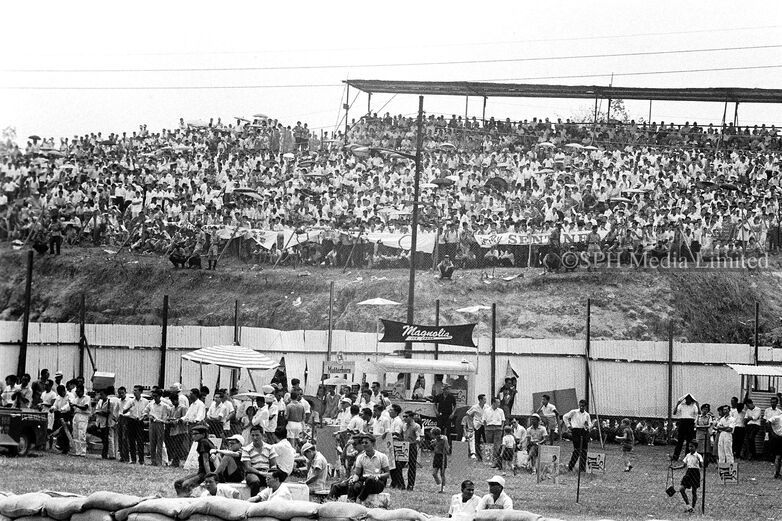
Large Crowds at the First Singapore Grand Prix, 1961
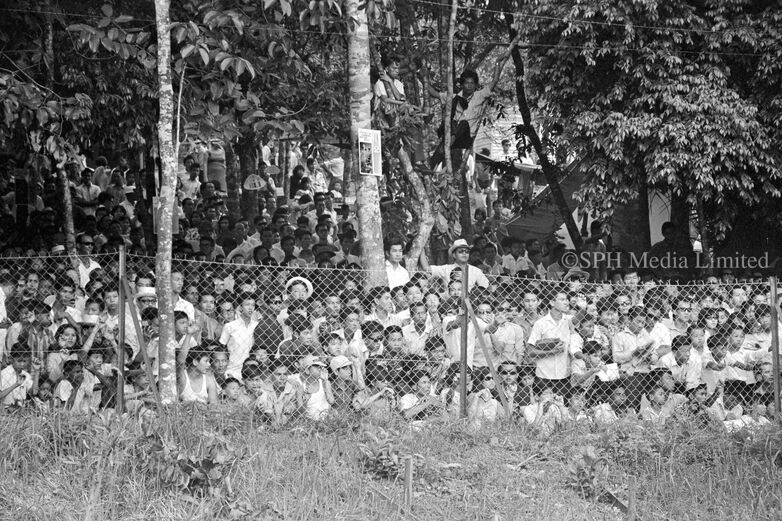
Over 100,000 people showed up to watch the first Grand Prix held in Singapore. The crowds were so overwhelming that ticket sales had to be stopped an hour after the start of the first of the two main races. Police reinforcements were called as hundreds of people who had been denied tickets tried to push their way in. That year, main grandstand tickets cost 9 Malayan Dollars, while general admission was 1 Malayan Dollar.
The Singapore Grand Prix saw a large turnout for its first iteration in 1961 with approximately 100,00 people attending. Up to that point in time, this was the largest number of people ever to attend a sporting event in Singapore. The Singapore Grand Prix would run for another 12 years before it was discontinued after 1973, citing safety concerns after a series of fatal crashes.
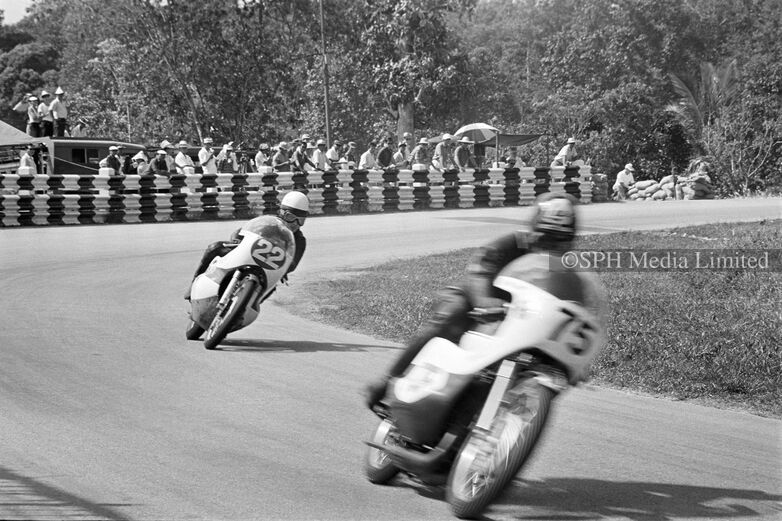
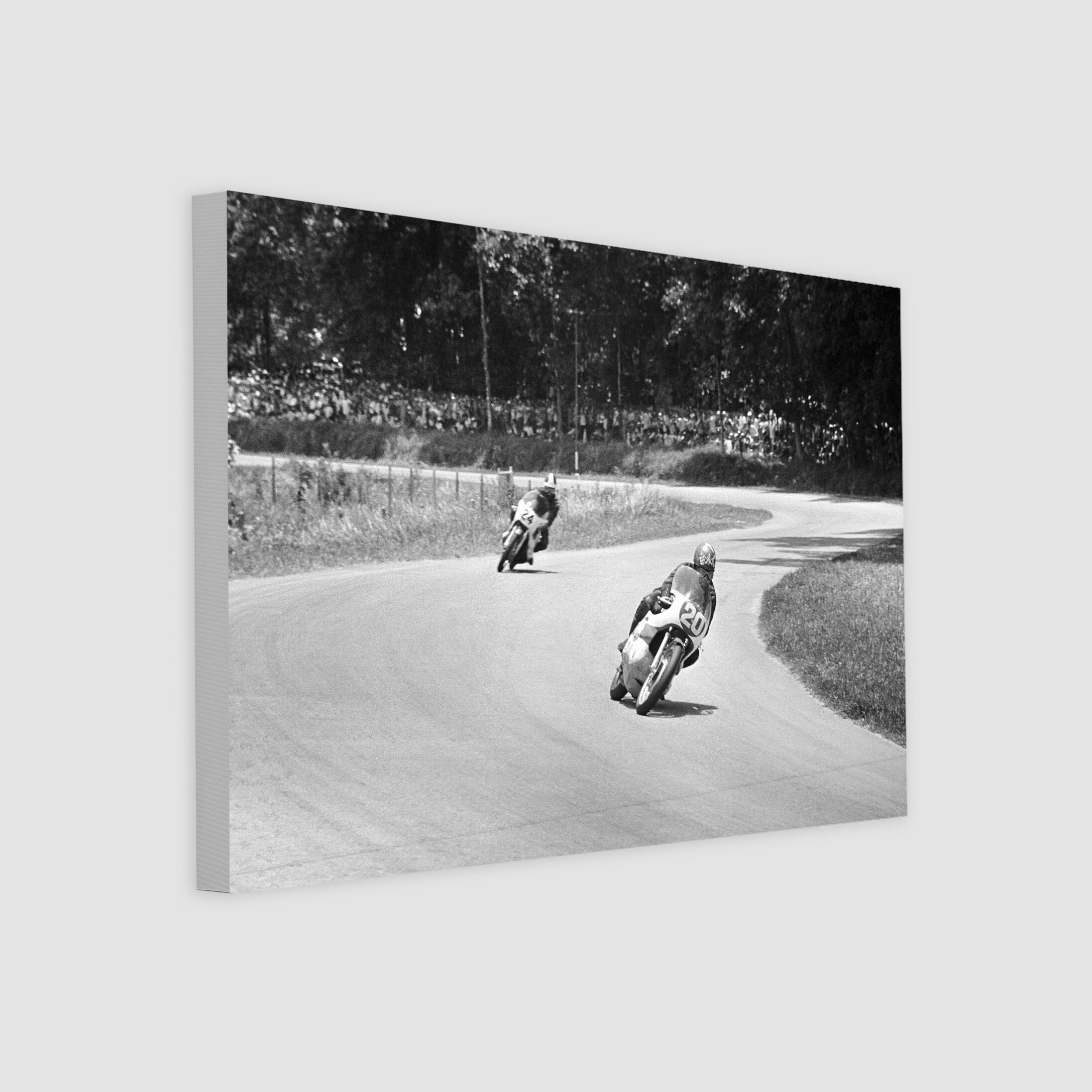
Motorcycle Grand Prix Bikes at the Peak Bend
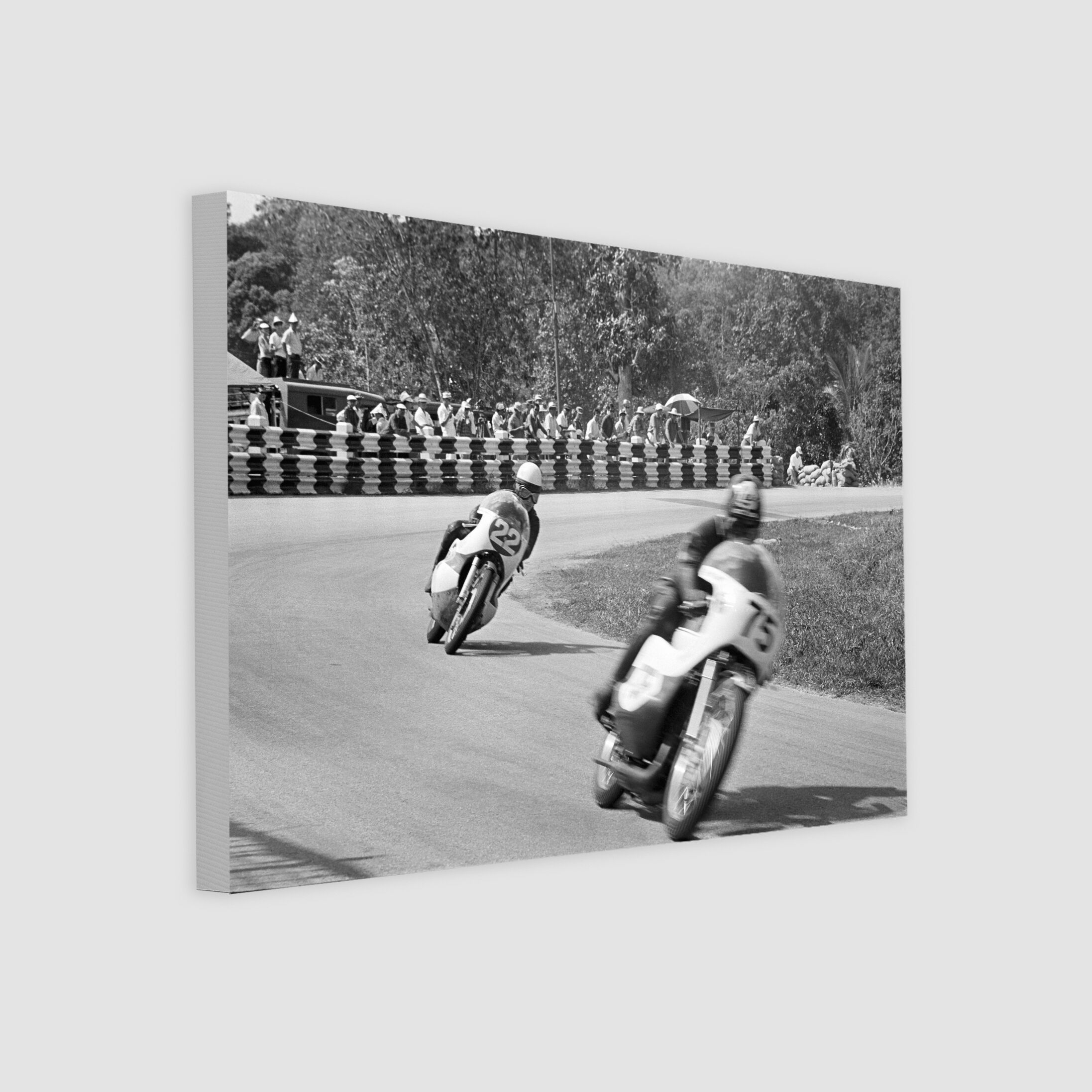
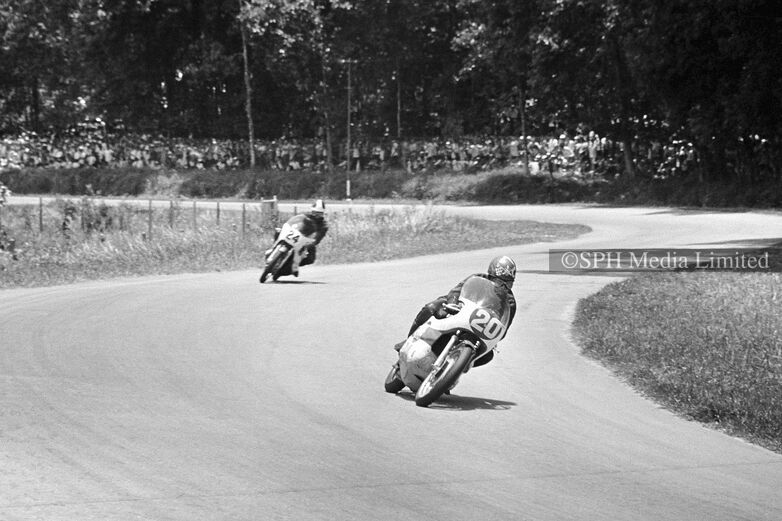
Local rider Lee Wing Sang [75] on a 350cc Kawasaki, closely followed by Akiyasu Motohashi [22] on a 250cc Yamaha around Peak Bend. Motohashi emerged the winner for the Motorcycle Grand Prix that year, reclaiming Yamaha's reign on the championship
The 4.865km (3 miles) long circuit began on Upper Thomson Road, a stretch known as the Thomson Mile (along Tagore Lane today). Midway through it came a sharp right-hand turn called The Hump, notorious for sending cars airborne when taken at speed. Drivers then hit the sandbagged Bus Stop Chicane, designed to slow them down as they rode into the Circus Hairpin at Sembawang Circus, past the VIP stands.
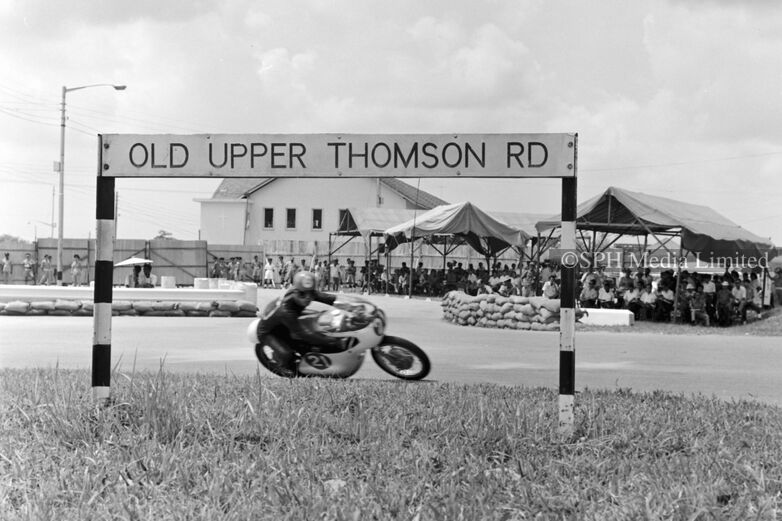
From there, the track climbed steeply up Old Upper Thomson Road through a series of bends. First came a set of four turns known as the Snakes, followed by Devil's Bend — a sharp V-bend widely regarded as the circuit's most dangerous point. Beyond it was the Long Loop, another gruelling bend. They would drive uphill to Peak's Bend, a left turn where TV and radio crews typically set up. Drivers would then race downhill before cutting sharply right into Range Hairpin and past the Signal Pits, finishing the lap back at the start-finish line on Upper Thomson Road.
The circuit was notoriously dangerous and claimed the lives of many participants over the years. This was a major contributor to the cancellation of the Thomson Grand Prix races after 1973.
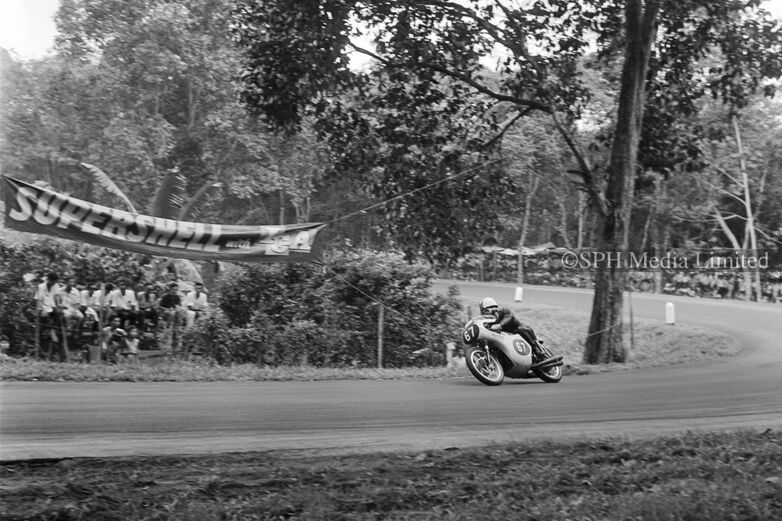
Making a Turn at the Devil's Bend, 1962
Teisuke Tanaka [67] powers past Devil’s Bend. The Honda rider won the 1962 Motorcycle GP at Upper Thomson. The race began as the Singapore GP in 1961, became the Malaysia GP between 1962 to 1965, then reverted to the Singapore GP after independence.
The Races
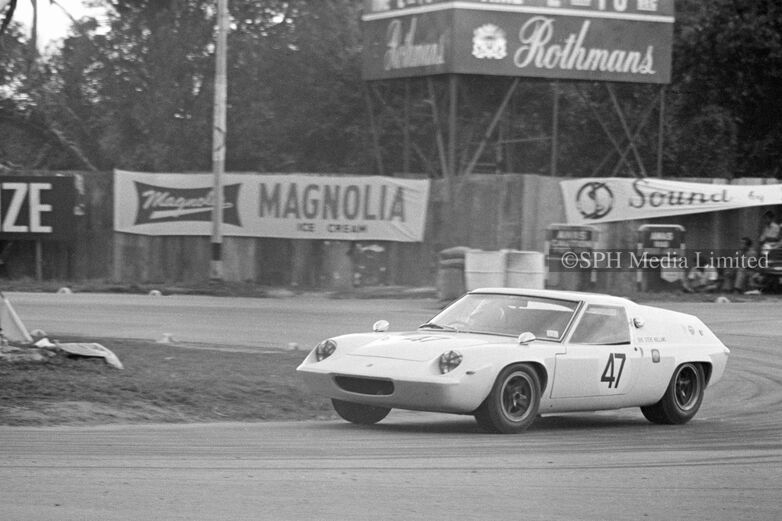
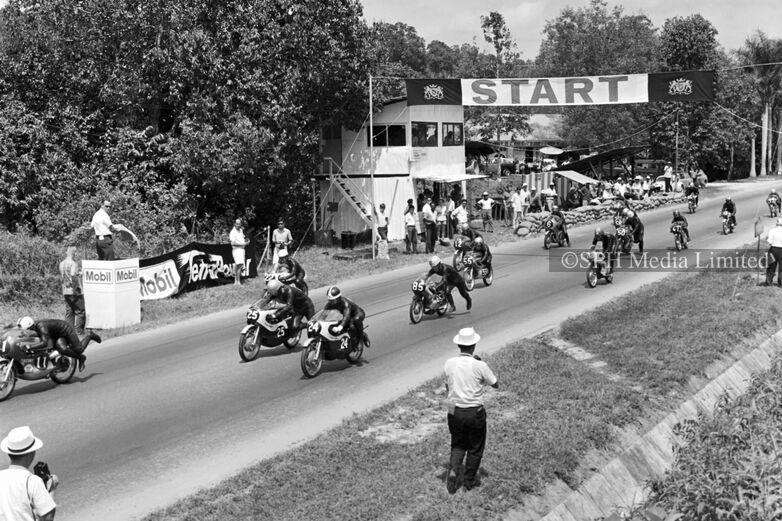
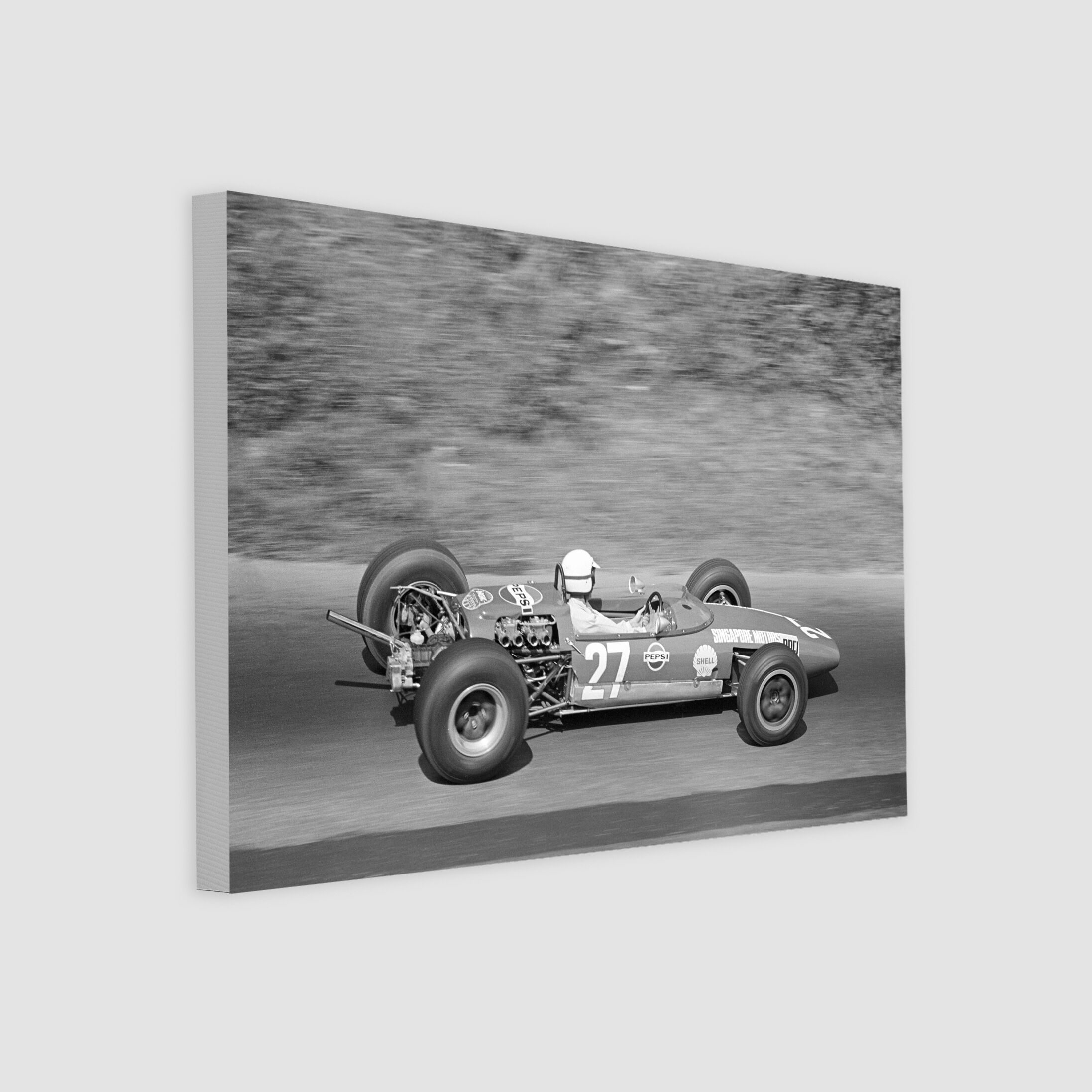
The Singapore Grand Prix was the first worldwide Grand Prix to have races for both cars and motorcycles. A total of nine races took place over the 1961 Grand Prix weekend.
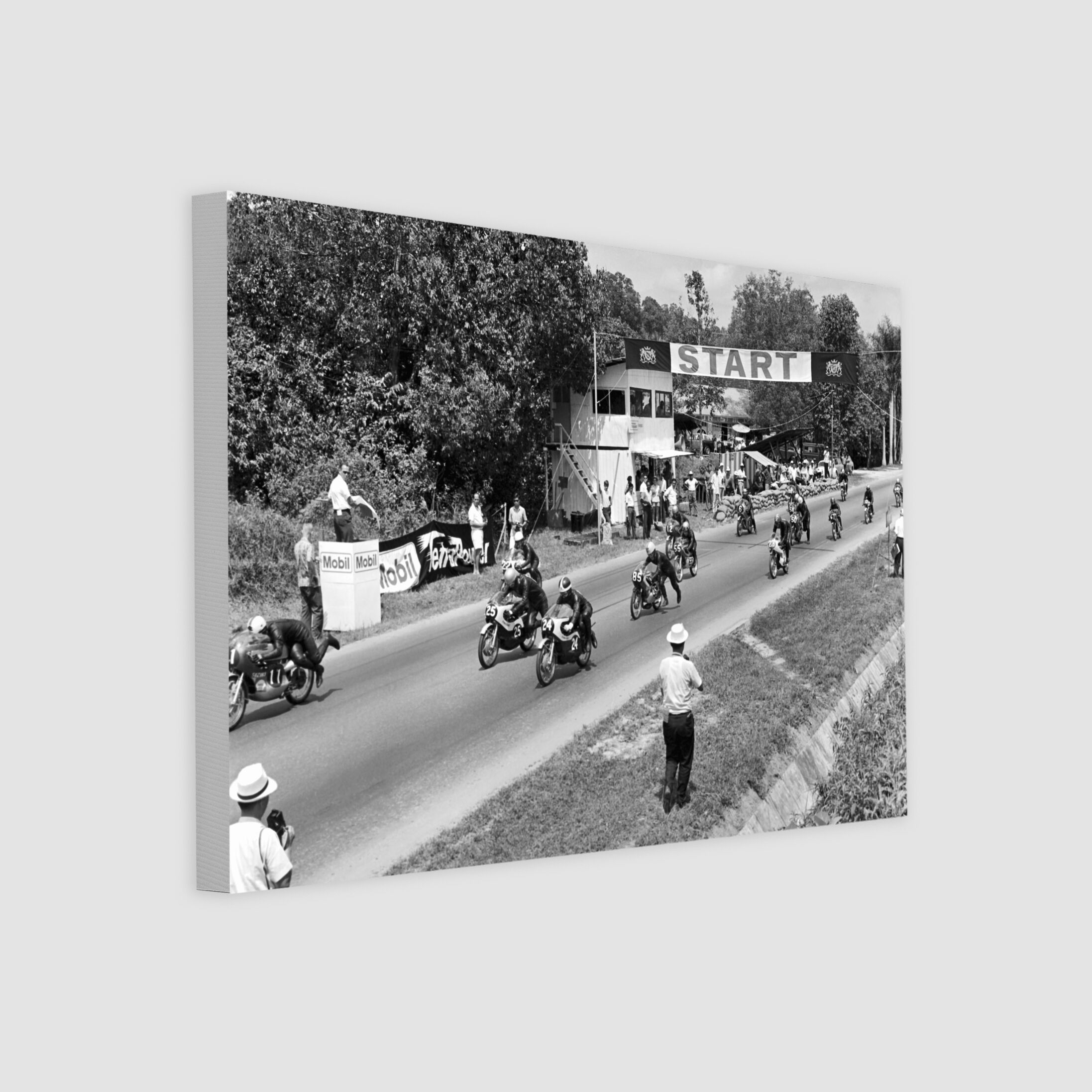
Before the main Grand Prix races, a series of support races ranging 5-15 laps for both cars and motorcycles were held, adding to the spectacle. This included the Sports and GT Race, Saloon and Tourer Race and a Vintage and P.V.T (Post-Vintage Tourer) Race for cars, and motorcycle races split by engine size & build type.
In later years, Clubman Races were introduced, to allow more local amateur entrants to take part in the races with production and barely modified everyday vehicles, as the main events were dominated by international competitors with more sponsors and resources.
The main Grand Prix races were a gruelling 180 miles, consisting of 60 laps. The cash prizes for the main races were $1000, $500 and $250 for first, second and third places respectively in the 1961 race.
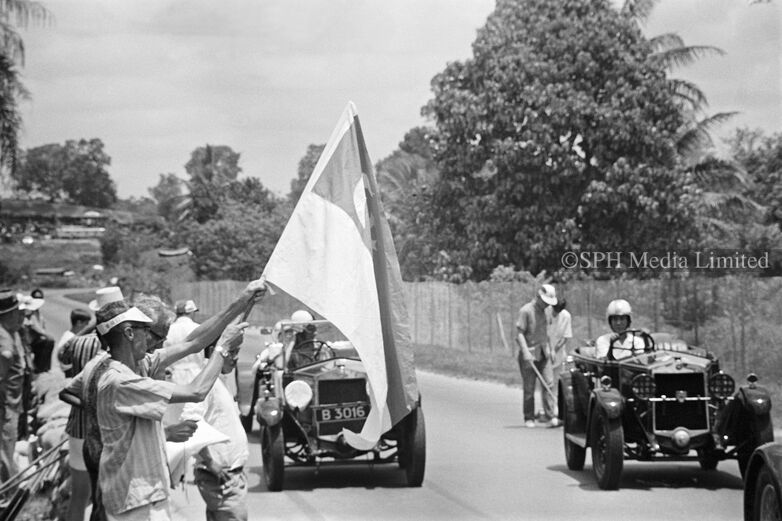
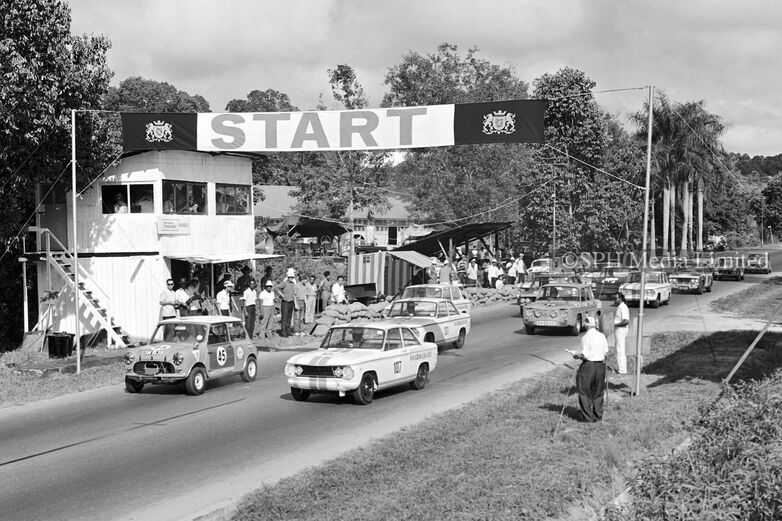
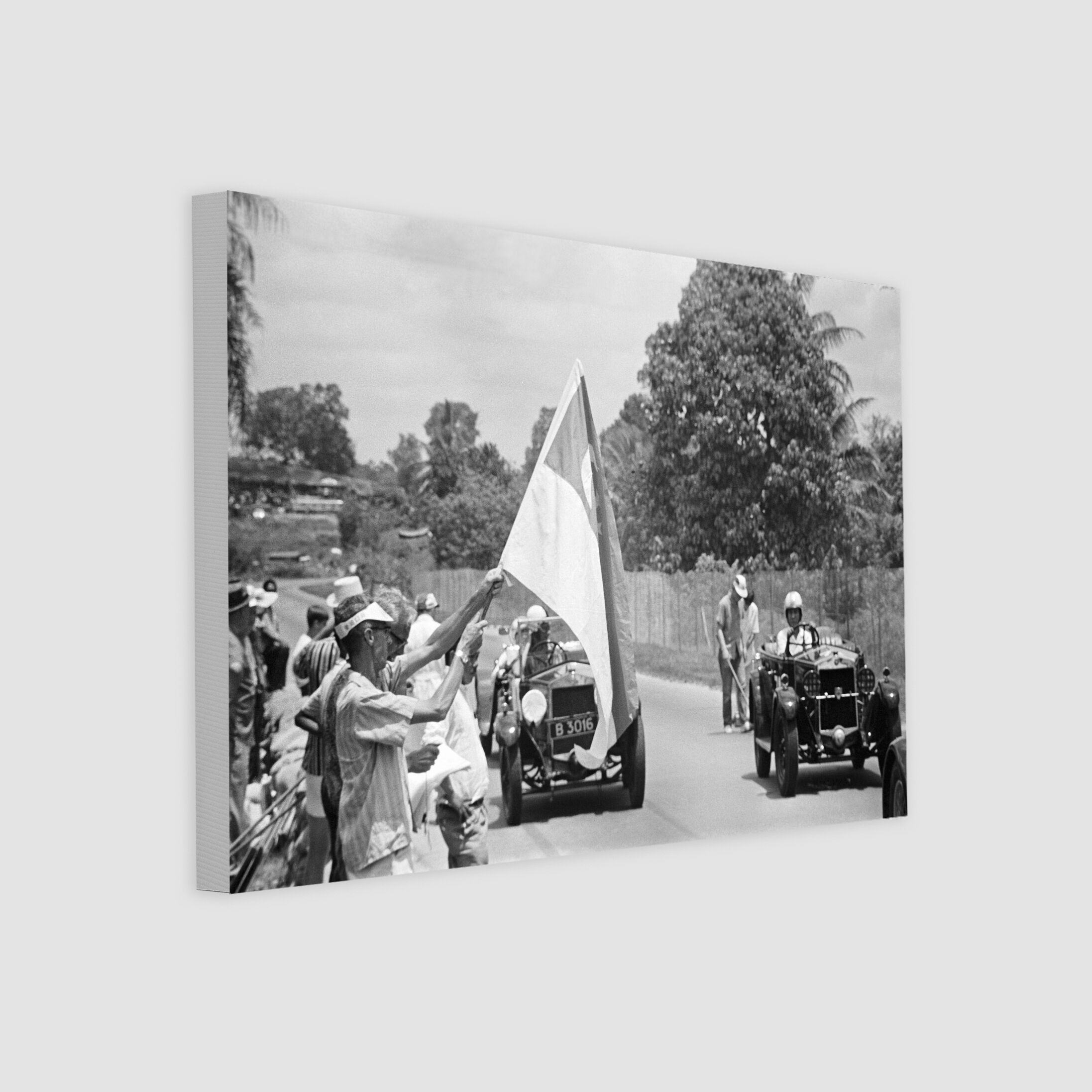
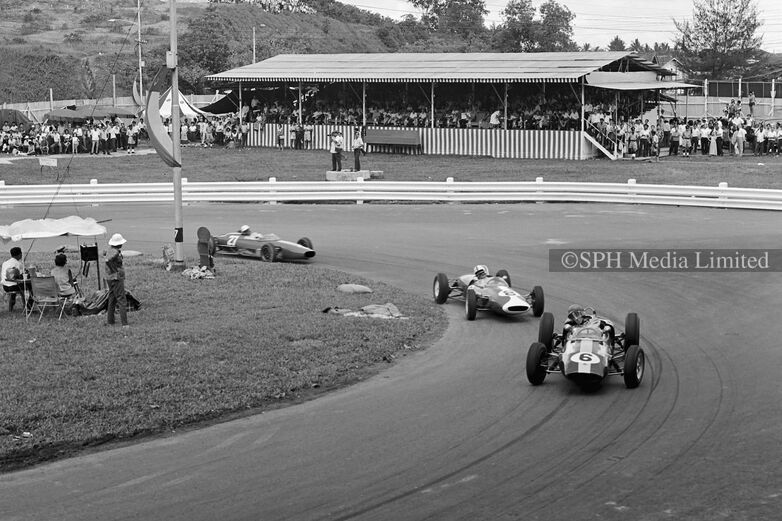
National Flag to Start the Grand Prix, 1964
Drivers behind the start-line await the signal to begin the Vintage and P.V.T Cars race, one of the supporting races during the Grand Prix weekend. Prior to the standardisation of the use of the black-and-white chequered flag, the national flag was used as a marker for the start of the races.
The Riders & Drivers
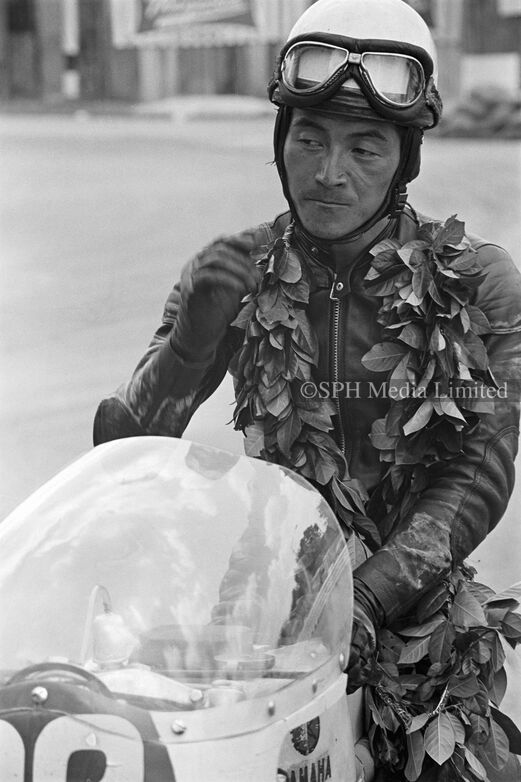
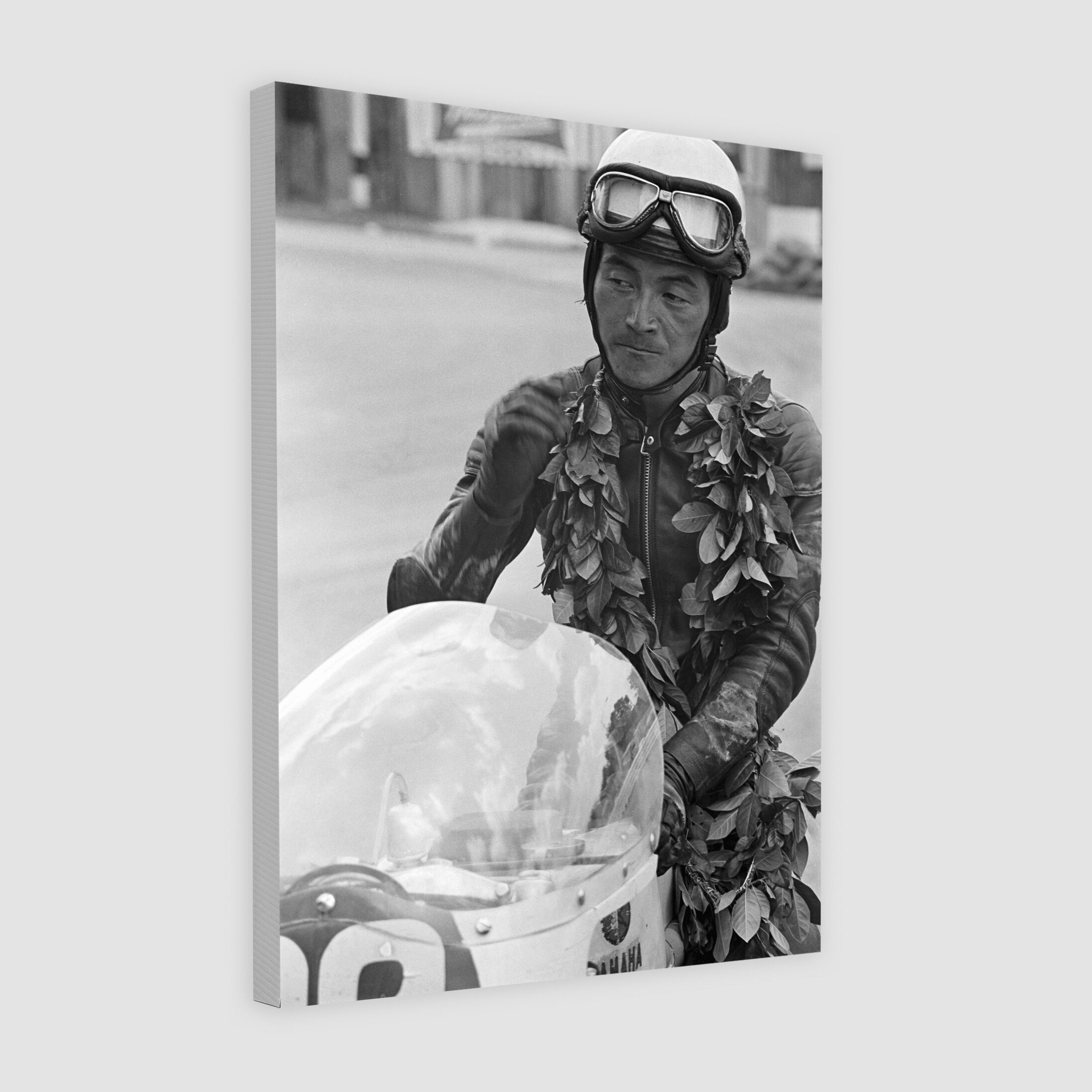
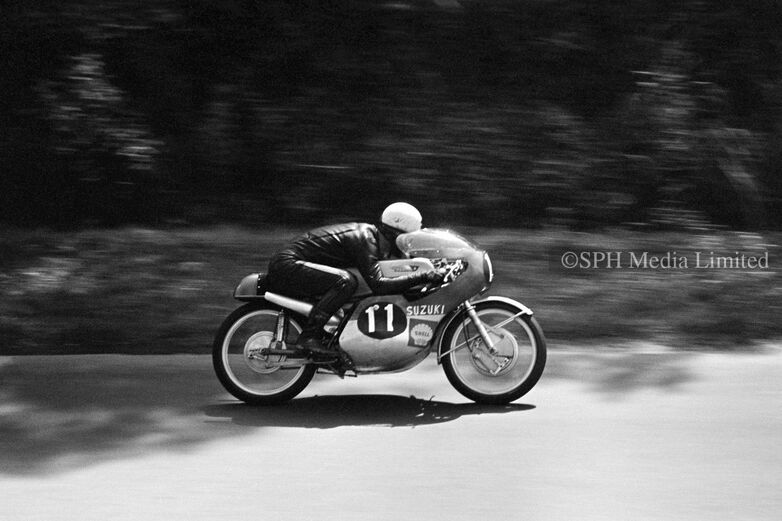
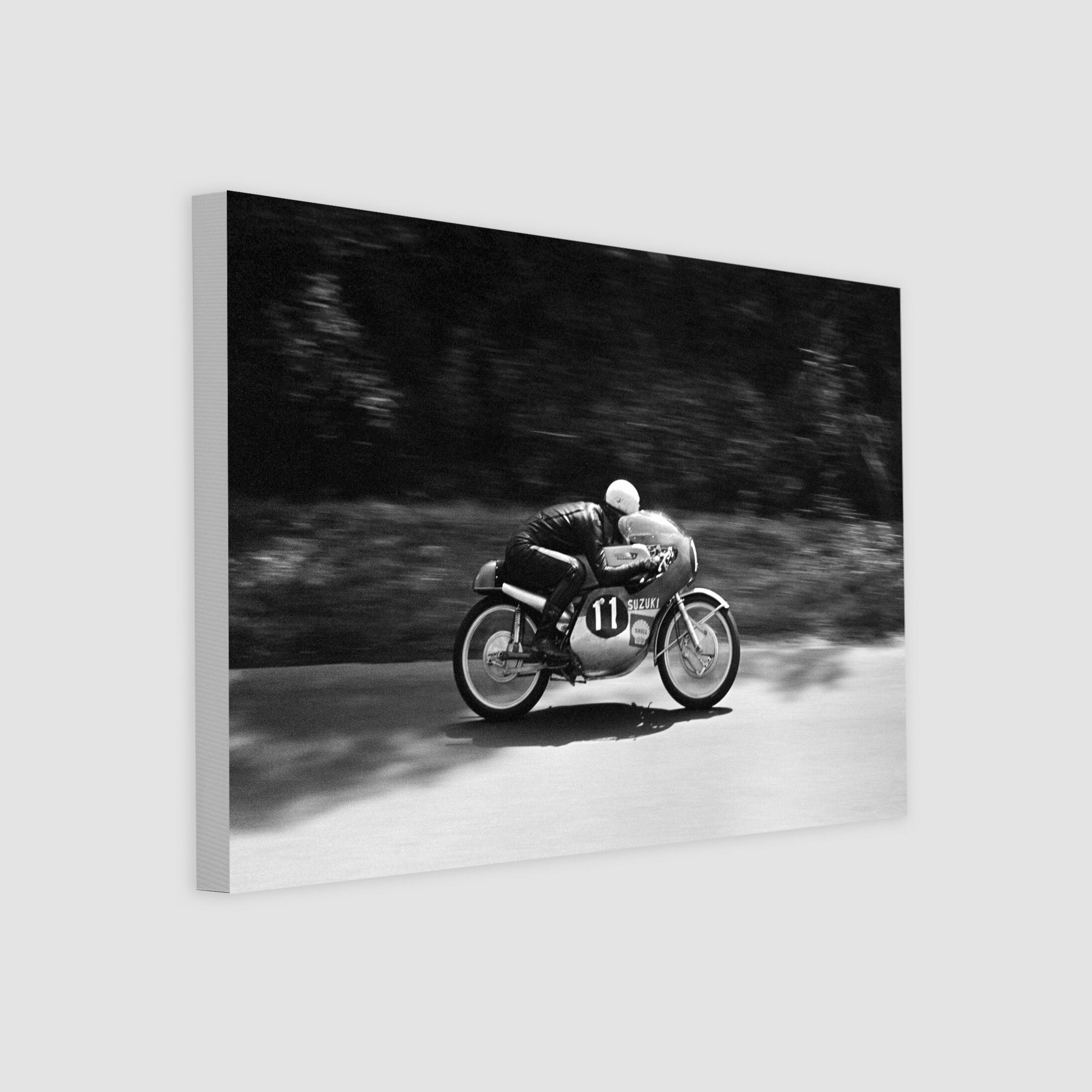
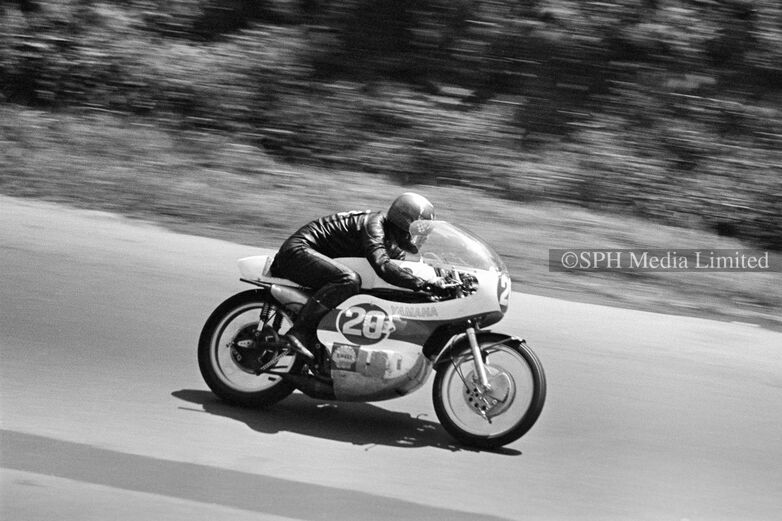
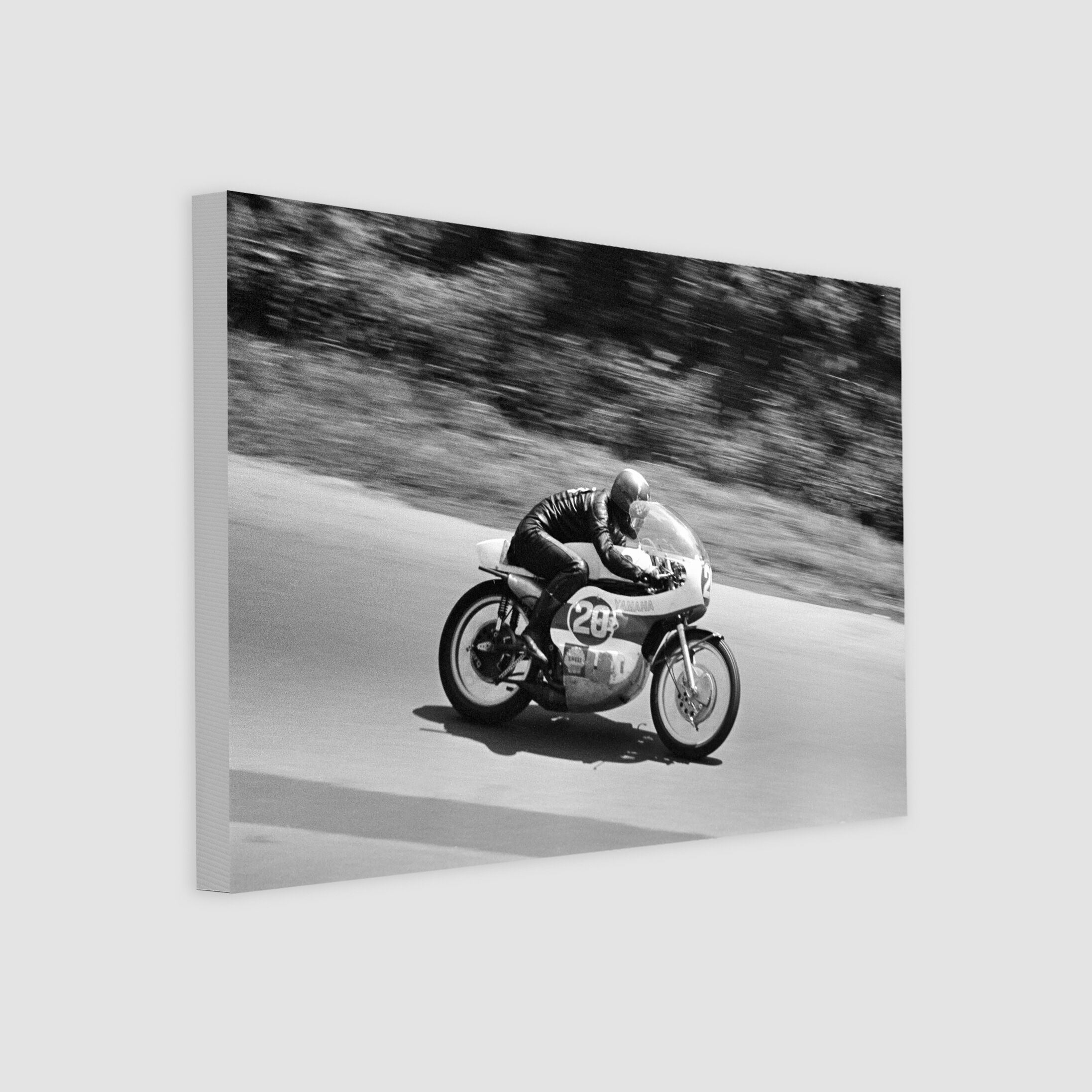
The Singapore Grand Prix attracted talented riders from both the region and abroad. Yamaha's factory riders Akiyasu Motohashi and Hiroshi Hasegawa were among the crowd favourites, alongside Suzuki's Giichi Suzuki and Mitsuo Itoh.
New Zealand's Graeme Lawrence dominated the event with 3 Grand Prix wins, while Akiyasu Motohashi on his motorcycle achieved the most wins on this circuit throughout its history with 4 wins.
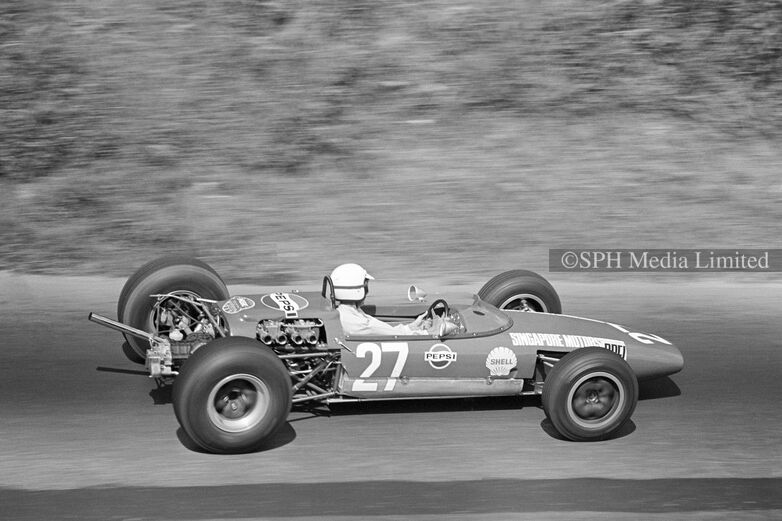 Last Local Grand Prix Winner Rodney Seow 1967
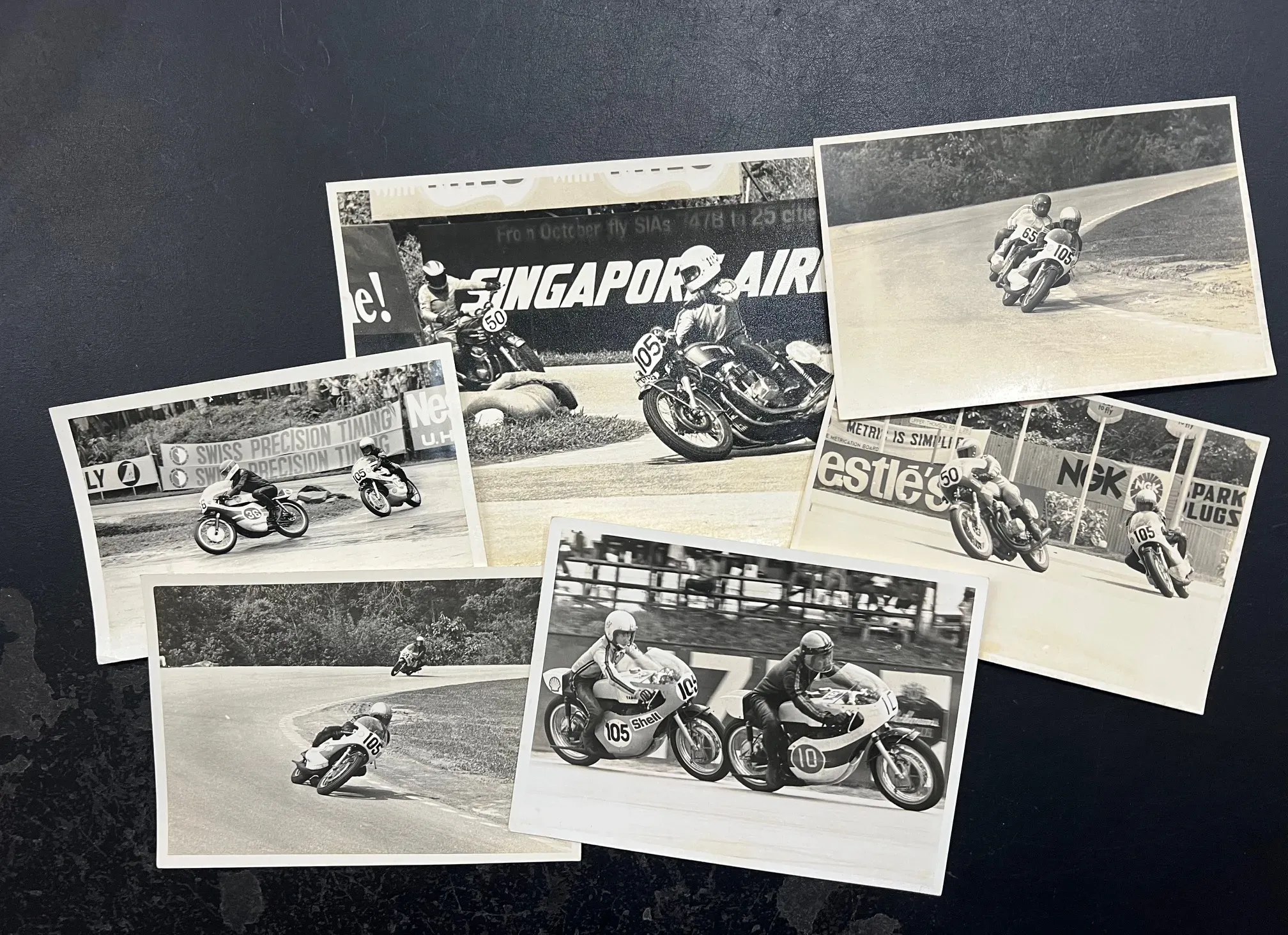
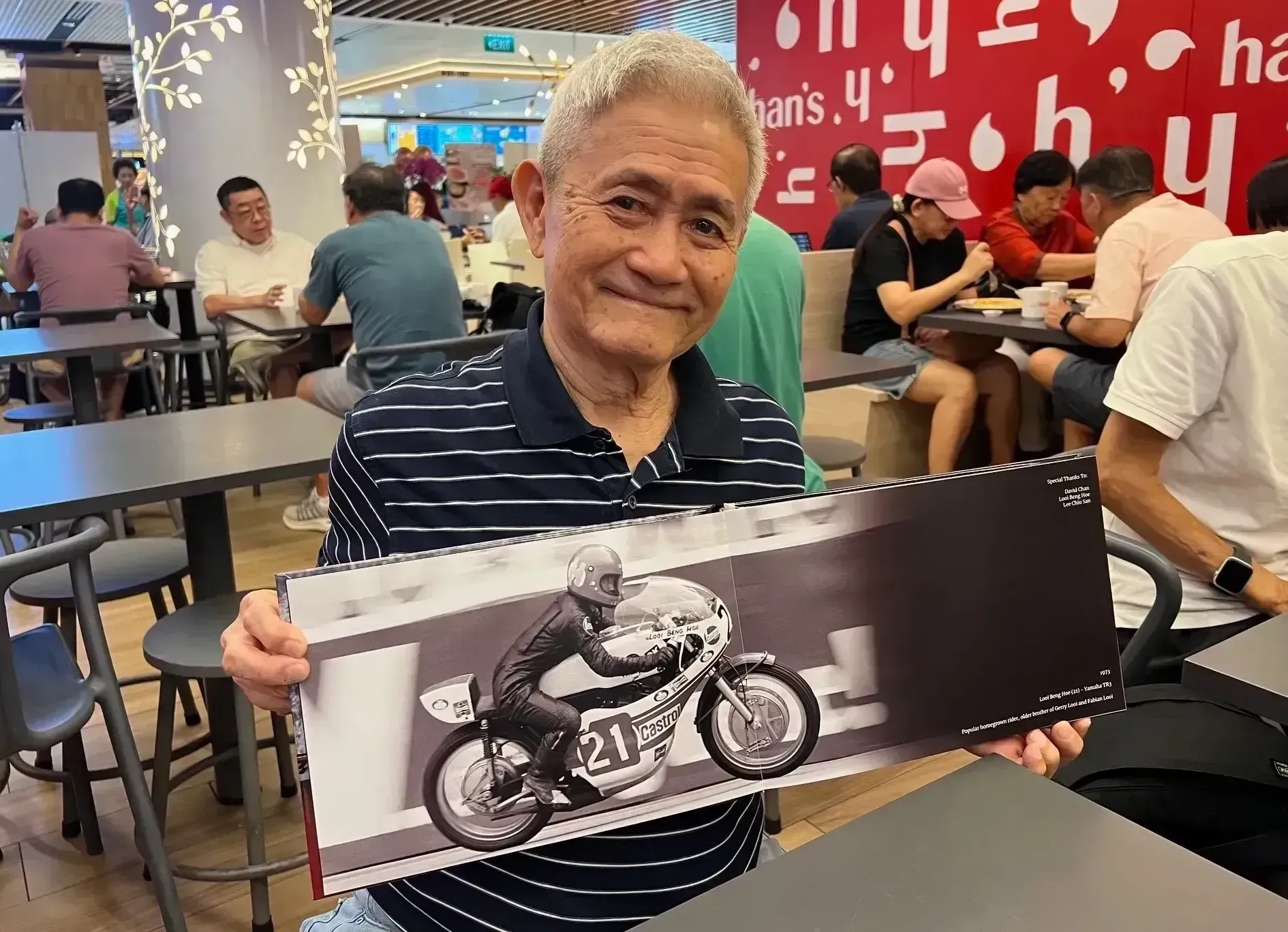
Local talent was well represented too, with riders like Looi Beng Hoe, Gerry Looi, Tommy Fang, Lee Han Seng, Tham Bing Kwan, Rodney Seow and Sonny Rajah making their mark.
The final iteration of the Upper Thomson Circuit Grand Prix saw Geoff Perry and Vern Schuppan emerge winners of the motorcycle and car Grand Prix respectively. Following the 1973 event, officials informed race organisers the discontinuation of future races, citing safety concerns.
Links: Click to browse our Grand Prix Collection , calendars and photobooks.
Special Thanks
The team would like to extend our thanks to Mr Looi Beng Hoe, Mr Lee Chiu San and Mr David Chan for generously sharing their knowledge with us and making this archival project possible.
 |
 |
 |
Fun Facts:
M$ stood for Malayan dollars, and was a common currency used between Singapore, Malaya, North Borneo (now Sabah), Sarawak and Brunei in the 1950s. In 1967, the 3 main countries in this currency union - Singapore, Malaysia and Brunei, begun to issue their own currency, whilst keeping a system of free interchangeability to faciliate trade relations. This, in effect, meant that they could use each other’s currencies at par with no extra fees in each country. Malaysia opted out of this agreement in 1973, but Singapore and Brunei have maintained this agreement. This is why Brunei dollars are accepted across Singapore, and vice versa.