No relevant currency found
Cultural and Historical Sites
Find out about the diverse culture and heritage in this multi-cultural landscape
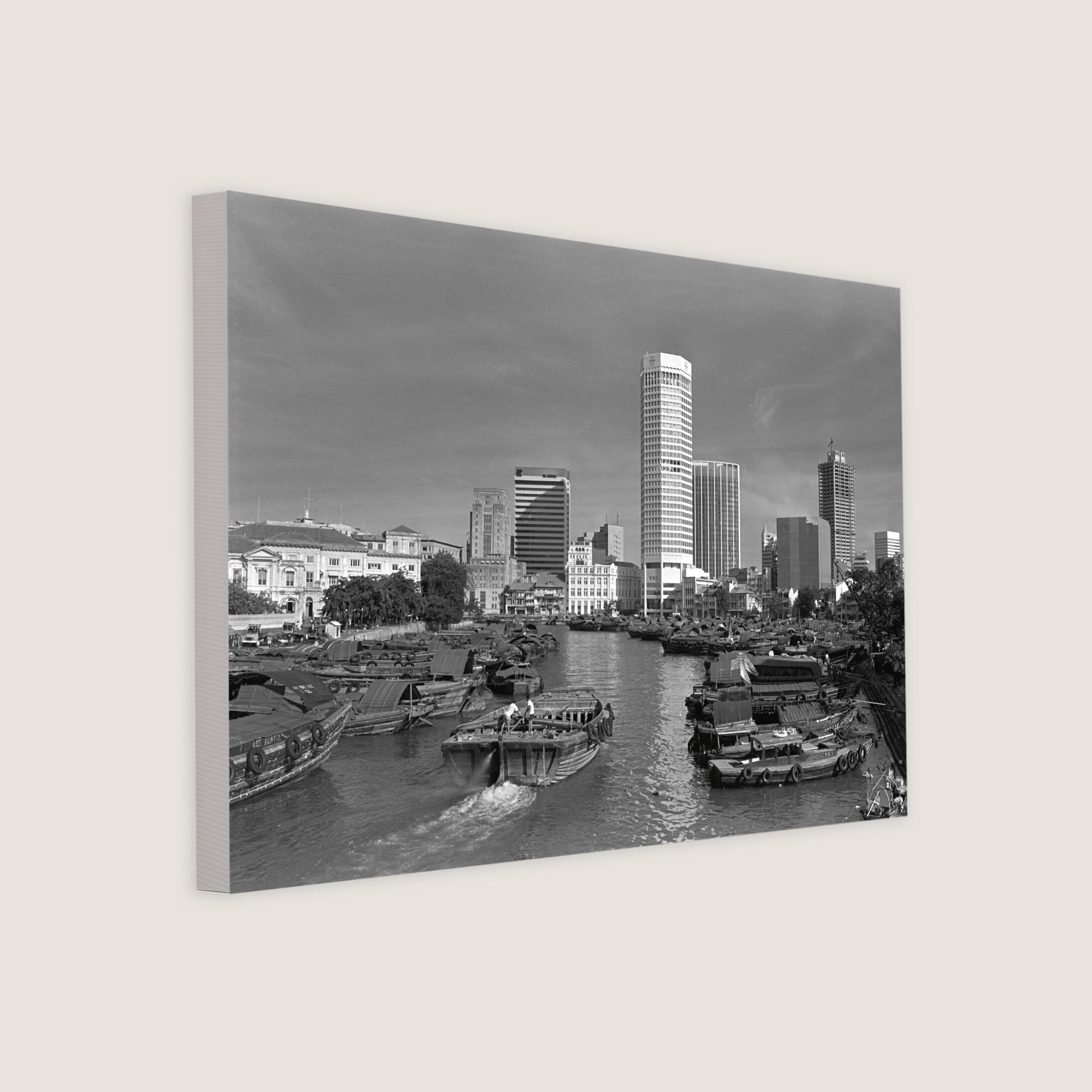
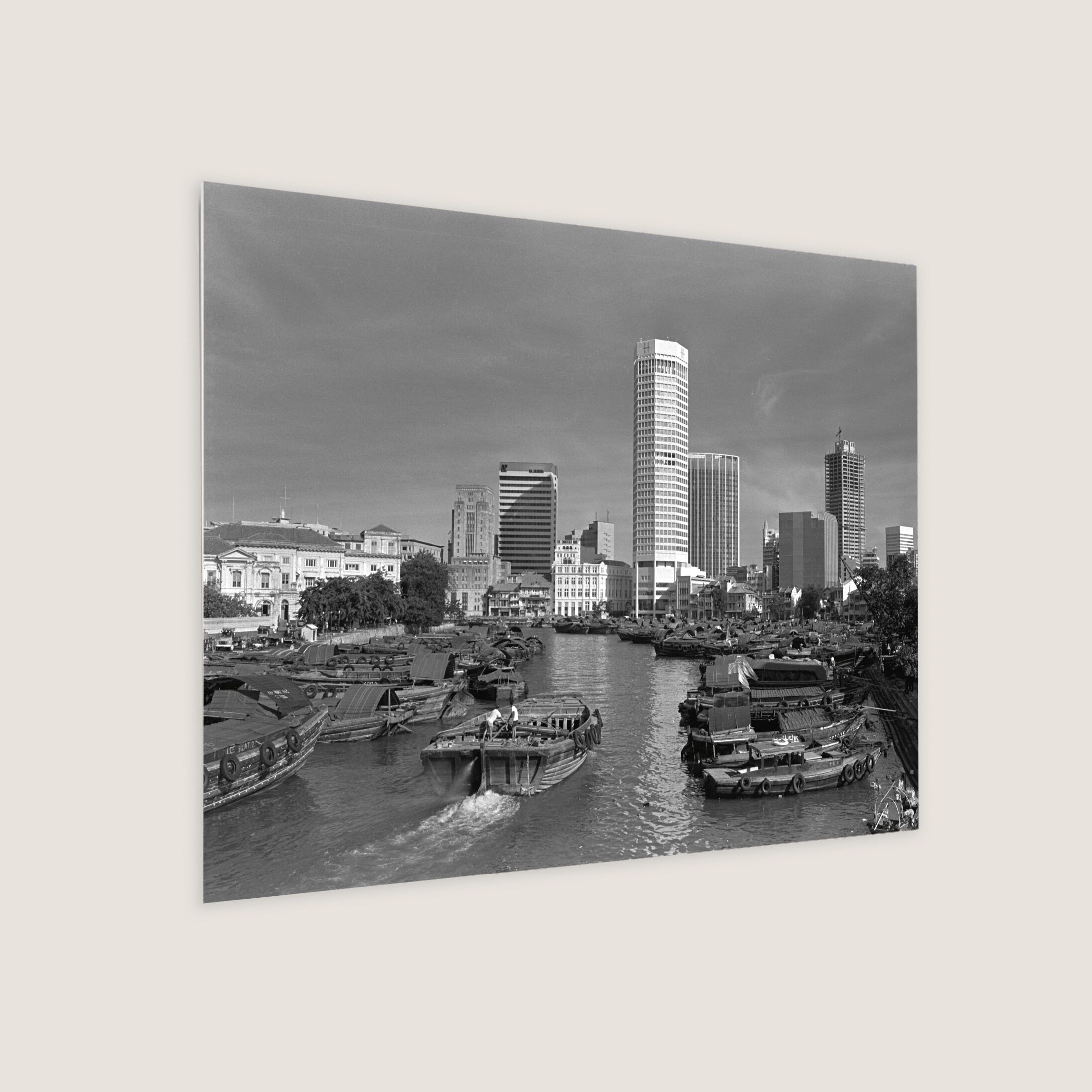
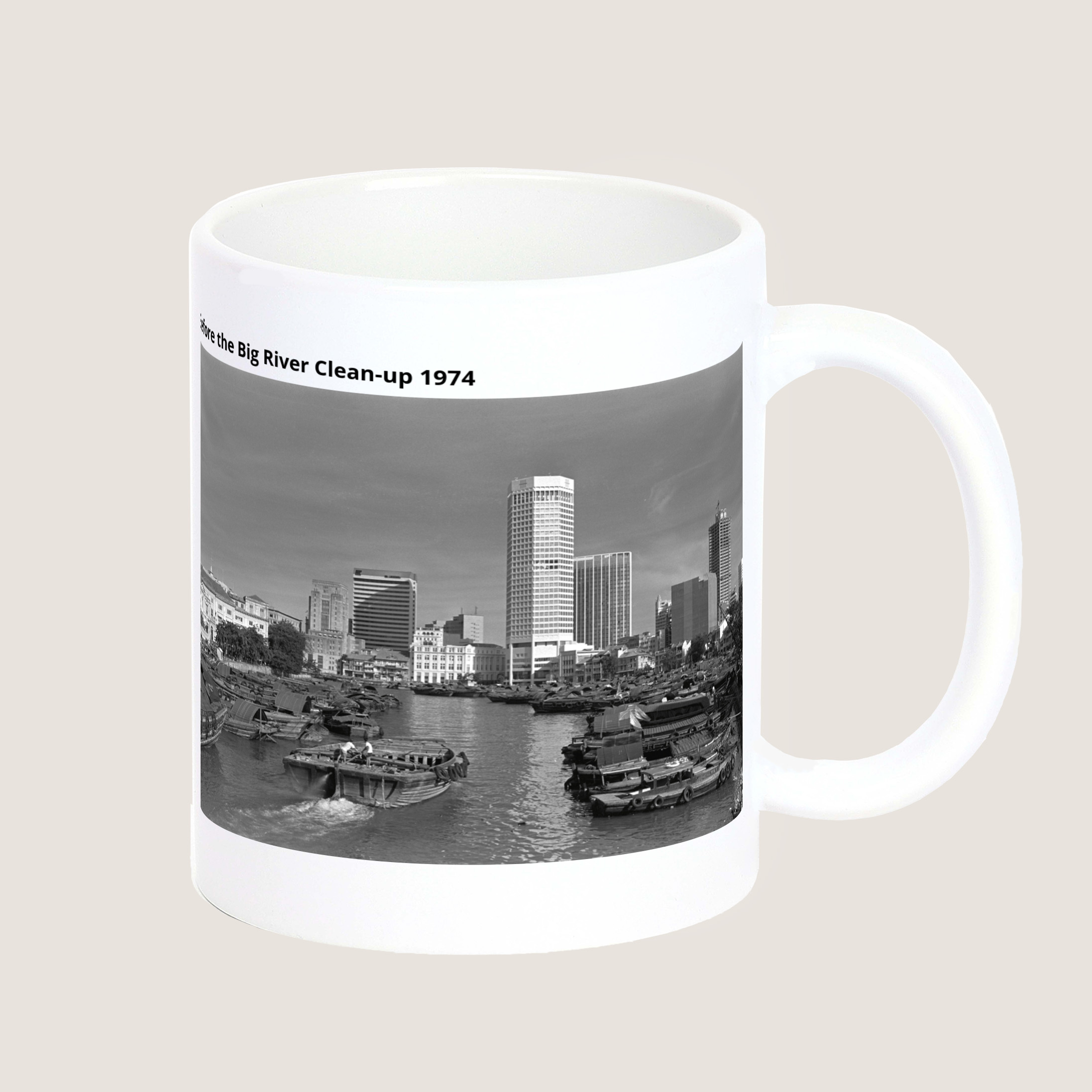
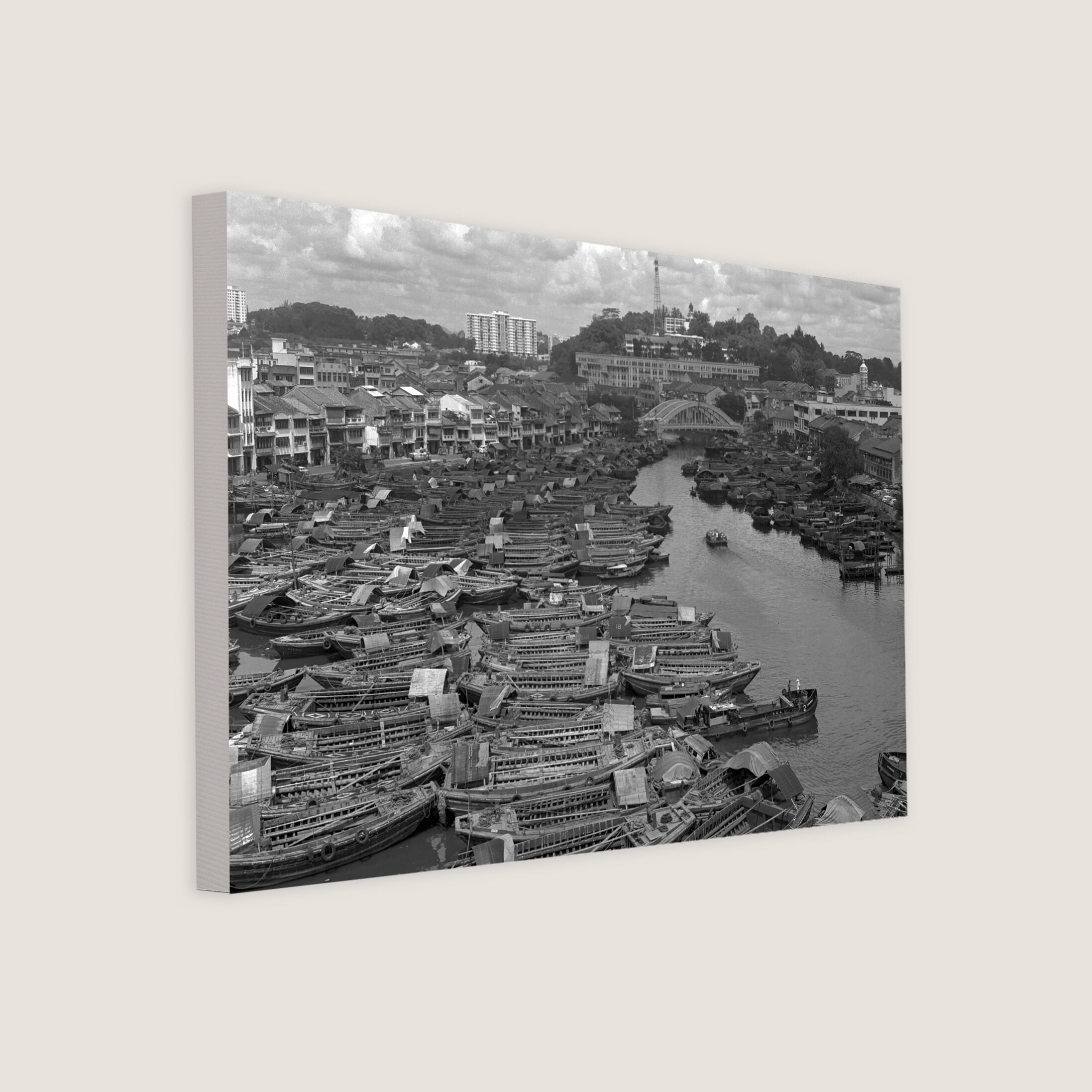
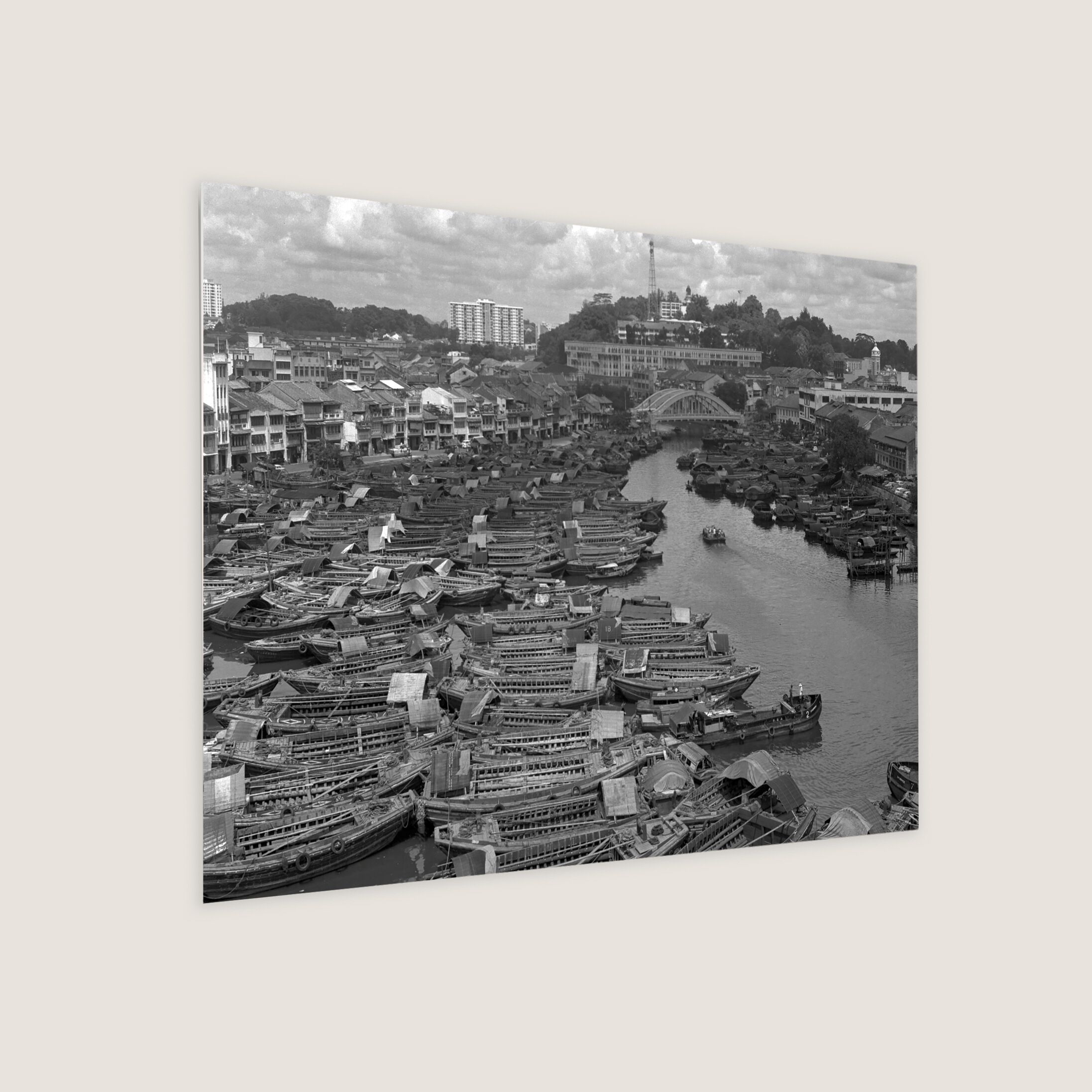
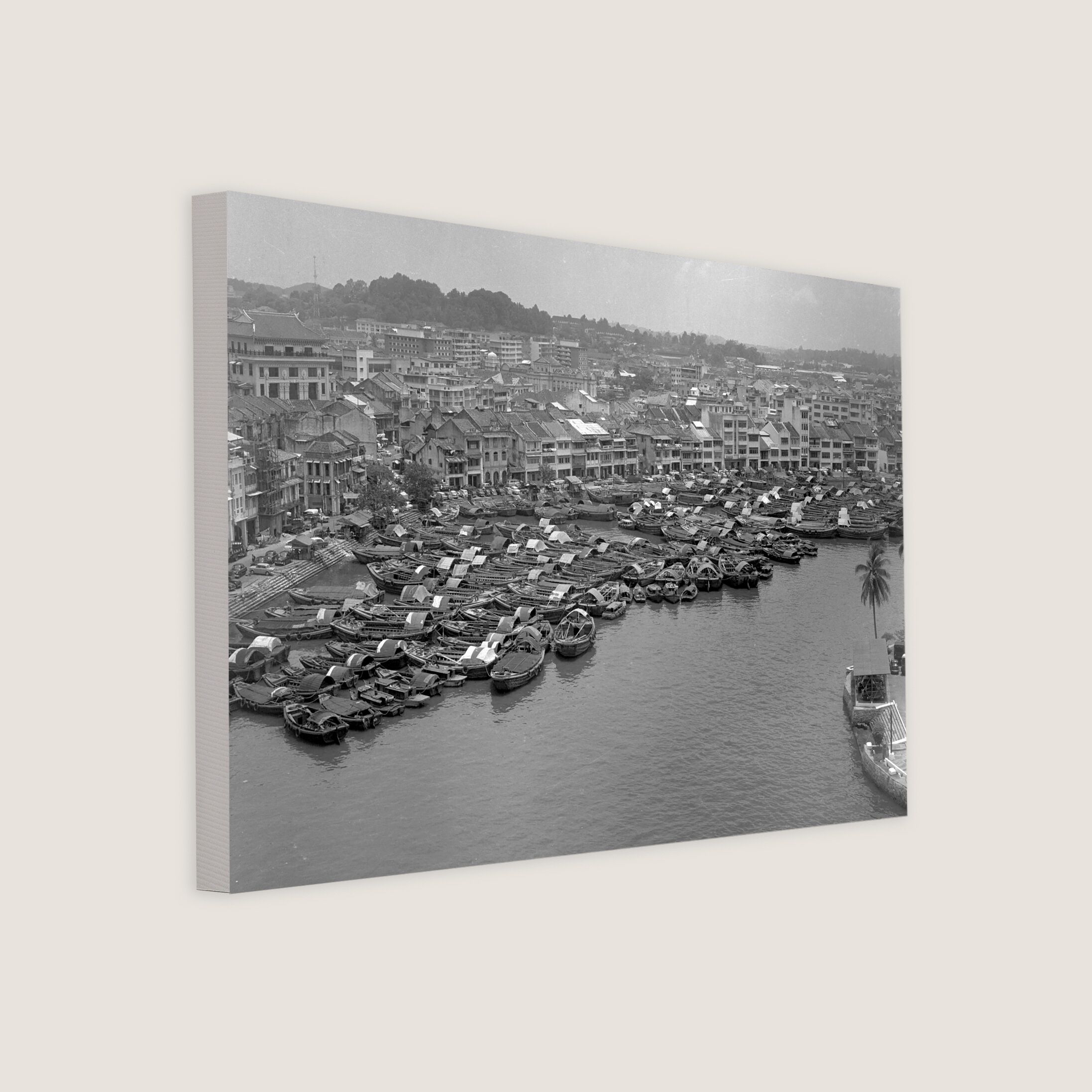
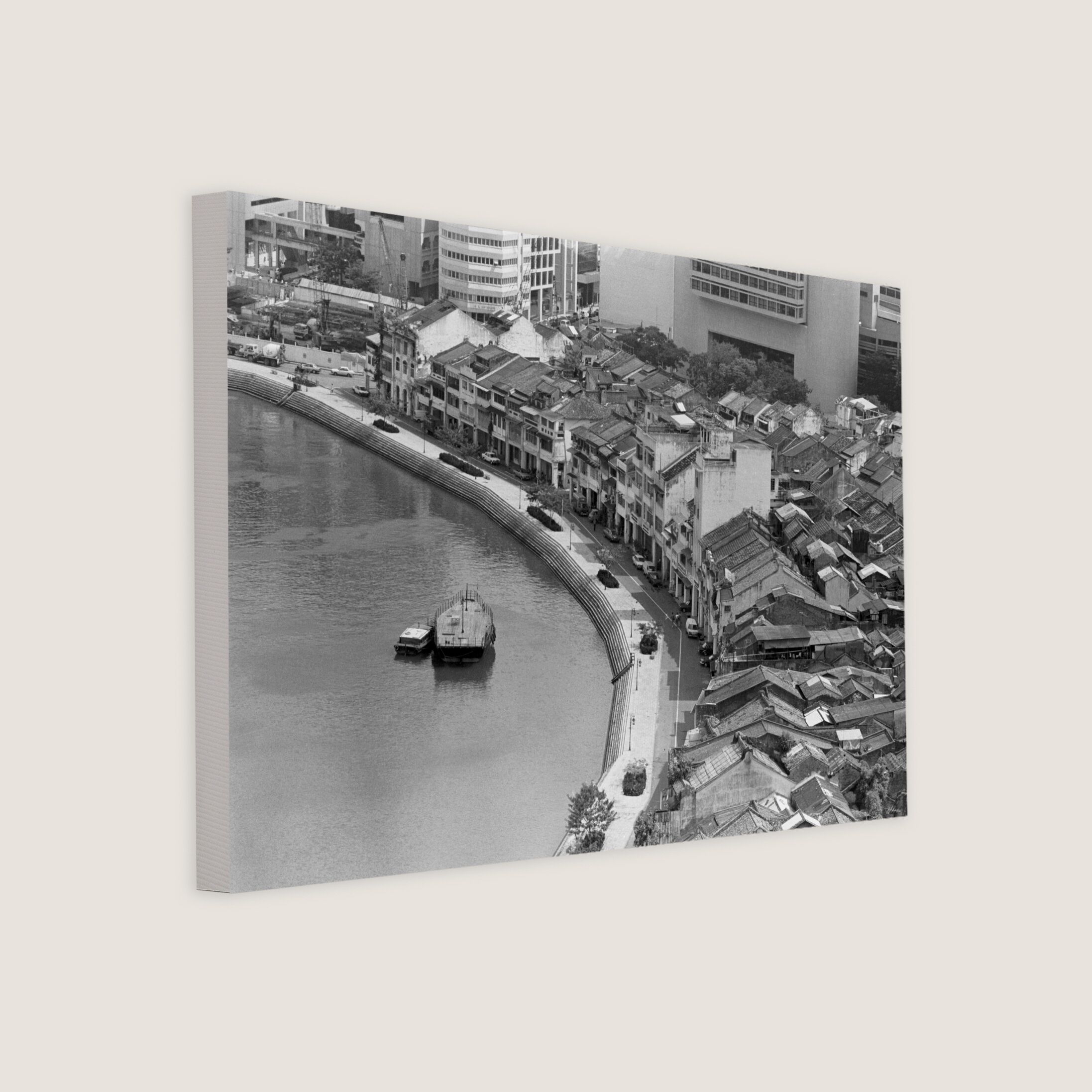
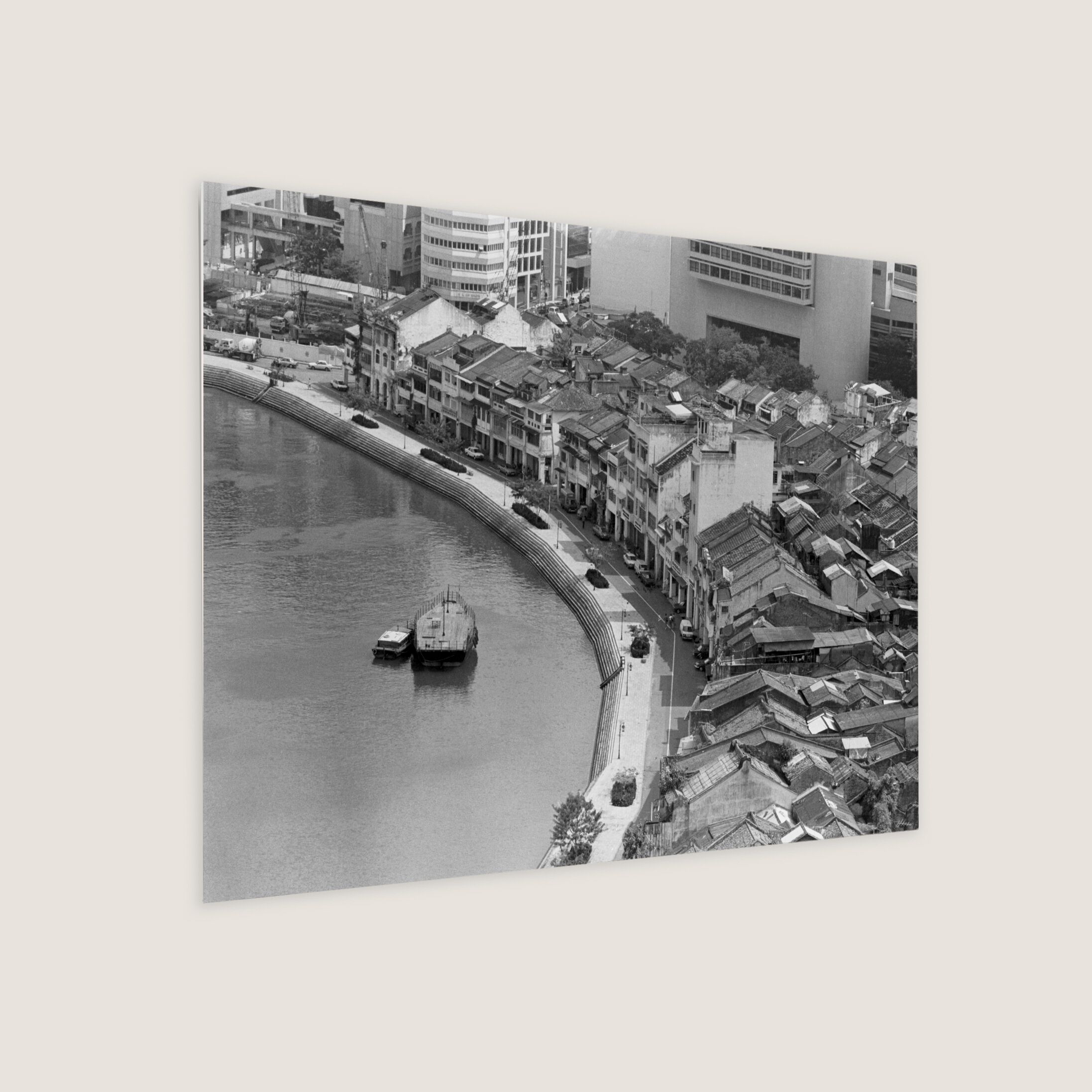
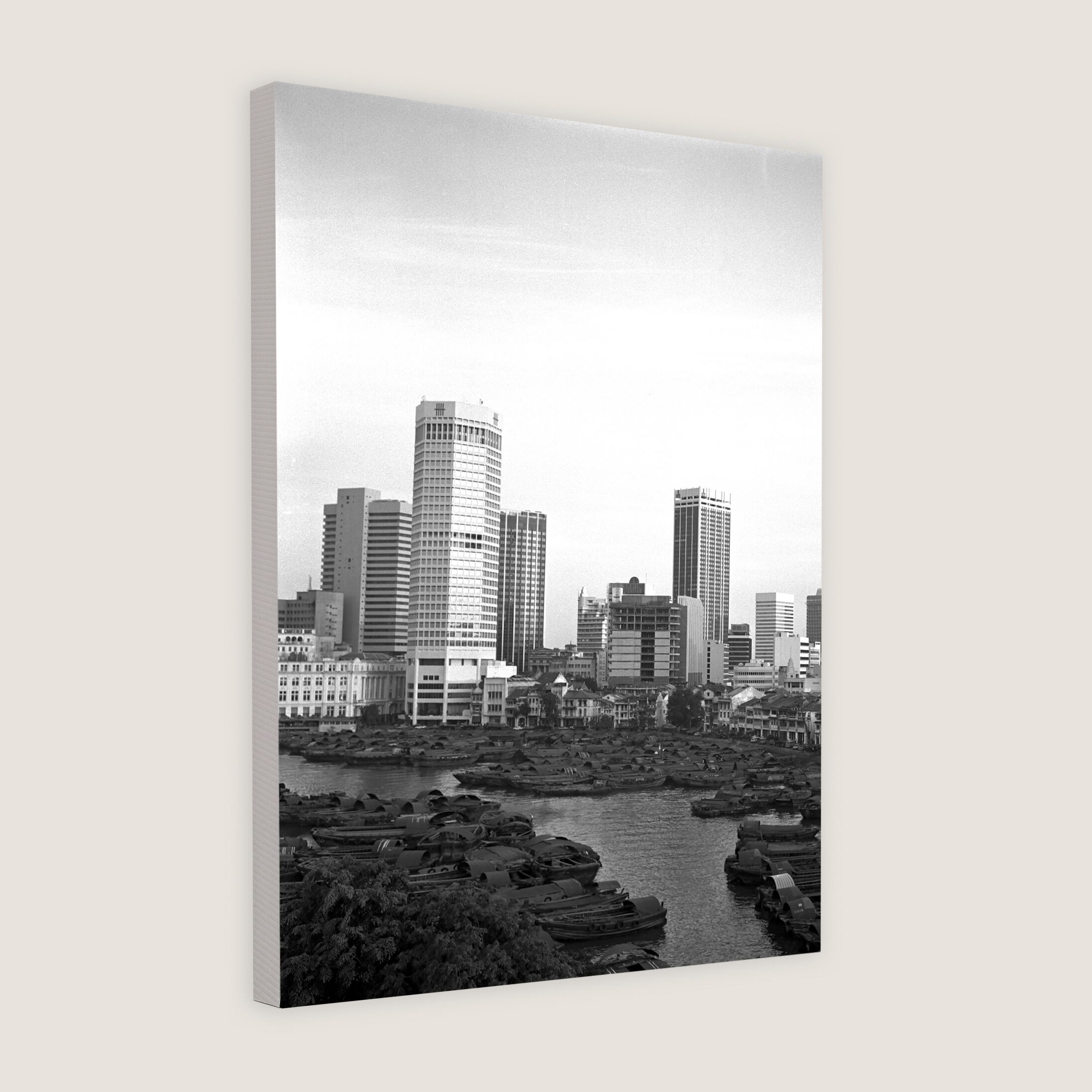
Before the Big River Clean-Up
1974
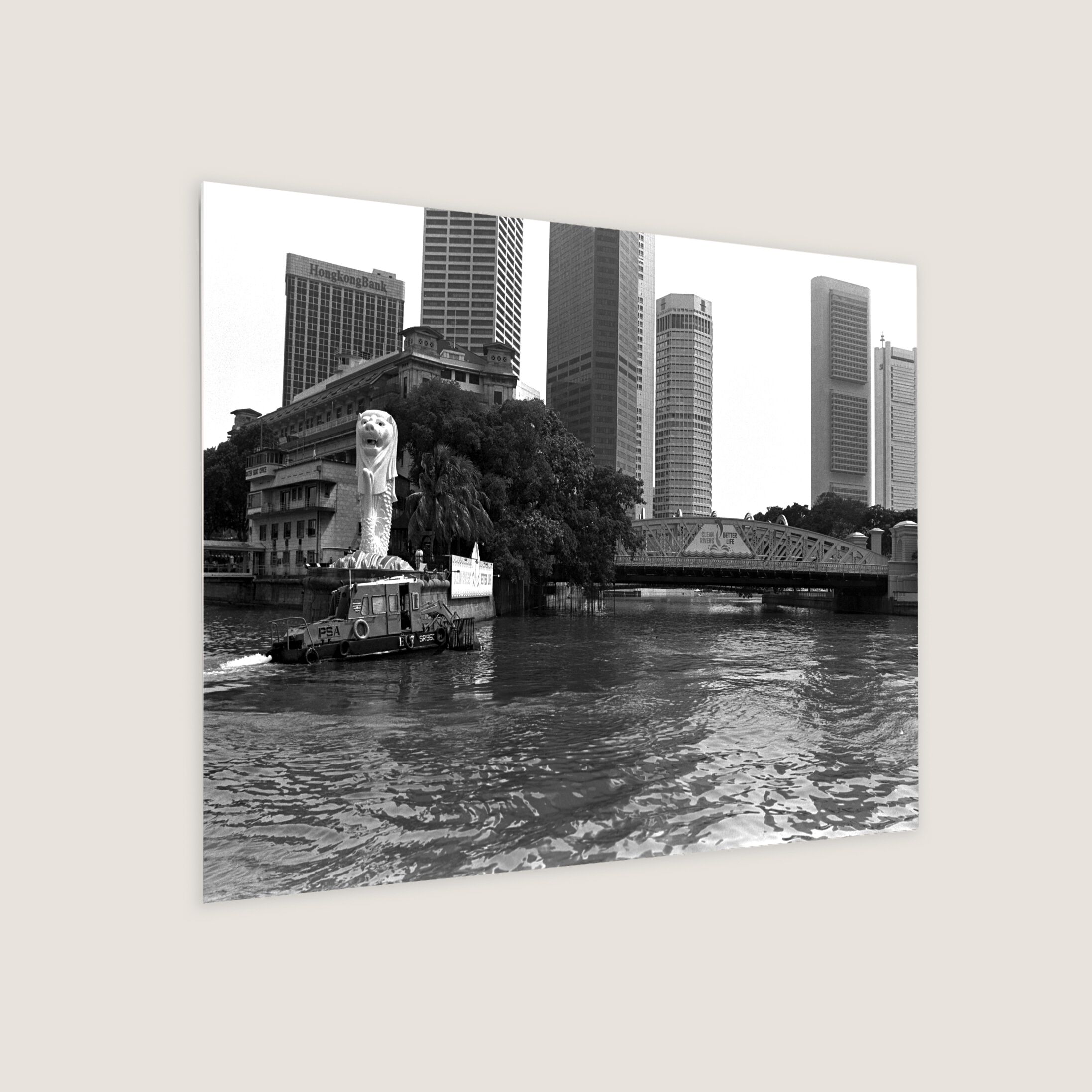
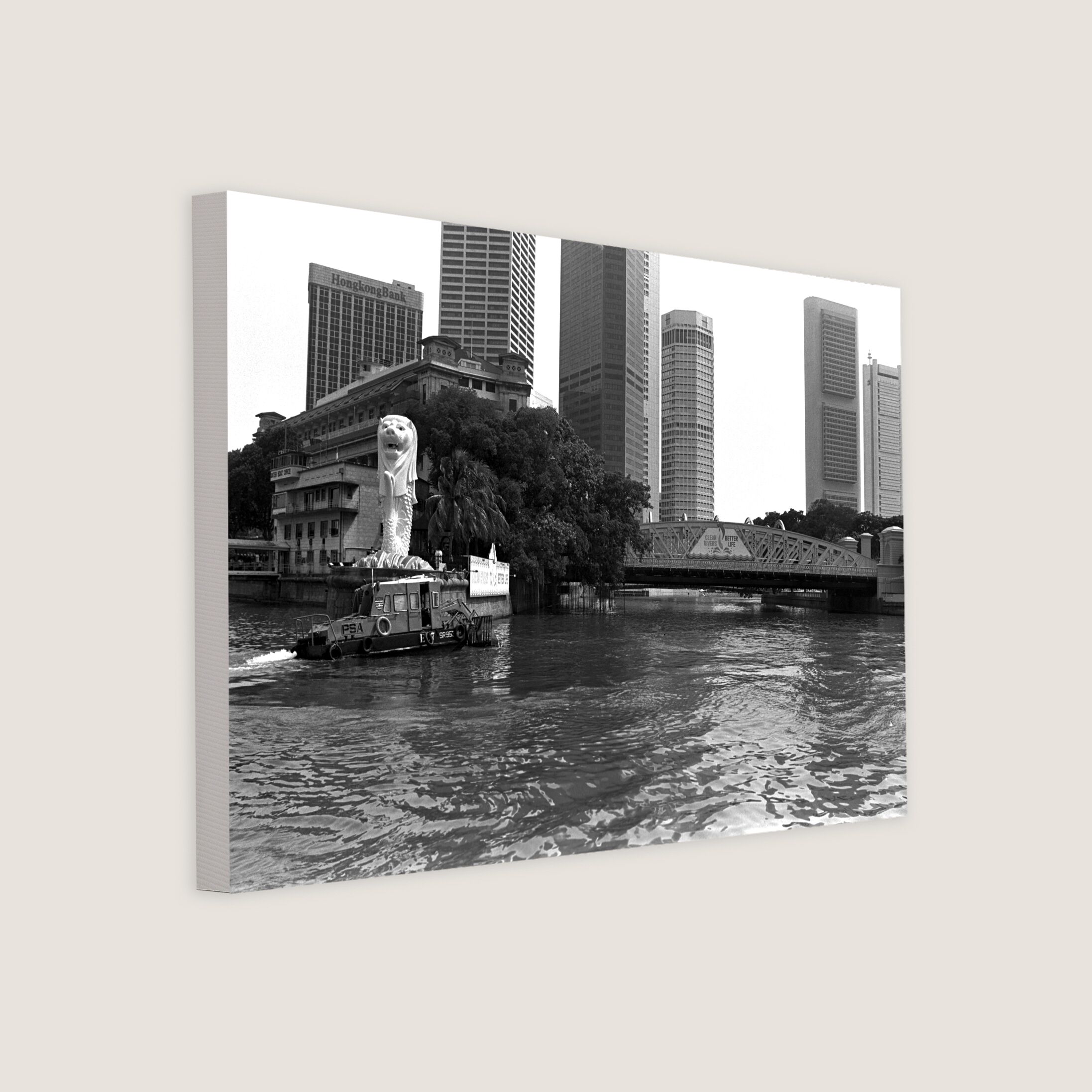
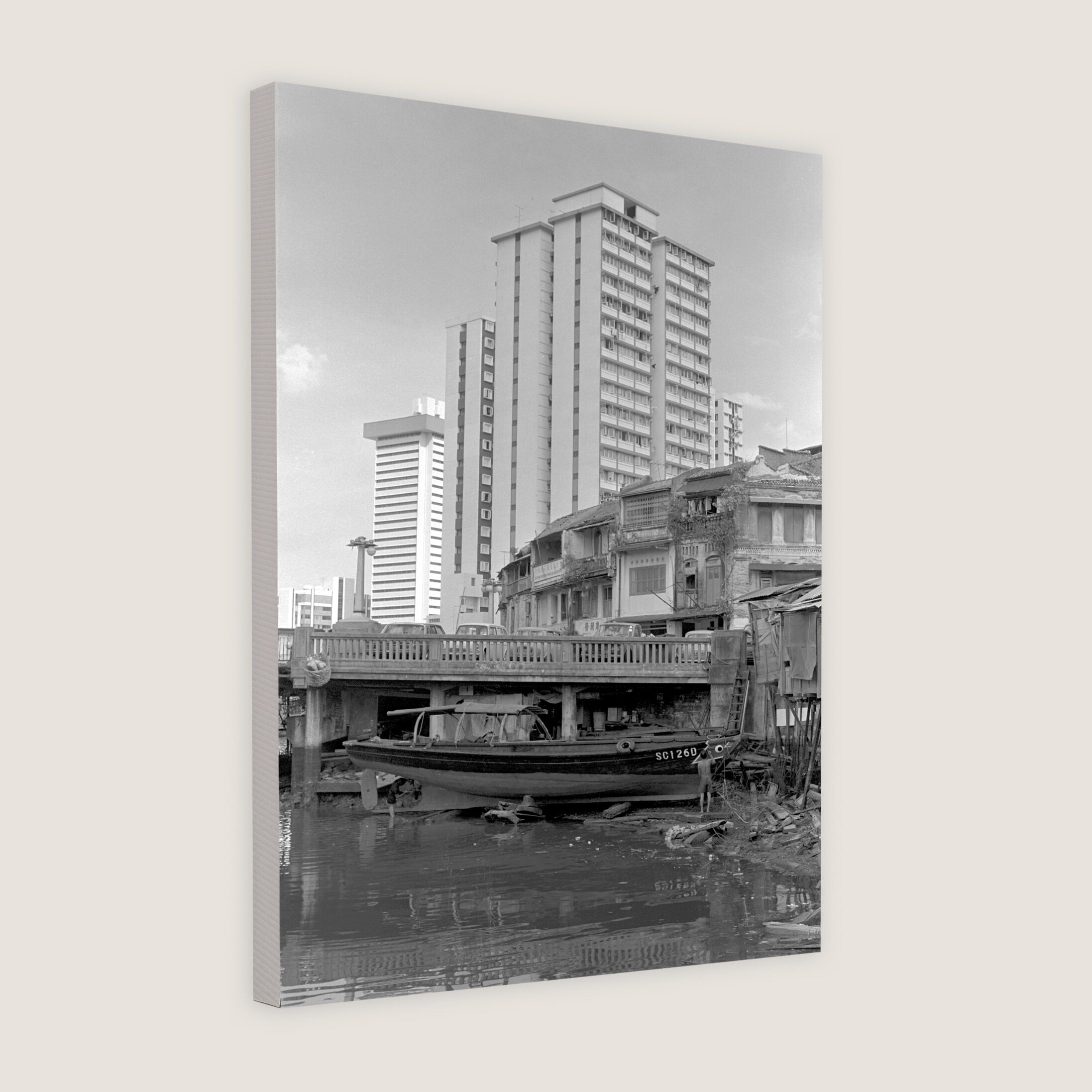
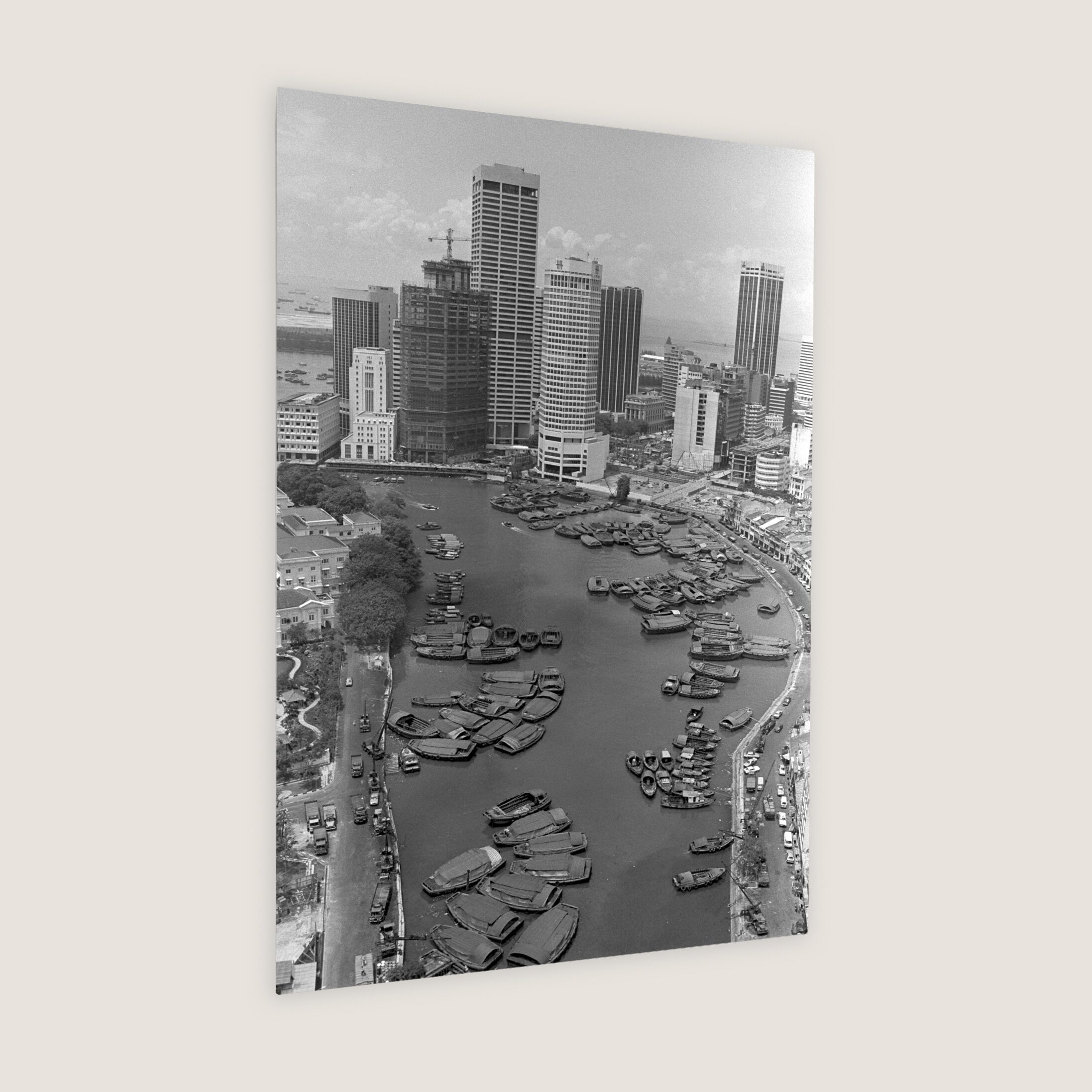
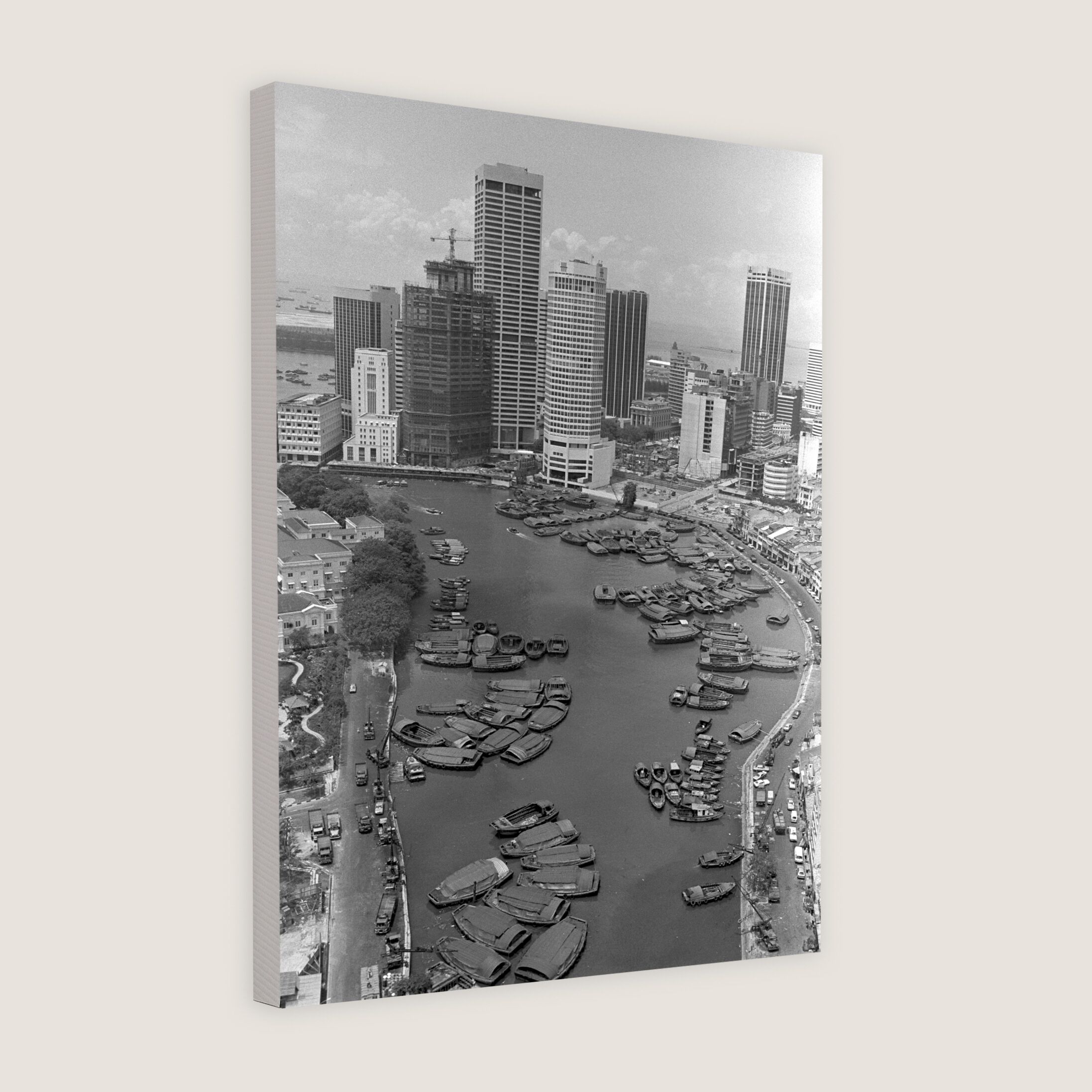
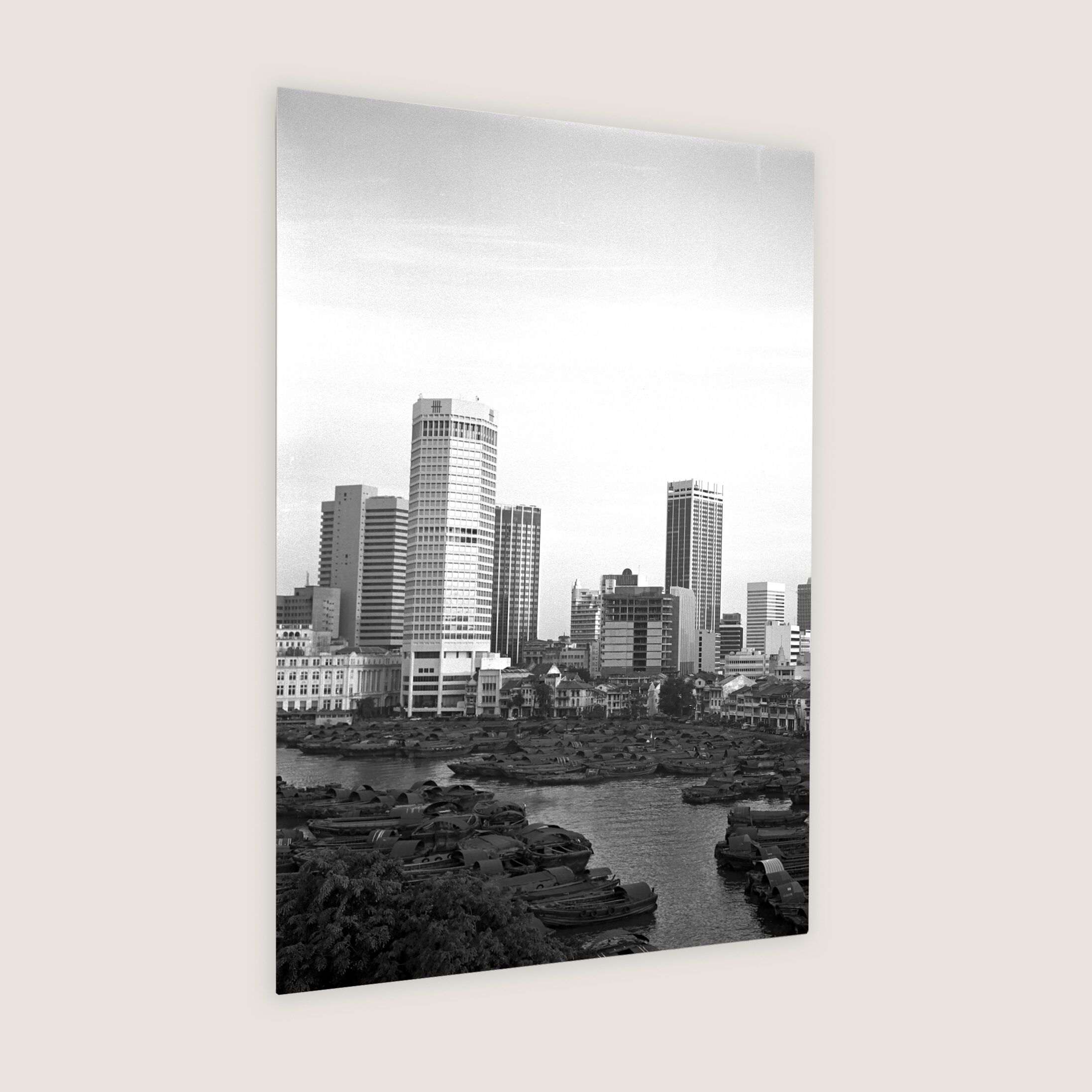
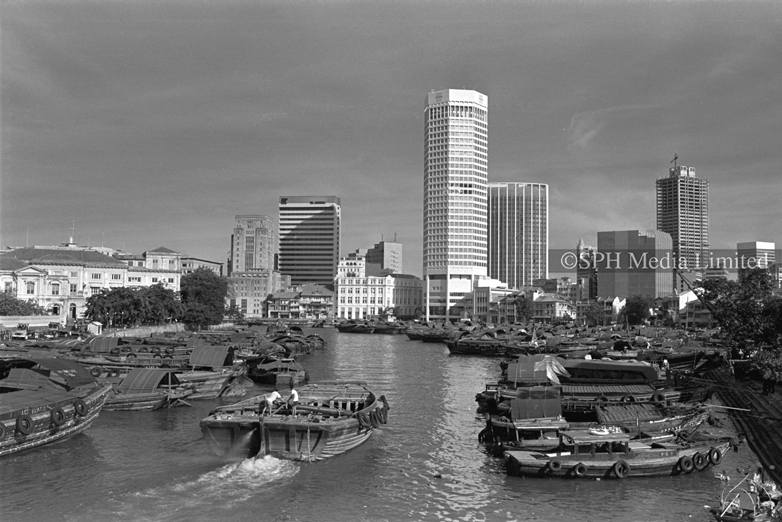
The Singapore River along Boat Quay in 1974 is the hub of commercial and financial activities. The Singapore River was given new life when it underwent a large-scale clean-up transforming into the Singapore River we know today.
Before the Big River Clean-Up
Year 1974
The Singapore River along Boat Quay in 1974 is the hub of commercial and financial activities. The Singapore River was given new life when it underwent a large-scale clean-up transforming into the Singapore River we know today.
©️ SPH Media Limited
Share to
Tags
Available for print on products
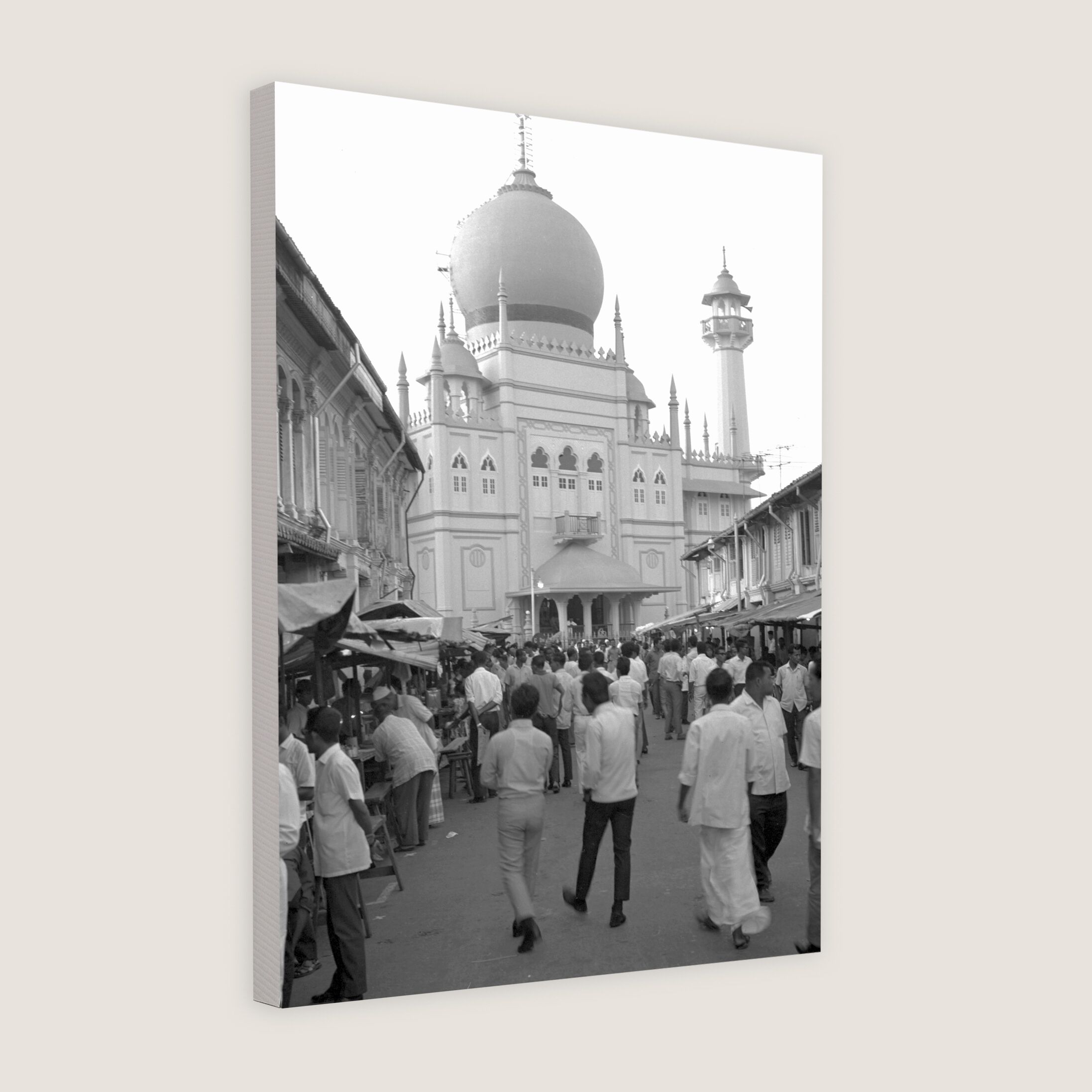
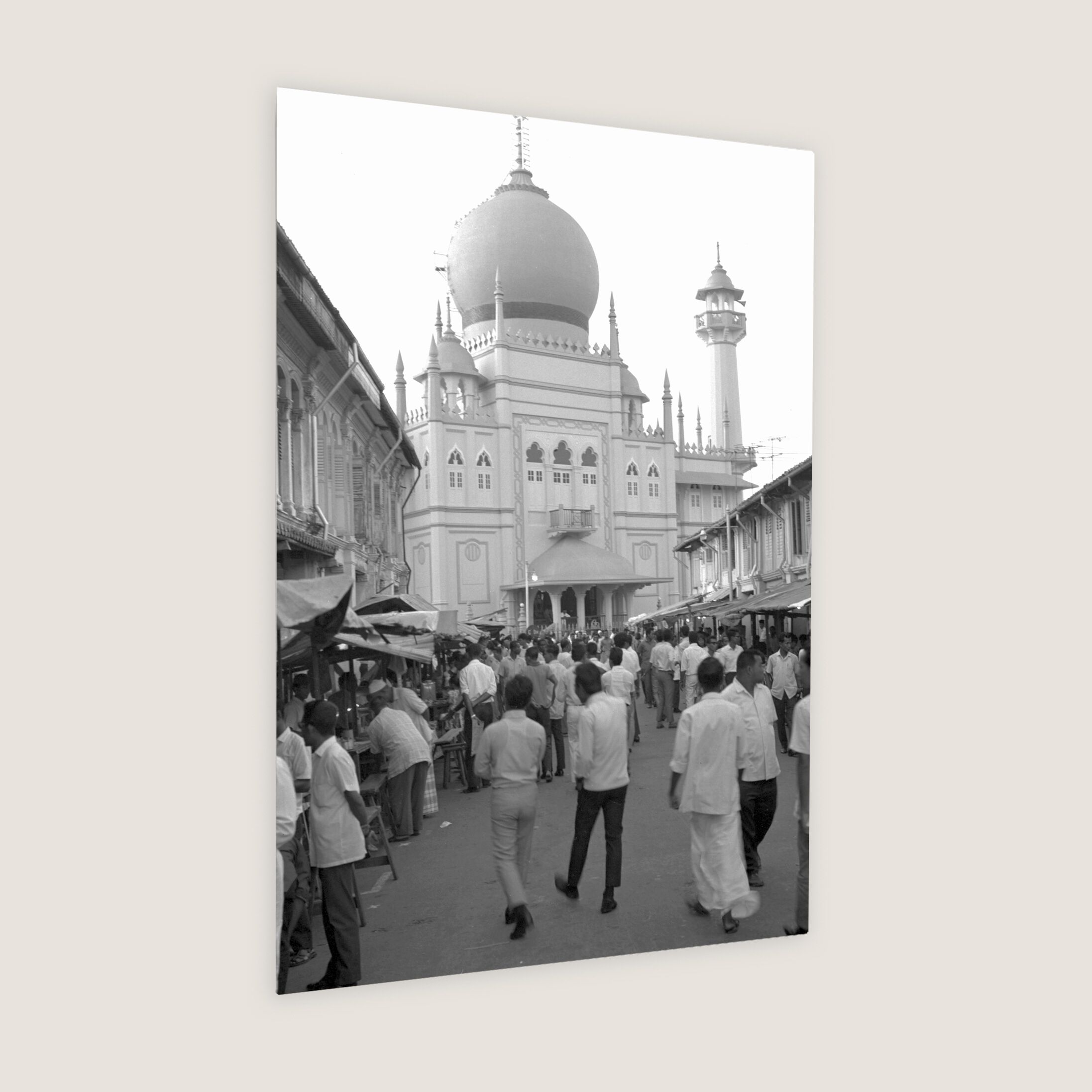
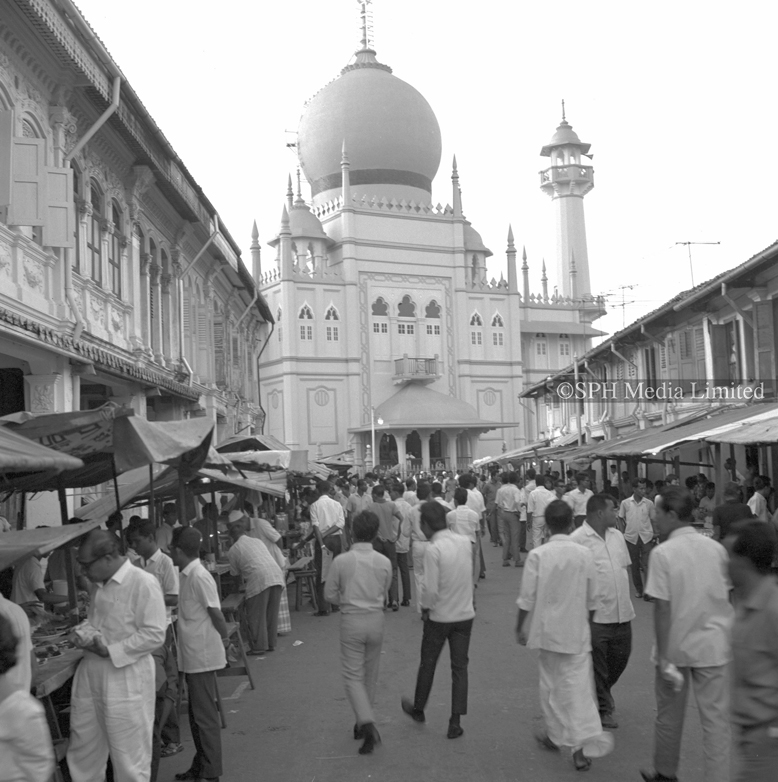 Busy Bussorah Street
1967
Busy Bussorah Street
1967
Busy Bussorah Street
Year 1967
The busy Busorrah street during the Muslim fasting month of Ramadhan. Behind stands the famous Sultan Mosque
©️ SPH Media Limited
Share to
Tags
Available for print on products
Before the Big River Clean-up
1974
Before the Big River Clean-up
Year 1974
The Singapore River along Boat Quay in 1974 is the hub of commercial and financial activities. The Singapore River was given new life when it underwent a large-scale clean-up, transforming into the Singapore River we know today.
©️ SPH Media Limited
Share to
Tags
Available for print on products
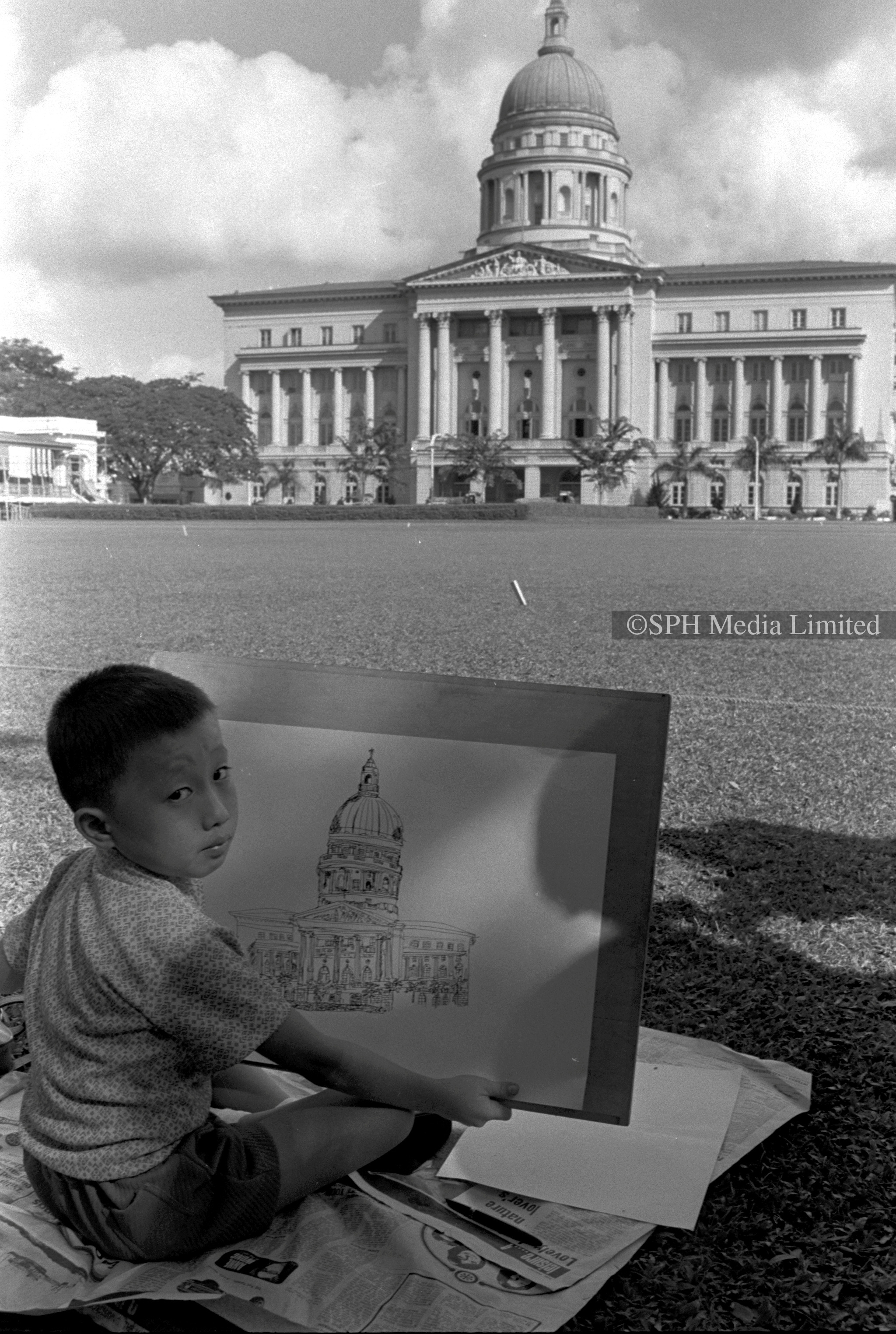 Drawing the Supreme Court
1973
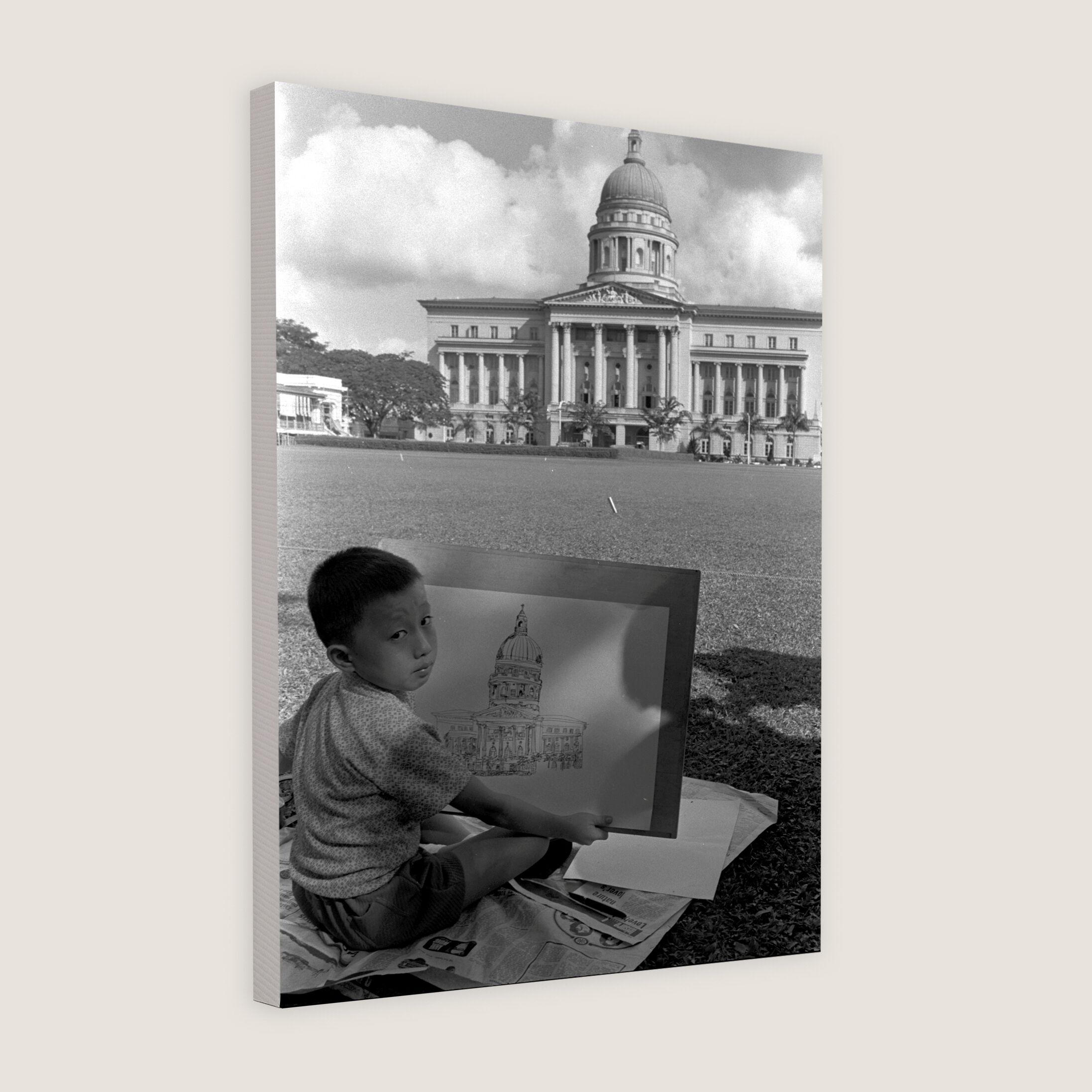
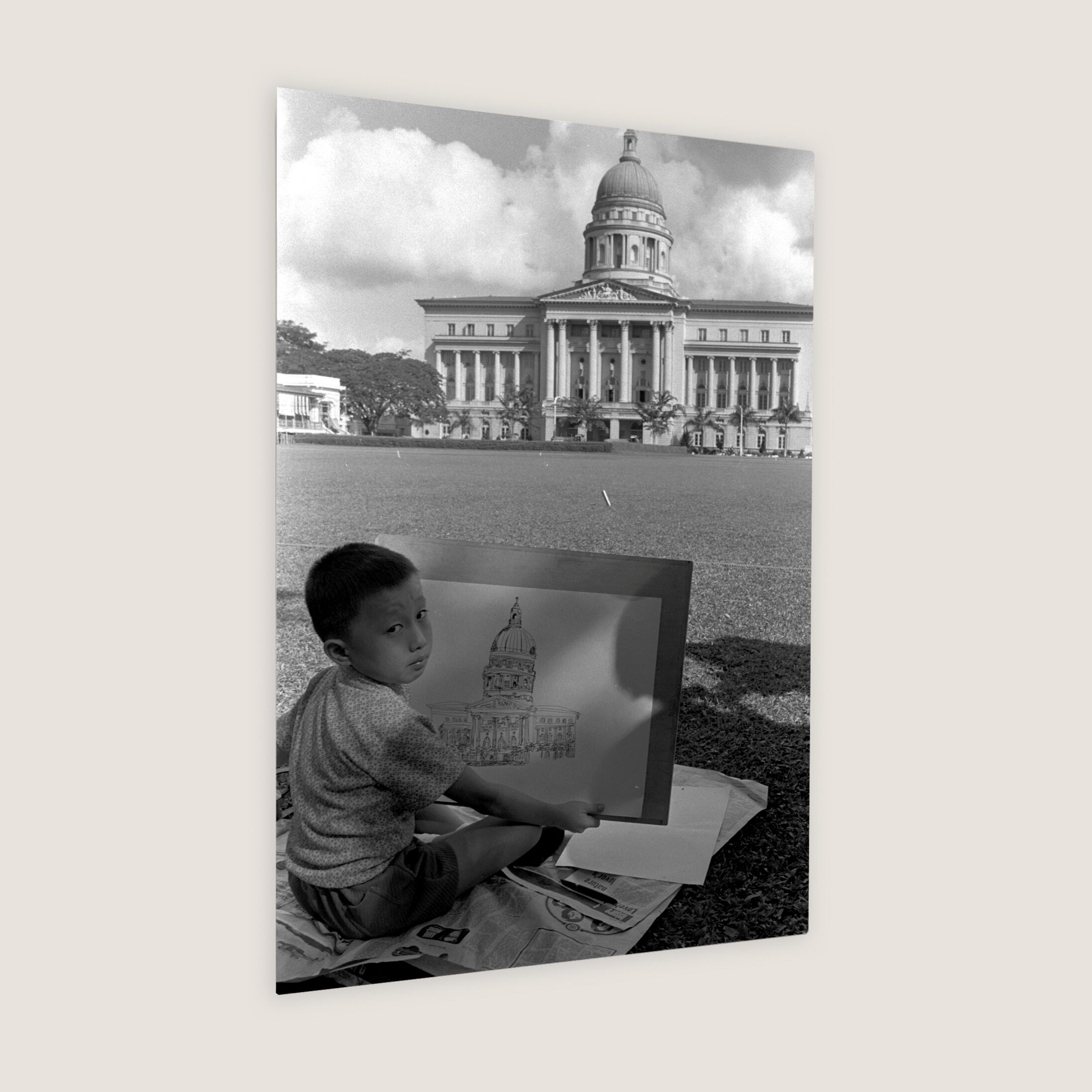
Drawing the Supreme Court
1973
Drawing the Supreme Court
Year 1973
Amidst the Singapore National On-The-Spot Drawing and Painting competition at Esplanade, a young boy is proudly showing his exemplary drawing of the grey monument of justice, the Supreme Court building. This building is currently the National Gallery of Singapore.
©️ SPH Media Limited
Share to
Tags
Available for print on products
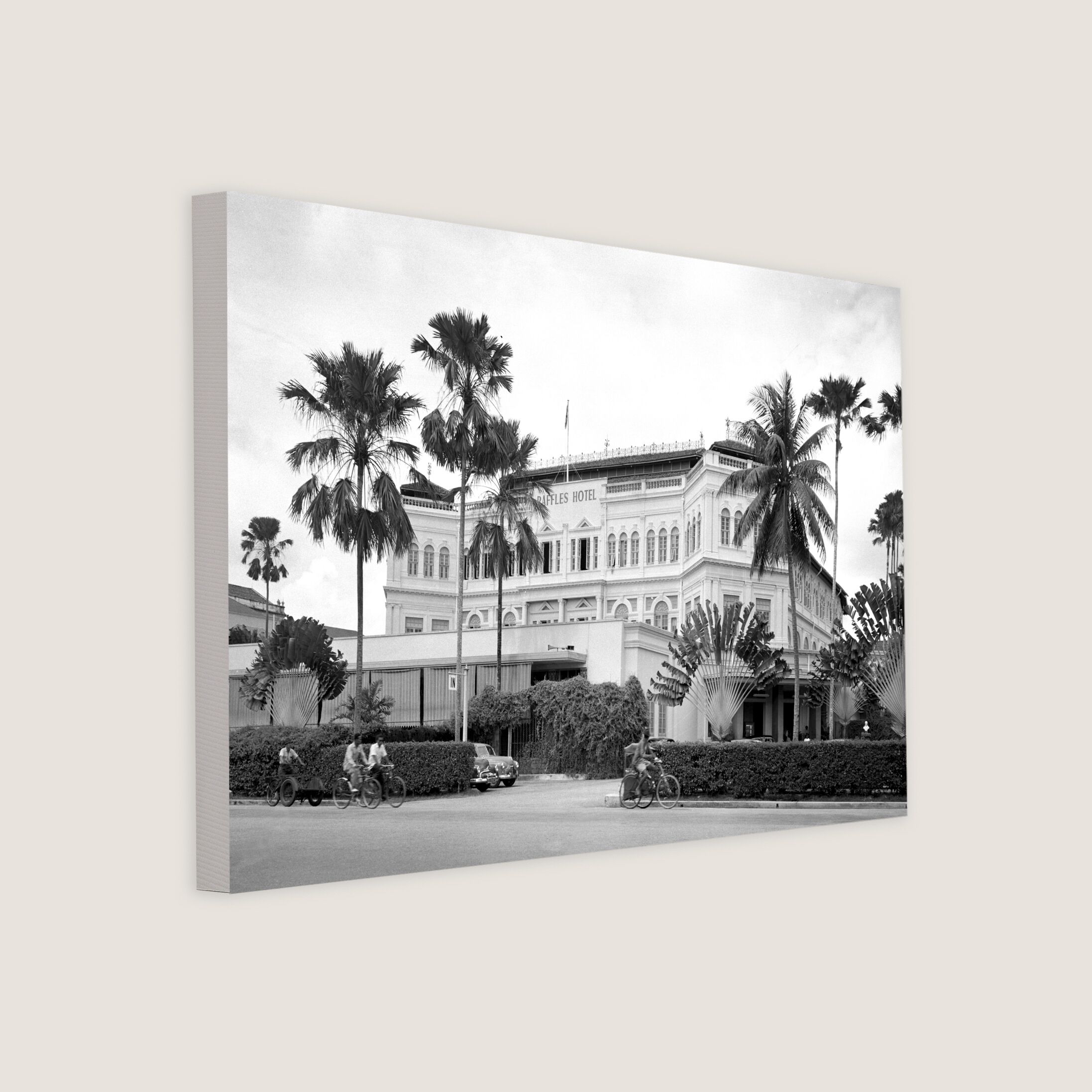
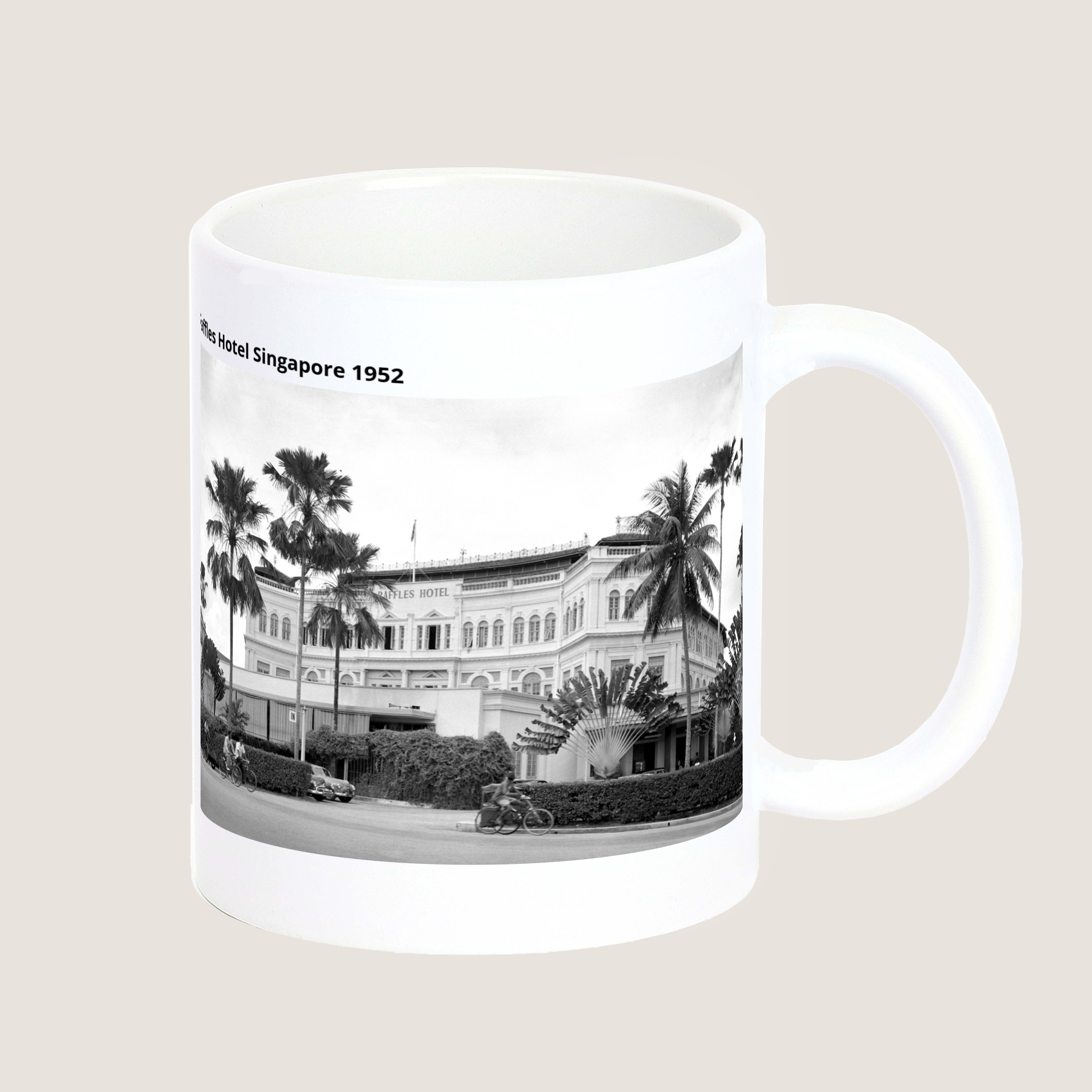
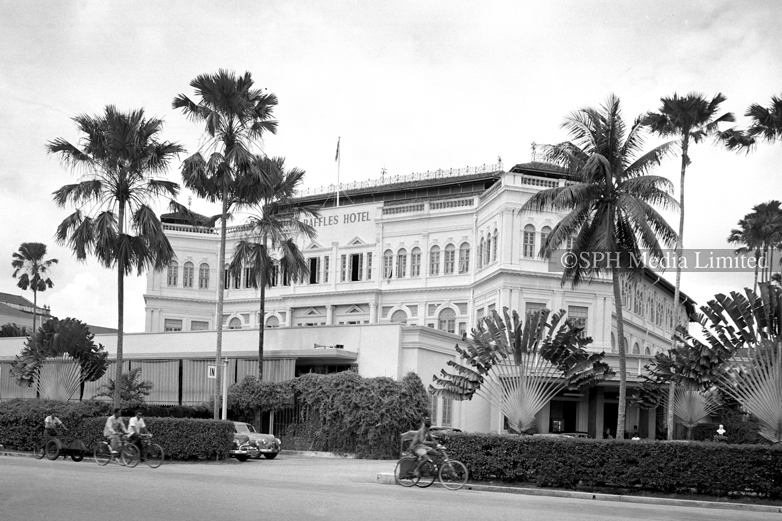 Raffles Hotel Singapore
1952
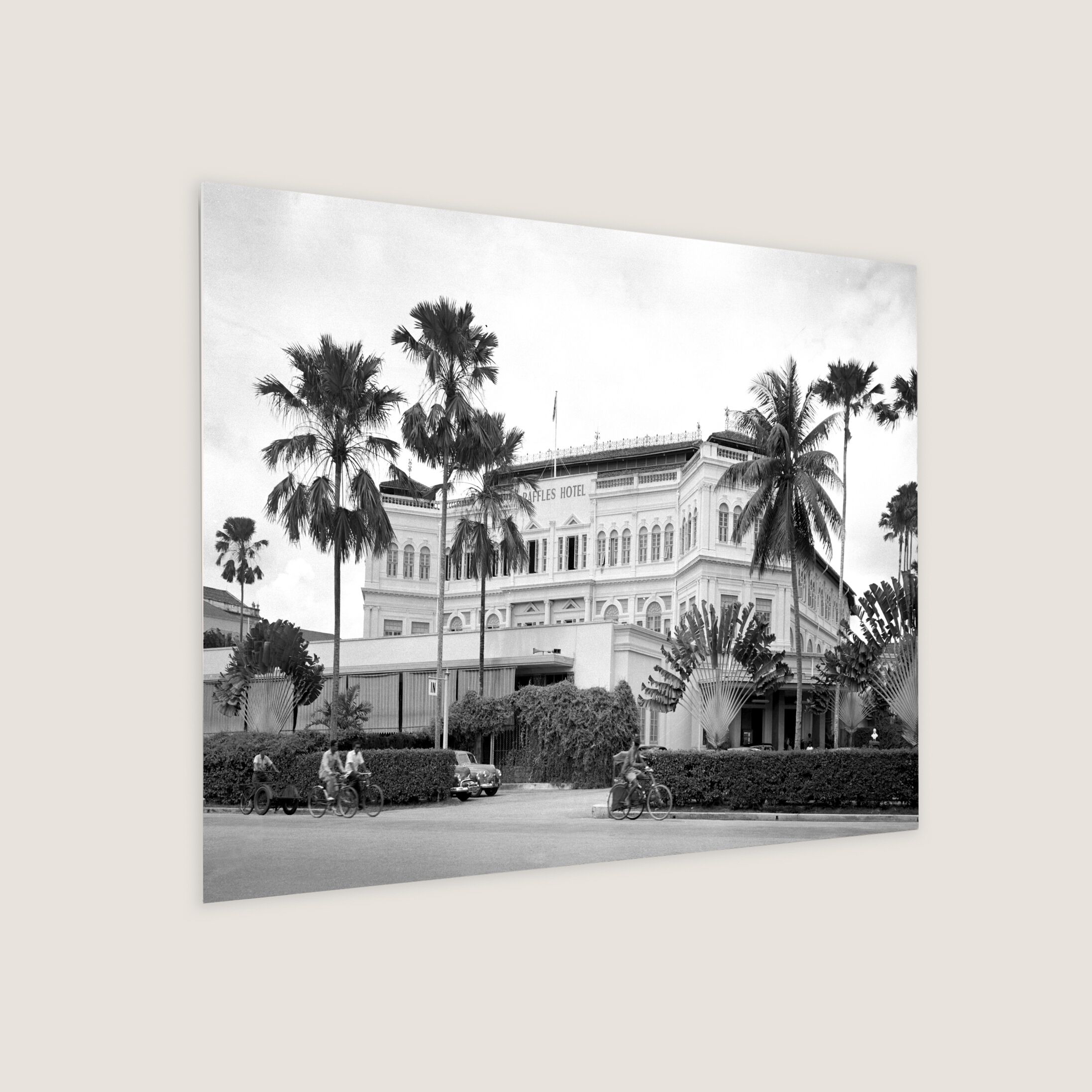
Raffles Hotel Singapore
1952
Raffles Hotel Singapore
Year 1952
Here is Raffles Hotel Singapore at Beach Road in 1952. Opened in 1887, it is one of the few remaining 19th century hotels in the world. Once, a tiger was found seeking shelter in Raffles Hotel, after escaping the circus.
©️ SPH Media Limited
Share to
Tags
Available for print on products
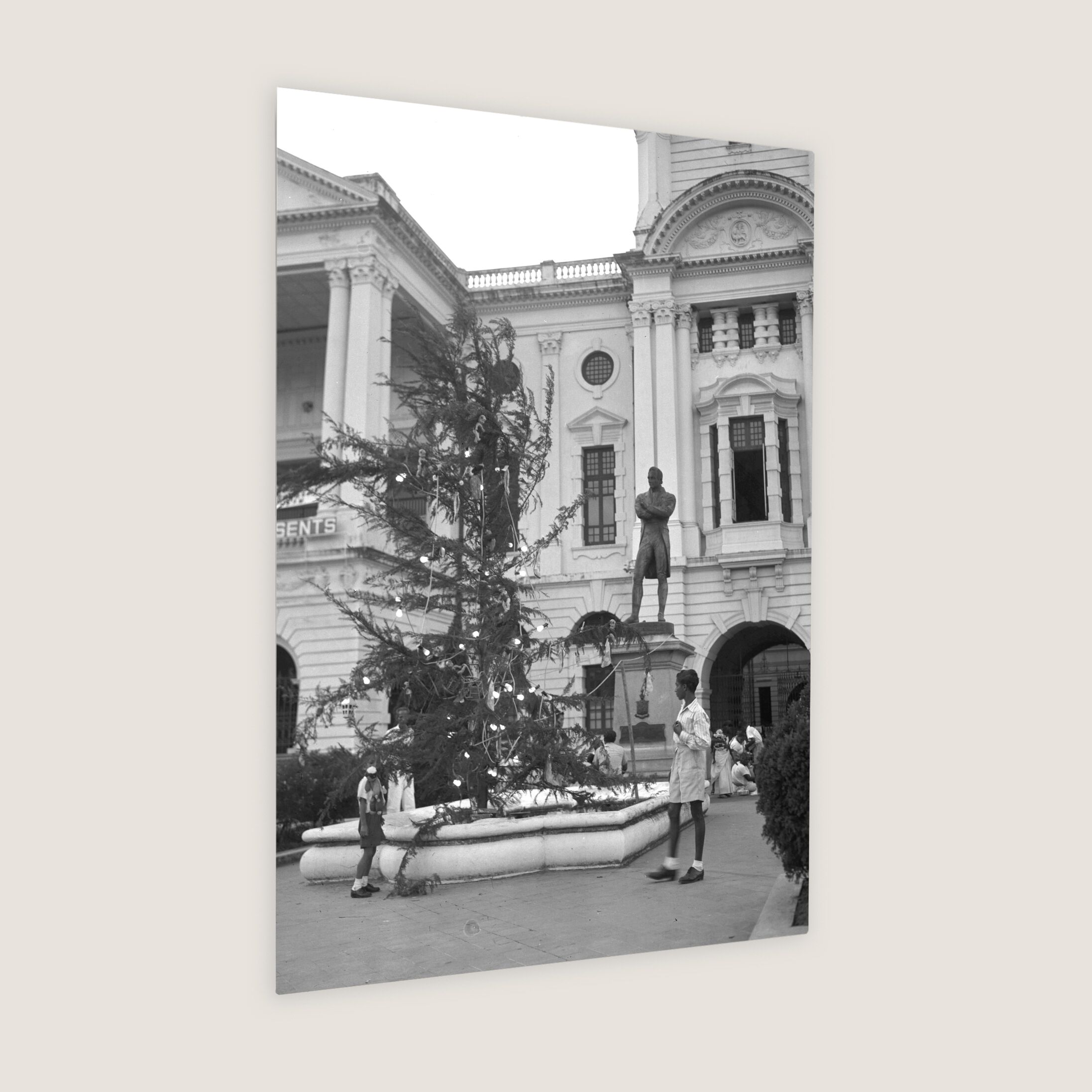
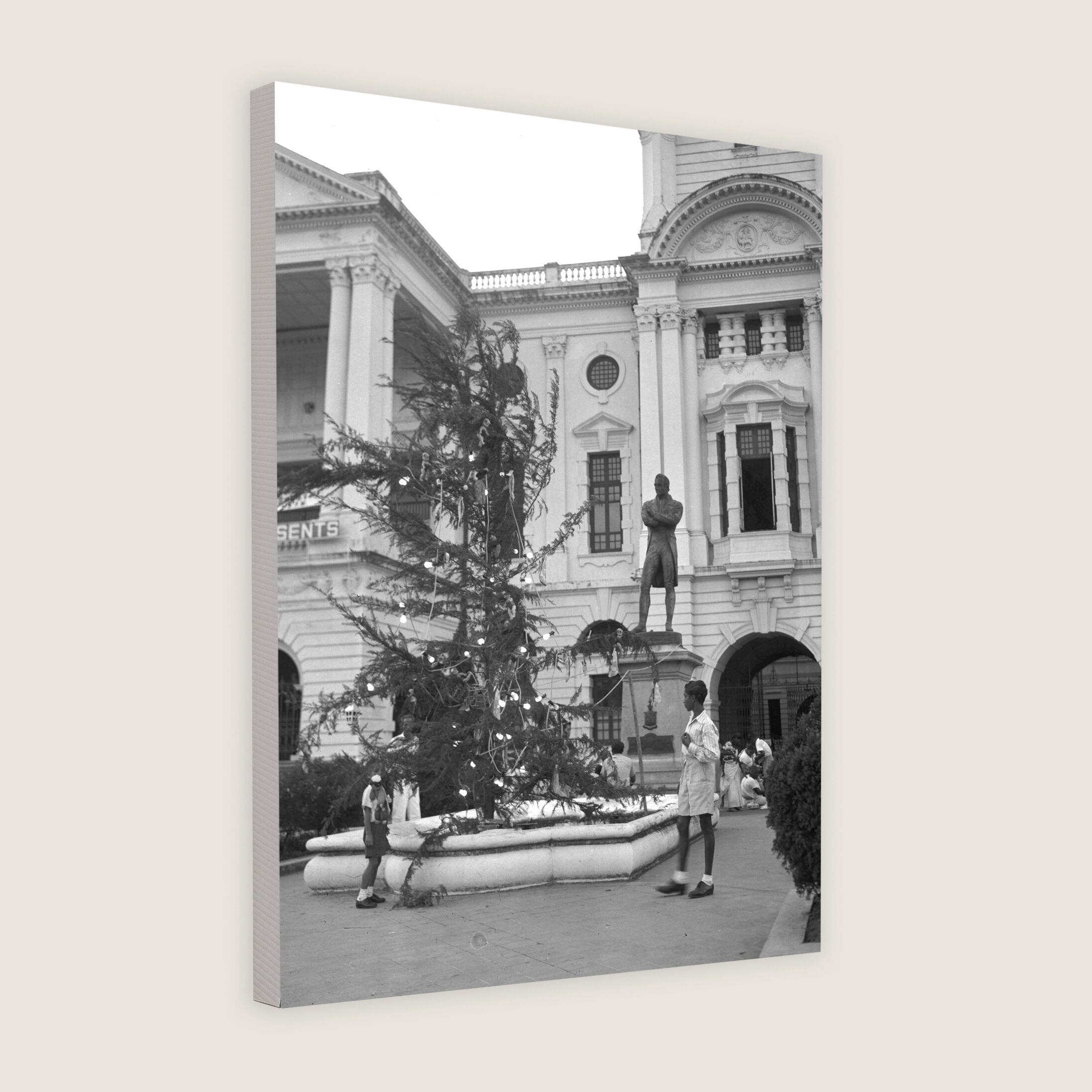
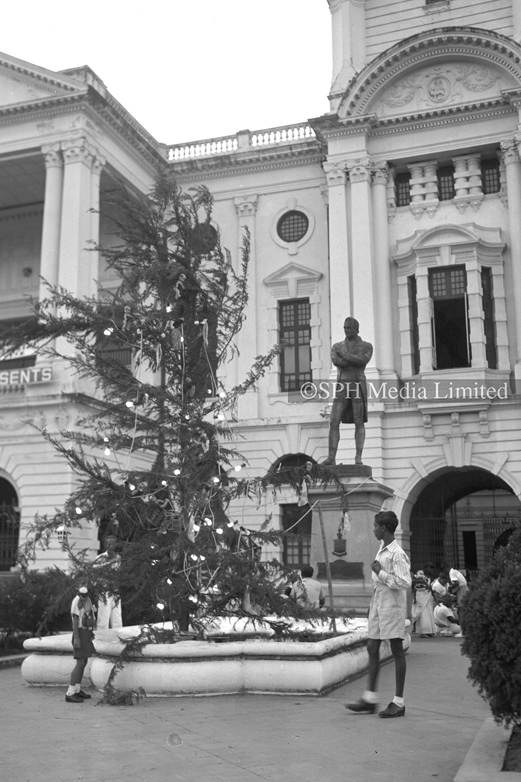 Christmas Celebration at Victoria Memorial Hall
1952
Christmas Celebration at Victoria Memorial Hall
1952
Christmas Celebration at Victoria Memorial Hall
Year 1952
The Raffles statue used to be at Padang, before it was shifted to the Victoria Memorial Hall in 1919.
©️ SPH Media Limited
Share to
Tags
Available for print on products
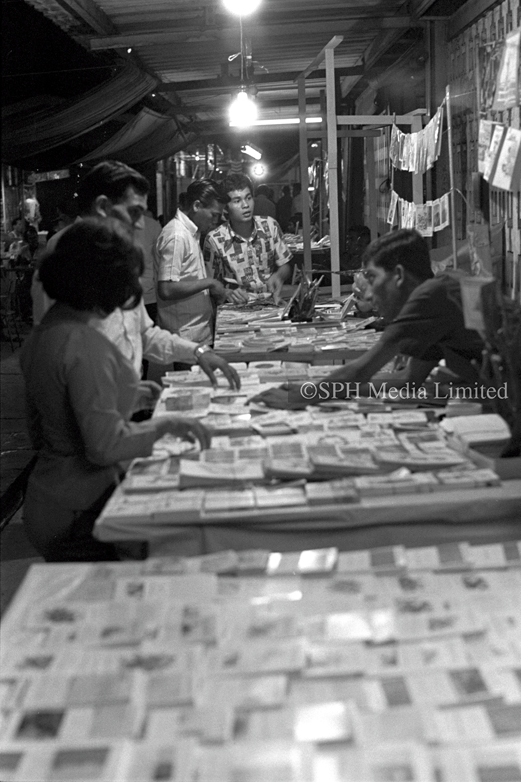 Hari Raya Shopping at Geylang Serai
1970
Hari Raya Shopping at Geylang Serai
1970
Hari Raya Shopping at Geylang Serai
Year 1970
The Alsagoff family owned the Perseverance Estate on which the extensive cultivation and growth of lemongrass plants led the settlement area to be known as Geylang Serai (serai meaning “lemongrass” in Malay).
©️ SPH Media Limited
Share to
Tags
Available for print on products
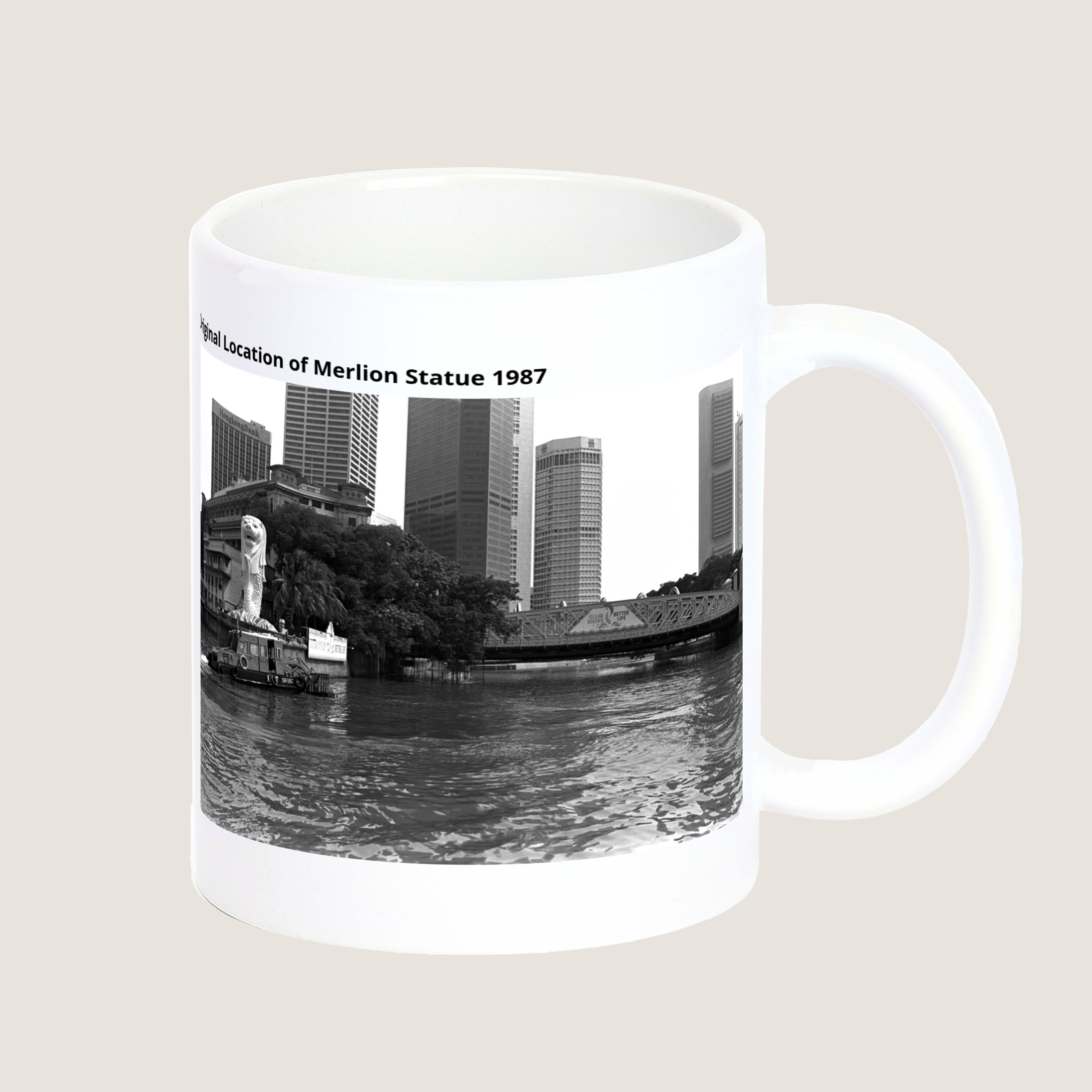
 Original Location of Merlion Statue
1987
Original Location of Merlion Statue
1987
Original Location of Merlion Statue
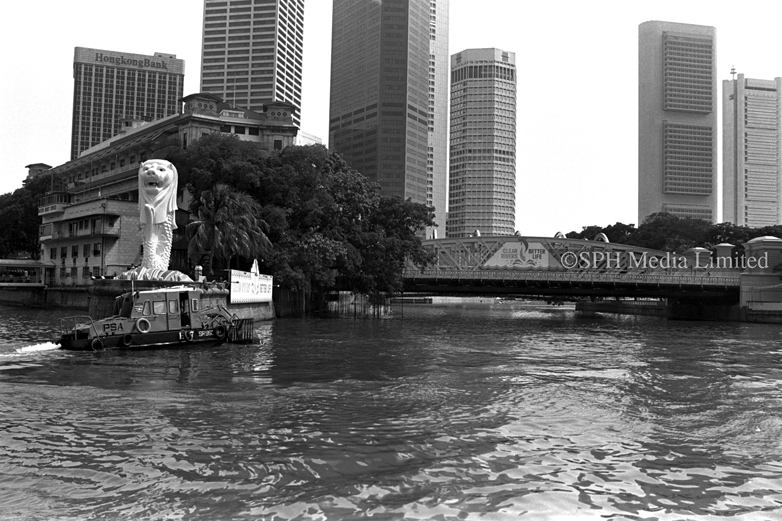
Year 1987
The Merlion park was originally situated at the mouth of the Singapore River, and was unveiled in September 1972. After the completion of the Esplanade Bridge, the view of the Merlion was blocked. In 2002, the Merlion was relocated to its current location.
©️ SPH Media Limited
Share to
Tags
Available for print on products
 Fascinated by Flower Garlands in Little India
1987
Fascinated by Flower Garlands in Little India
1987
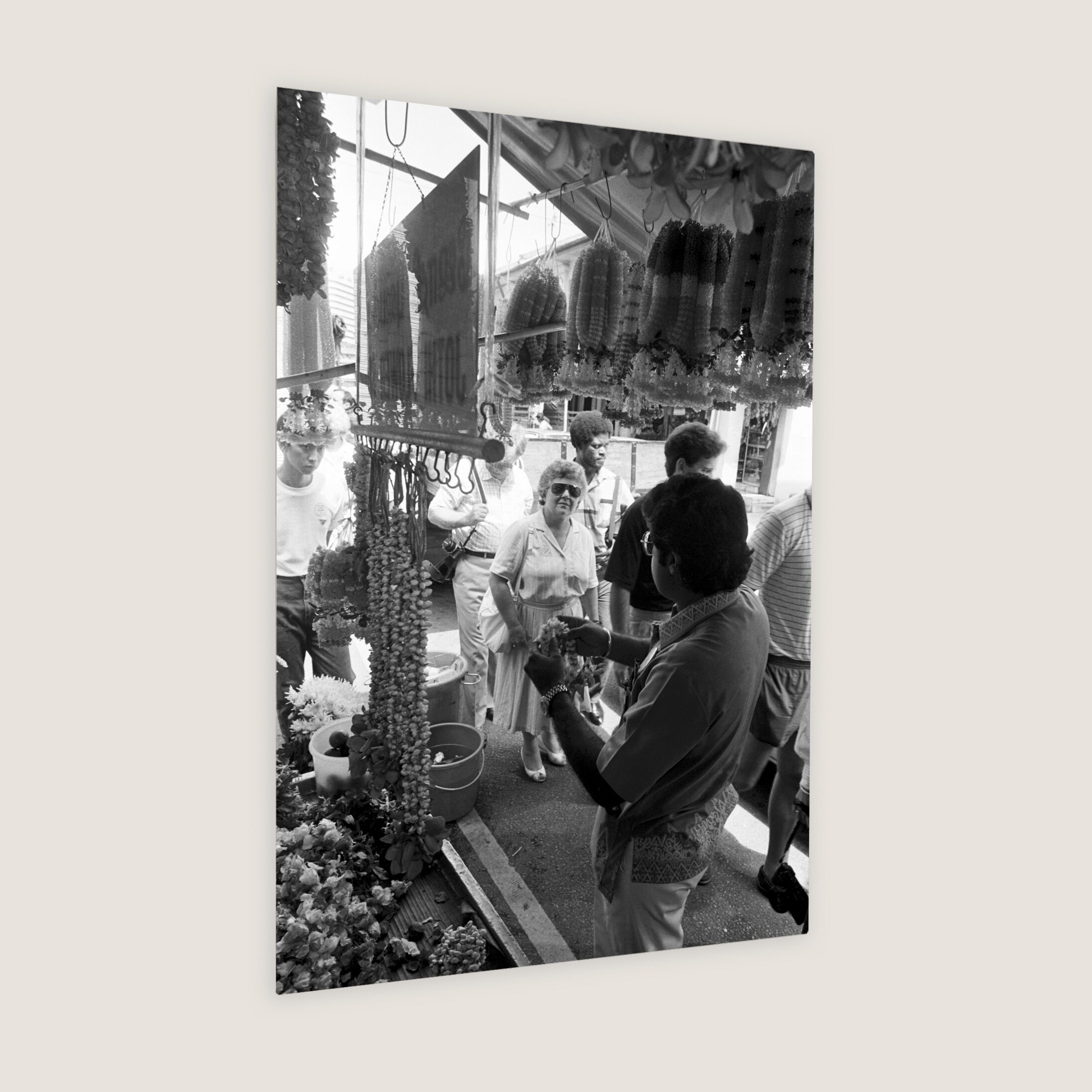
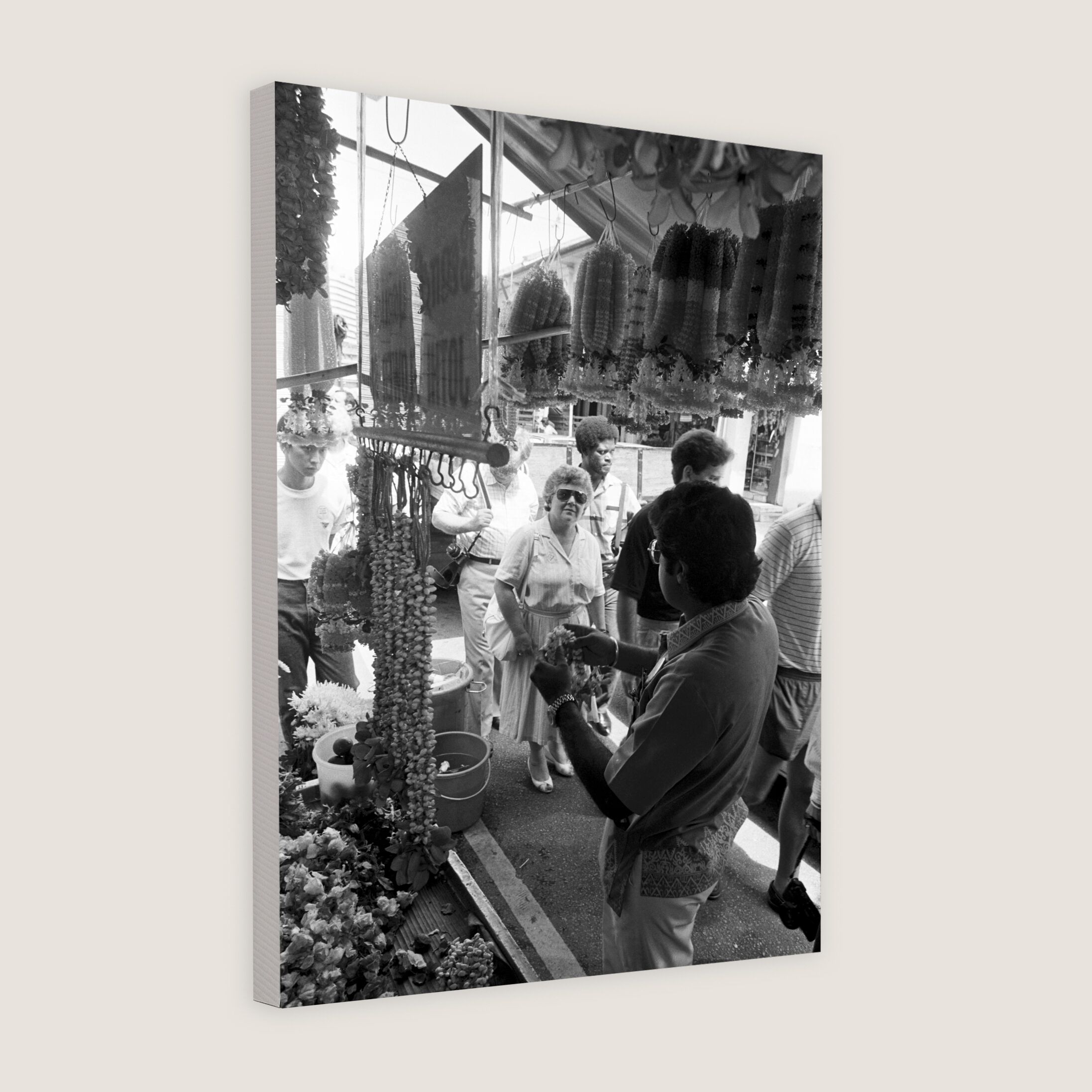
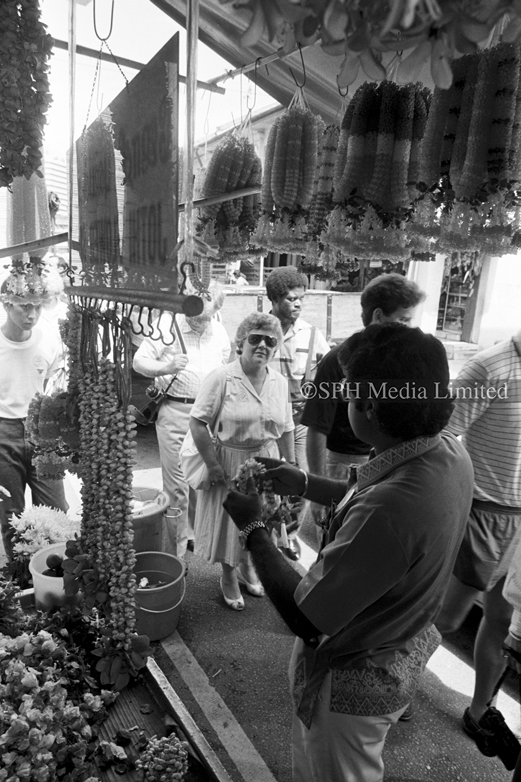
Fascinated by Flower Garlands in Little India
Year 1987
Tourists walking along Little India in Serangoon Road were fascinated by the making of flower garlands. The making and use of flower garlands are primarily associated with the Hindu community in Singapore. Apart from rituals and worship, flower garlands are used in festivals like Pongal and Deepavali, as well as significant life events such as weddings.
©️ SPH Media Limited
Share to
Tags
Available for print on products
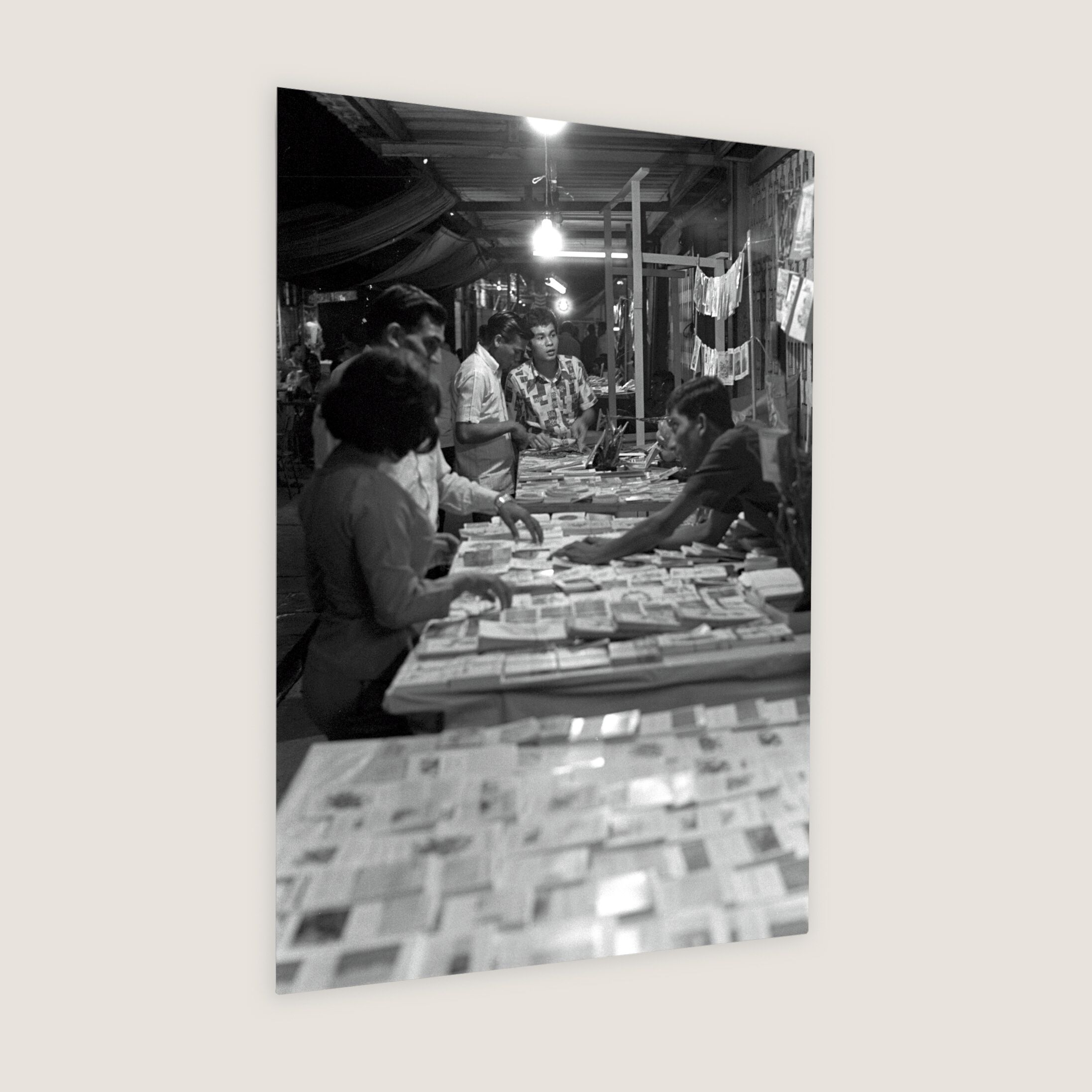
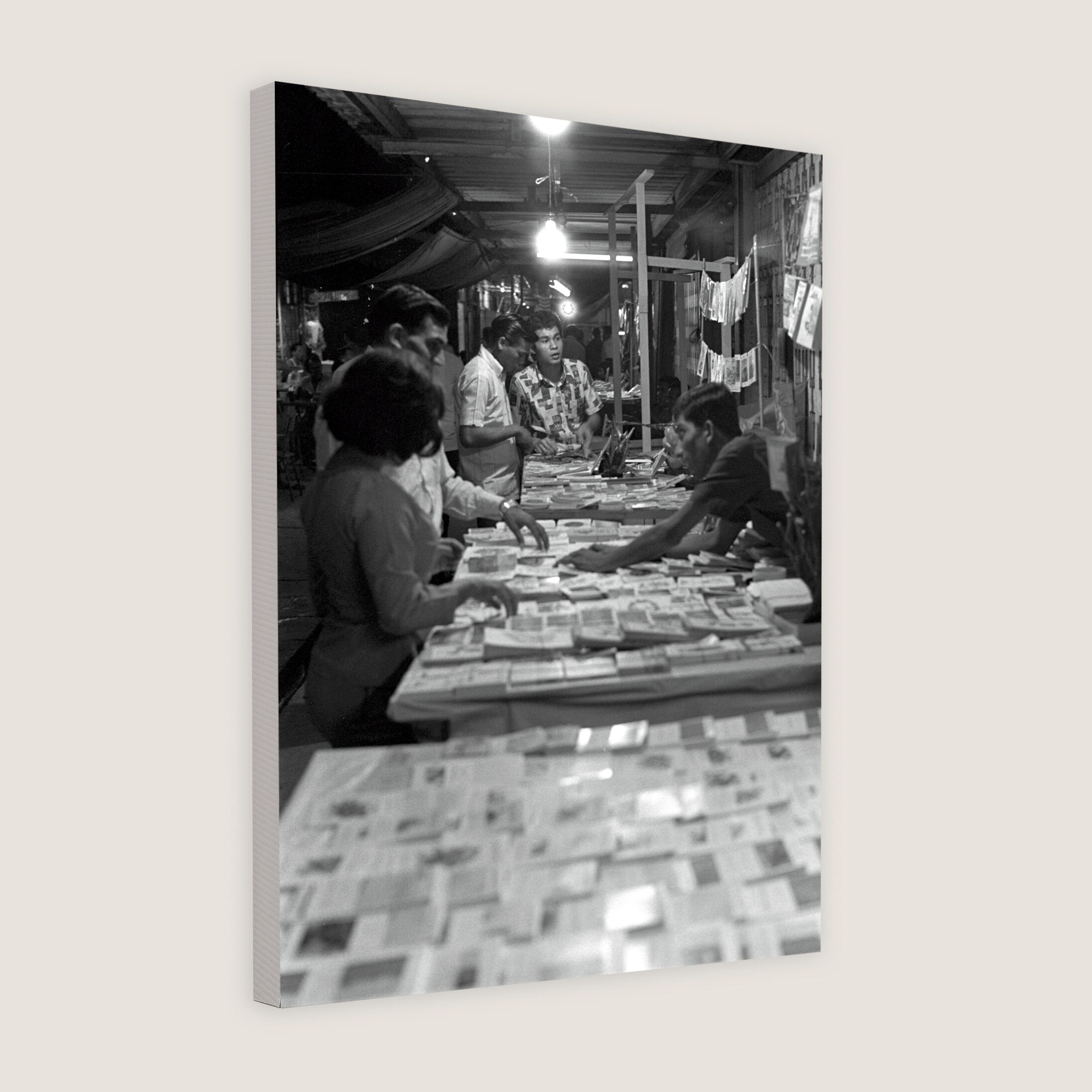
 Pagoda Street Before Chinese New Year
1959
Pagoda Street Before Chinese New Year
1959
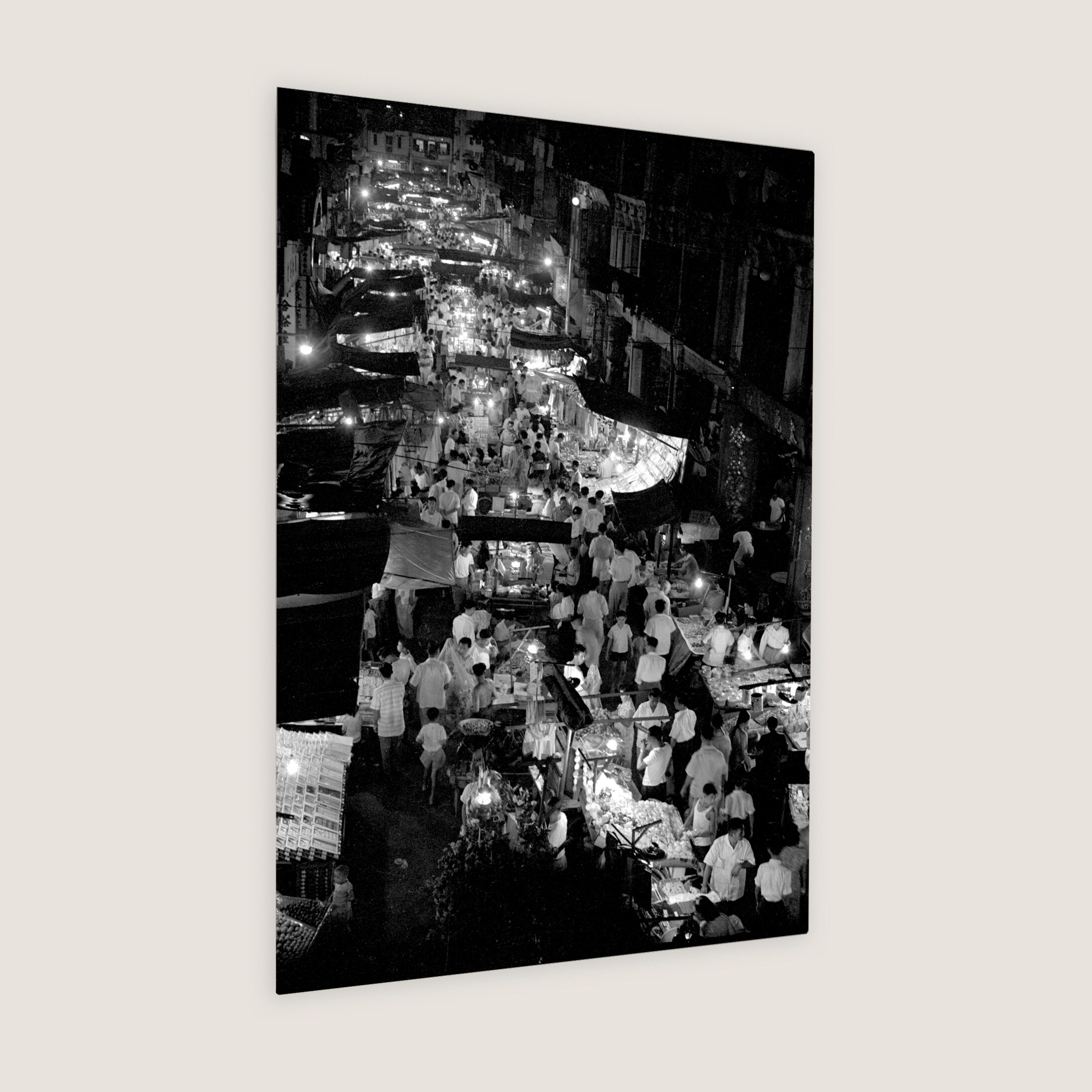
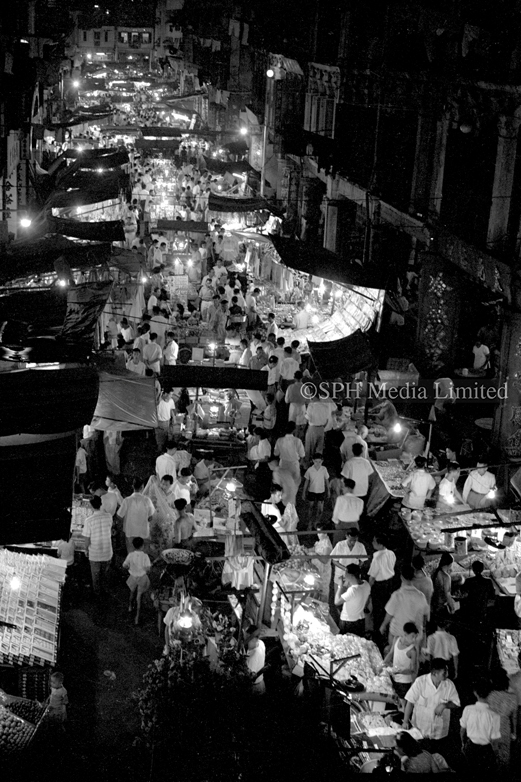
Pagoda Street Before Chinese New Year
Year 1959
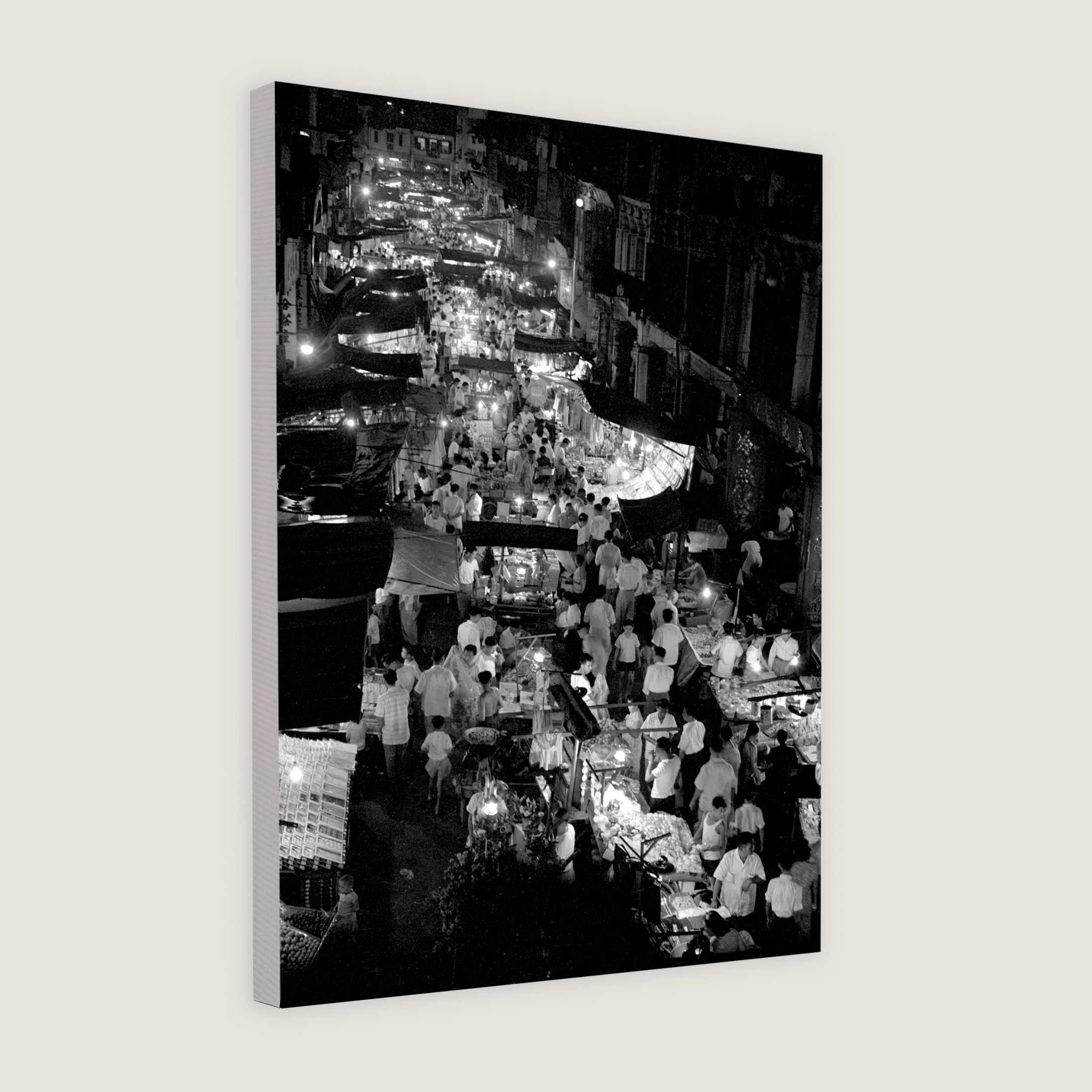
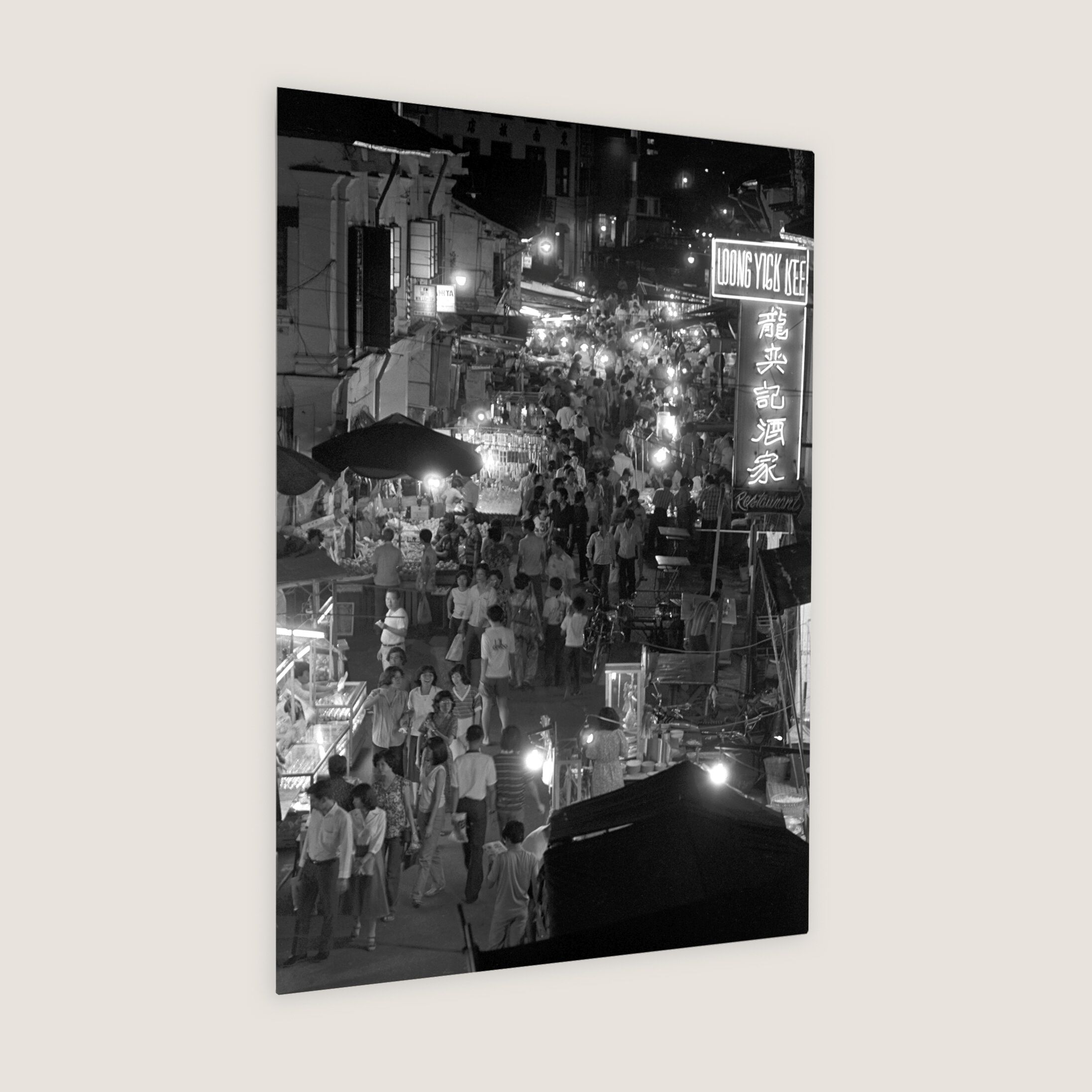
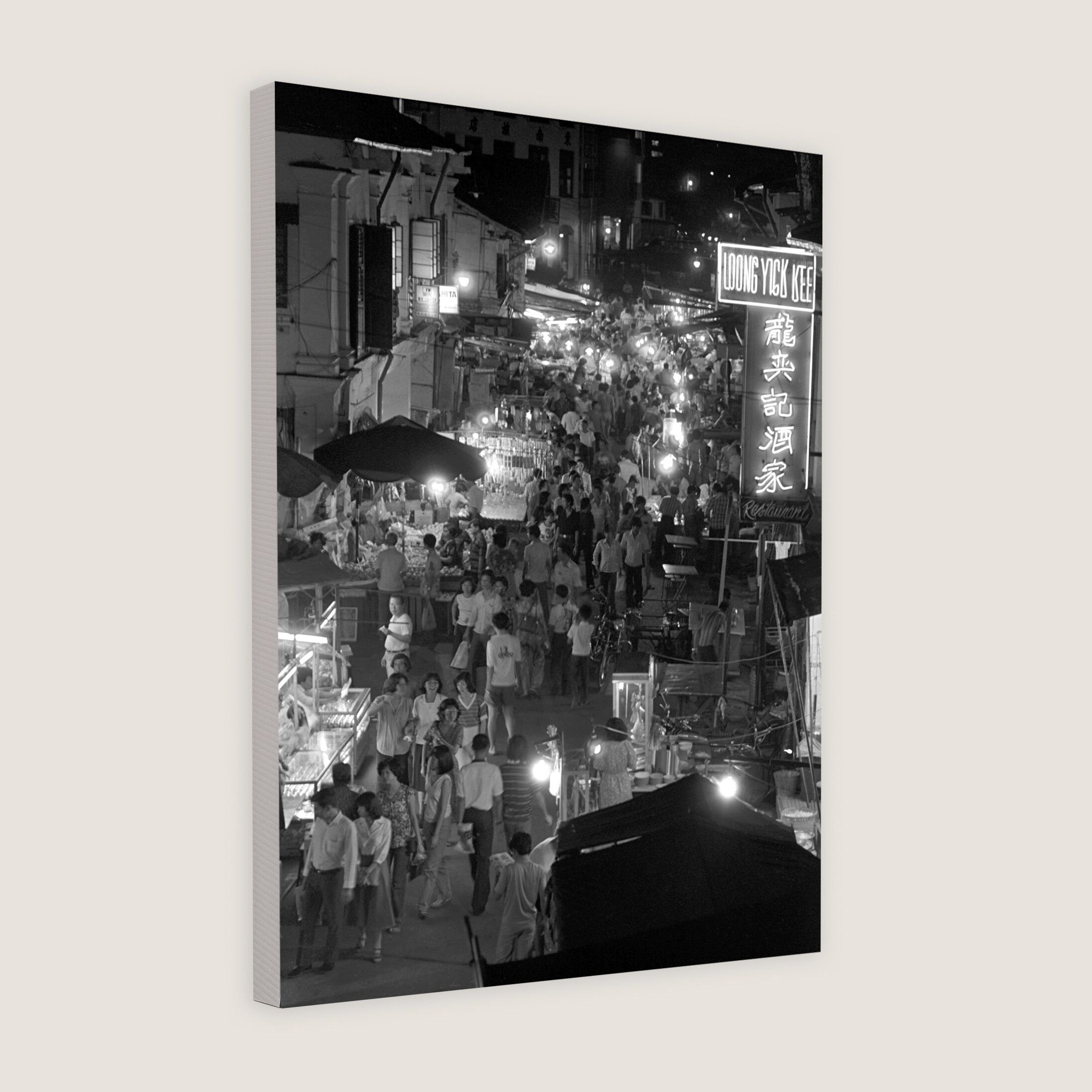
The bustling night scene of hawkers stalls and shoppers in Pagoda Street with just two more days to go before Chinese New Year on Sunday in 1959. Pagoda Street's name originated from the nearby Sri Mariamman Temple, located at the corner of South Bridge Road and Pagoda Street.
©️ SPH Media Limited
Share to
Tags
Available for print on products
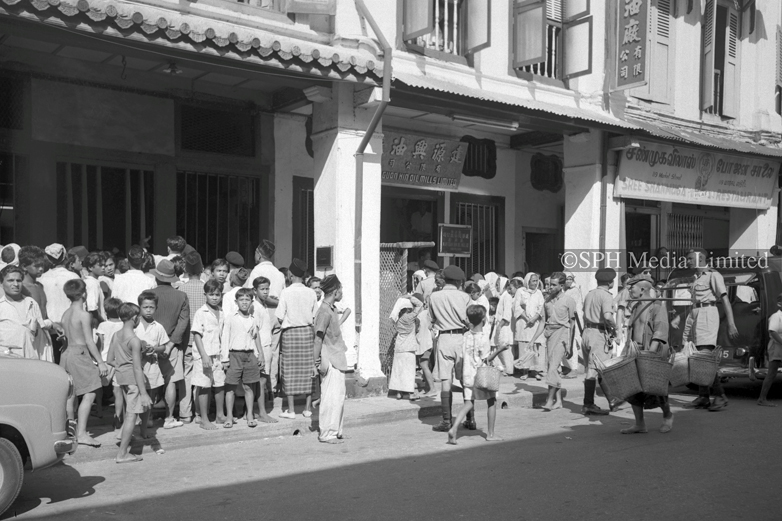 Market Street During Hari Raya
1952
Market Street During Hari Raya
1952
Market Street During Hari Raya
Year 1952
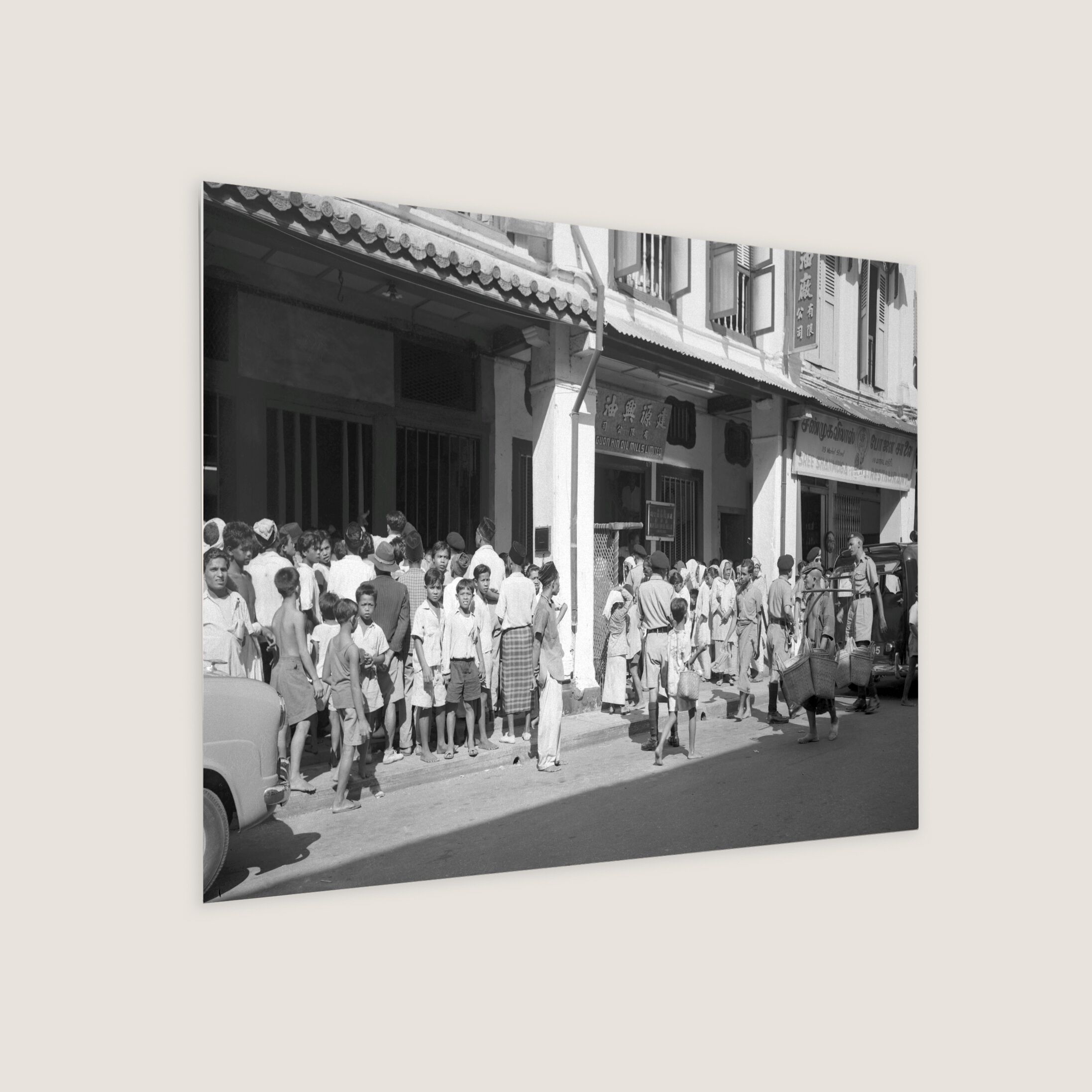
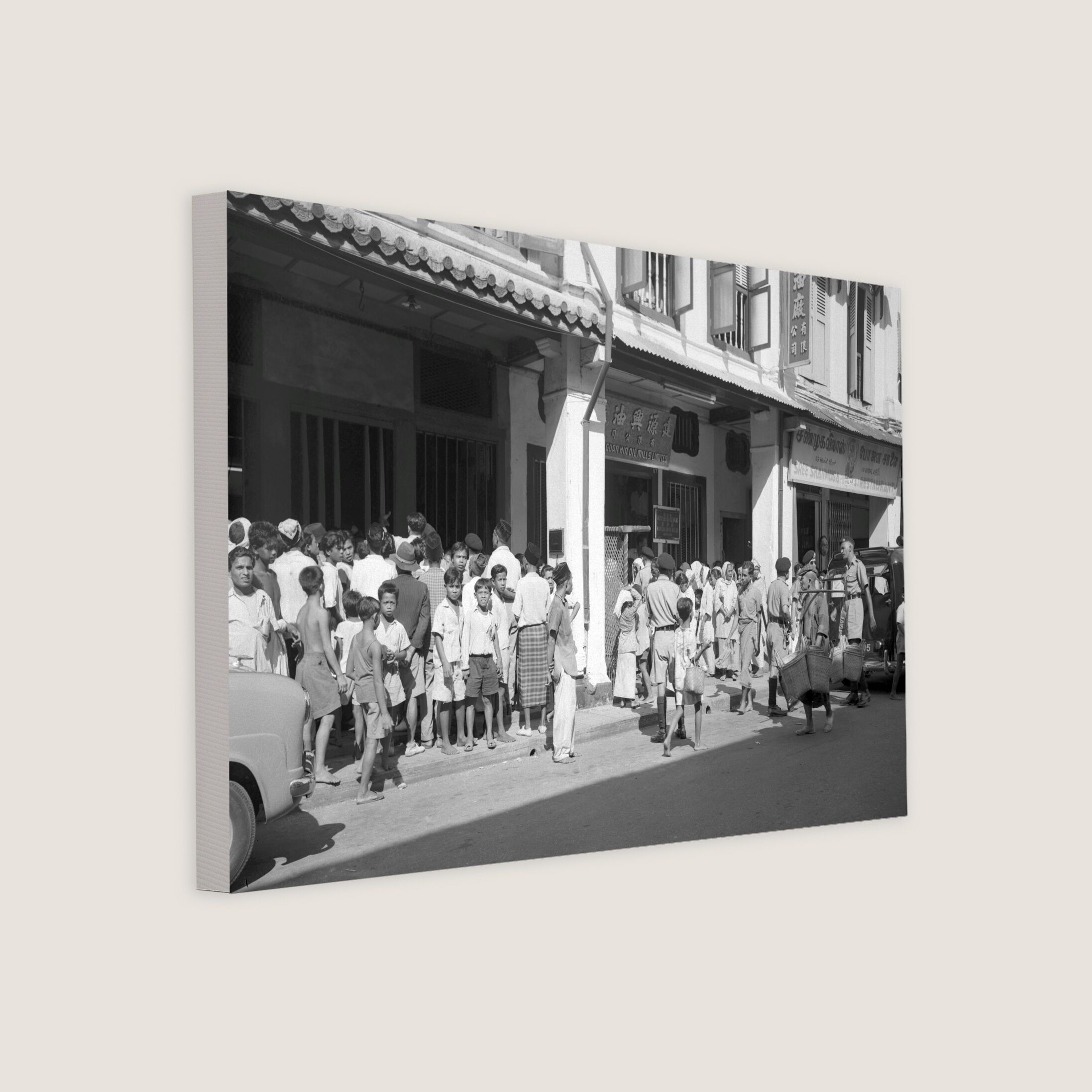
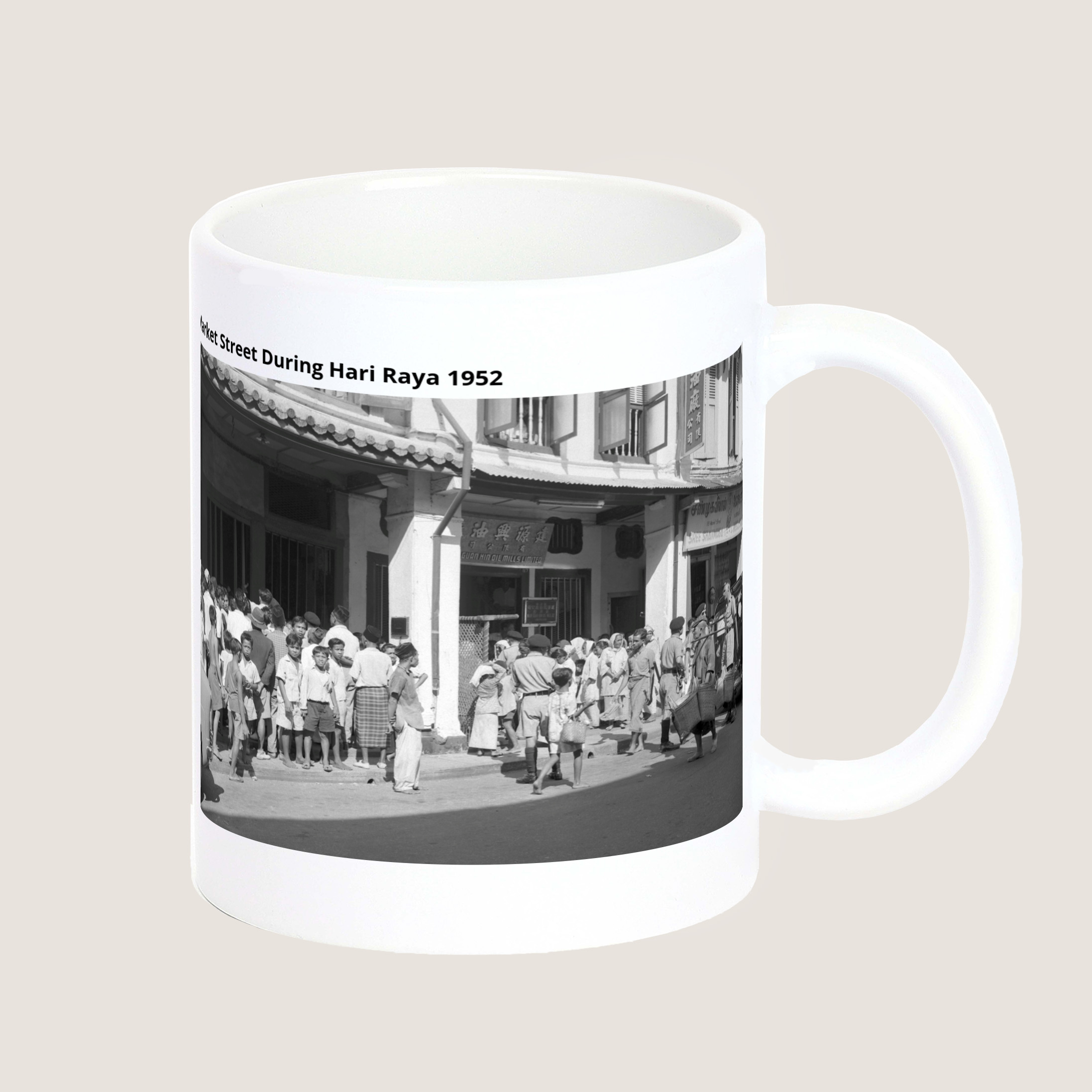
A crowd of people who came from all over Singapore gathered in front of a small shop on Market Street for special Hari Raya gifts. Market Street is considered one of the older streets of Singapore, home to many Indians and Hokkiens.
©️ SPH Media Limited
Share to
Tags
Available for print on products
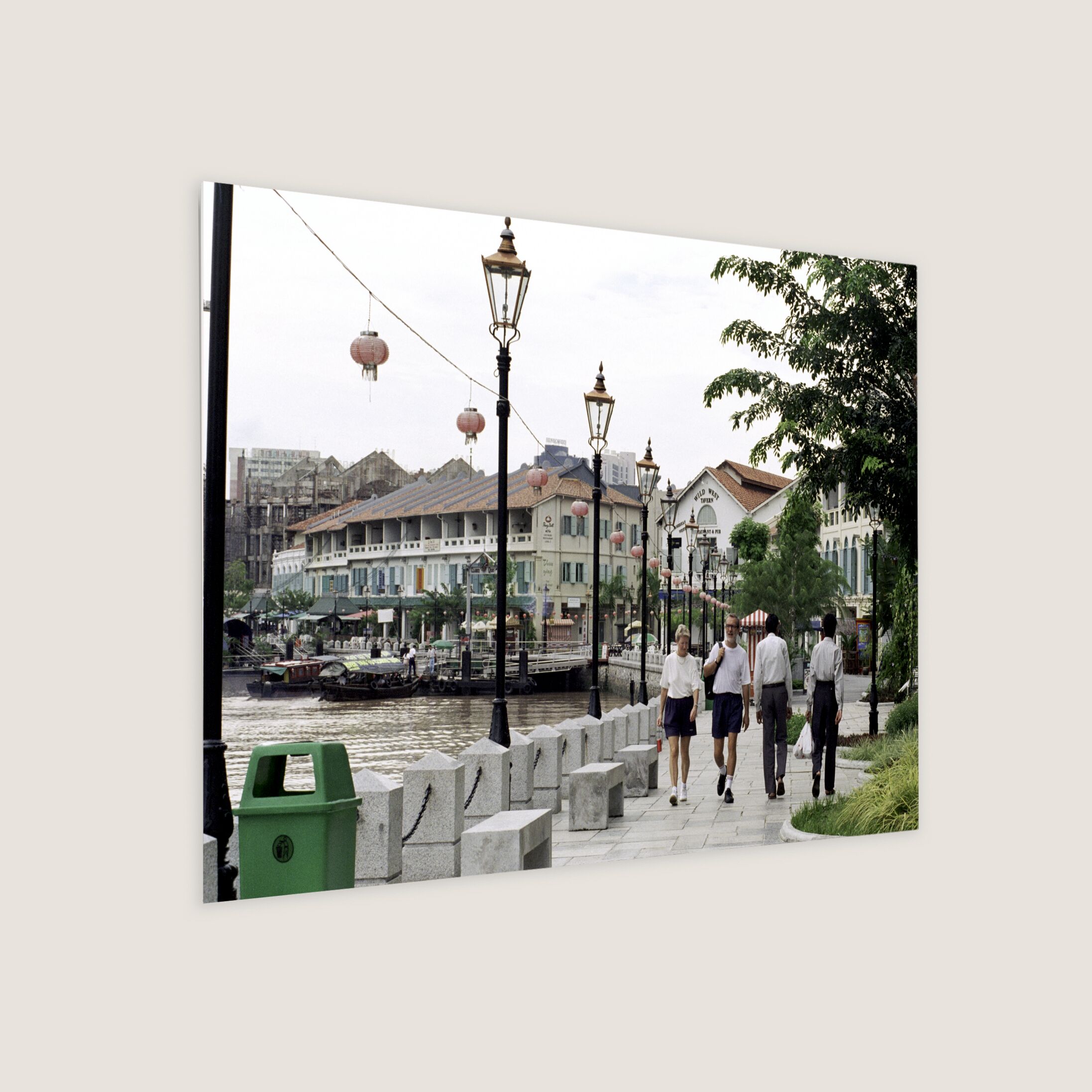
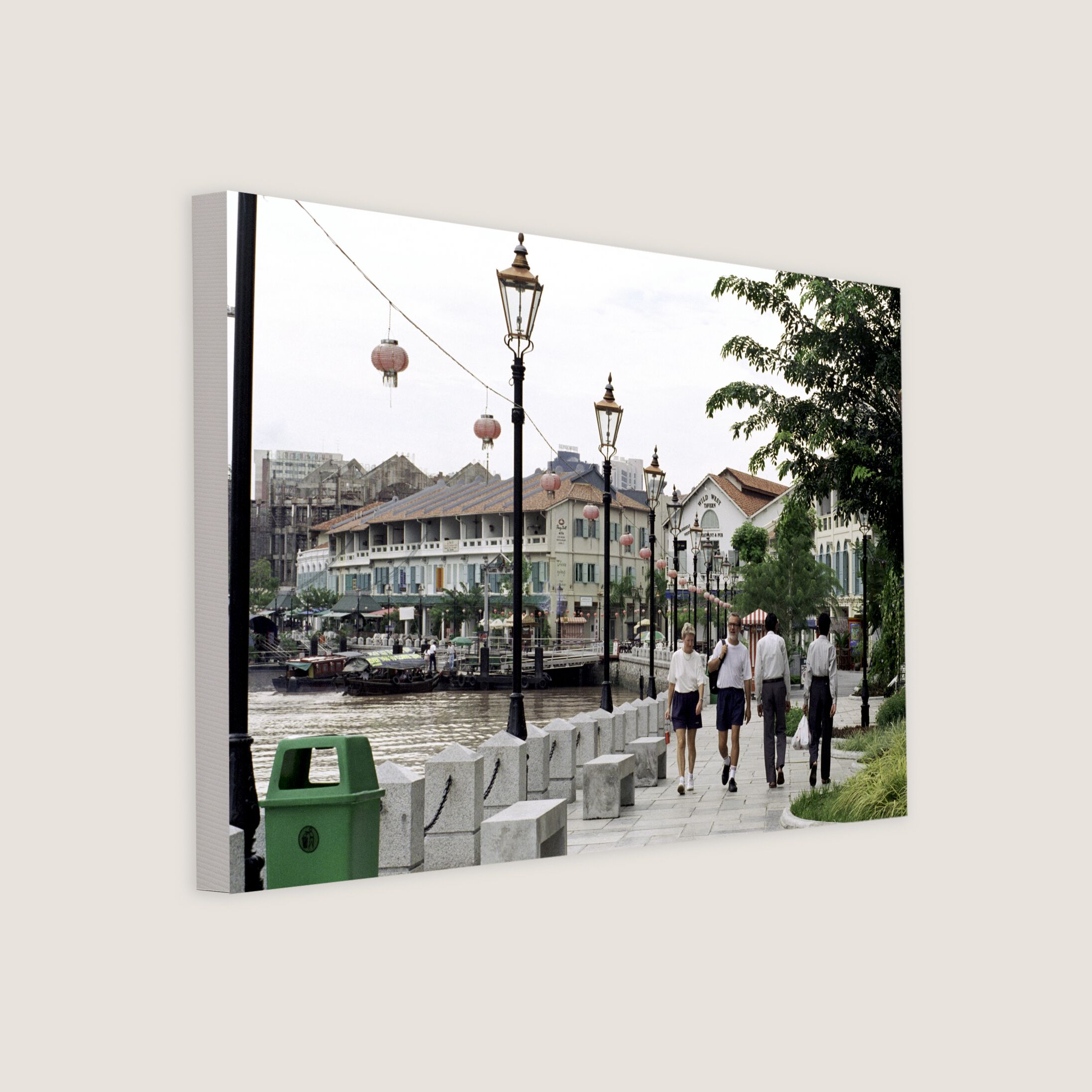
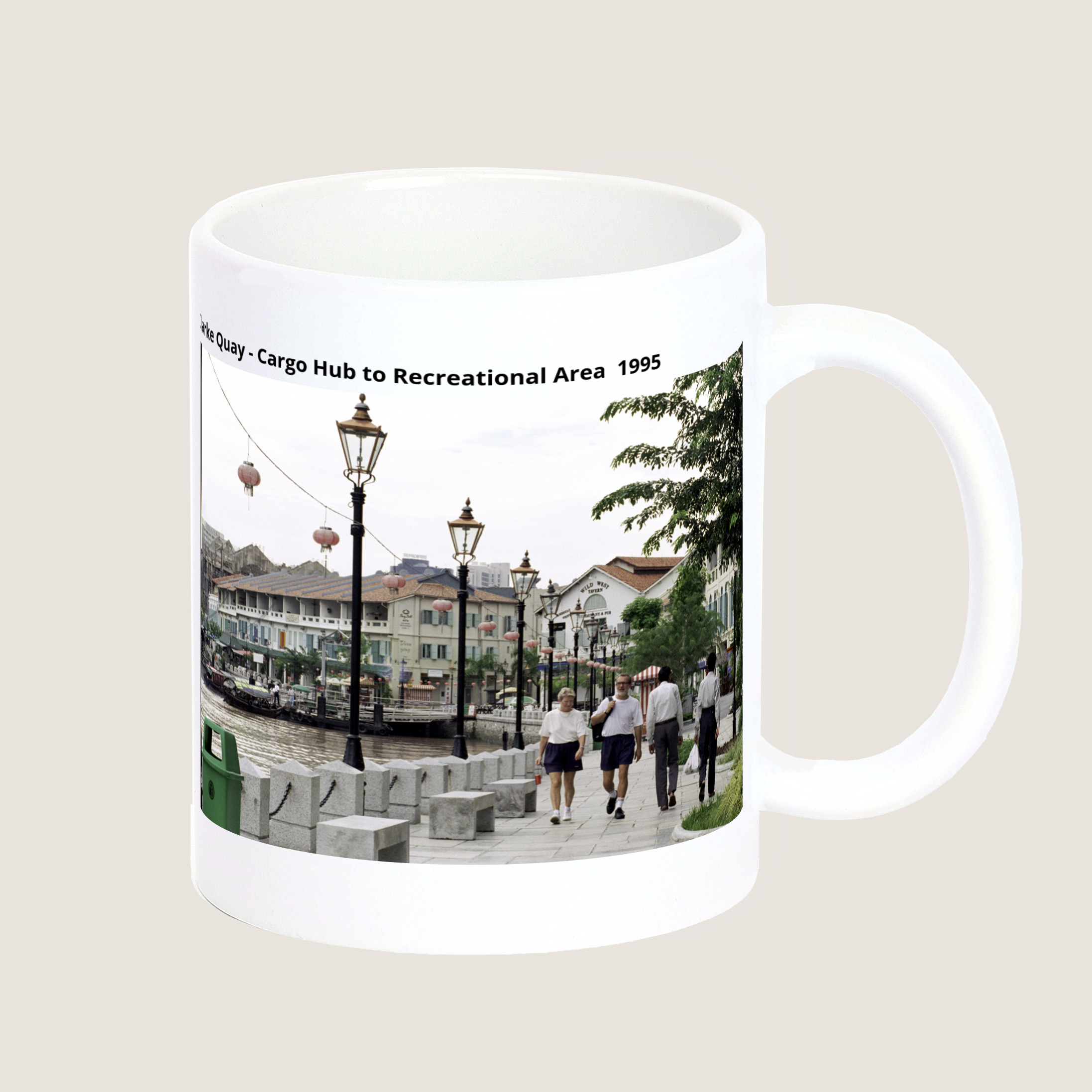
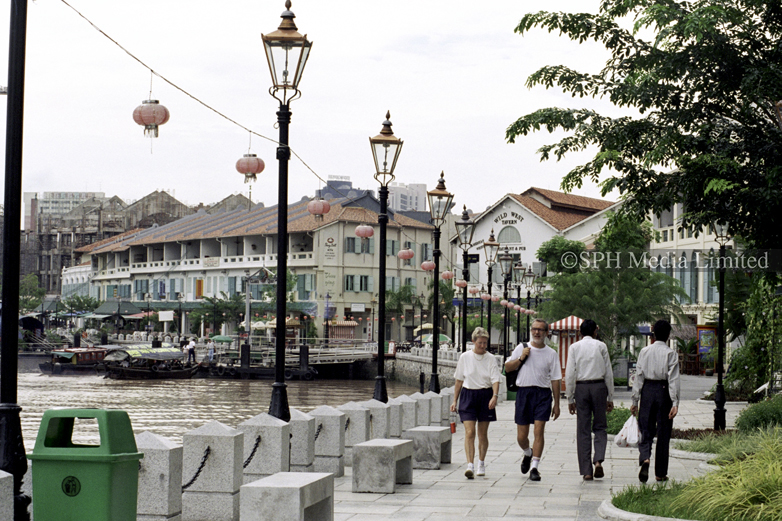 Clarke Quay - Cargo Hub to Recreational Area
1995
Clarke Quay - Cargo Hub to Recreational Area
1995
Clarke Quay - Cargo Hub to Recreational Area
Year 1995
Clarke Quay, situated along the Singapore River, has a rich history dating back to the 18th century when it served as a bustling dock for loading and unloading cargo. Fast forward to 1995, the area underwent a major transformation, emerging as a recreational hub with a diverse array of food stores, restaurants, and entertainment options. By night, the area transforms into a vibrant nightlife hub, attracting throngs of clubgoers and revelers.
©️ SPH Media Limited
Share to
Tags
Available for print on products
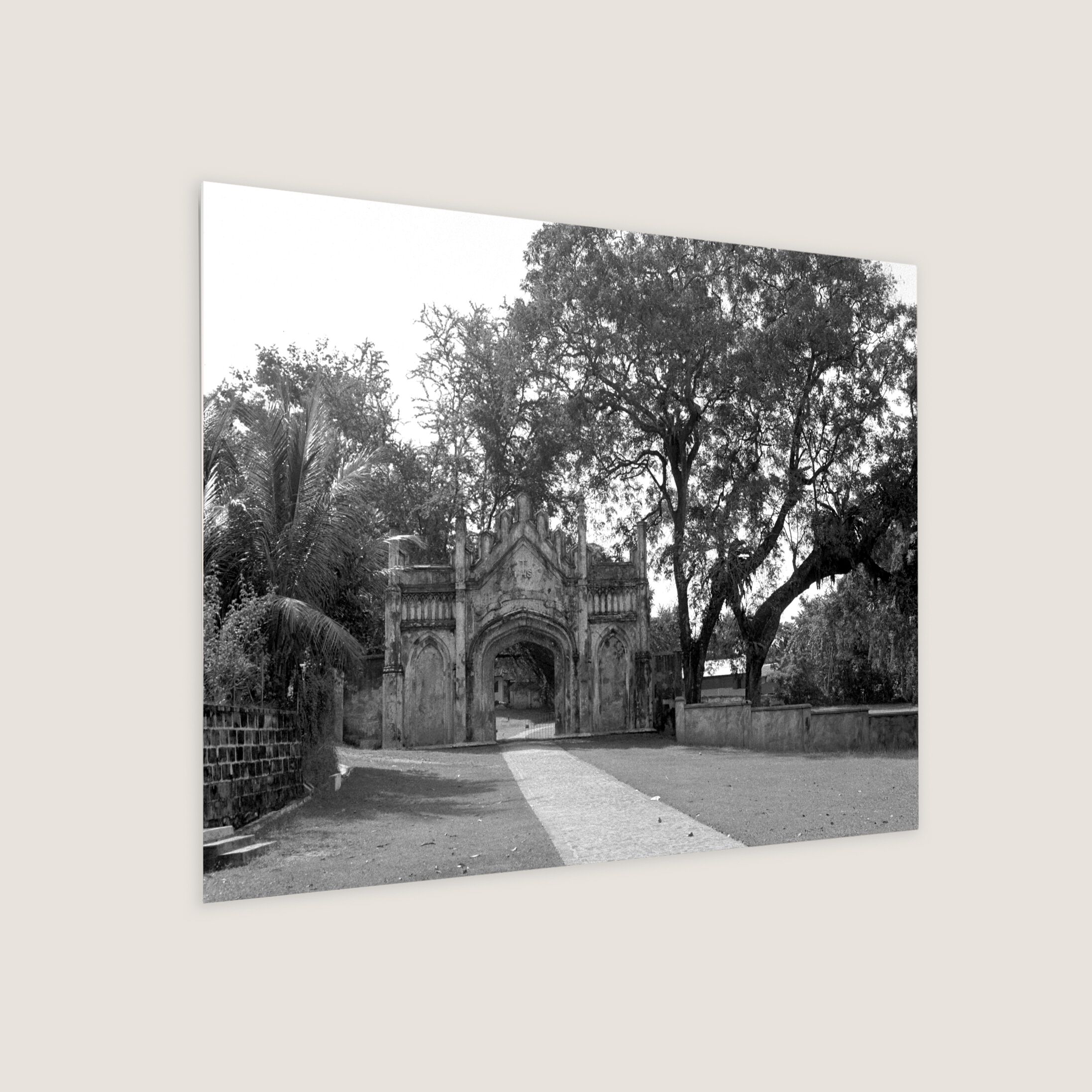
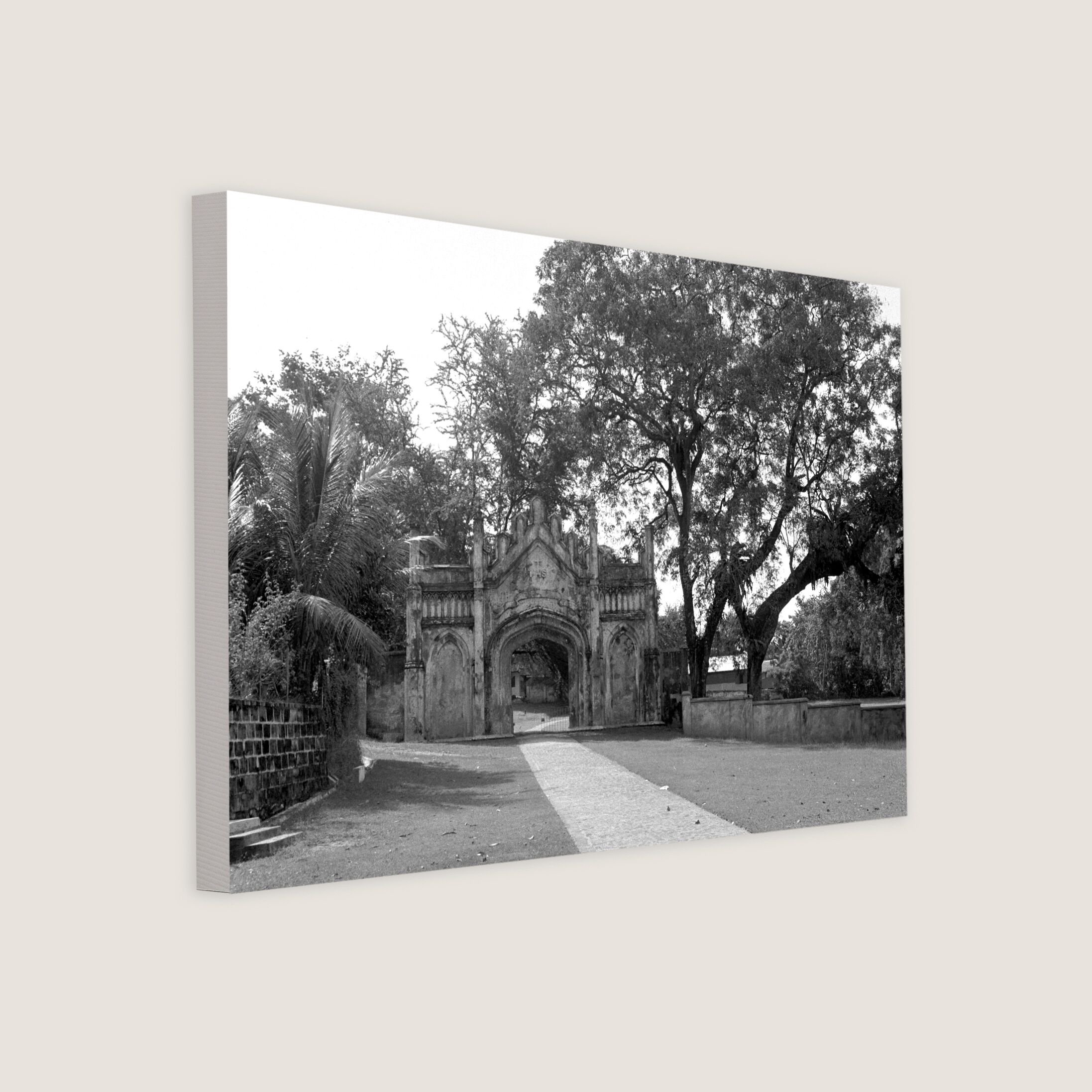
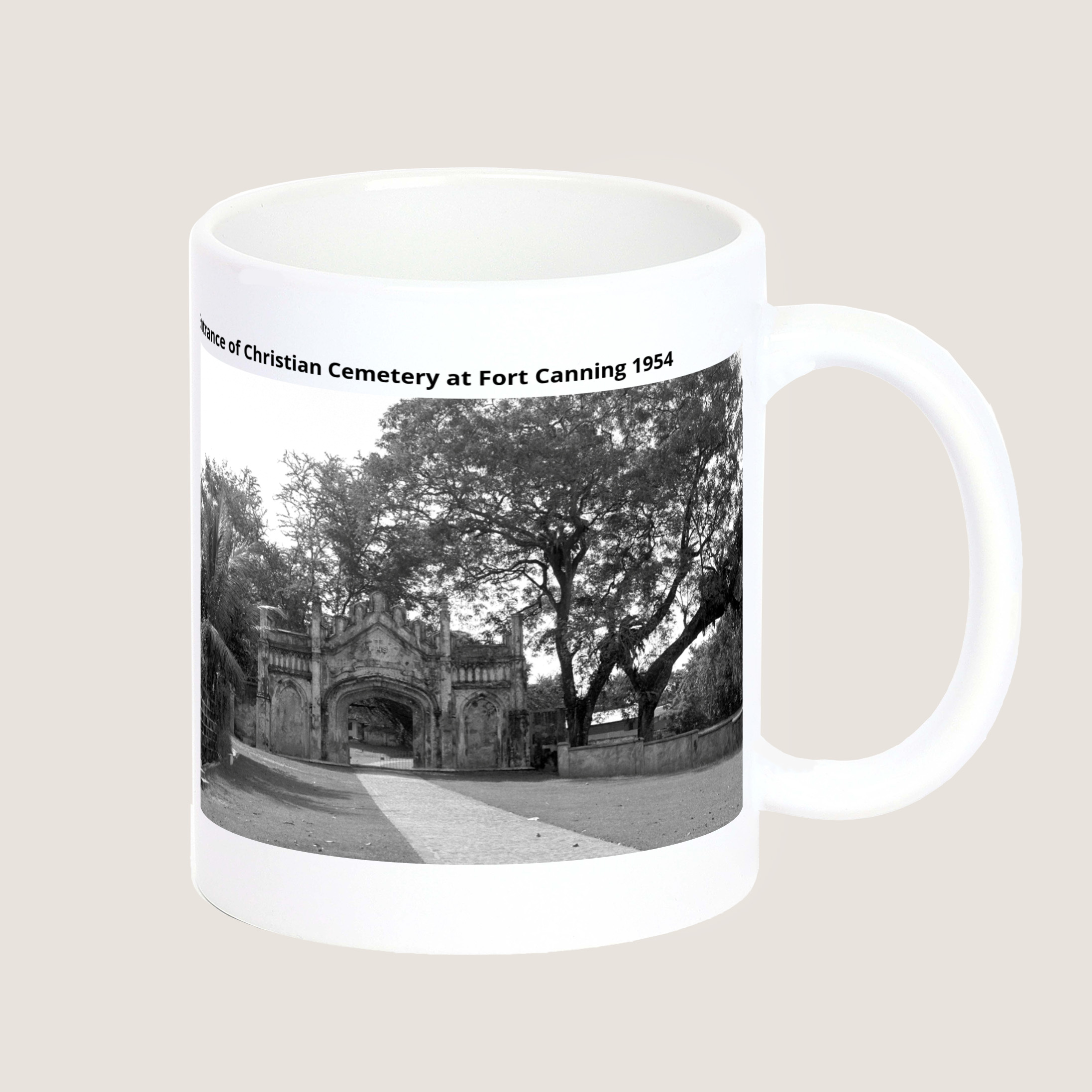
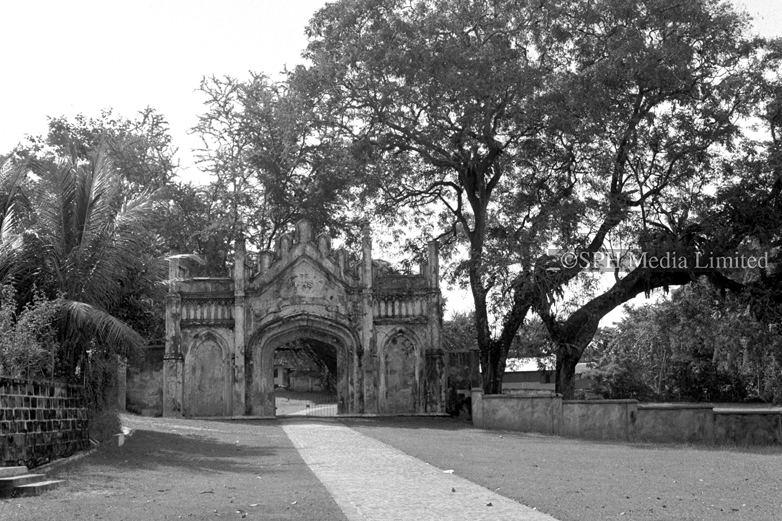 Entrance of Christian Cemetery at Fort Canning
1954
Entrance of Christian Cemetery at Fort Canning
1954
Entrance of Christian Cemetery at Fort Canning
Year 1954
Featuring the gothic gateways to where the old Christian Cemetery was once located at Fort Canning in 1954. Now, the majority of the tombstones have been moved to the St. Gregory's Armenian Church. The hill was once where the palace of Sang Nila Utama was. Eventually, Fort Canning was renamed as Fort Canning Park in 1984.
©️ SPH Media Limited
Share to
Tags
Available for print on products
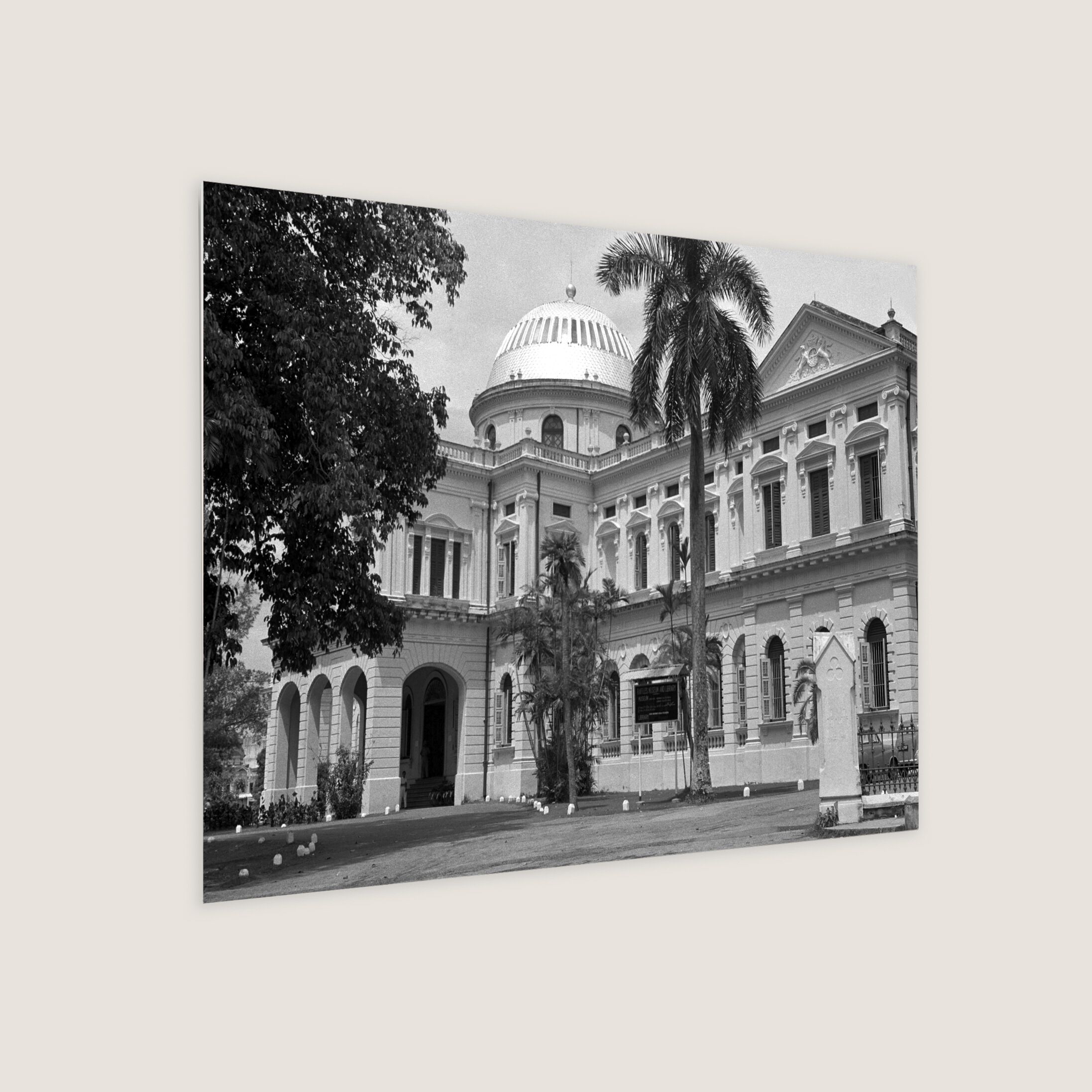
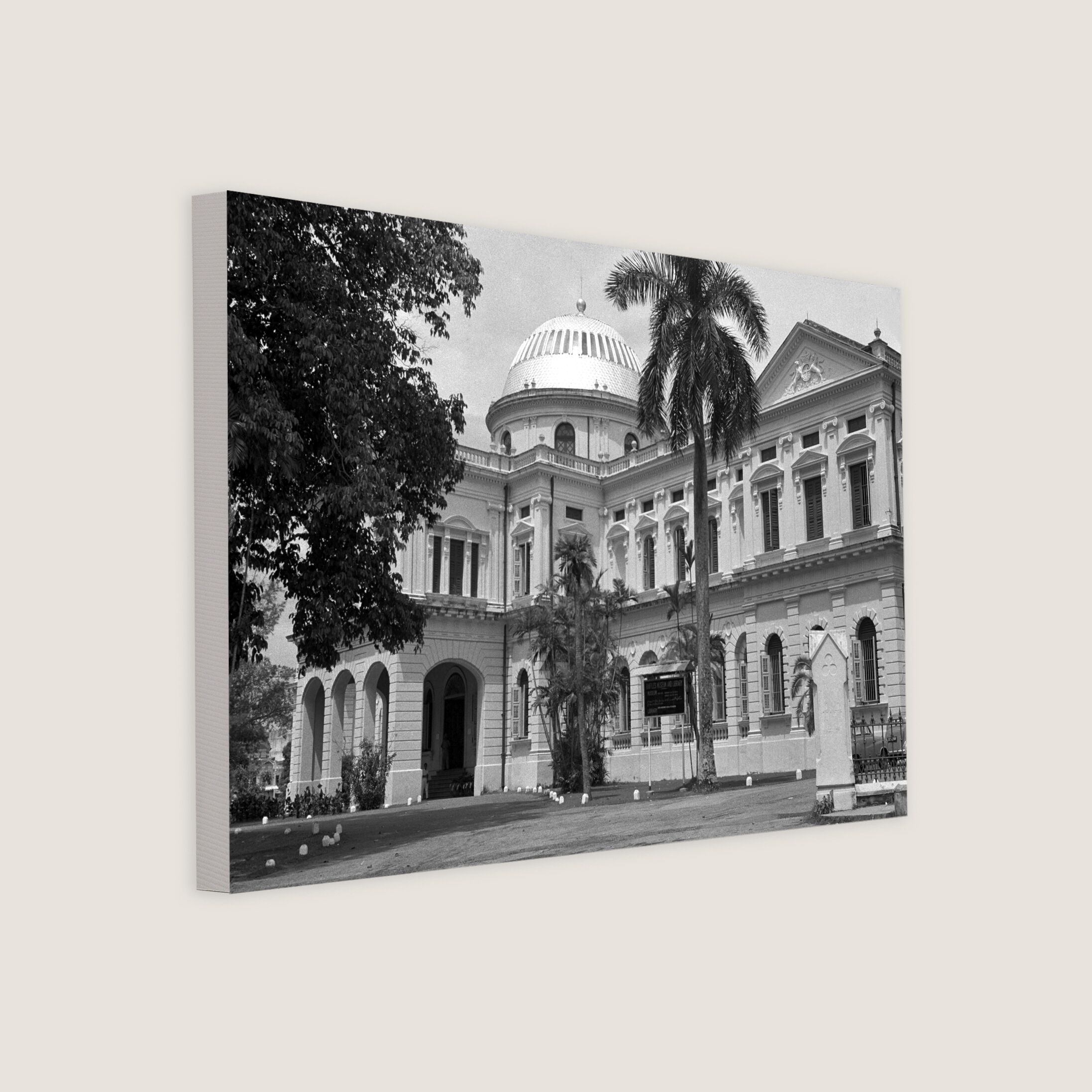
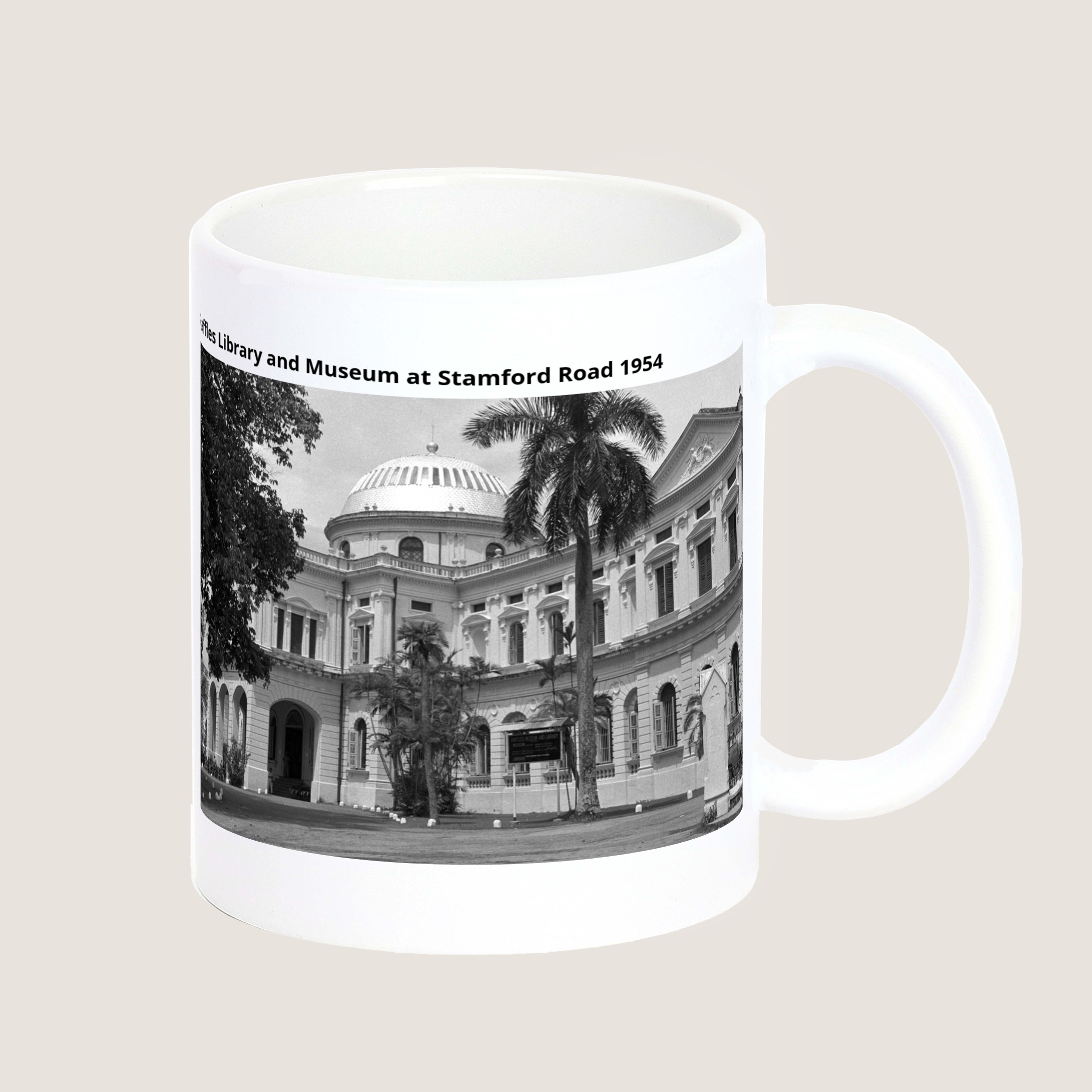
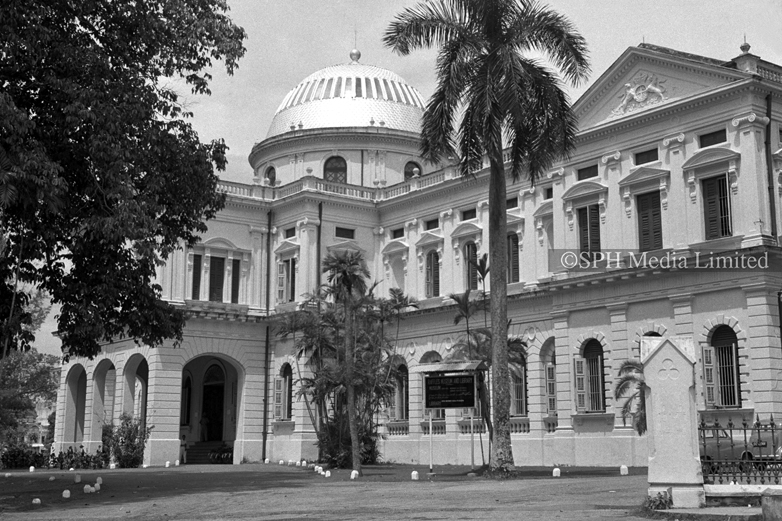 Raffles Library and Museum at Stamford Road
1954
Raffles Library and Museum at Stamford Road
1954
Raffles Library and Museum at Stamford Road
Year 1954
In 1874, under colonial rule, the Singapore Library became a public library. Afterwards, it combined with a new museum and was renamed the Raffles Library and Museum. Today, it is known as the National Museum of Singapore.
©️ SPH Media Limited
Share to
Tags
Available for print on products
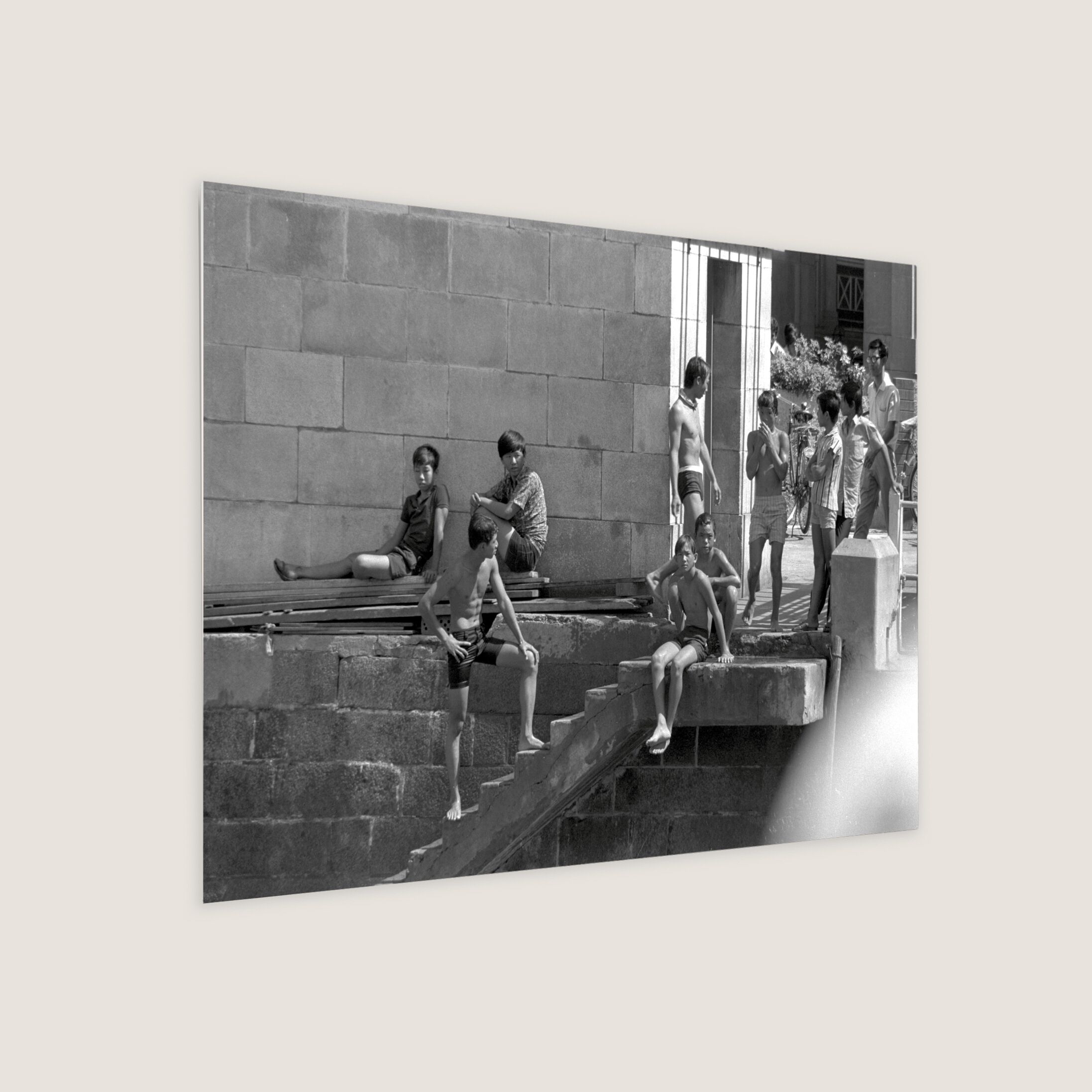
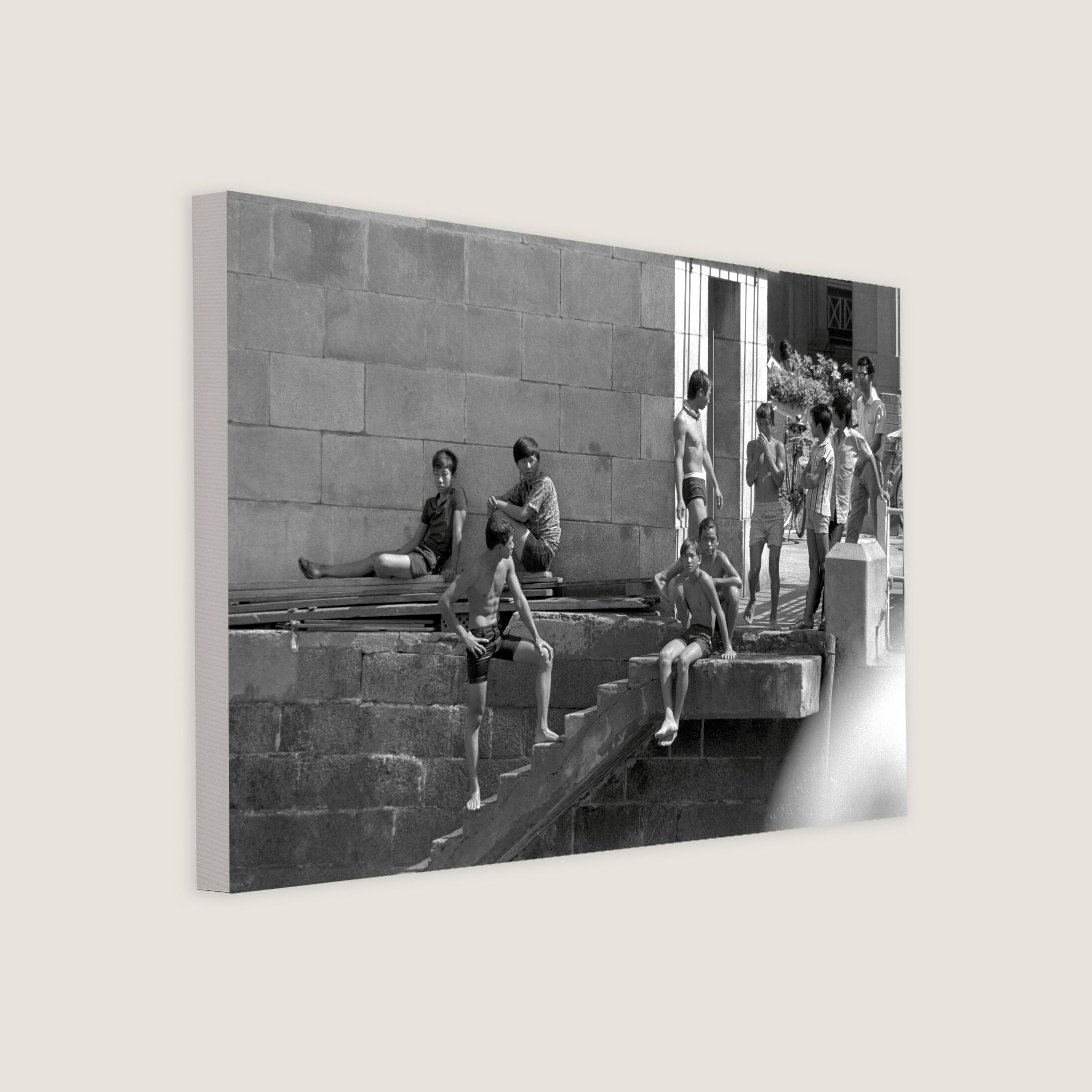
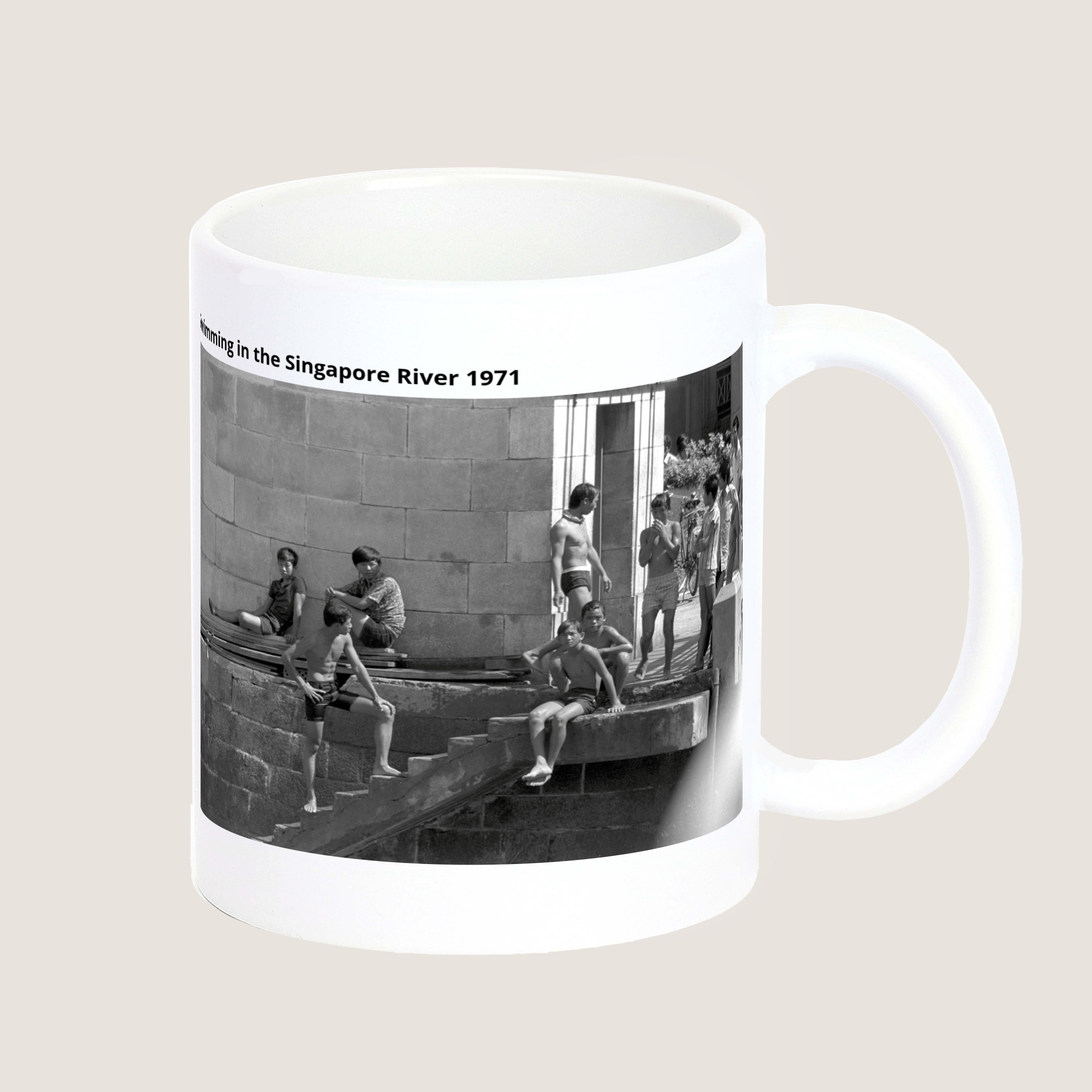
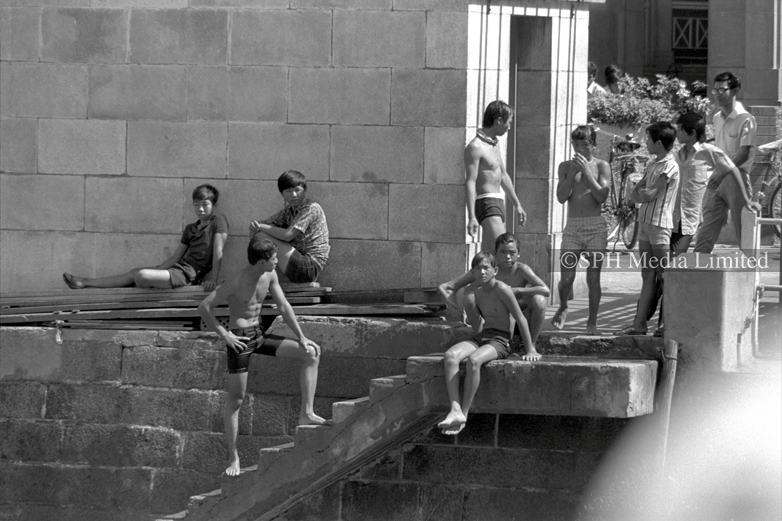 Swimming in the Singapore River
1971
Swimming in the Singapore River
1971
Swimming in the Singapore River
Year 1971
Teenagers are seen resting after a swim in the Singapore River near Cavenagh Bridge. Stretching across the Singapore River, the Cavenagh Bridge is the oldest bridge, completed in 1869. It was gazetted as a national monument in 2019.
©️ SPH Media Limited
Share to
Tags
Available for print on products
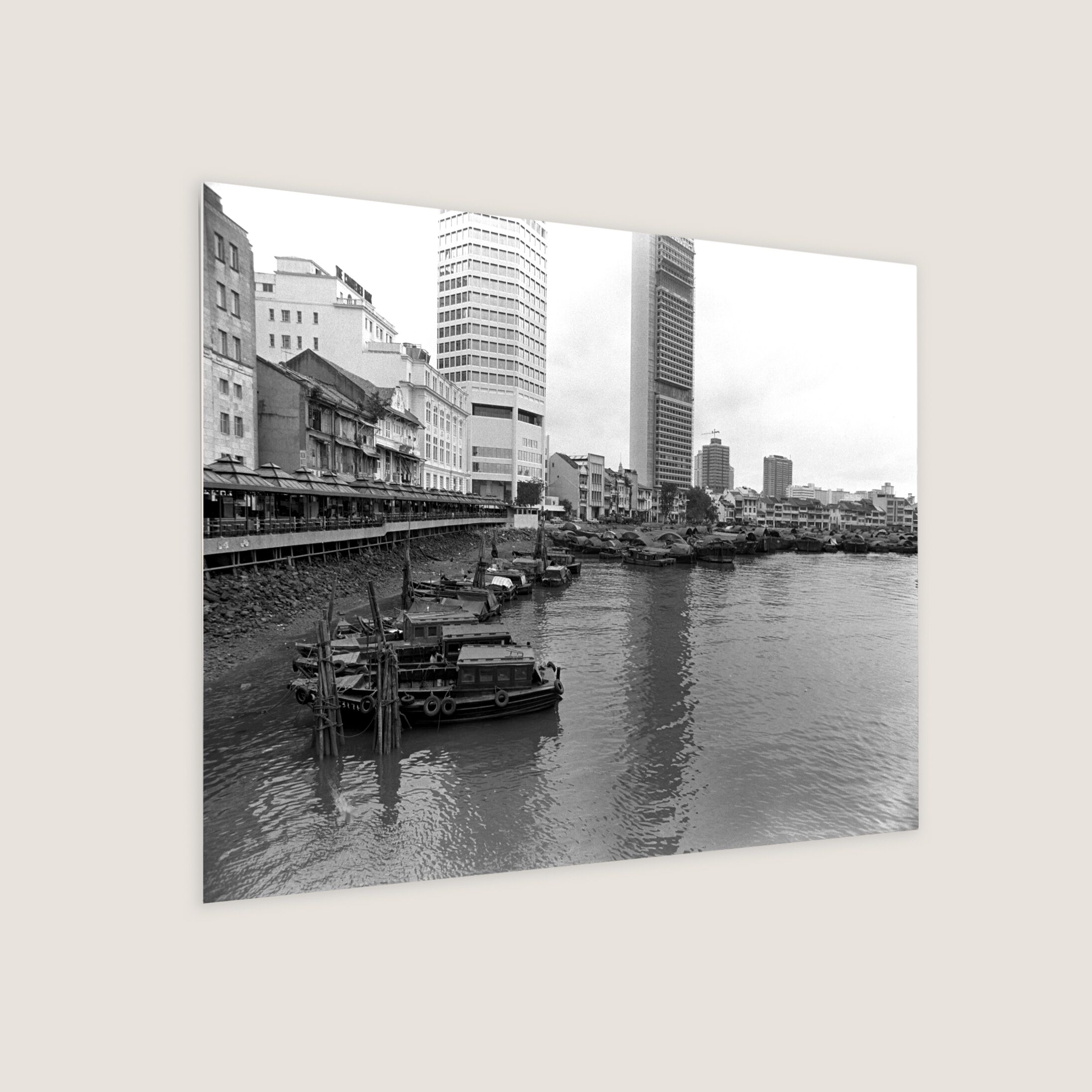
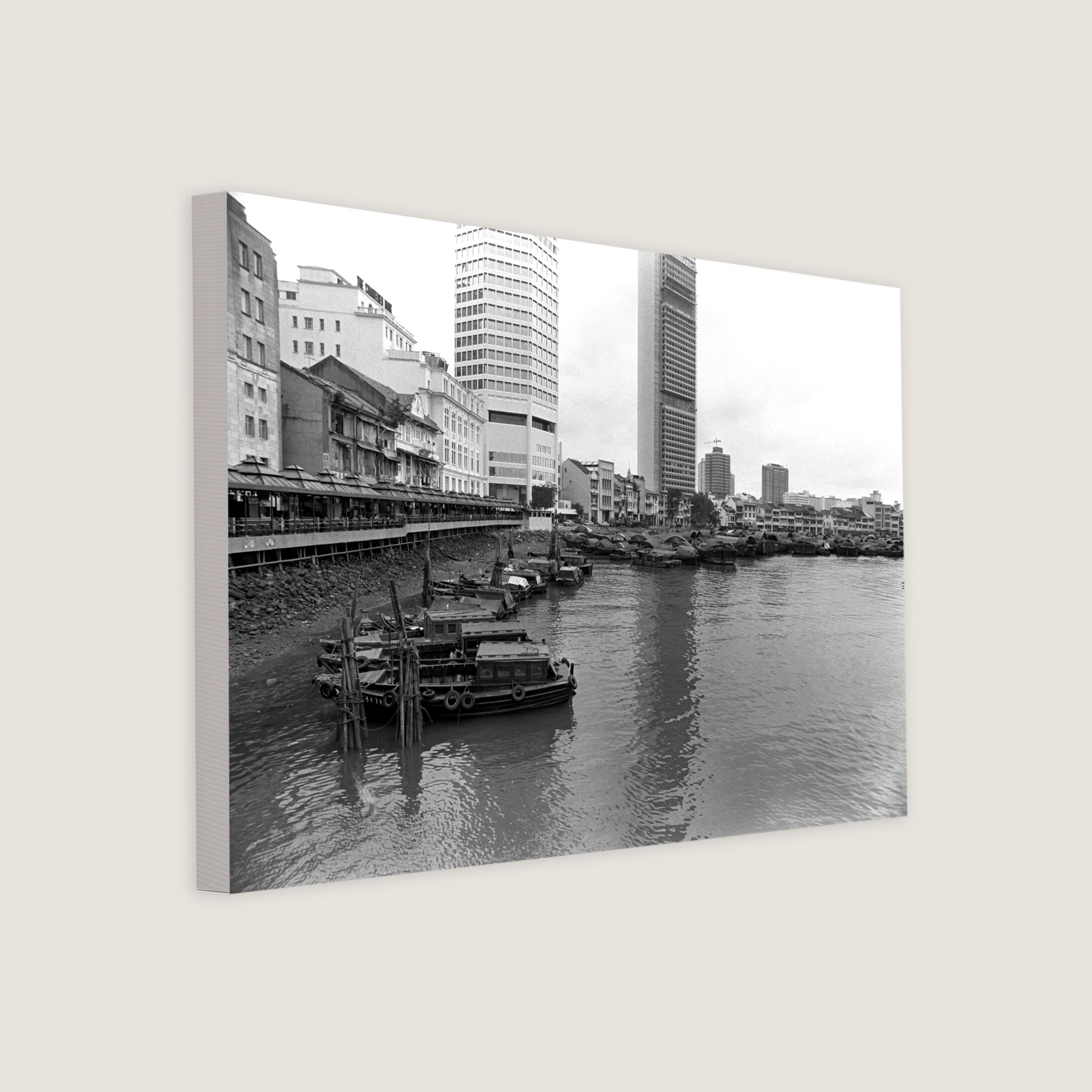
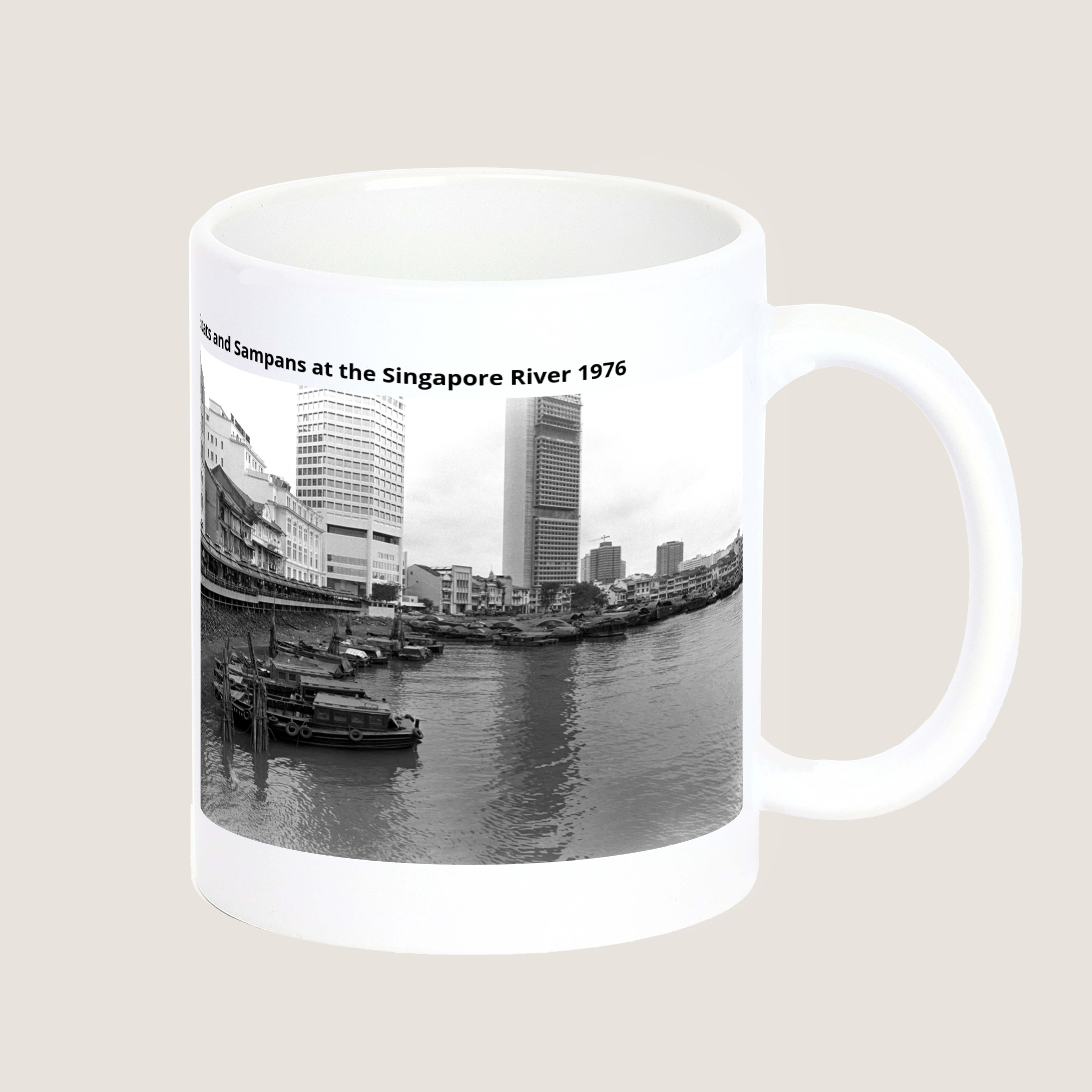
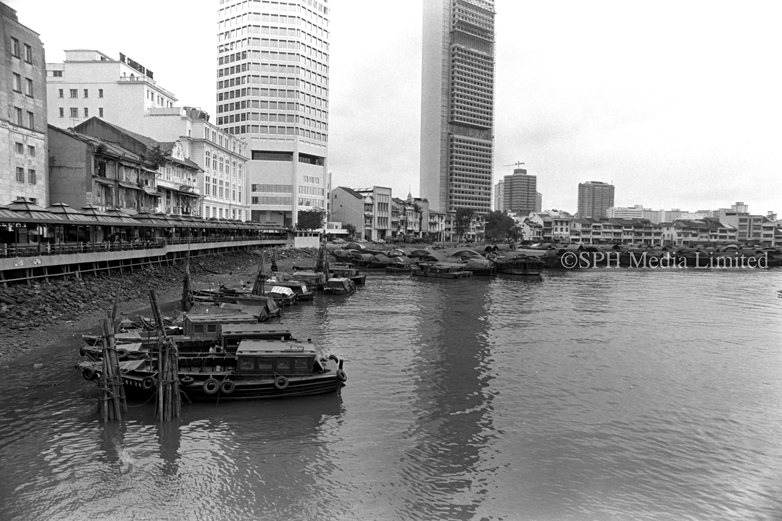 Boats and Sampans at the Singapore River
1976
Boats and Sampans at the Singapore River
1976
Boats and Sampans at the Singapore River
Year 1976
Boats and sampans showcasing the Singapore River's role as a bustling hub for commerce and trade. However, this economic activity came at a cost, as the river suffered from severe pollution. This photo was taken on the cusp of a major clean-up effort, which would take place from 1977 to 1987 and transform the river into the thriving waterway we know today.
©️ SPH Media Limited
Share to
Tags
Available for print on products
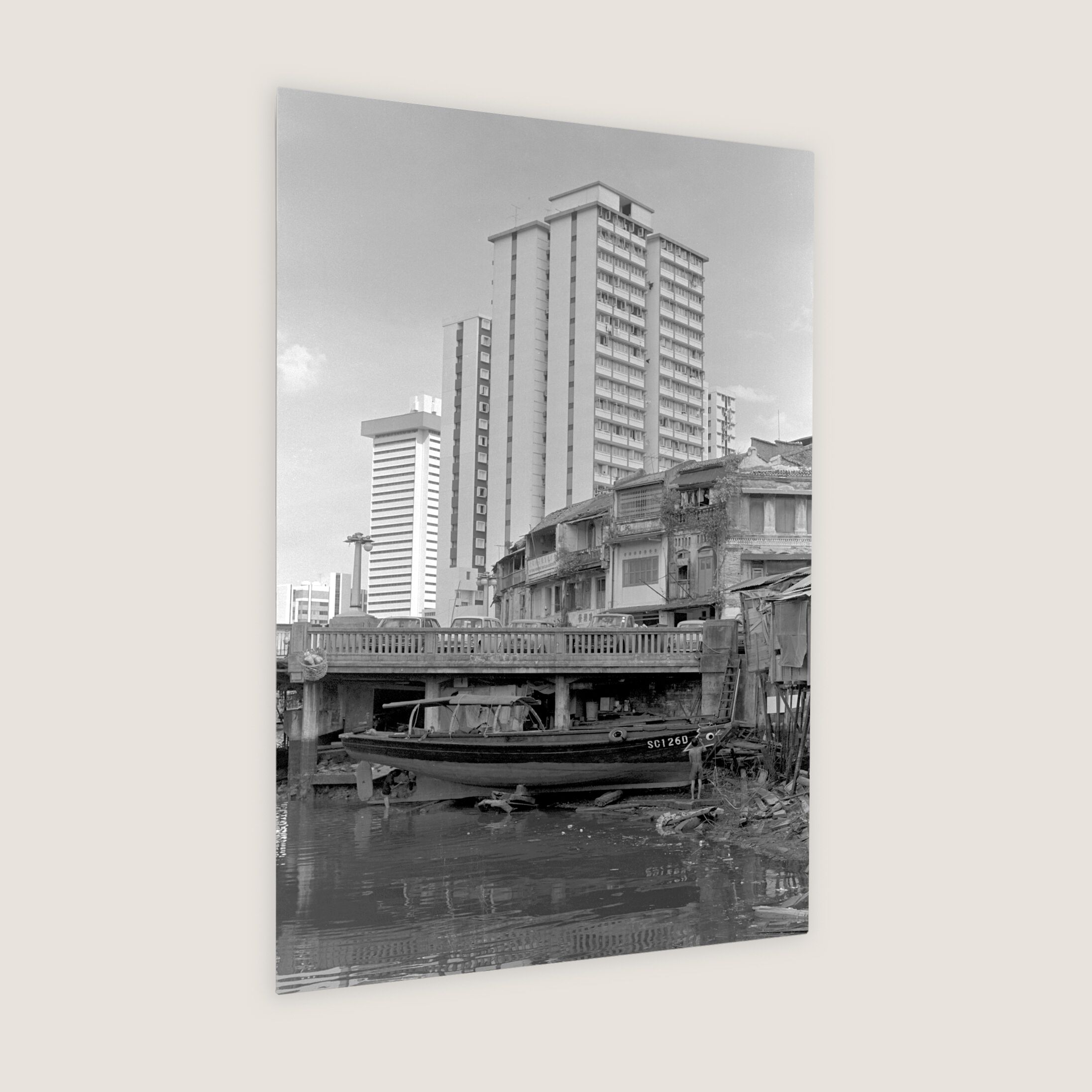
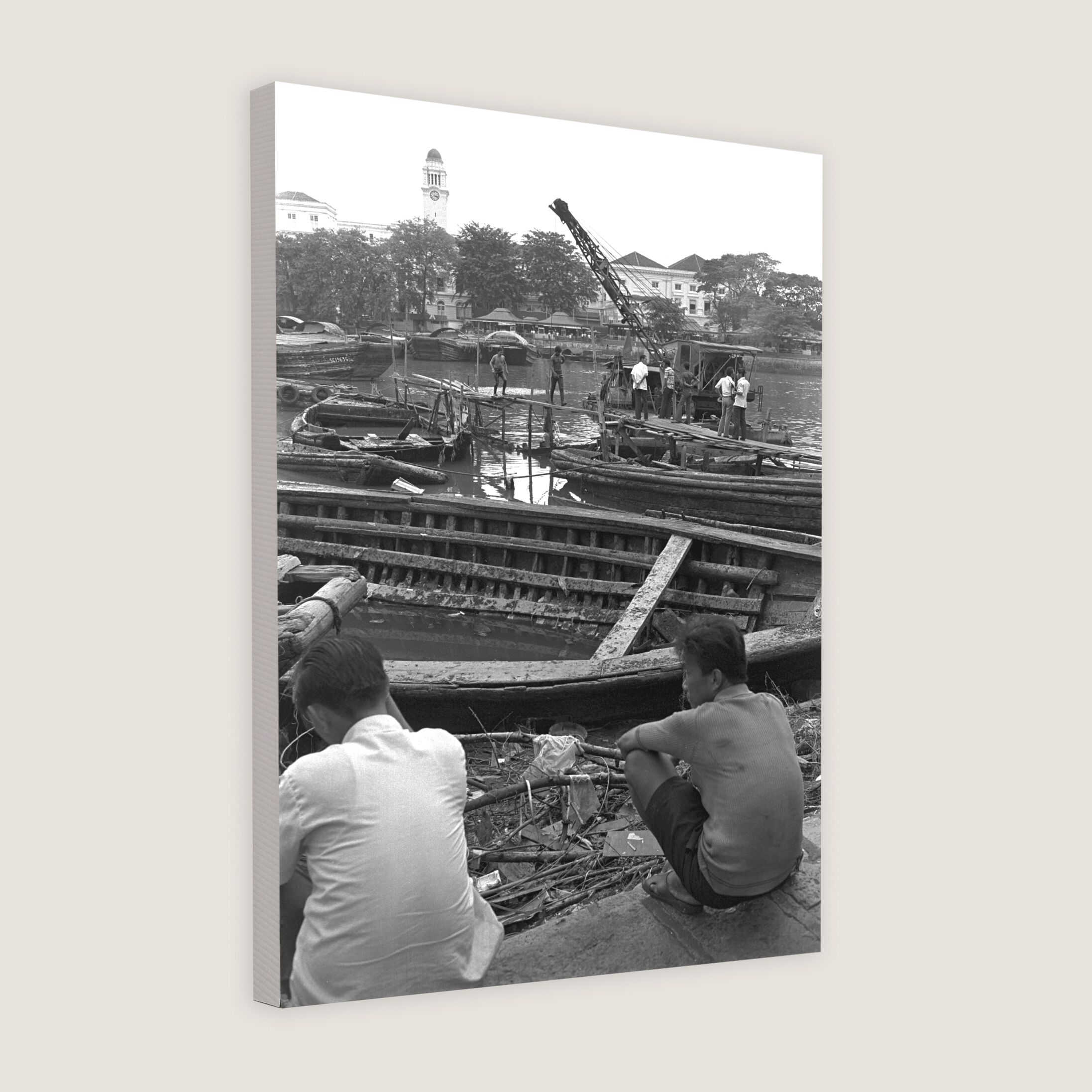
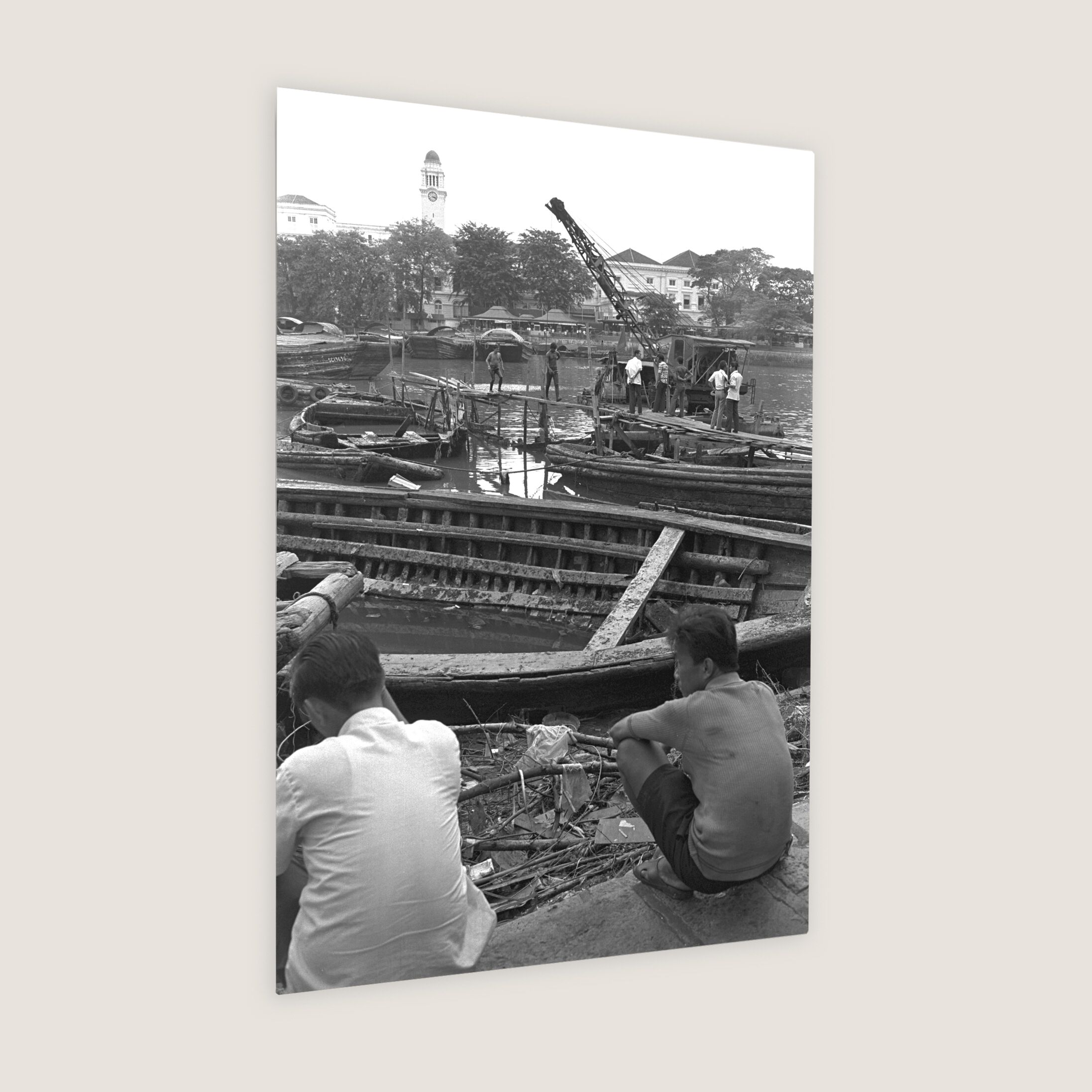
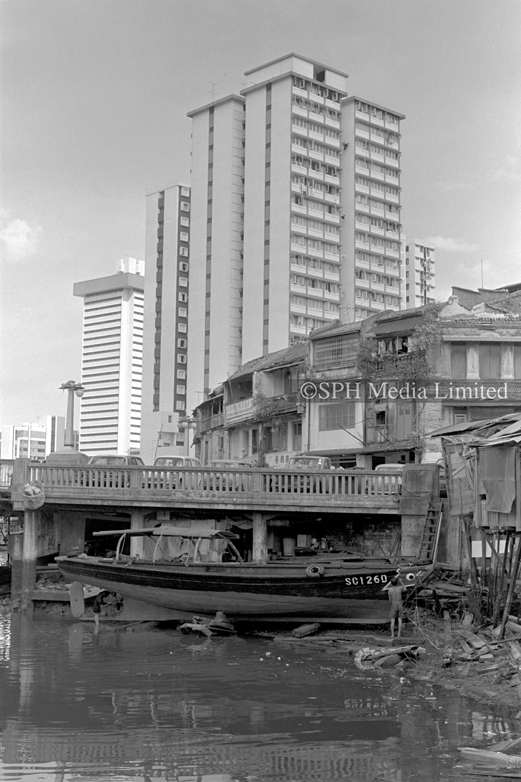 Boat Repair Works by the Singapore River
1977
Boat Repair Works by the Singapore River
1977
Boat Repair Works by the Singapore River
Year 1977
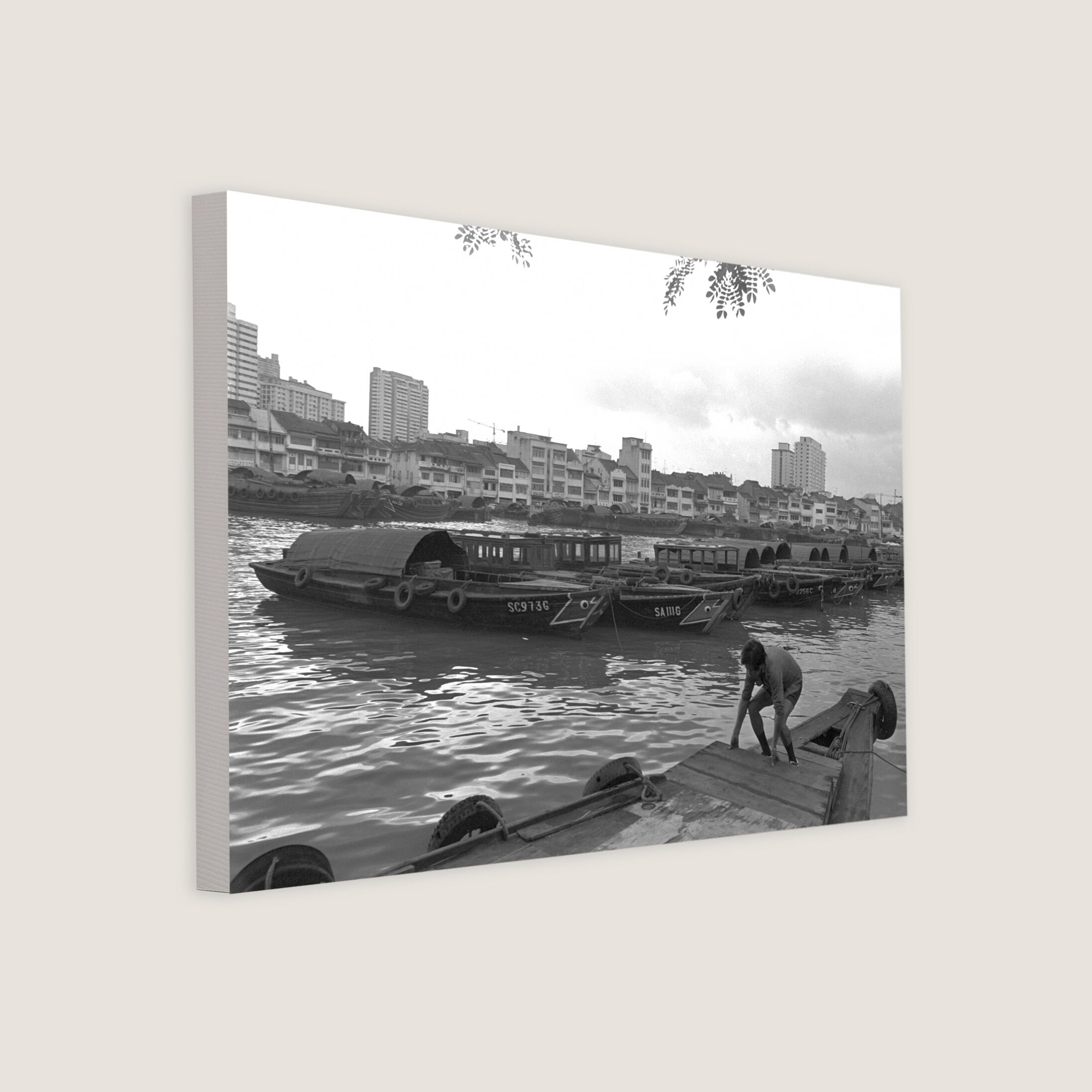
A boatman skillfully repairs boats by the Singapore River. After the river cleanup efforts between 1977 and 1987, these traditional boats were repurposed as river taxis, offering tourists and locals alike a unique perspective on the Singapore River's transformation and scenic beauty.
©️ SPH Media Limited
Share to
Tags
Available for print on products
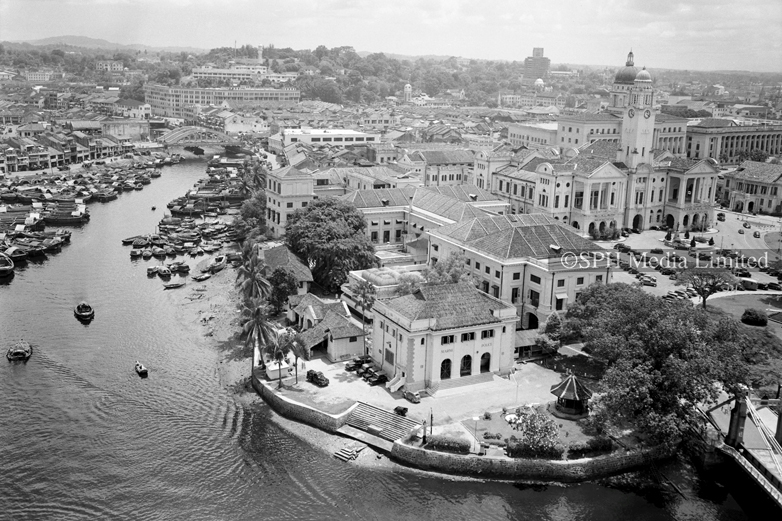 Aerial View of Singapore River
1953
Aerial View of Singapore River
1953
Aerial View of Singapore River
Year 1953
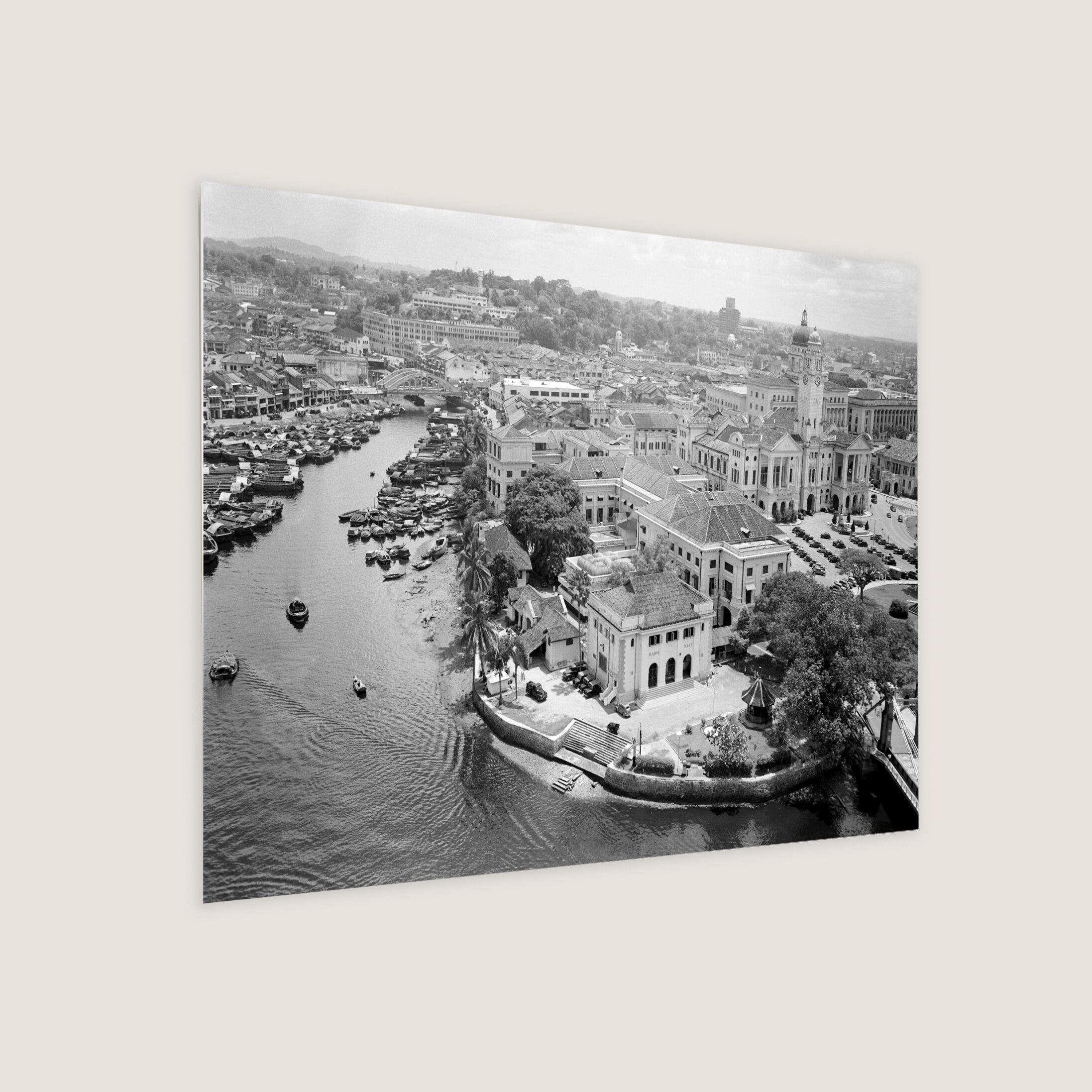
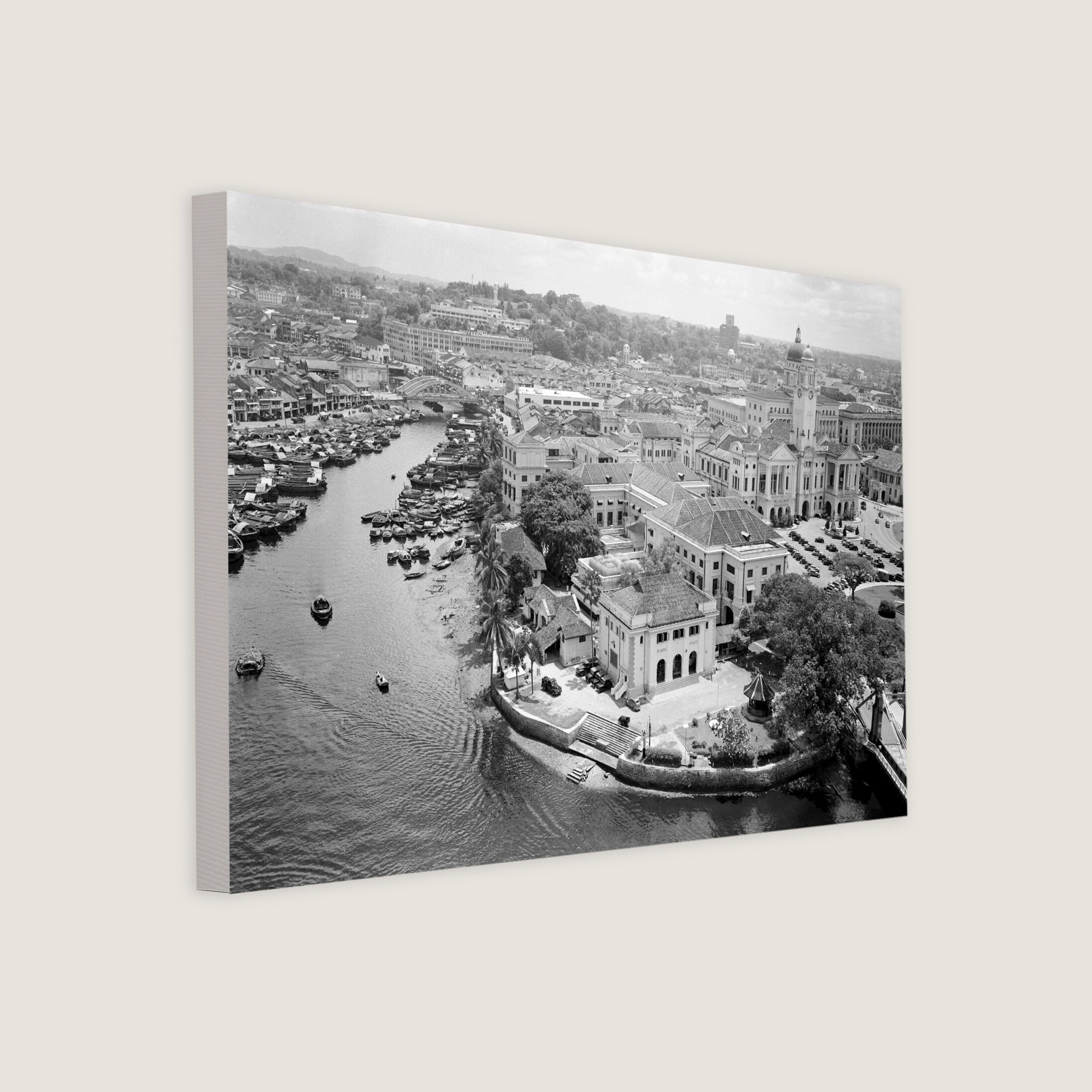
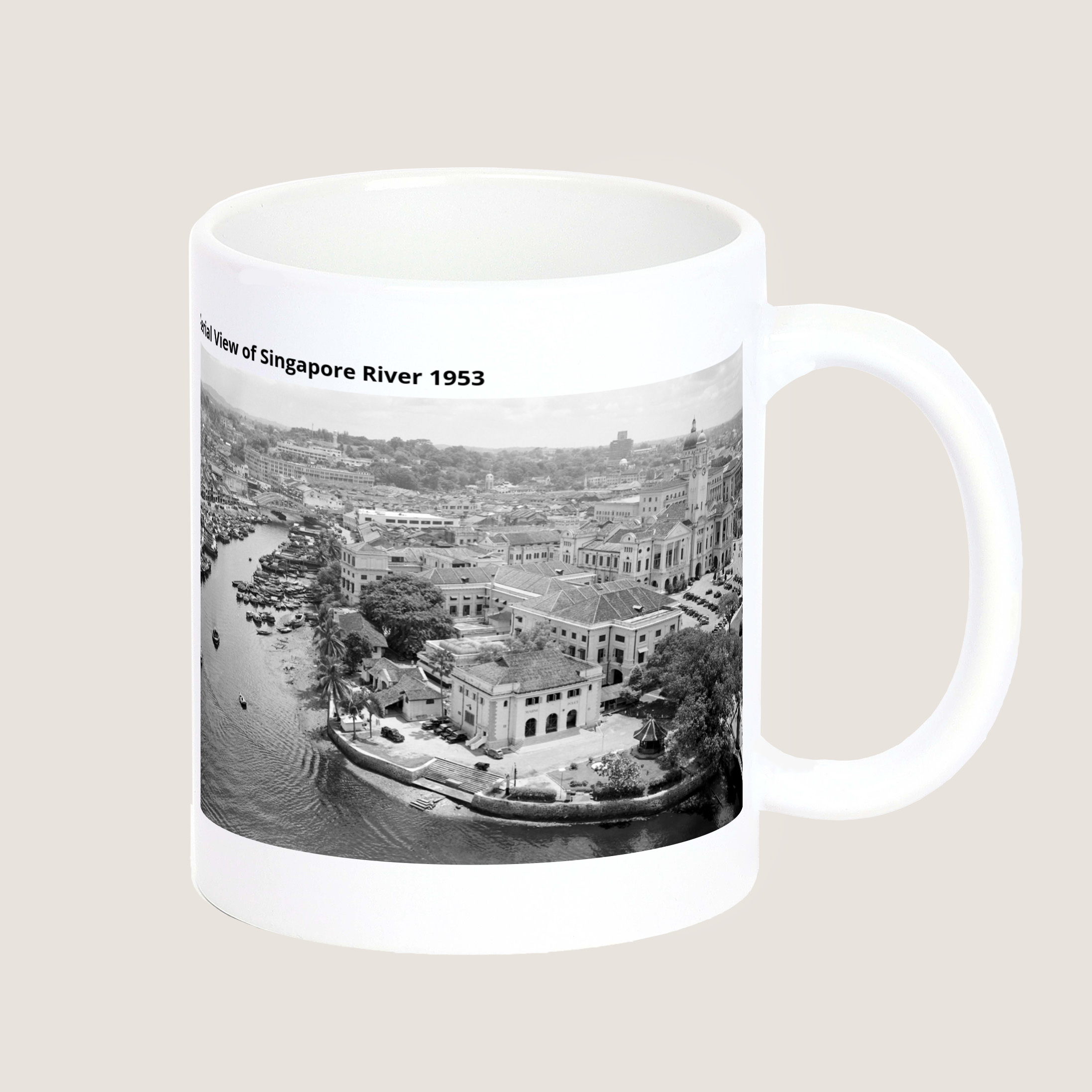
An aerial view of Singapore River and Empress Place from the China Bank Building in 1953. The China Bank Building was once the highest skyscraper in that vicinity. That area served as the administrative centre of the British government.
©️ SPH Media Limited
Share to
Tags
Available for print on products
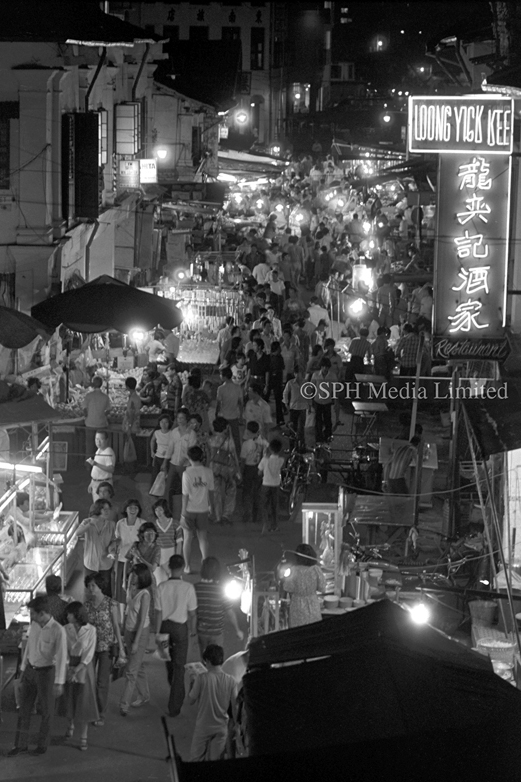 Bugis Street Lined with Street Vendors and Shops
1979
Bugis Street Lined with Street Vendors and Shops
1979
Bugis Street Lined with Street Vendors and Shops
Year 1979
A glimpse into the vibrant past of Singapore's most iconic nightspot, Bugis Street at Night. Between the 1950s and 1980s, Bugis Street was a beloved destination for locals and tourists alike, renowned for its drag queens and transgender community. Despite public pleas to preserve its legacy, Bugis Street was redeveloped in 1984, and the historic shophouses were demolished in October 1985, marking the end of an era.
©️ SPH Media Limited
Share to
Tags
Available for print on products
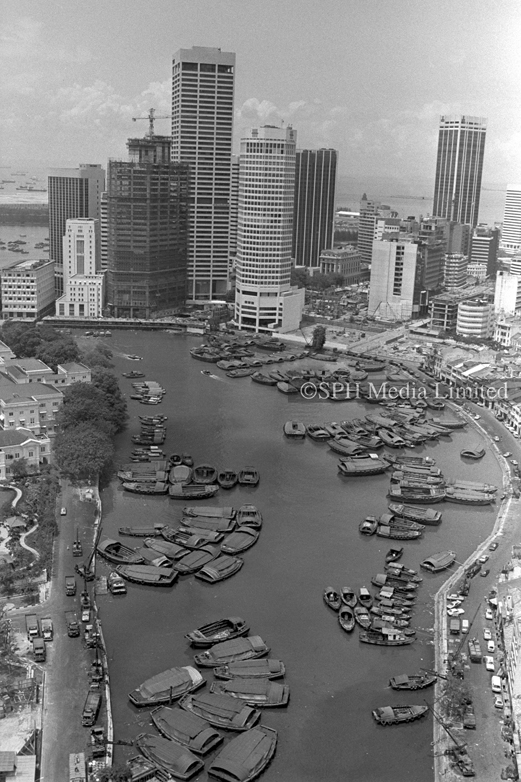 Tongkangs at Singapore River
1983
Tongkangs at Singapore River
1983
Tongkangs at Singapore River
Year 1983
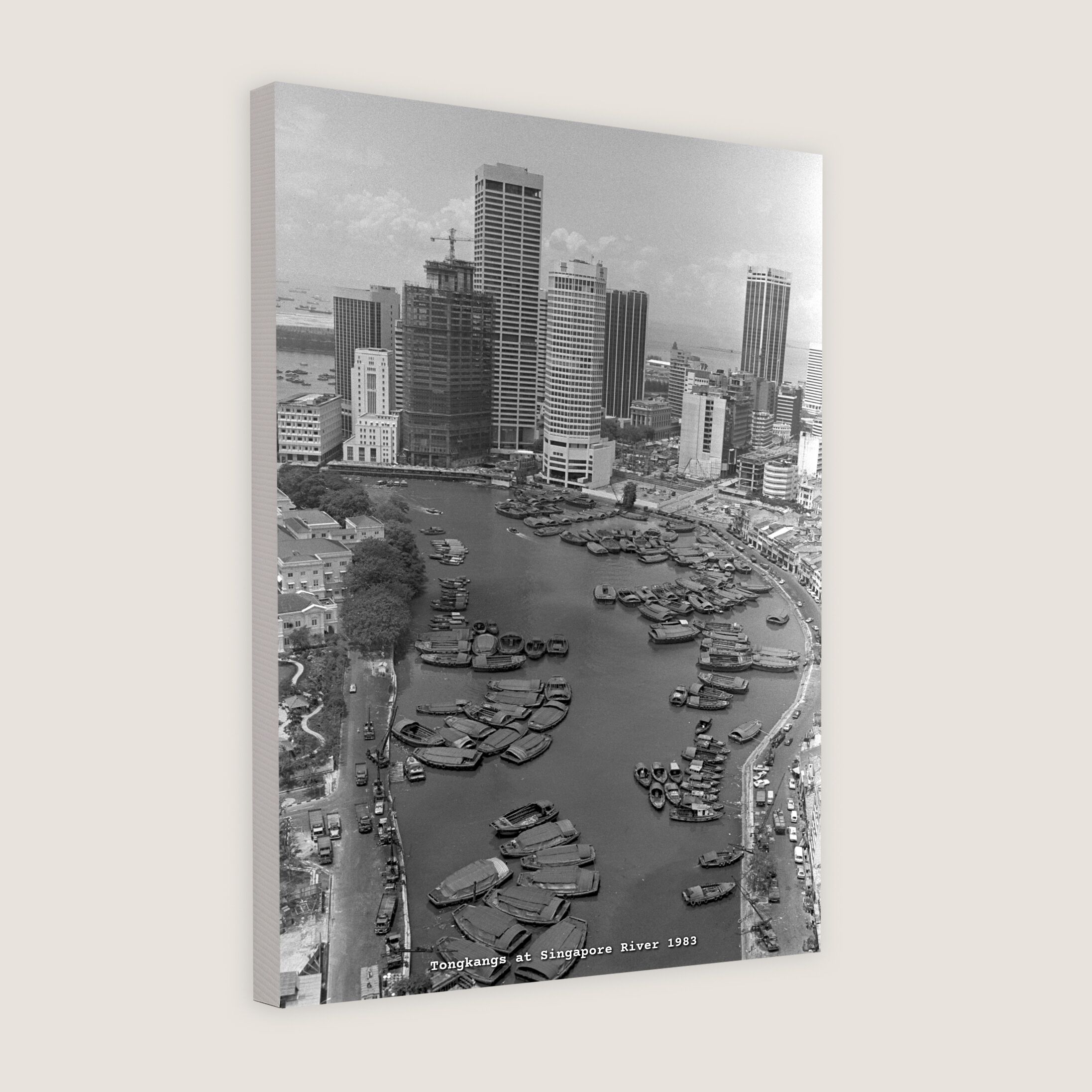
A bustling scene on the Singapore River as lighters prepare to relocate to Pasir Panjang Wharves, marking a significant change for the river's ecosystem. Starting August 15, lightermen began their shift. This relocation impacted hundreds of lightermen and their vessels and transformed the river's landscape.
©️ SPH Media Limited
Share to
Tags
Available for print on products
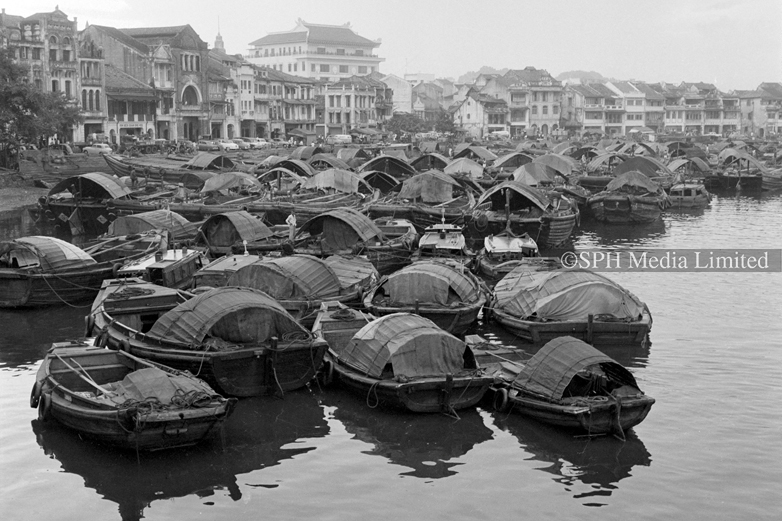 Tongkangs Parked Along Singapore River
1957
Tongkangs Parked Along Singapore River
1957
Tongkangs Parked Along Singapore River
Year 1957
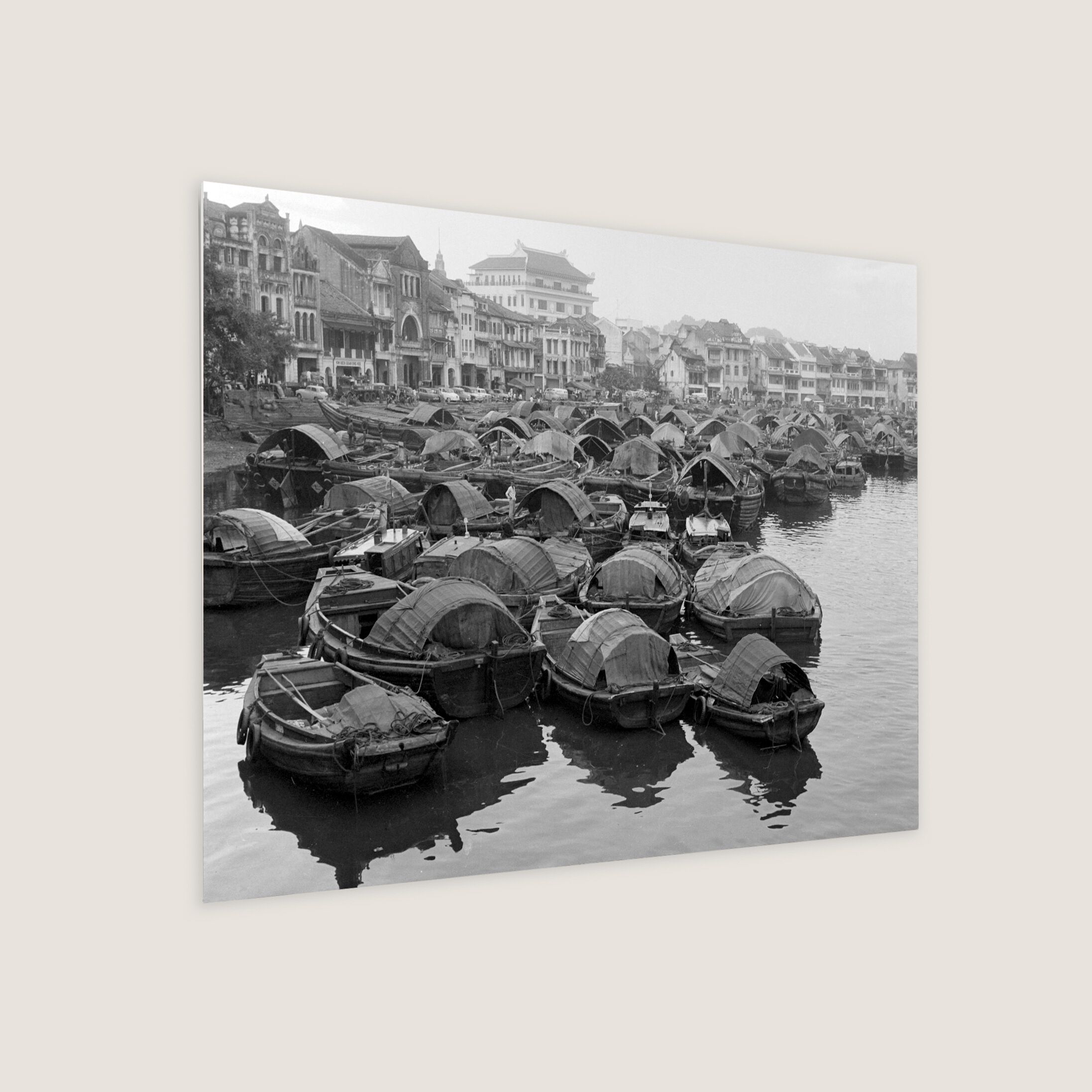
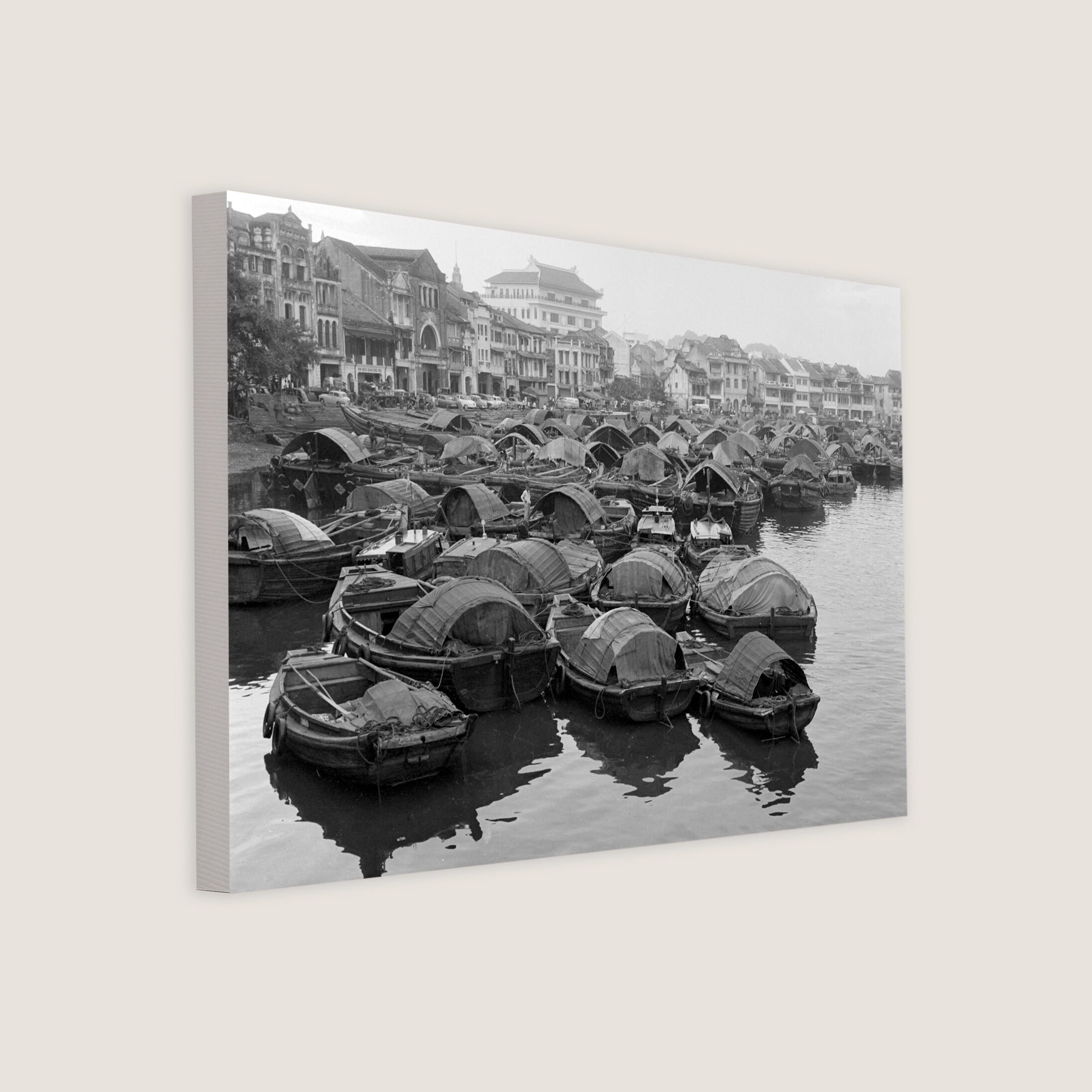
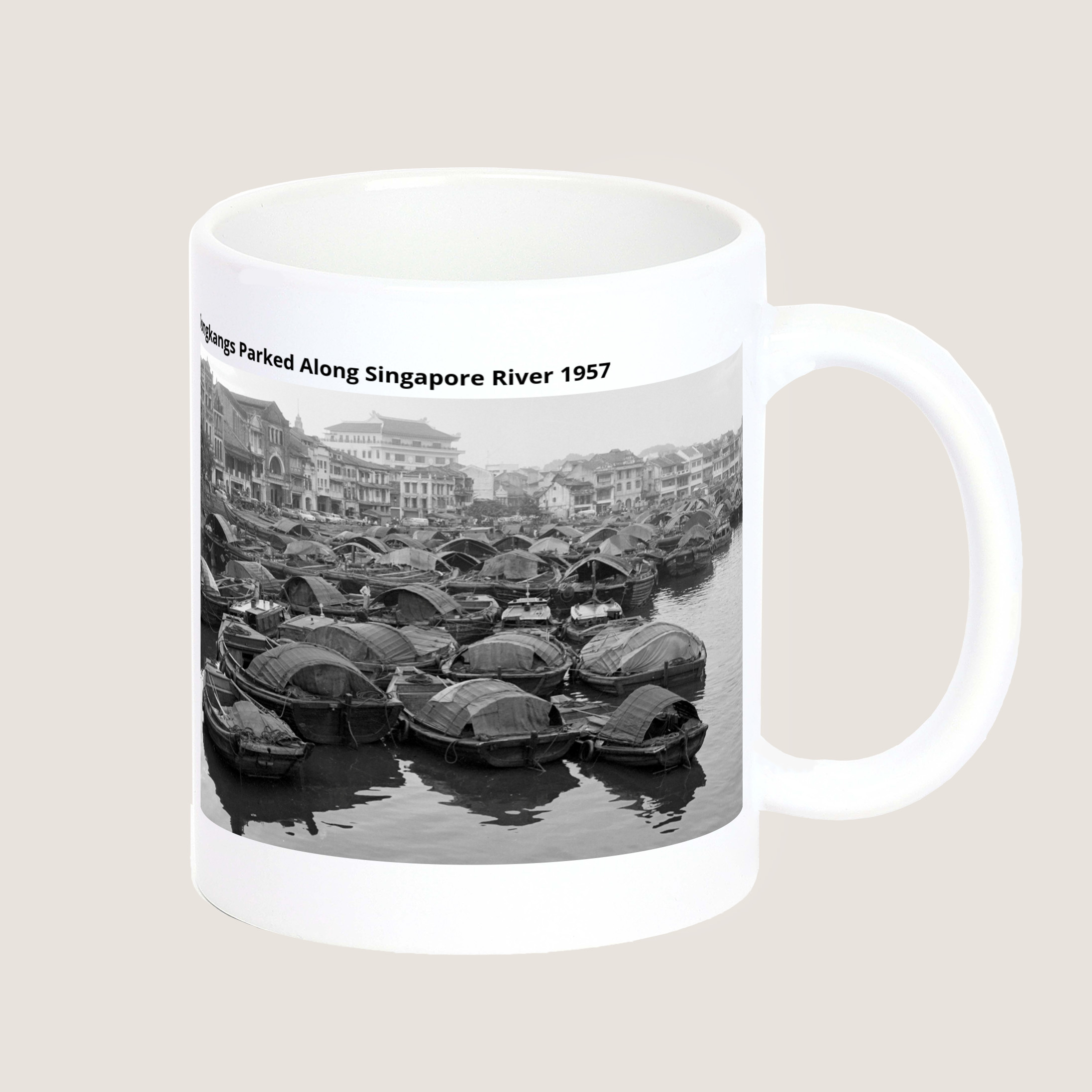
Tongkangs, also known as bumboats, were used for transportation along the Singapore River, as seen in this photo. After the river clean-up campaign in 1983, the boats were shifted to Pasir Panjang. In the backdrop stands the former building of OCBC Centre.
©️ SPH Media Limited
Share to
Tags
Available for print on products
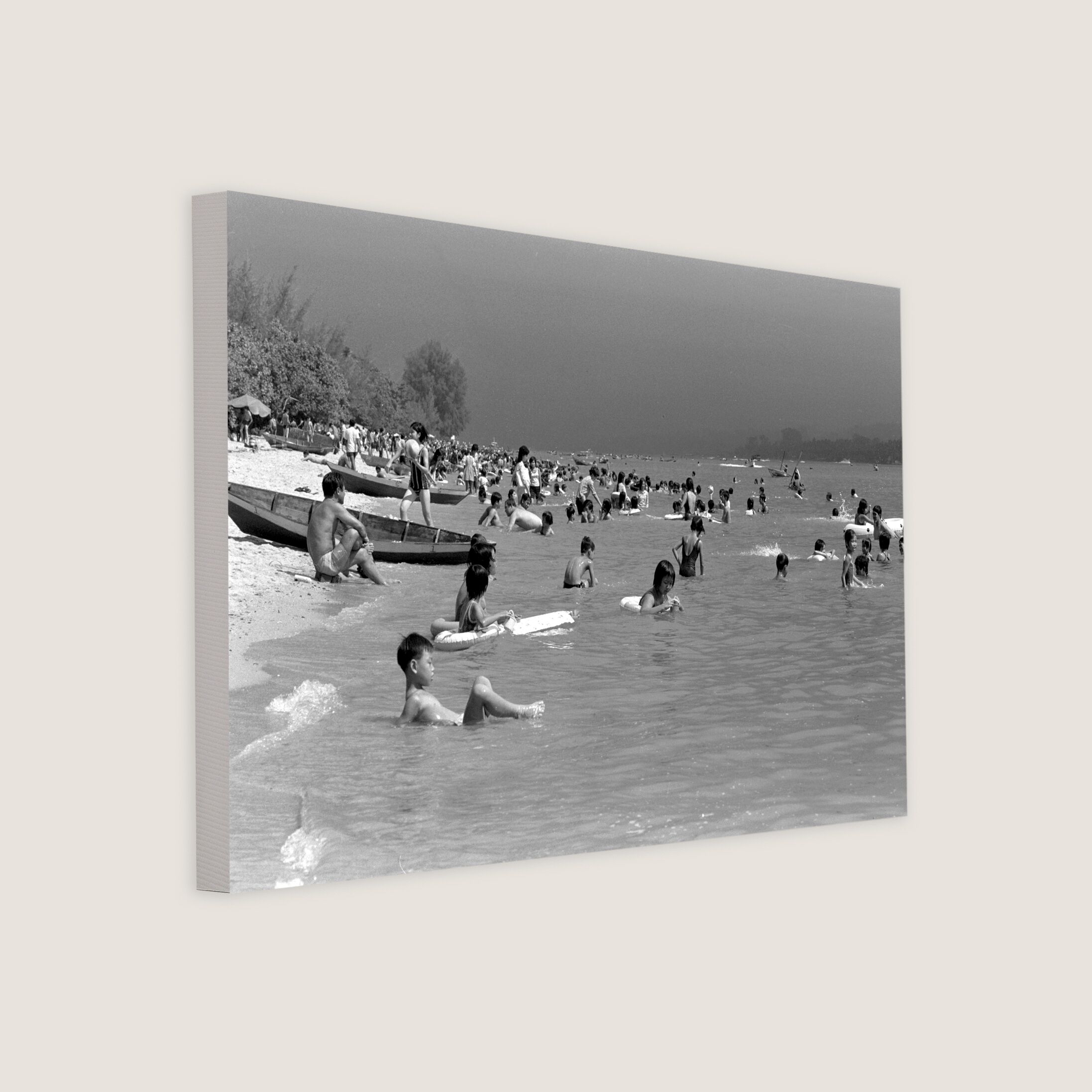
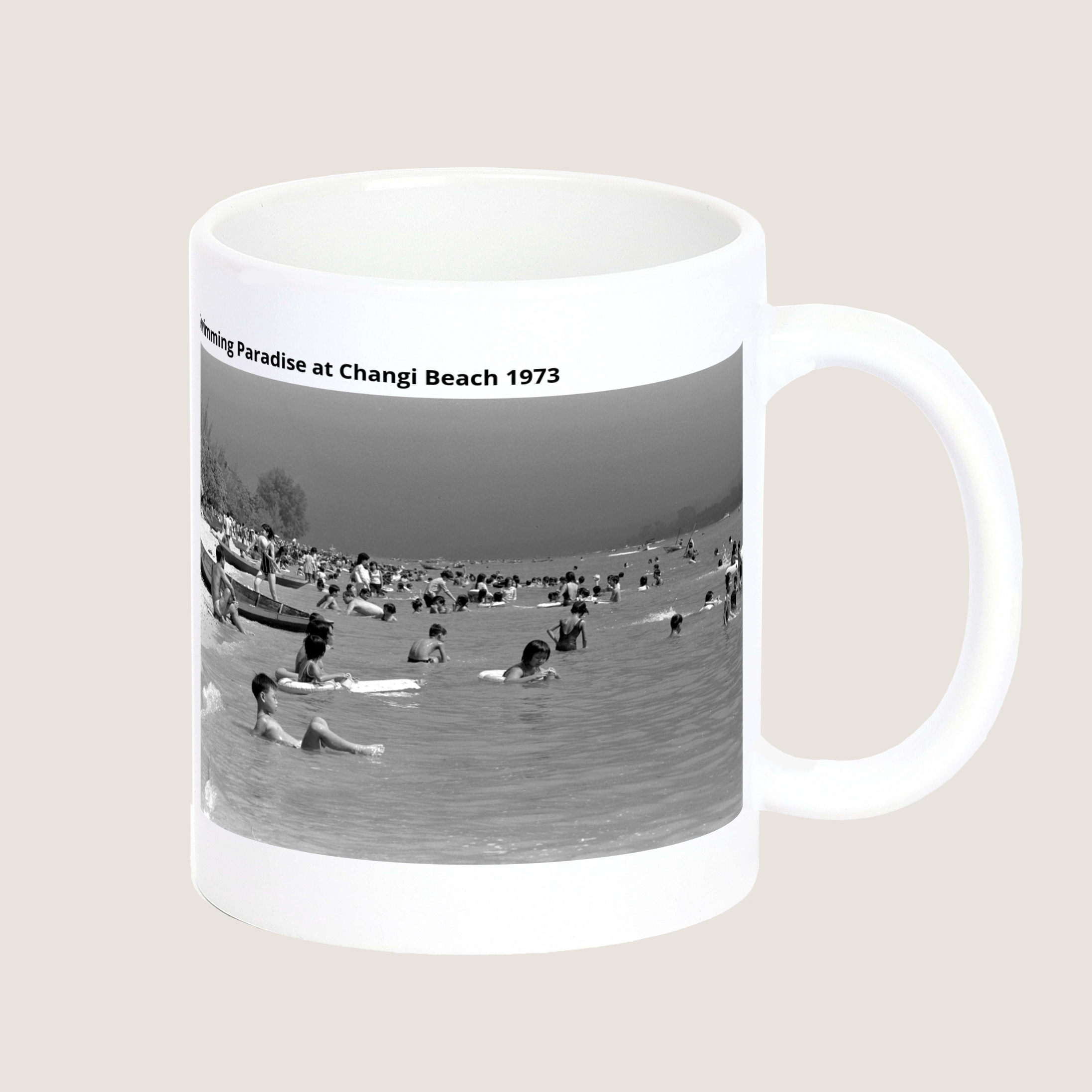
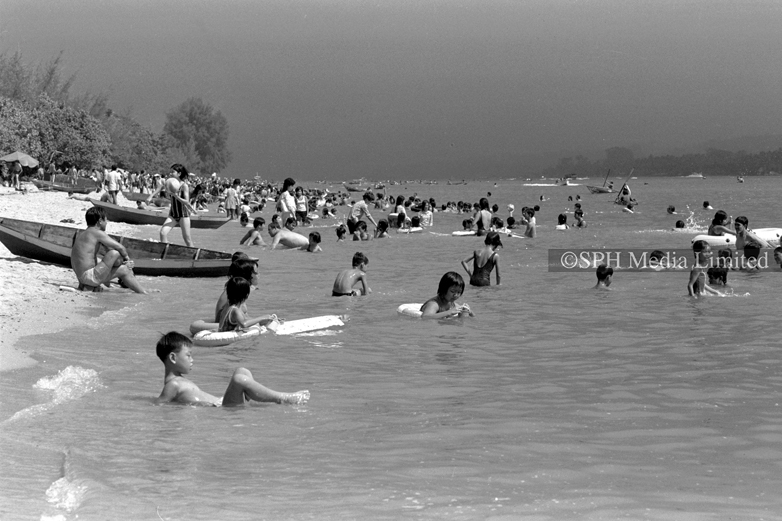 Swimming Paradise at Changi Beach
1973
Swimming Paradise at Changi Beach
1973
Swimming Paradise at Changi Beach
Year 1973
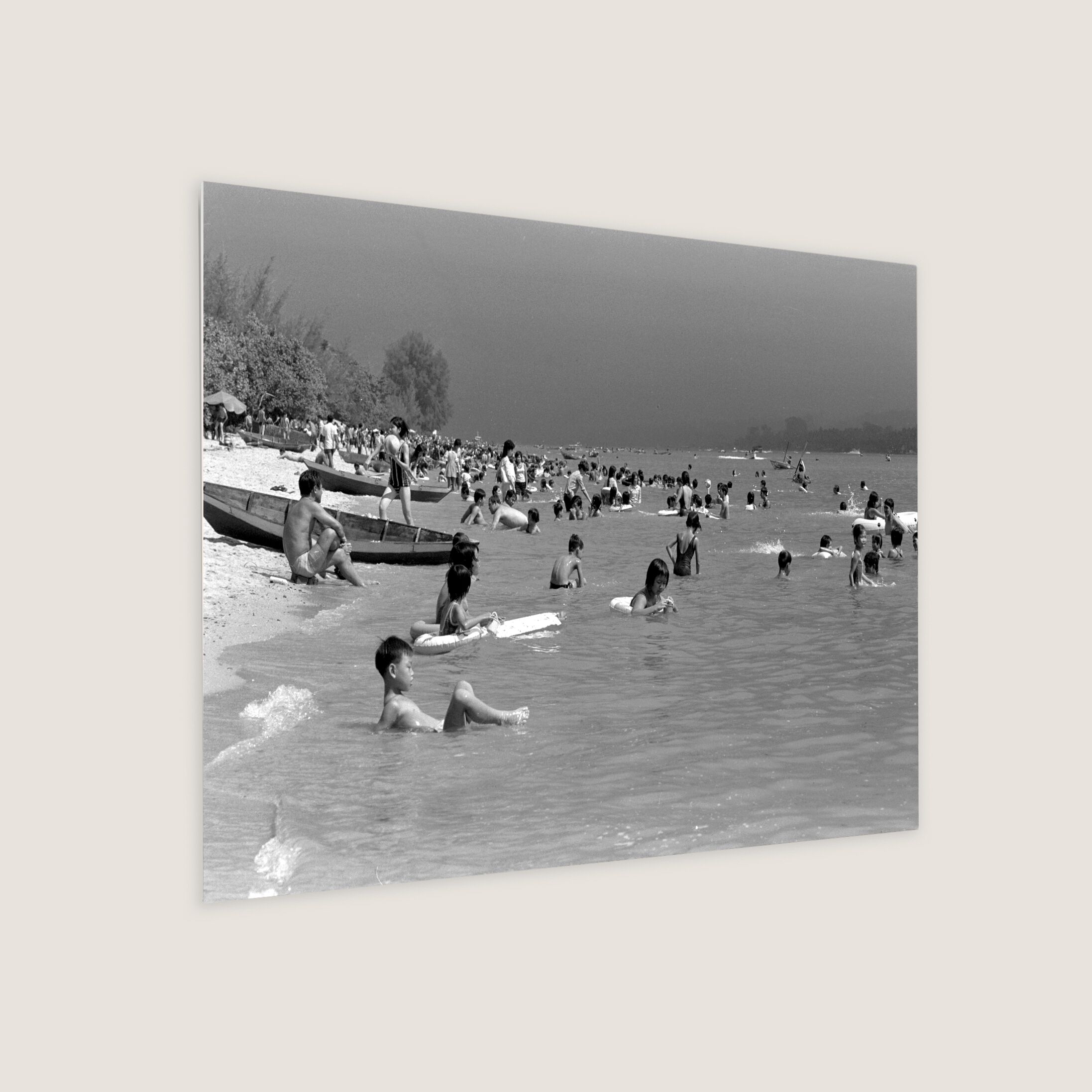
Changi’s beaches were popular weekend retreats between the 1950s and 1970s. Families would pack food, water, clean bedding, clothes, swimsuits, and inner rubber tubes, and then make the long journey to Changi. The expansion and establishment of Changi Airport from 1976 brought another wave of redevelopment to Changi's beaches.
©️ SPH Media Limited
Share to
Tags
Available for print on products
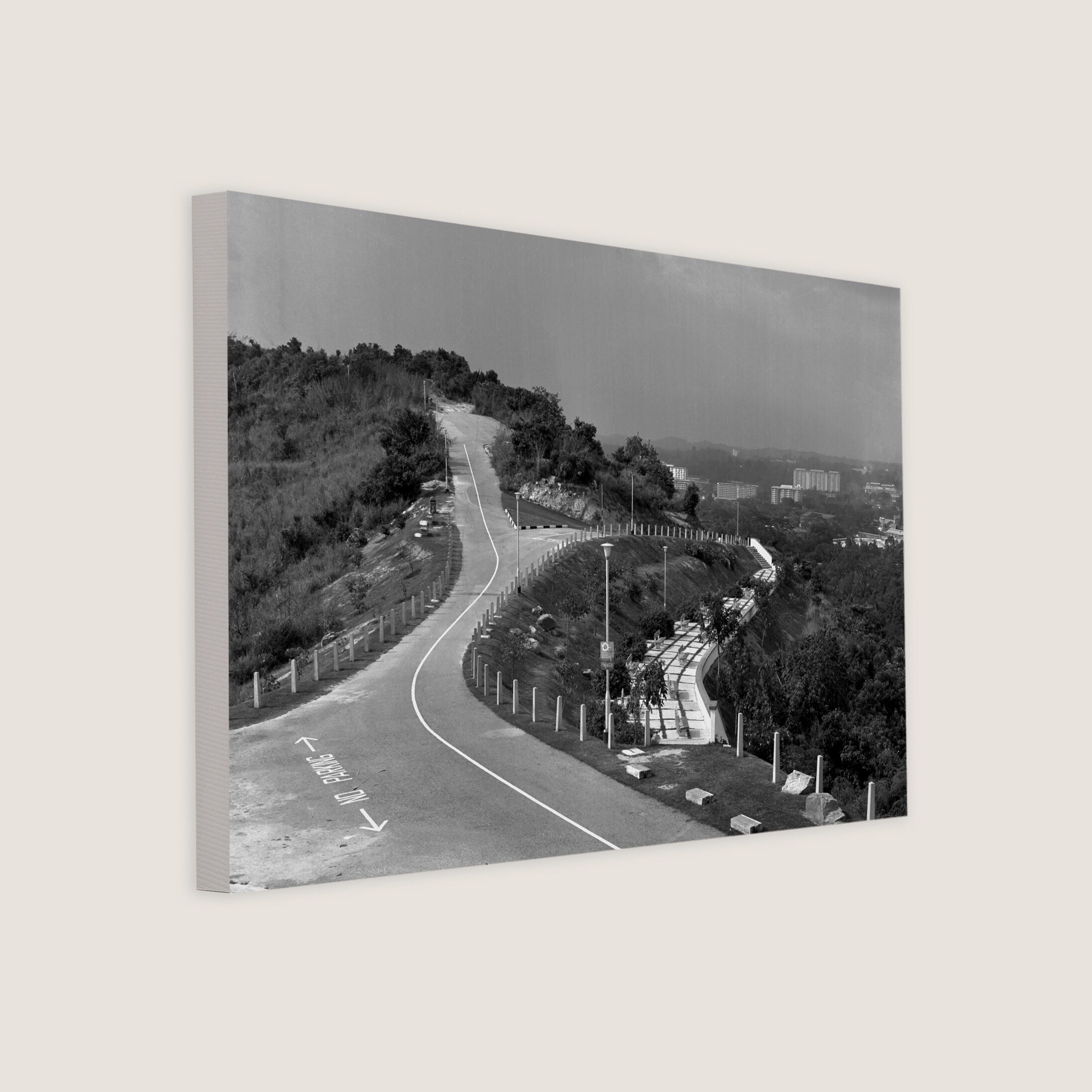
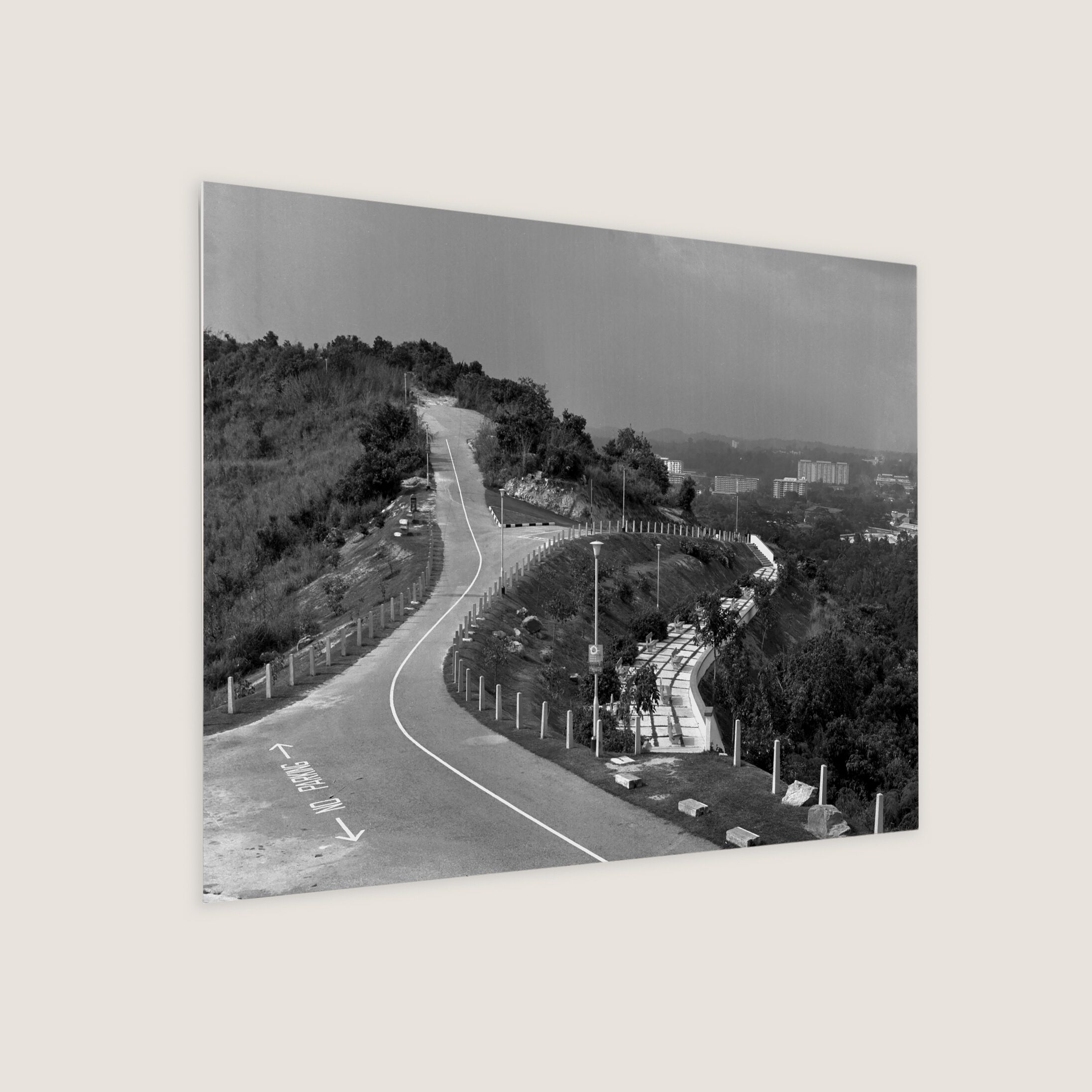
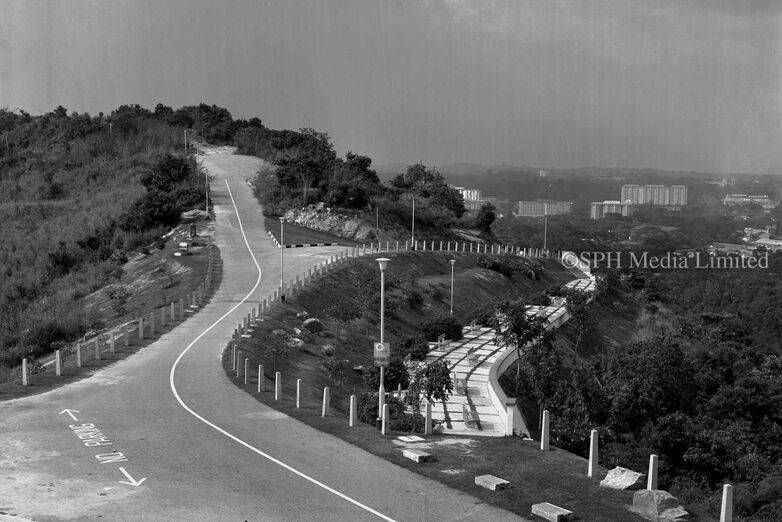 The Top of Mount Faber
1969
The Top of Mount Faber
1969
The Top of Mount Faber
Year 1969
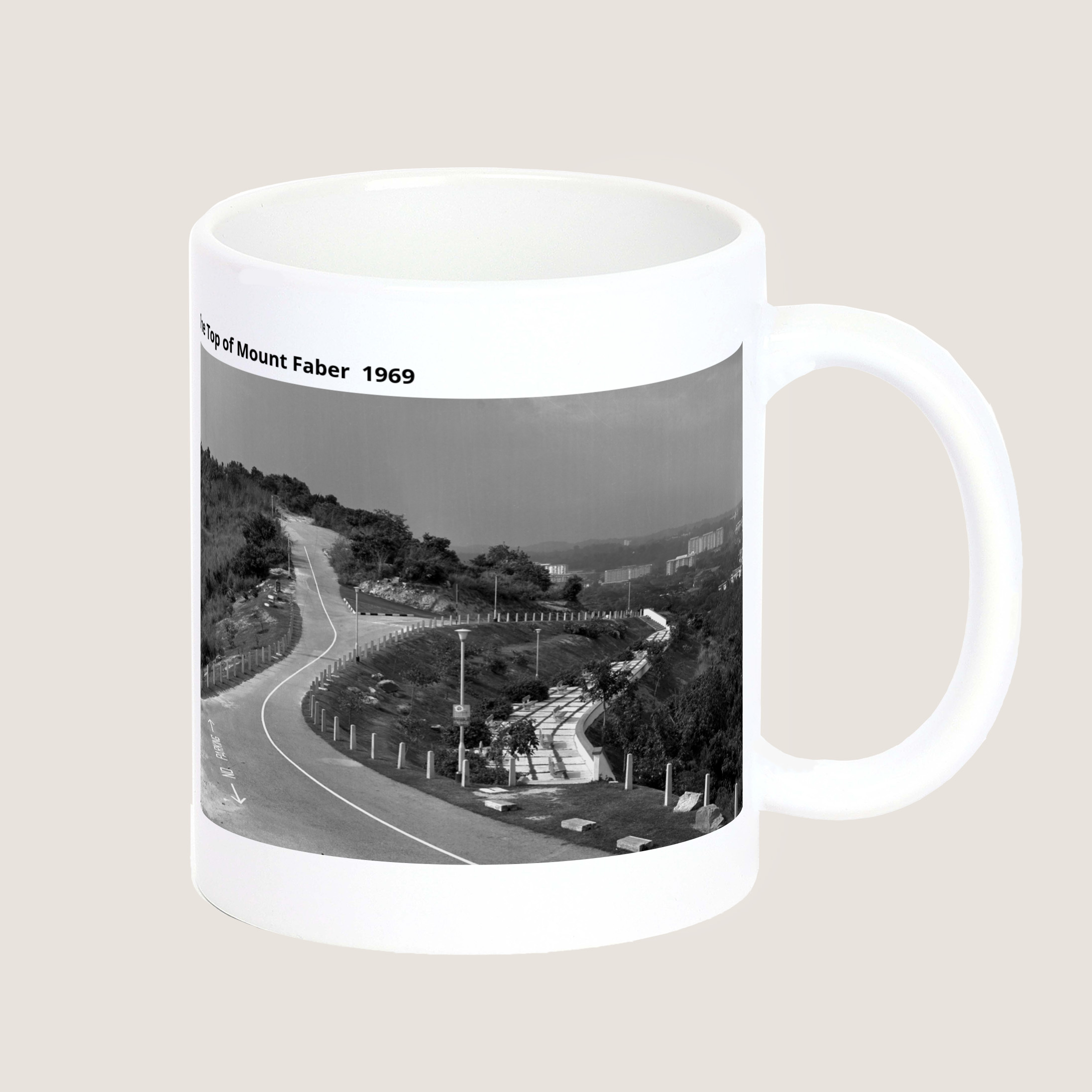
Opened on 17 January 1965, Mount Faber Park is one of the oldest parks in Singapore. The park covers a land area of 56 hectares and is home to a variety of flora and fauna. Mount Faber, together with at least seven small hills, forms the Southern Ridges. Before the development of present-day Mount Faber, this was what the top looked like. The road leads to a Buddhist temple at the summit of another hill, the former Thousand Buddha Temple.
©️ SPH Media Limited
Share to
Tags
Available for print on products
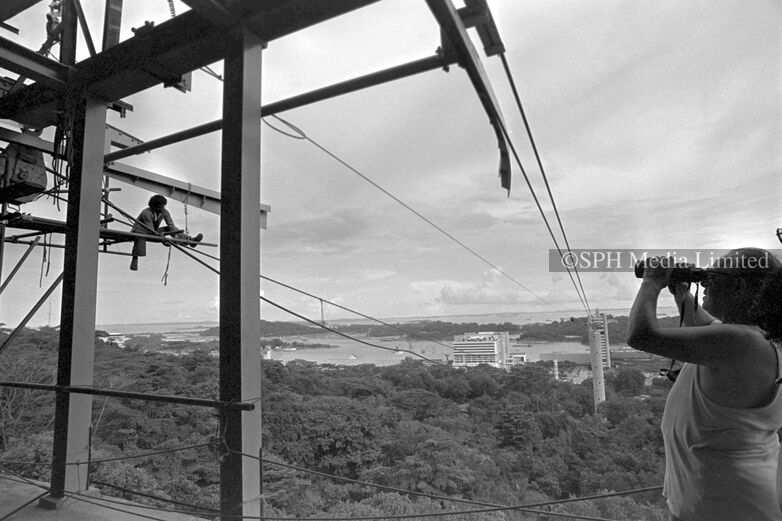 Upgrading Work of Cable Car Station at Mount Faber
1983
Upgrading Work of Cable Car Station at Mount Faber
1983
Upgrading Work of Cable Car Station at Mount Faber
Year 1983
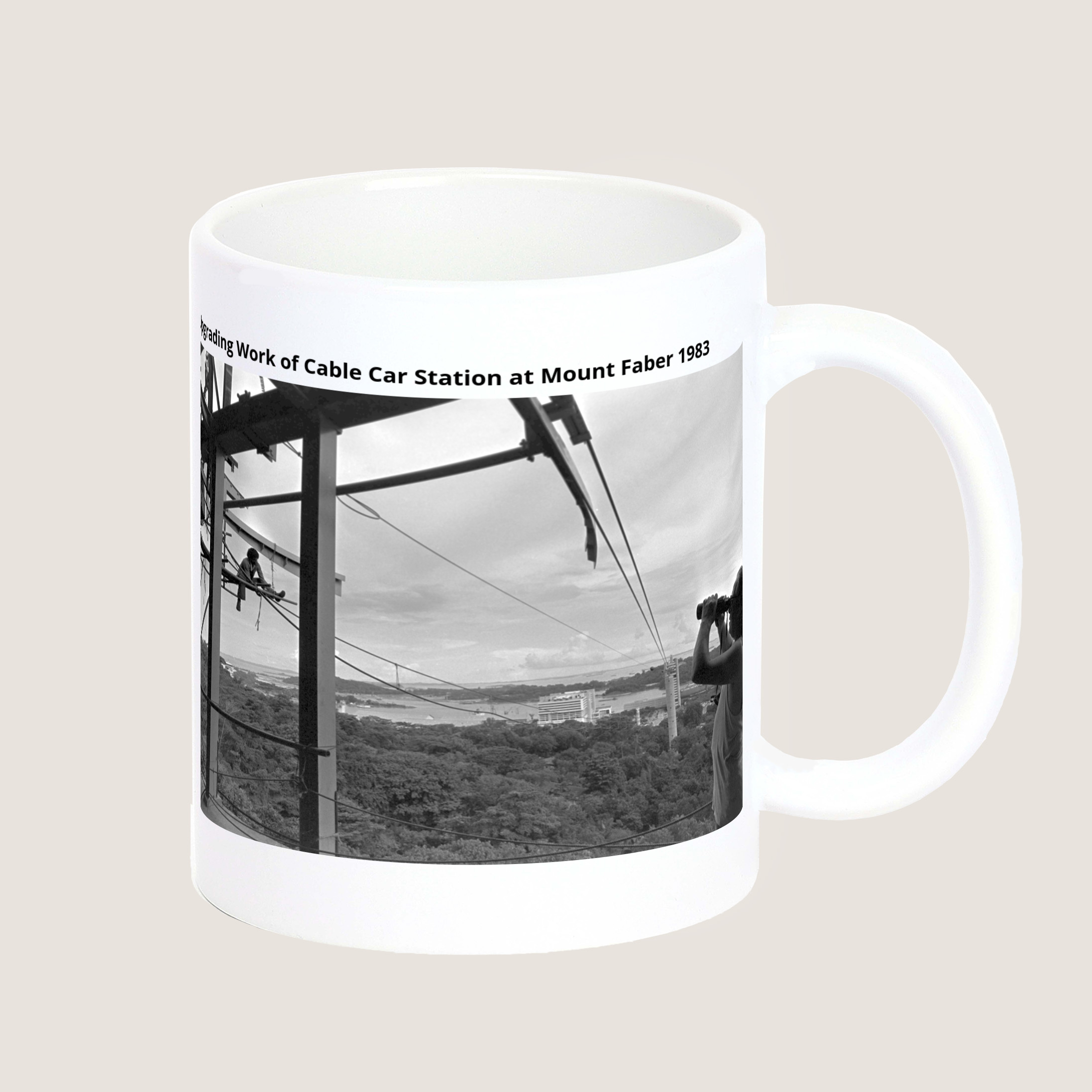
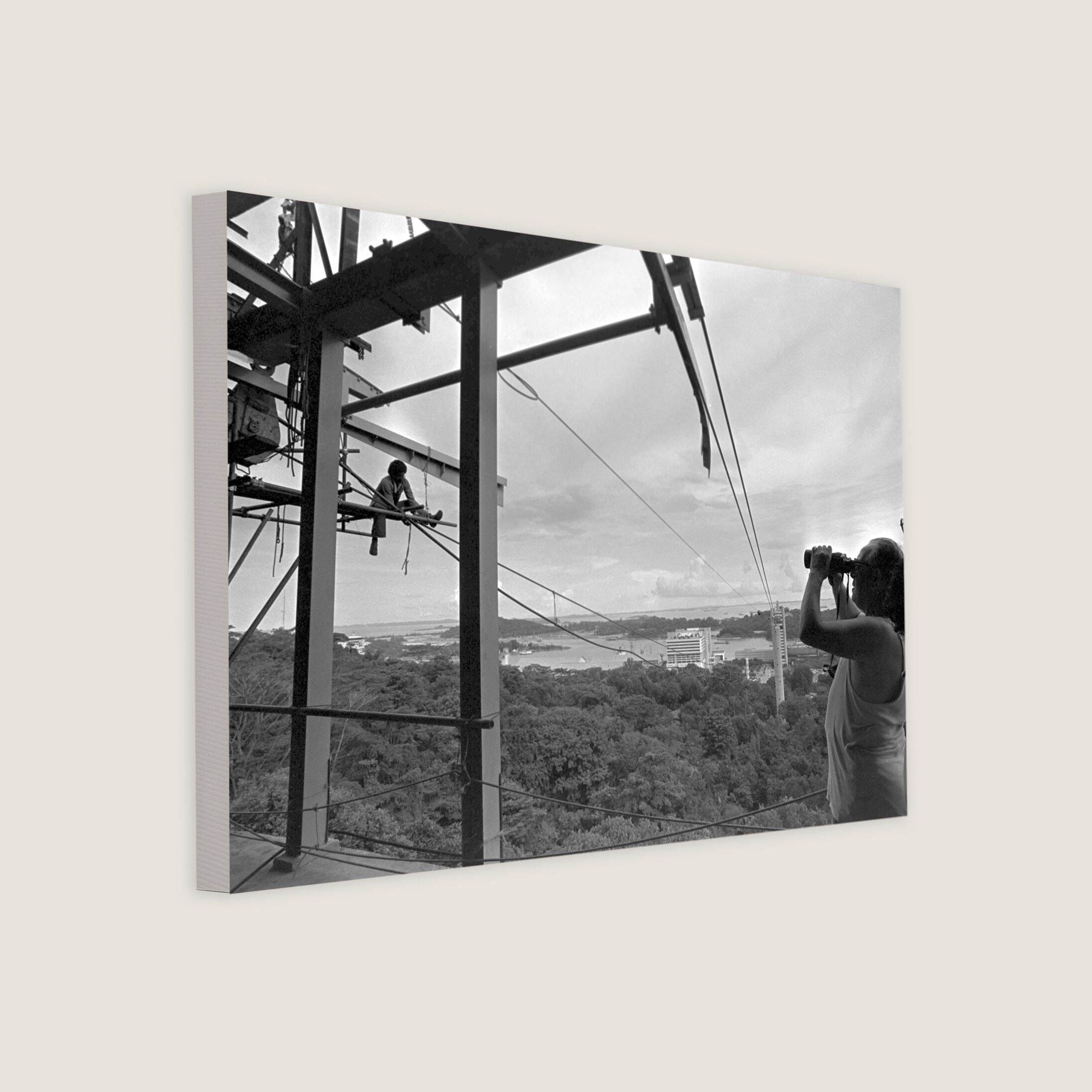
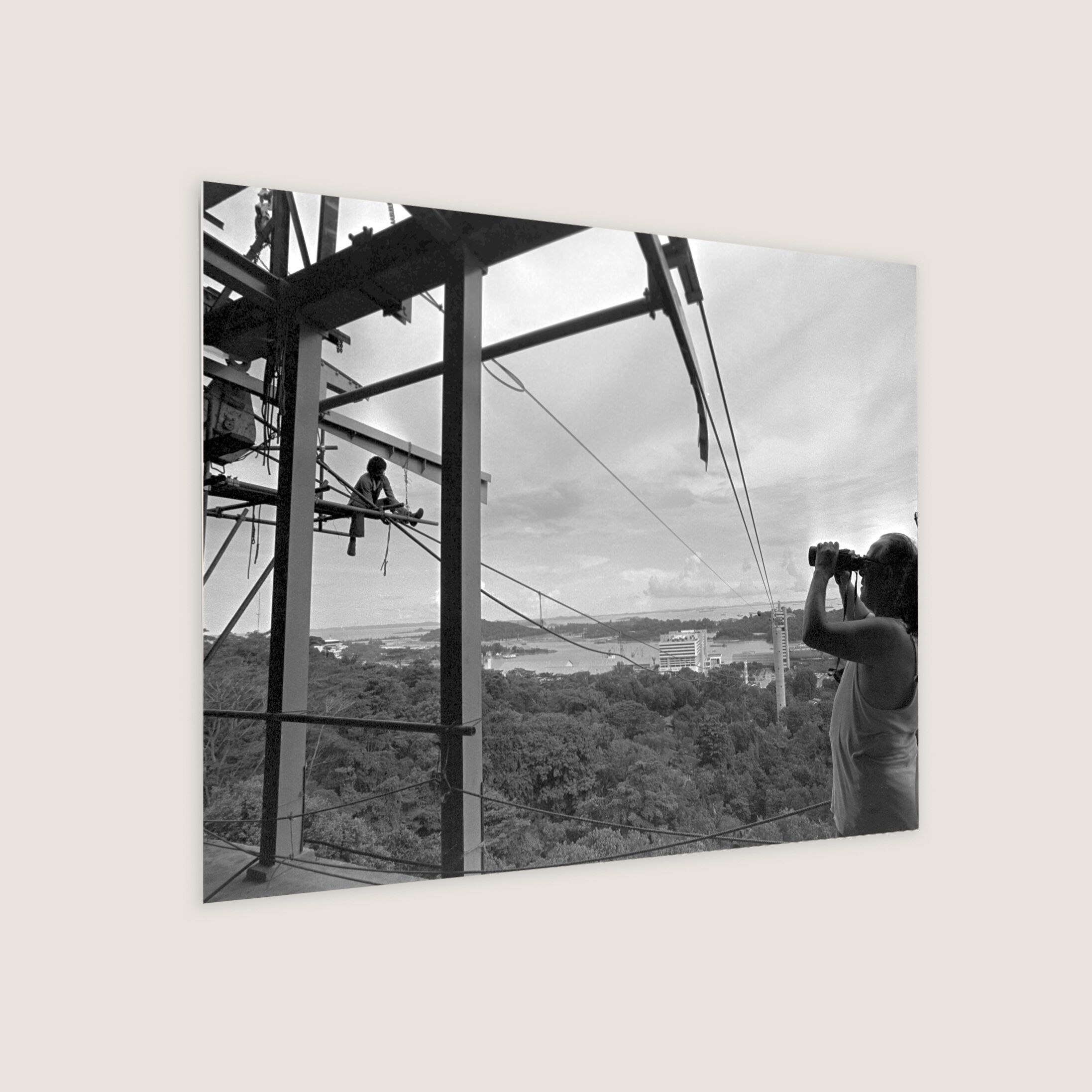
Mount Faber is where one of the Singapore Cable Car stations is located. This was launched on 15 February 1974 by then Deputy Prime Minister Goh Keng Swee. The cable car is a means of transport to Sentosa, the world-renowned resort island of Singapore. It was part of the efforts to convert the island from its history as a naval base to an island getaway for both tourists and locals.
©️ SPH Media Limited
Share to
Tags
Available for print on products
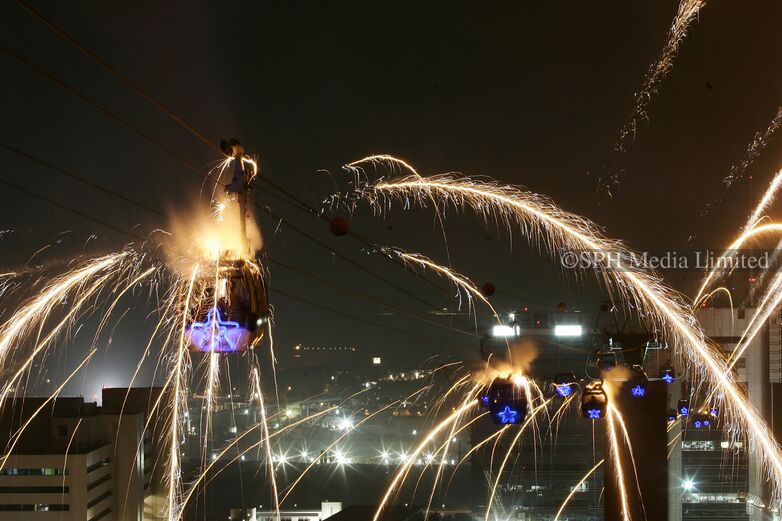 Mount Faber Cable Car New Year Countdown Fireworks
2007
Mount Faber Cable Car New Year Countdown Fireworks
2007
Mount Faber Cable Car New Year Countdown Fireworks
Year 2007
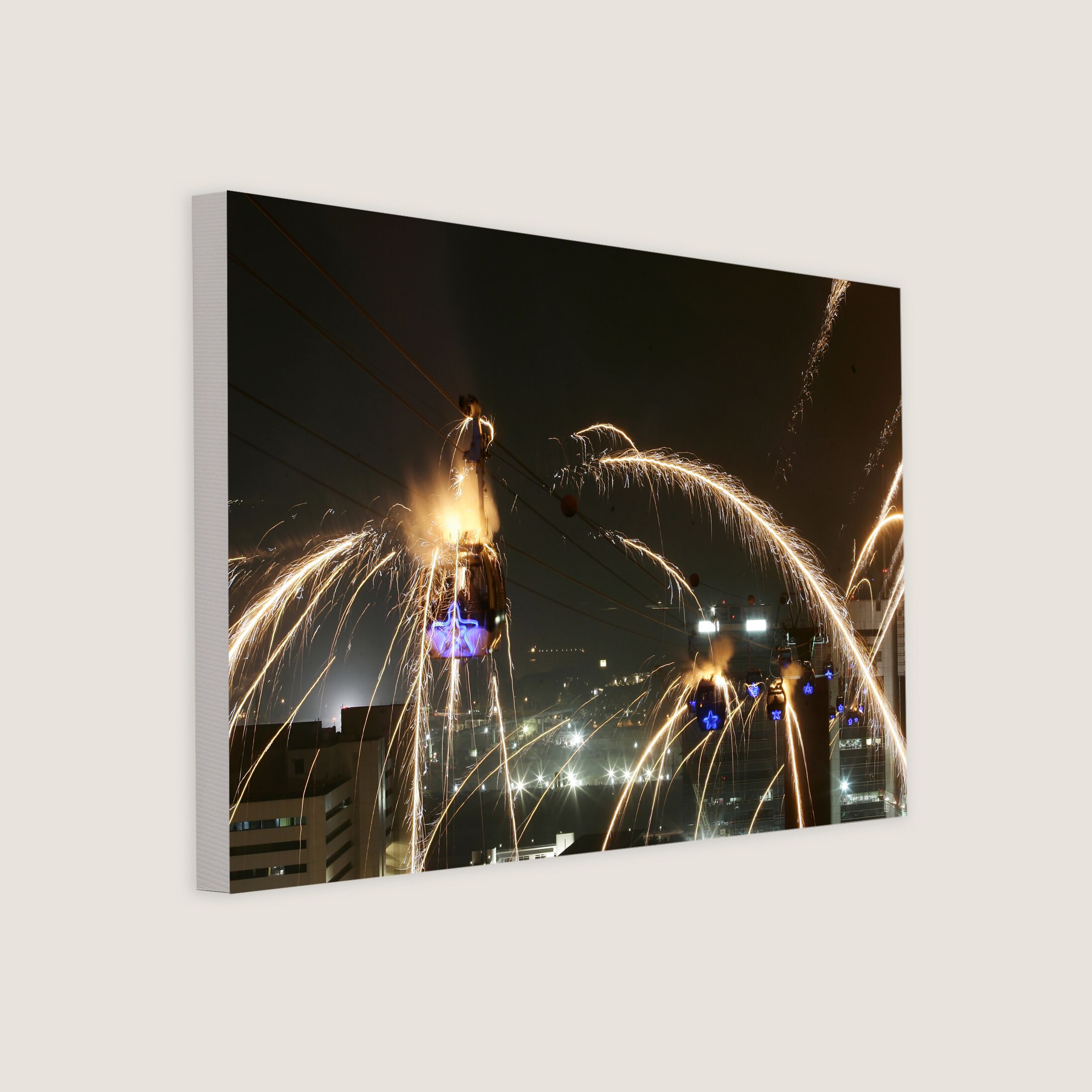
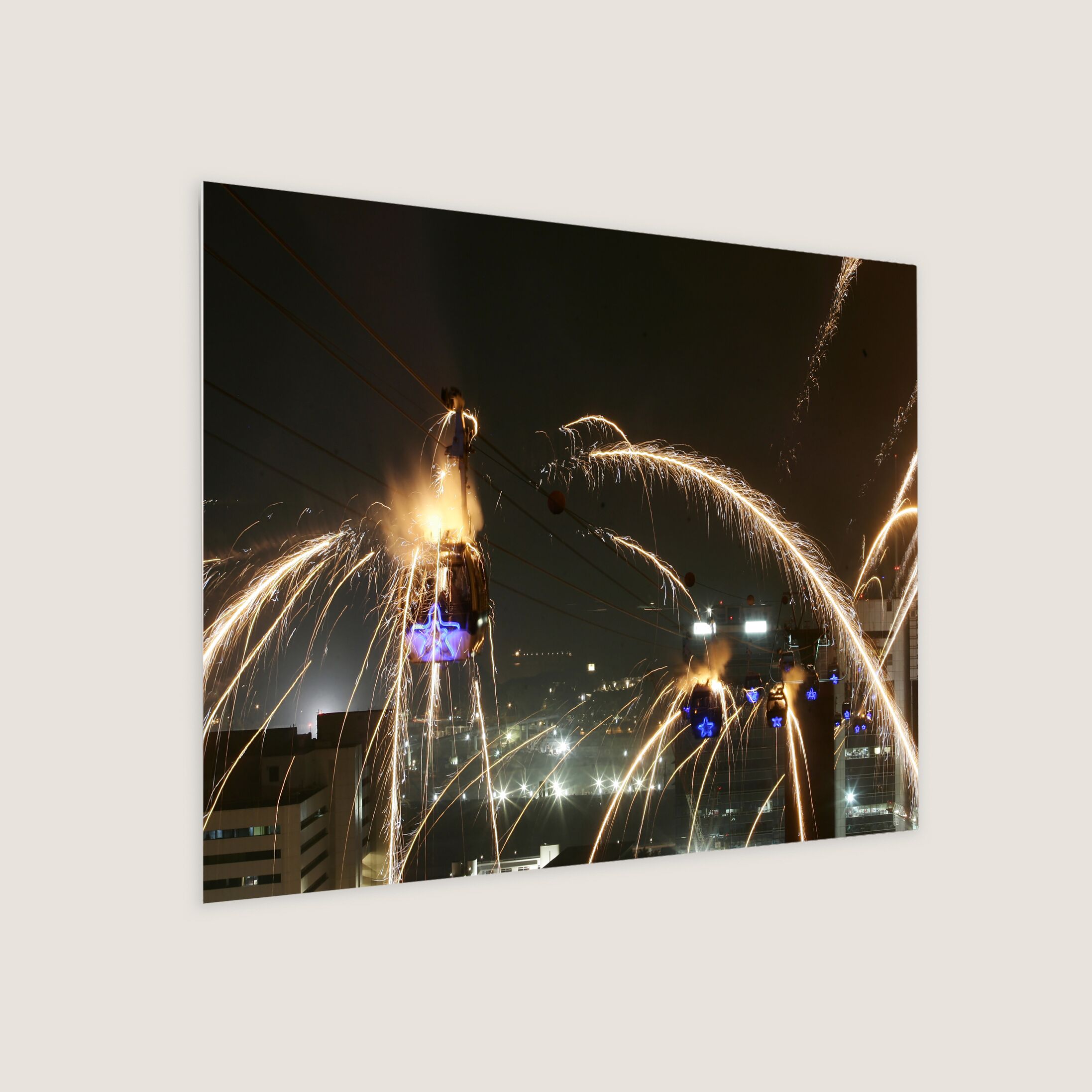
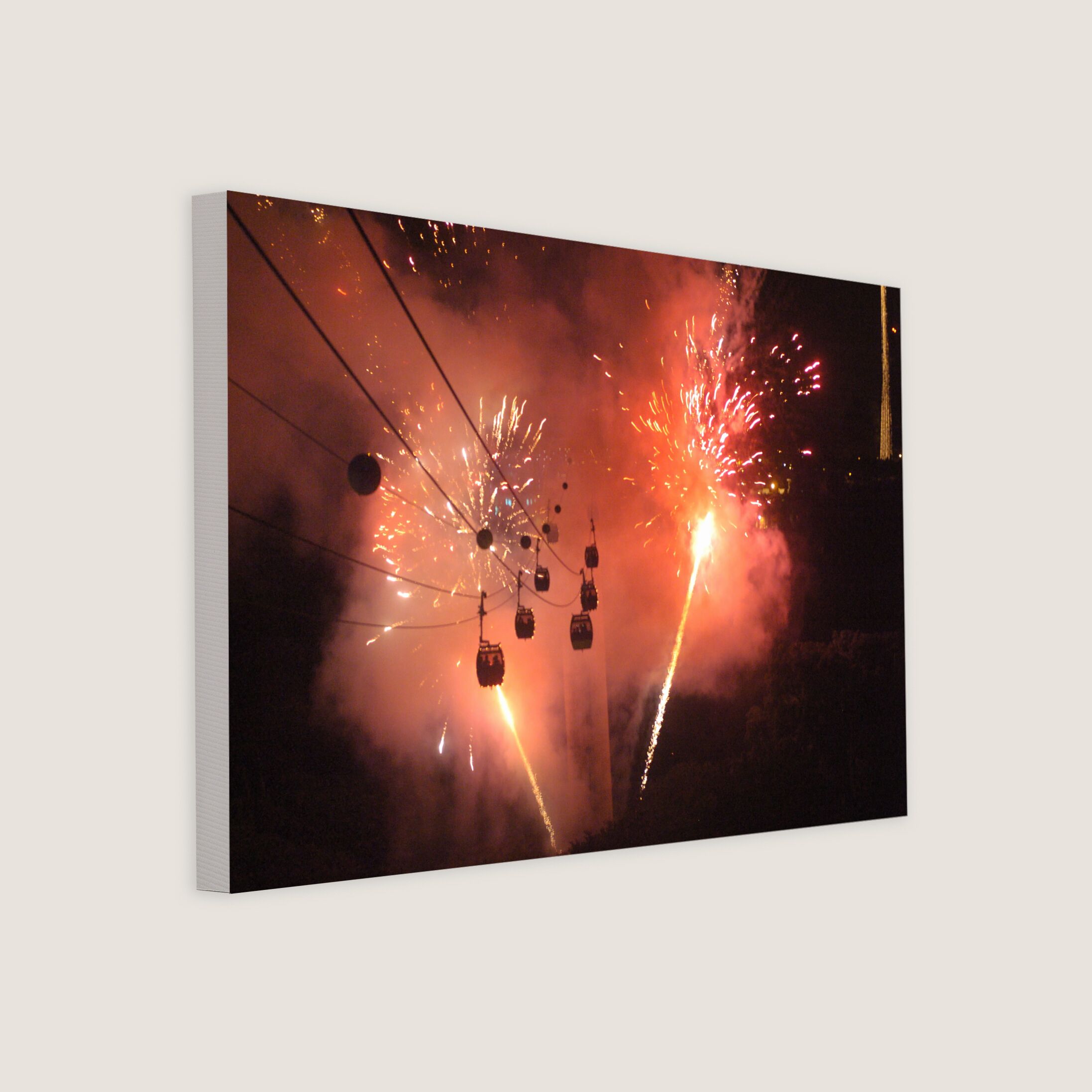
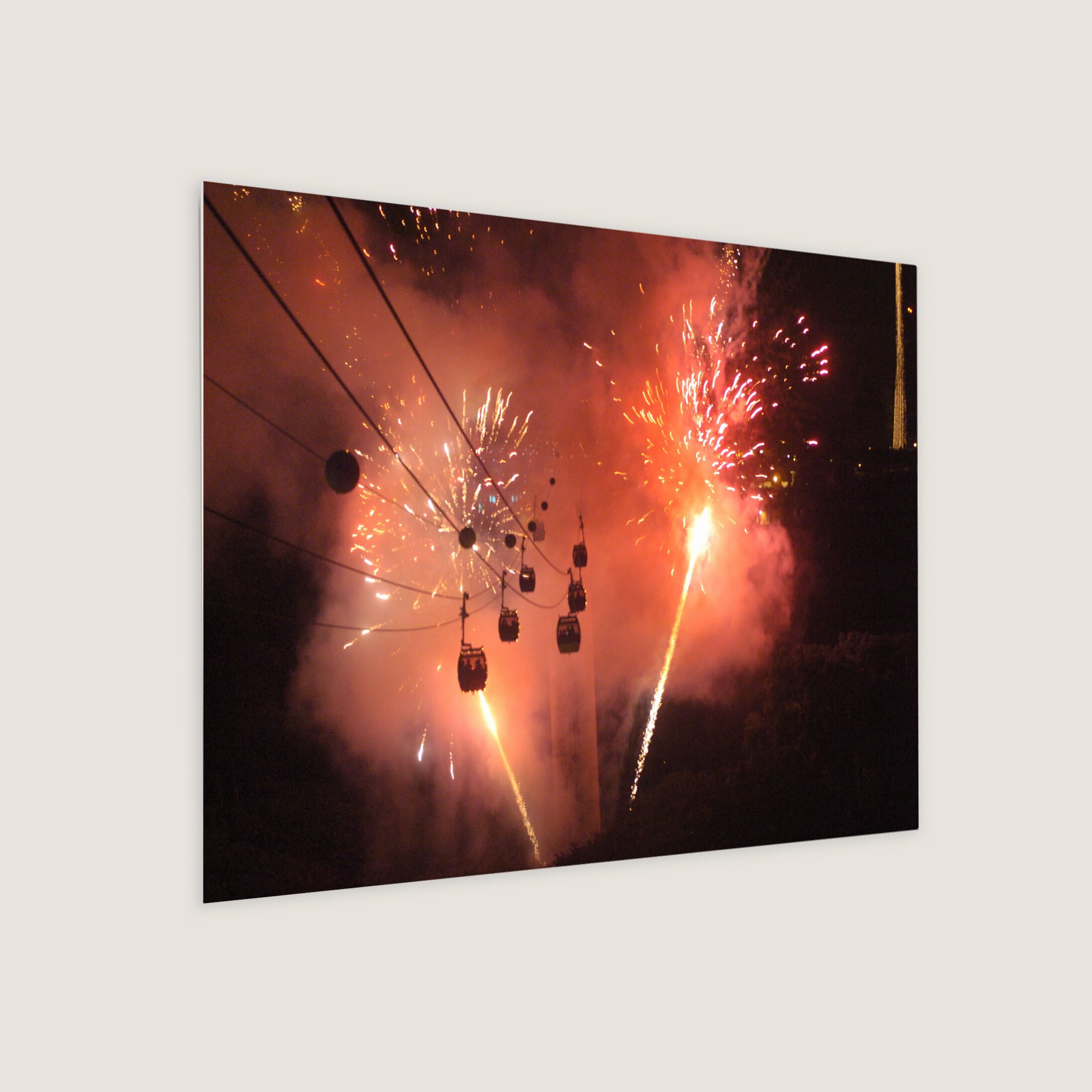
Mount Faber was one of the key attractions for celebrating New Year. During the 2008 countdown, cable cars on Mount Faber emitted fireworks at the stroke of midnight, with the furthest reaching 660 meters away. This fireworks show was handled by a team of pyro experts specially flown in from Germany, becoming the talk of the town.
©️ SPH Media Limited
Share to
Tags
Available for print on products
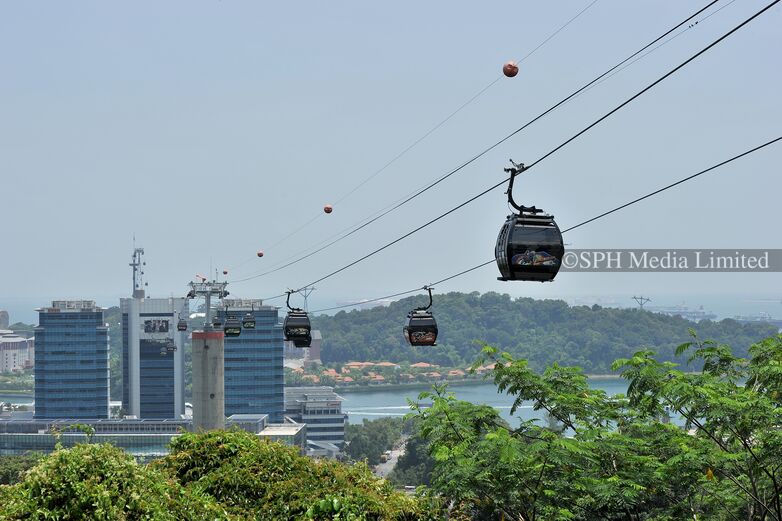 Connecting Mount Faber and Sentosa
2014
Connecting Mount Faber and Sentosa
2014
Connecting Mount Faber and Sentosa
Year 2014
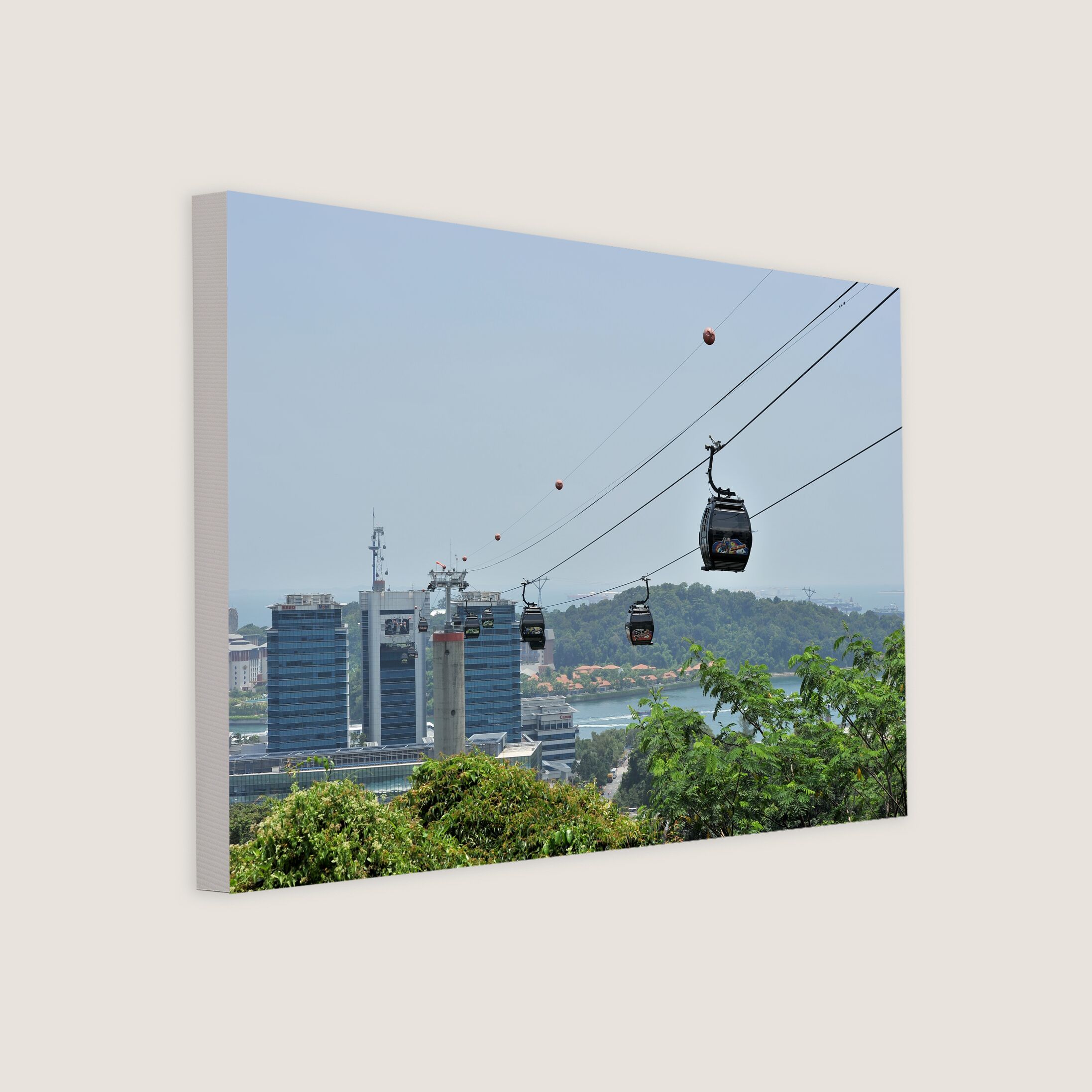
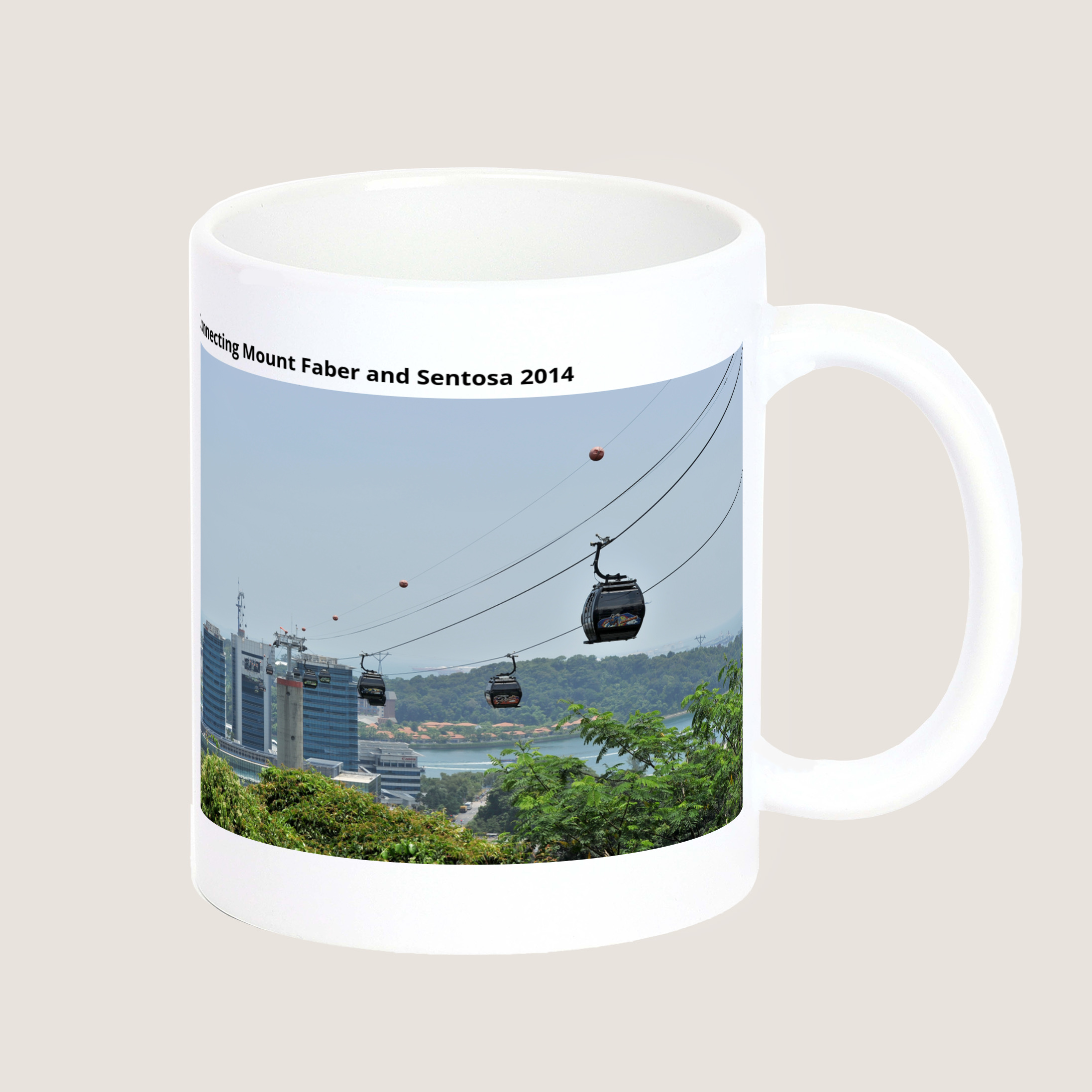
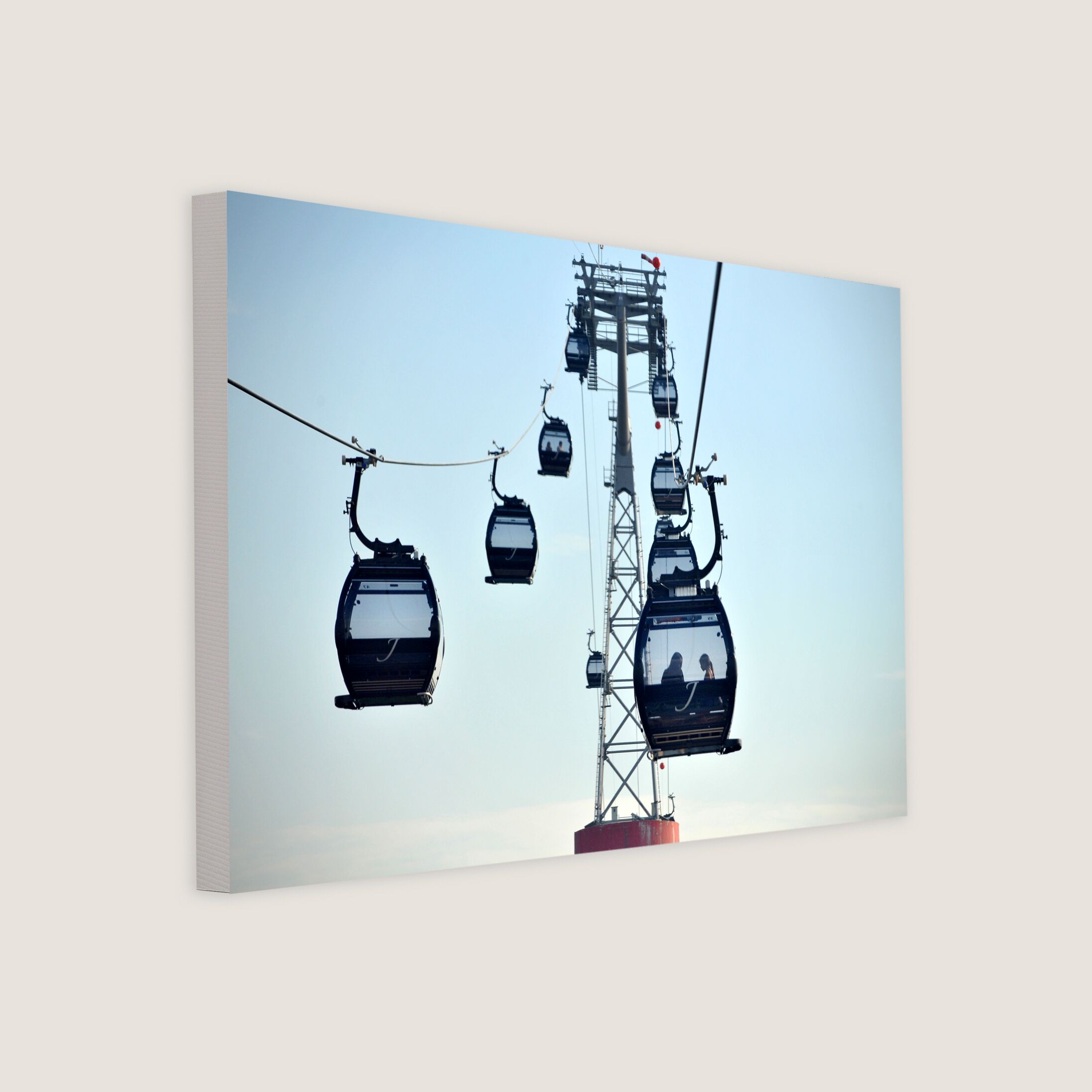
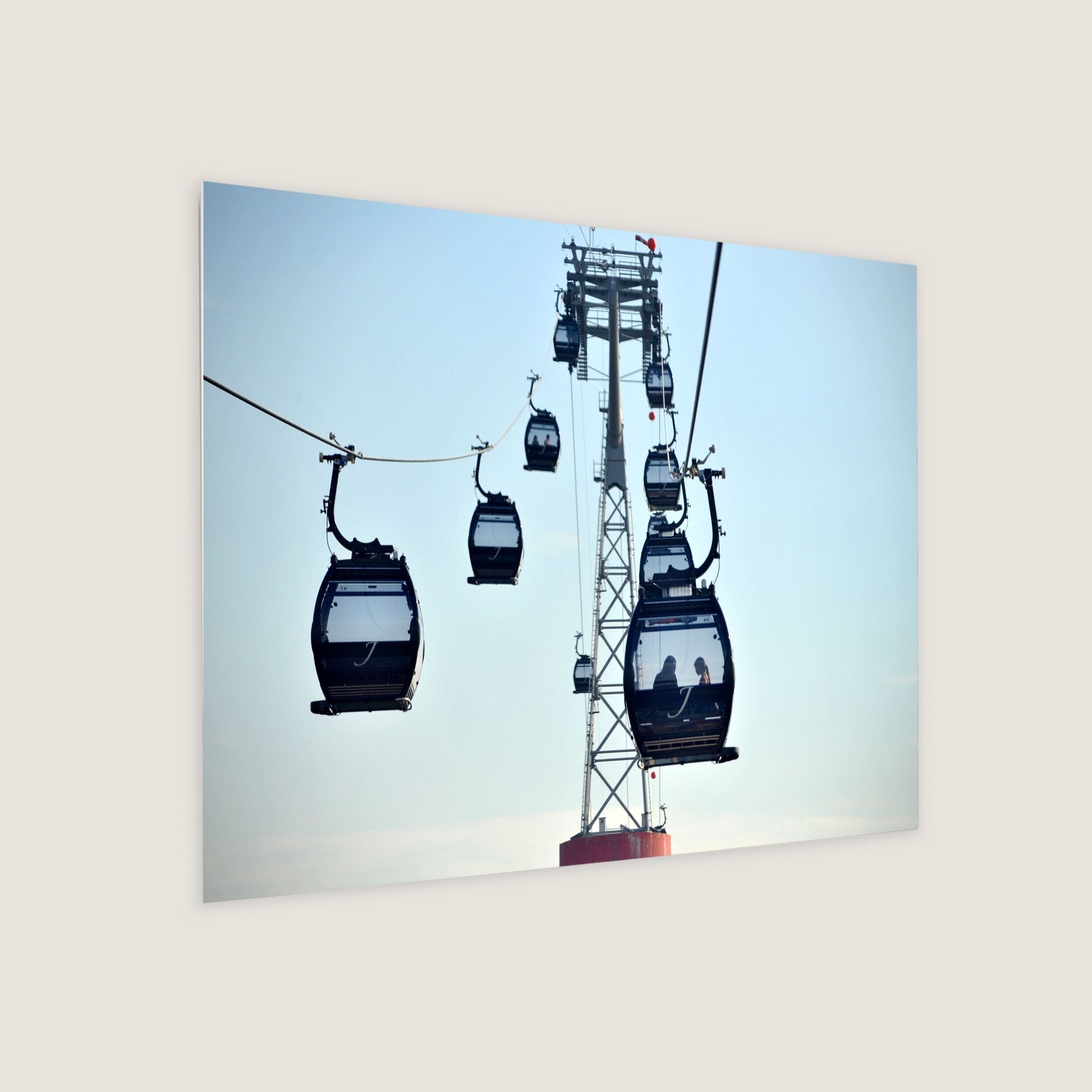
In 2014, the Singapore Cable Car system consisted of two independent lines, the Mount Faber Line, which provided services between Mount Faber and Sentosa stations, connecting Singapore's main island and Sentosa Island. The photos here show cable cars traveling between Mount Faber and Sentosa.
©️ SPH Media Limited
Share to
Tags
Available for print on products
 Revamping of Mount Faber Cable Car System
2010
Revamping of Mount Faber Cable Car System
2010
Revamping of Mount Faber Cable Car System
Year 2010
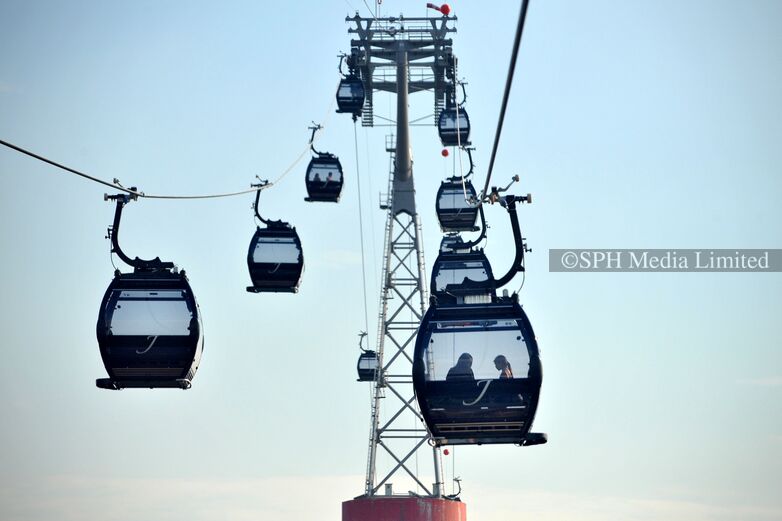
On the hilltop of Mount Faber Park, home to the iconic Singapore Cable Car, a $36 million revamp took place. The mechanical system was replaced, and 67 eight-seat cabins, along with one VIP cabin, were installed. The cable cars reopened to the public on 21 July 2010, and the highest point was raised from 90m to 120m.
©️ SPH Media Limited
Share to
Tags
Available for print on products
 Harbourfront Cable Car Tower New Year Fireworks
2005
Harbourfront Cable Car Tower New Year Fireworks
2005
Harbourfront Cable Car Tower New Year Fireworks
Year 2005
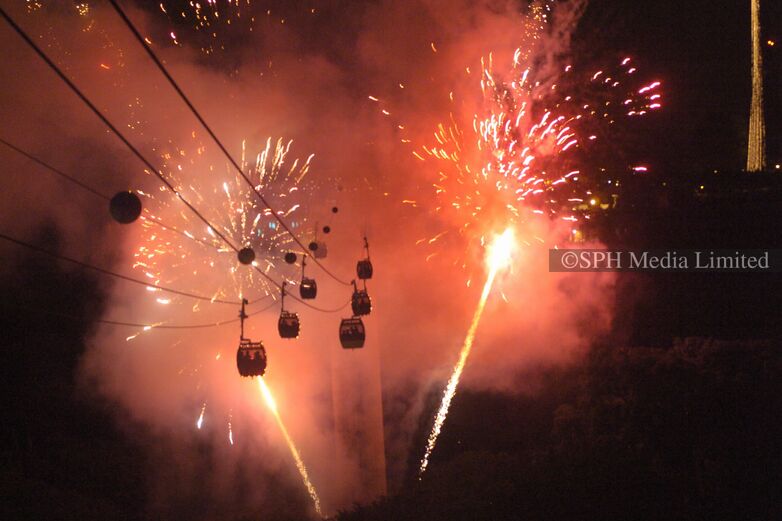
The cable car station at Mount Faber underwent a transformation in 2005 to remain competitive in the tourism and lifestyle sectors and was renamed Jewel Box. It was later renamed Faber Peak. After the countdown, visitors at the Harbourfront Cable Car Tower excitedly welcomed the new year of 2006, with fireworks lighting up the sky.
©️ SPH Media Limited
Share to
Tags
Available for print on products
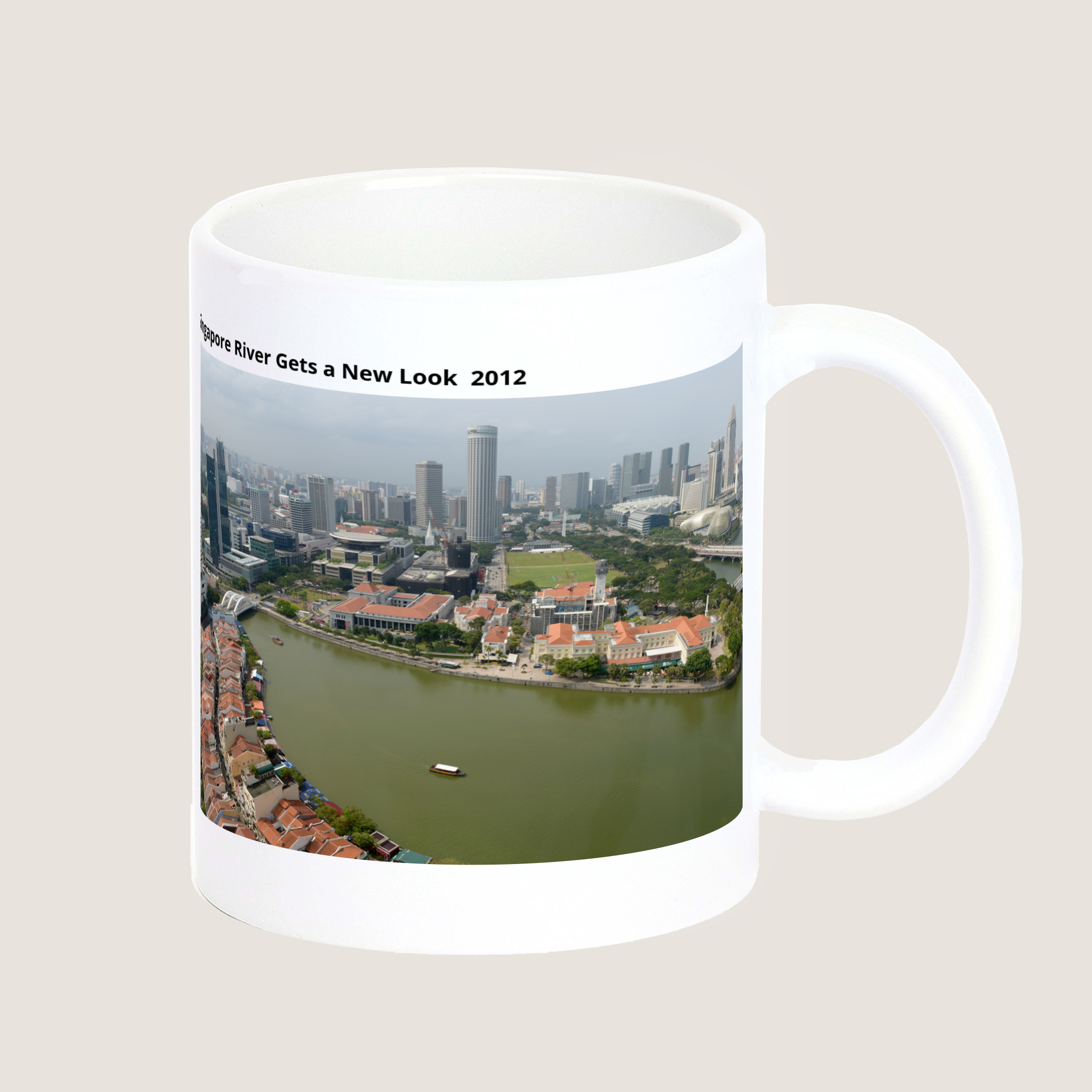
 Singapore River Gets a New Look
2012
Singapore River Gets a New Look
2012
Singapore River Gets a New Look
Year 2012
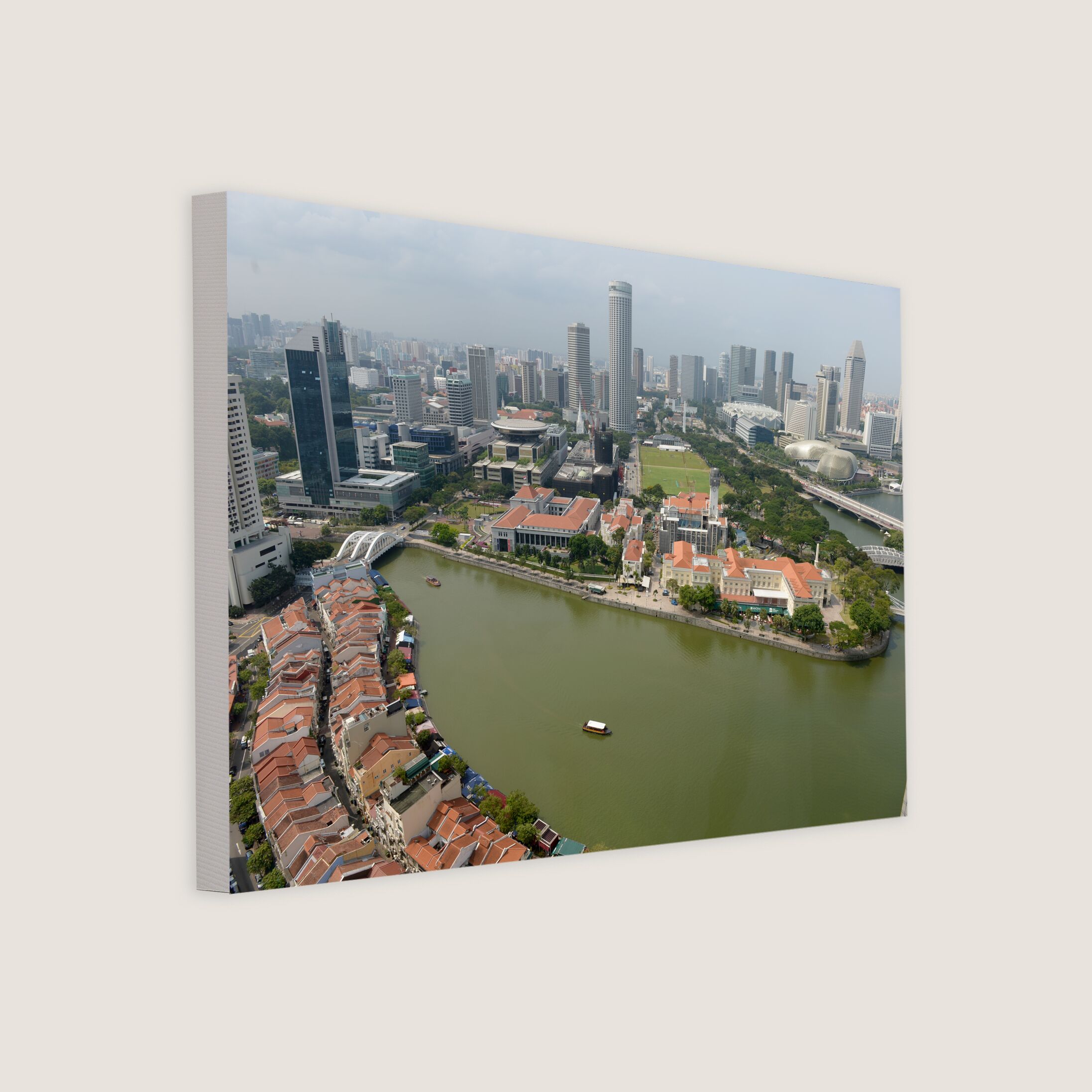
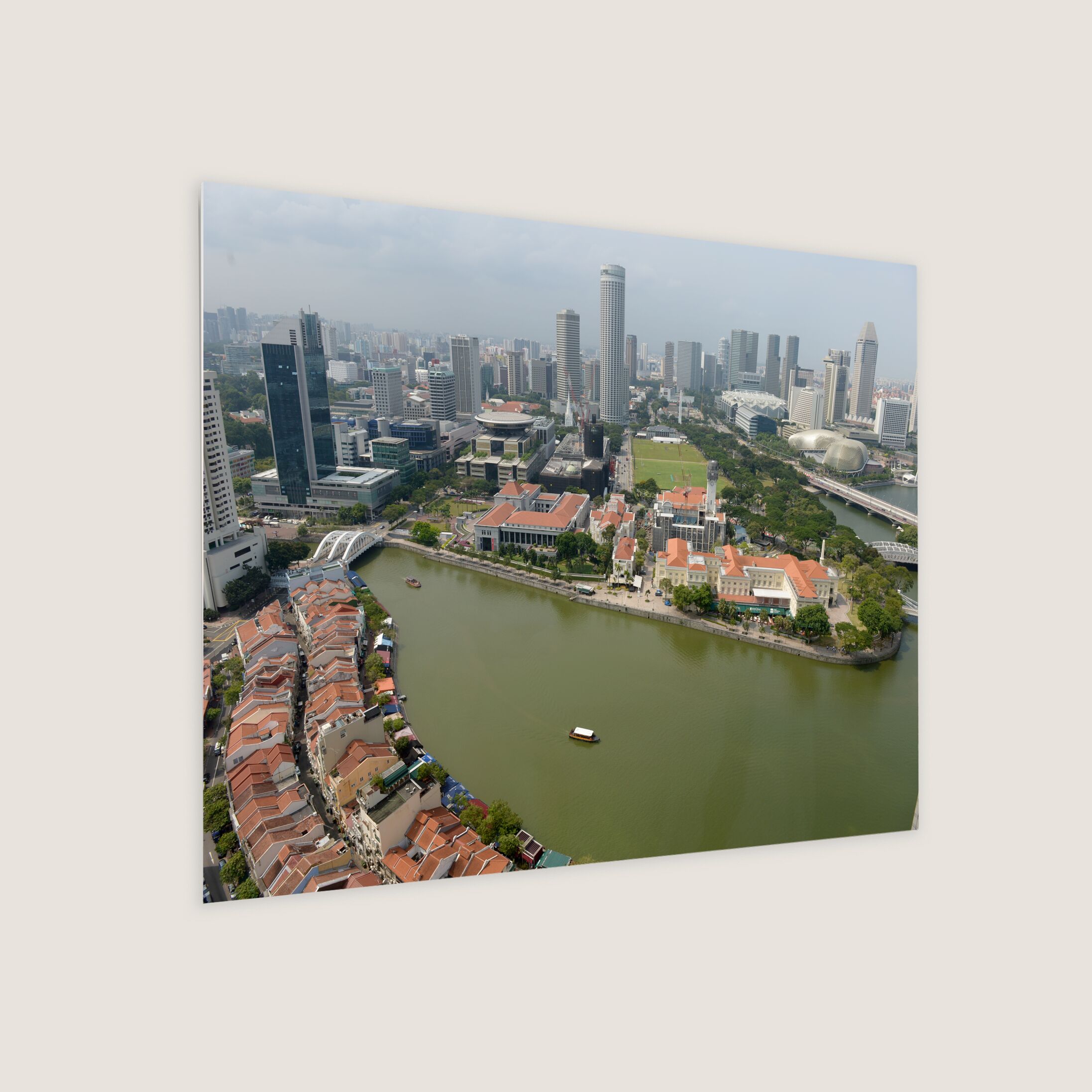
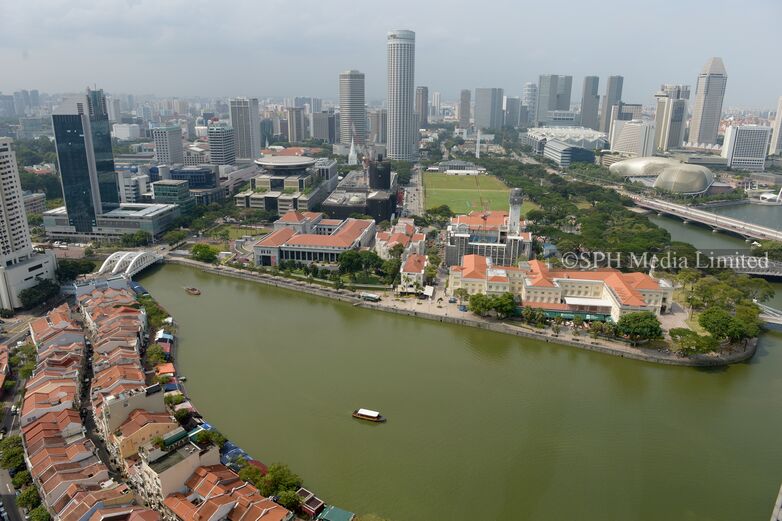
The Singapore River has refurbished shophouses lining its sides. This historical site used to be filled with bumboats and tongkangs ferrying goods across the river. Now, these shophouses have been transformed into entertainment and food venues, and the only boats crossing the river are ferries for tourists.
©️ SPH Media Limited
Share to
Tags
Available for print on products
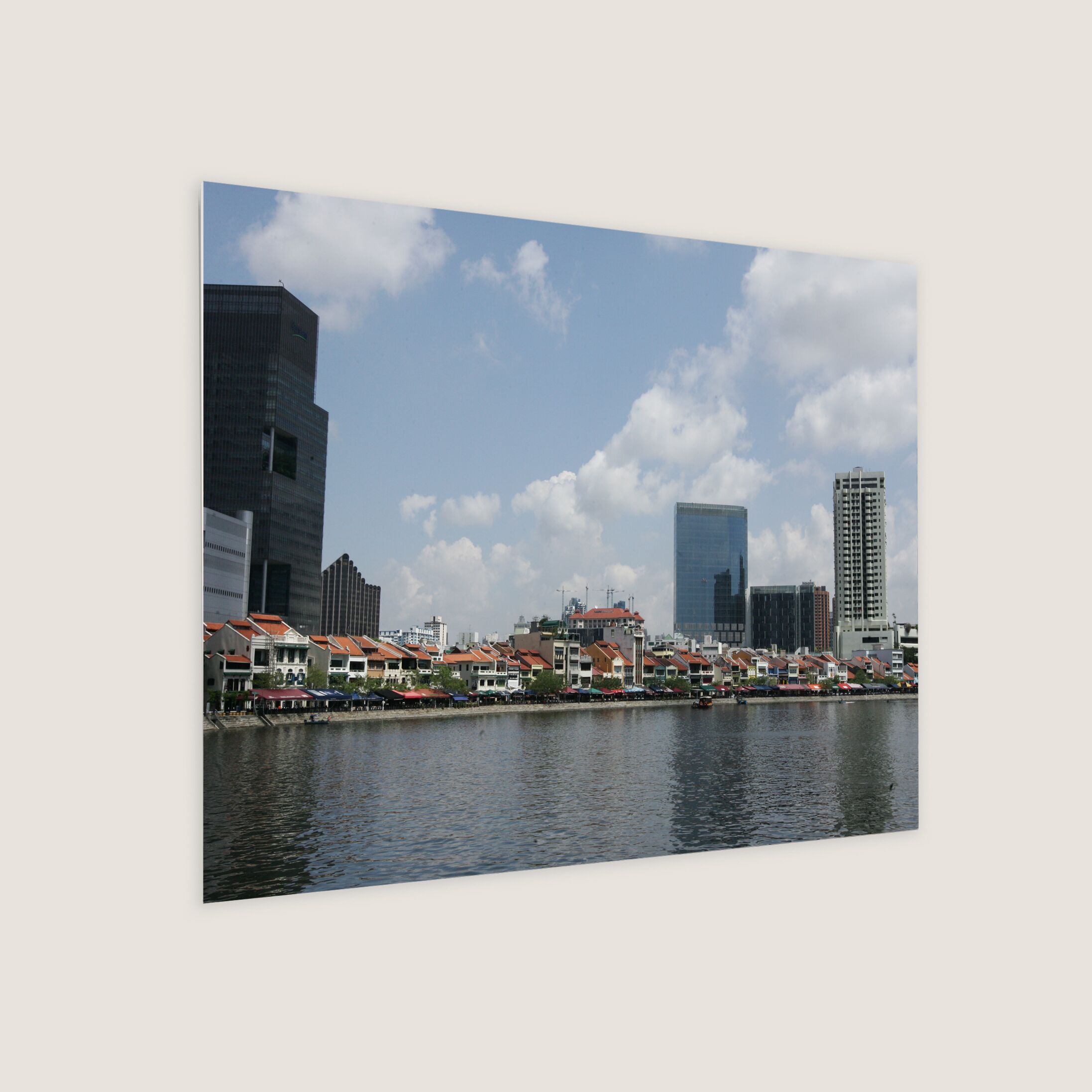
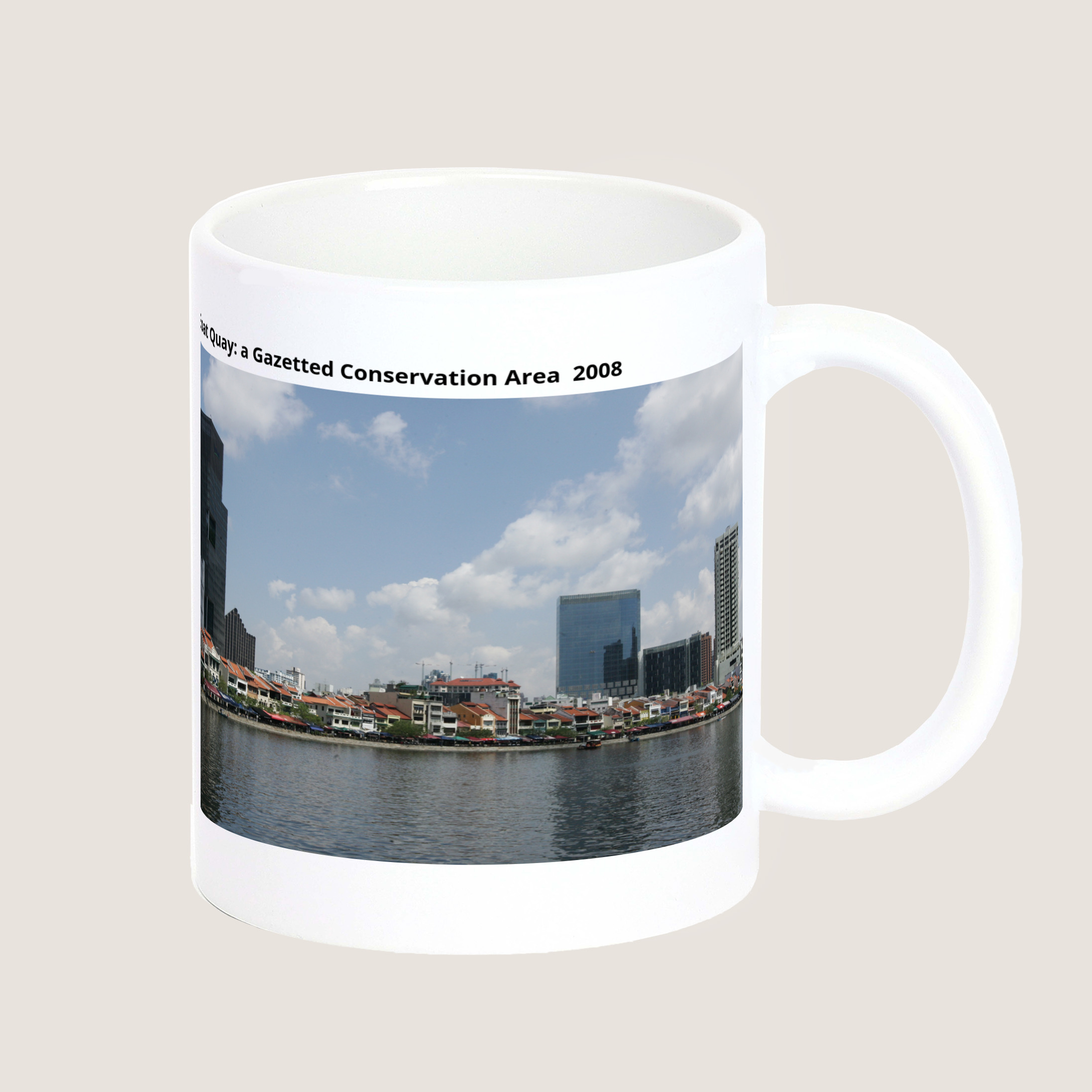
 Boat Quay: a Gazetted Conservation Area
2008
Boat Quay: a Gazetted Conservation Area
2008
Boat Quay: a Gazetted Conservation Area
Year 2008
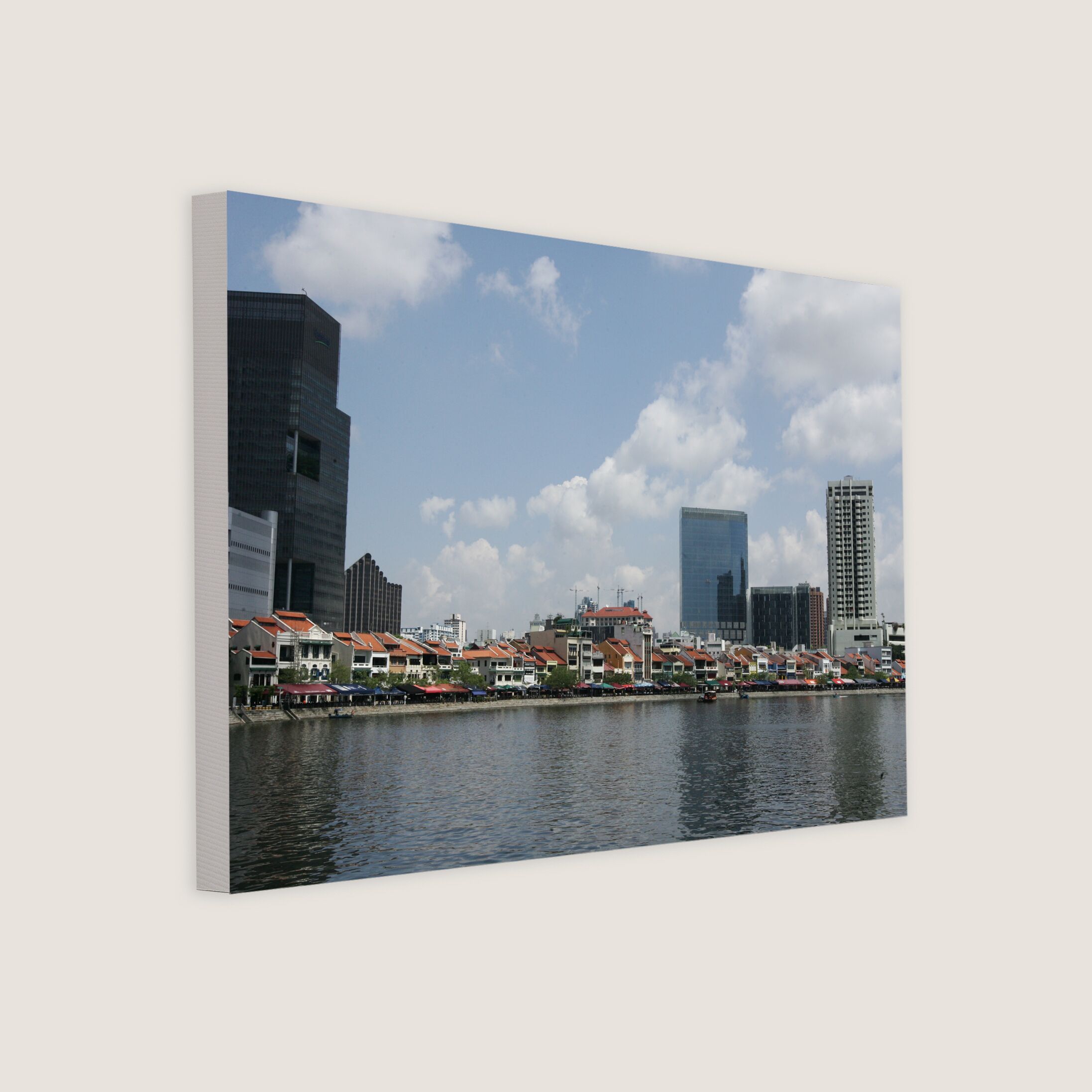
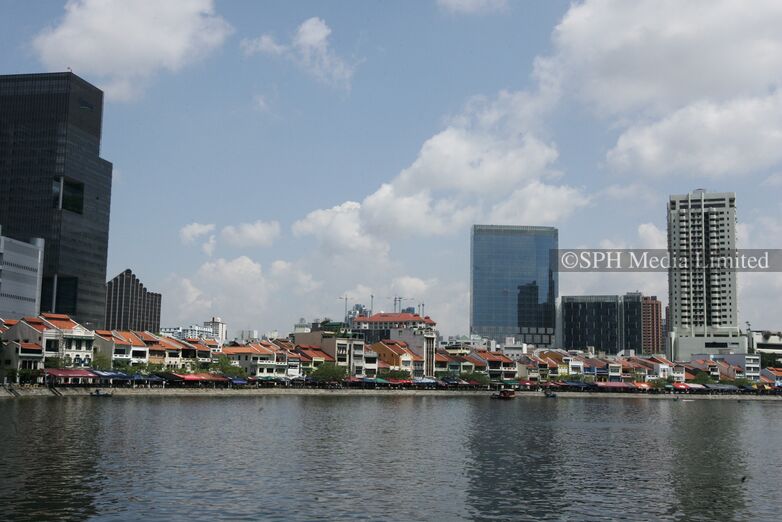
Boat Quay is one of the oldest and most historically significant places in Singapore. When Sir Stamford Raffles arrived in 1819, he designated the area for land reclamation. Sand from the hills near Battery Road was used to fill in the mangrove swamps at both ends of the Singapore River. This was Singapore's first developmental project. The buildings at Boat Quay were gazetted for conservation in 1989 and now mainly serve as food and entertainment venues.
©️ SPH Media Limited
Share to
Tags
Available for print on products
 Docking Point of Bumboats in Singapore River
1965
Docking Point of Bumboats in Singapore River
1965
Docking Point of Bumboats in Singapore River
Year 1965
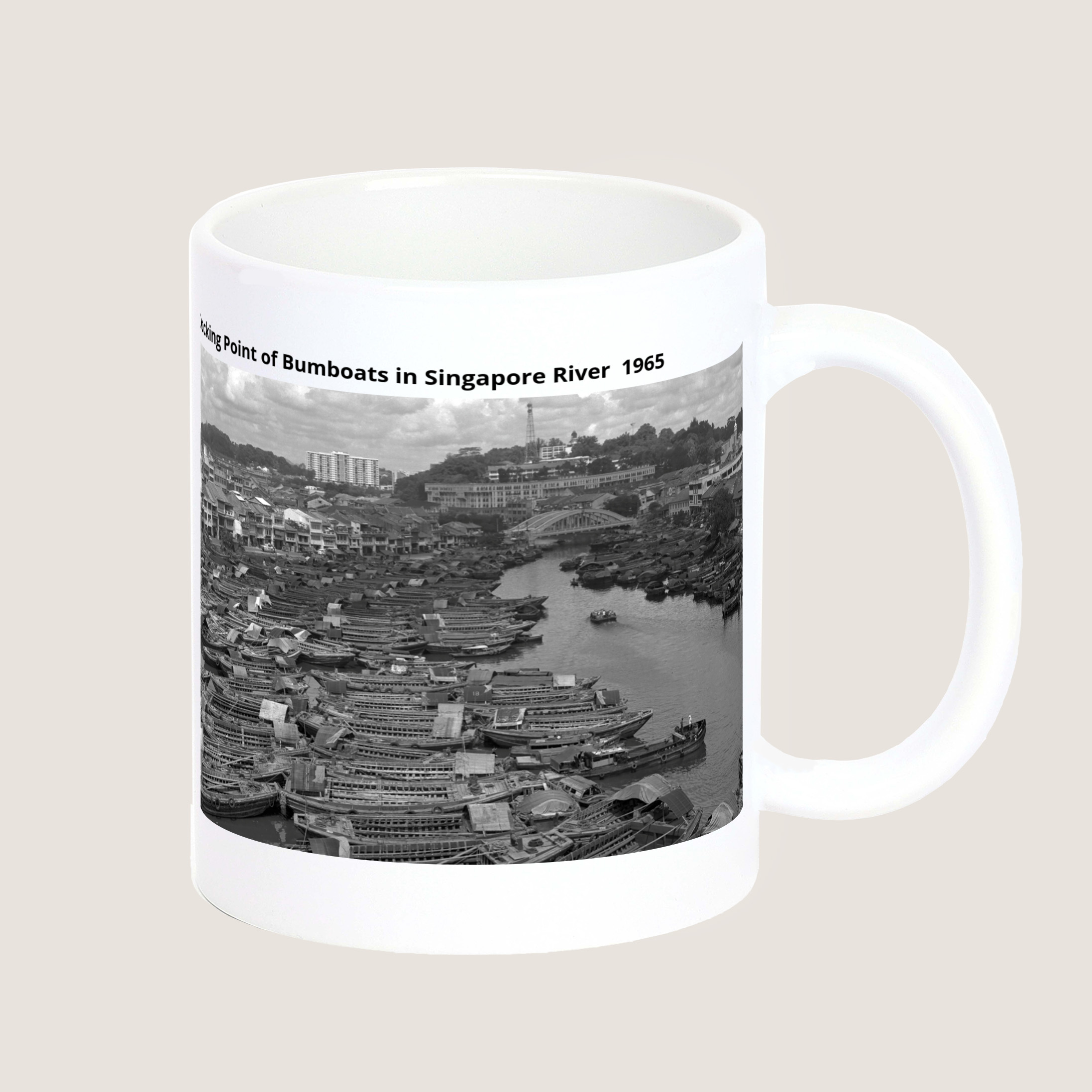
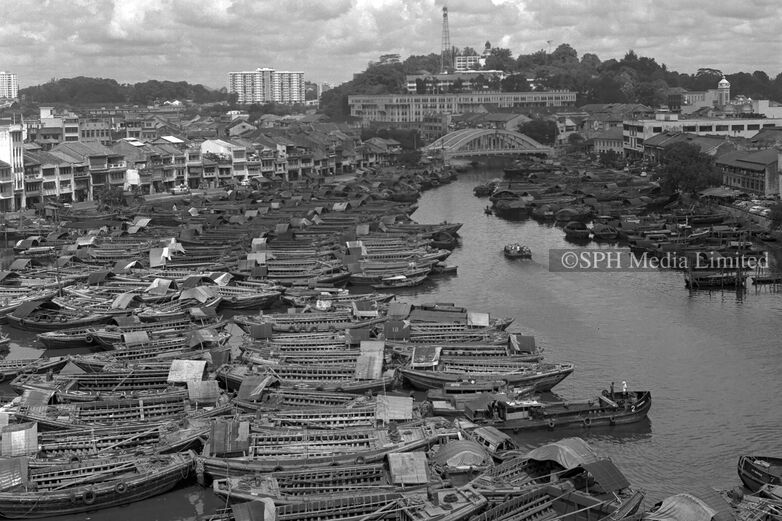
Bumboats are called tongkang in Malay and Twakow in the Fujian and Teochew languages in Singapore. They were used on the Singapore River, Kallang River, and Rochor River for loading and unloading goods, or for transporting cargo, supplies, and goods between ships and the shore. The docking point in this picture is along the Singapore River.
©️ SPH Media Limited
Share to
Tags
Available for print on products
 Singapore River Clean-up
1983
Singapore River Clean-up
1983
Singapore River Clean-up
Year 1983
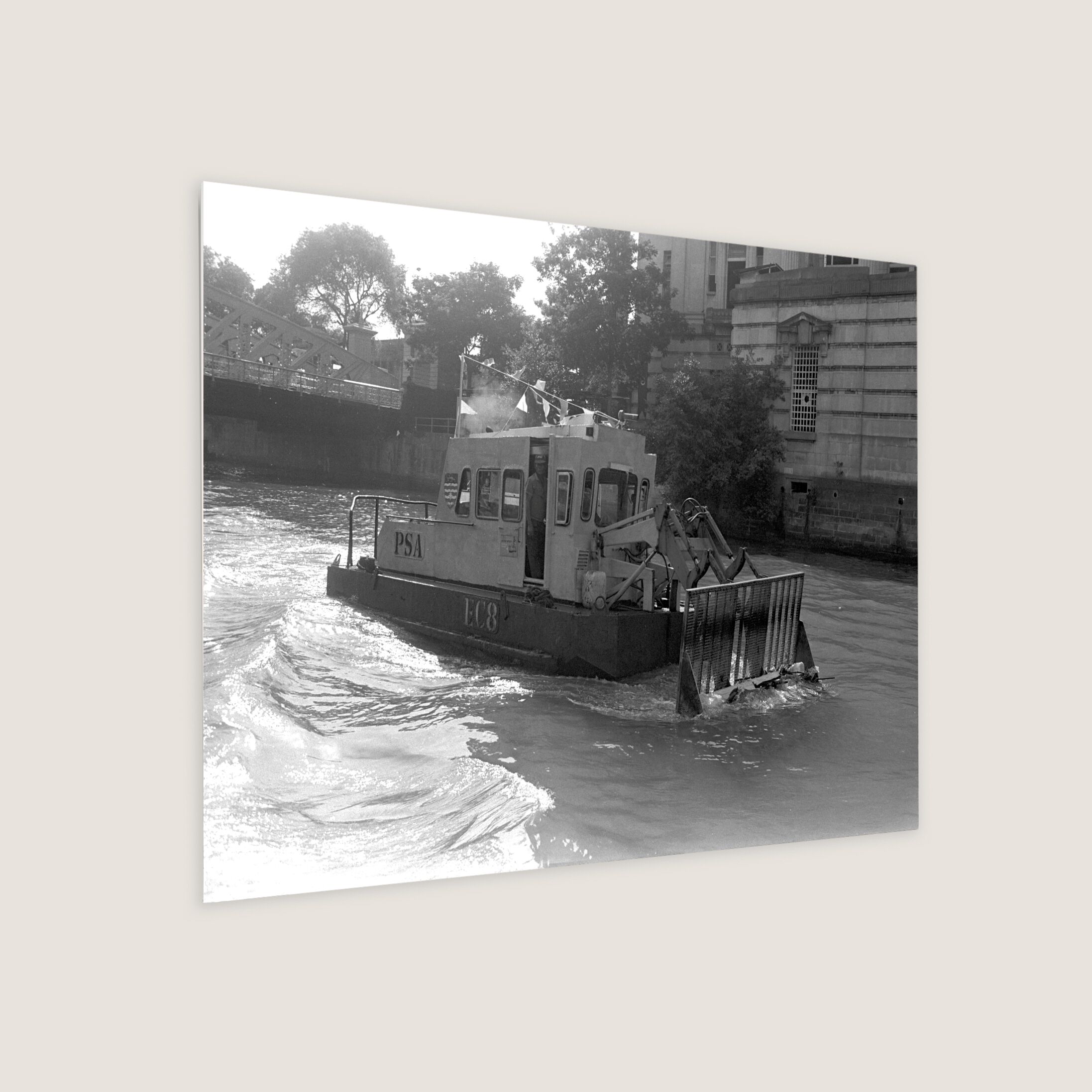
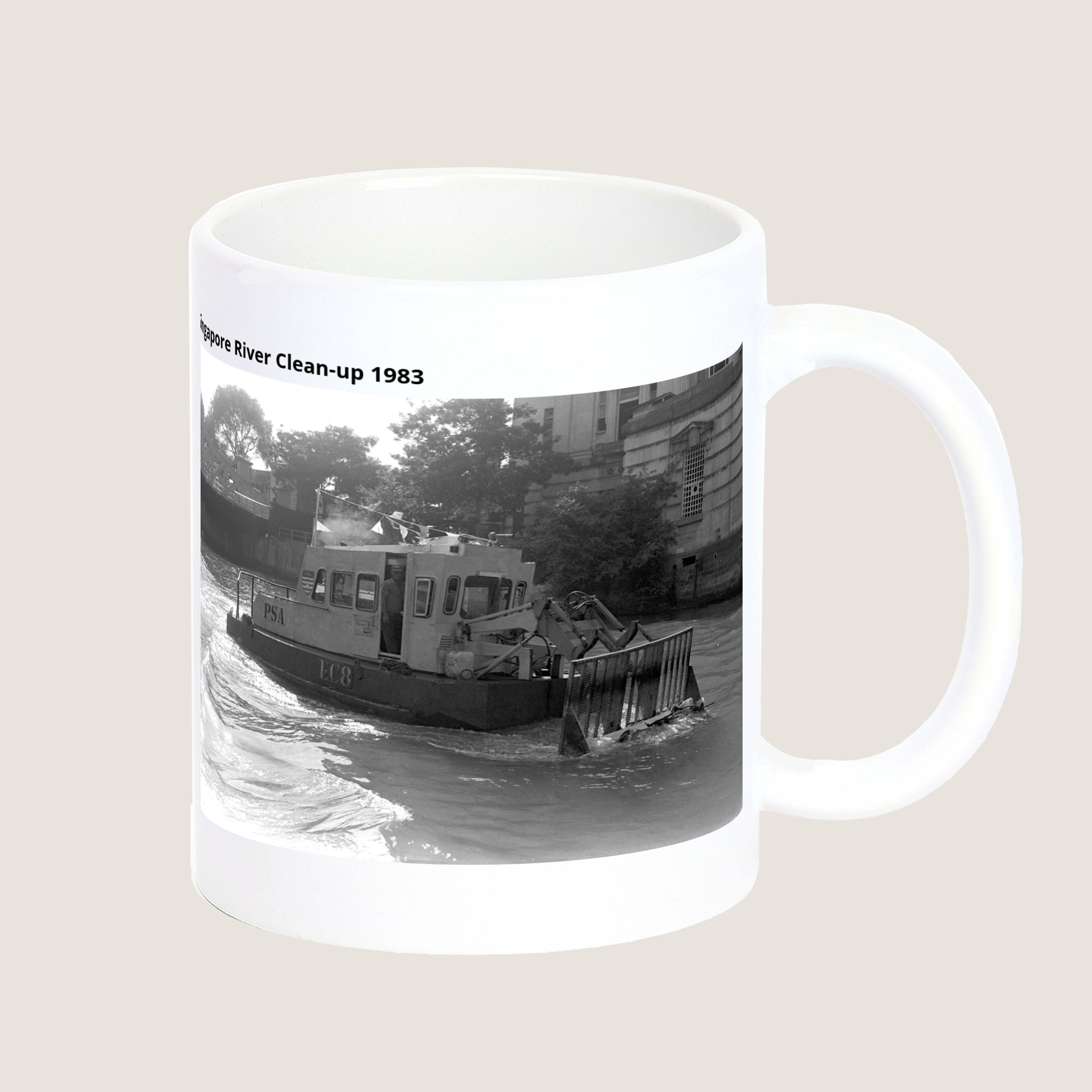
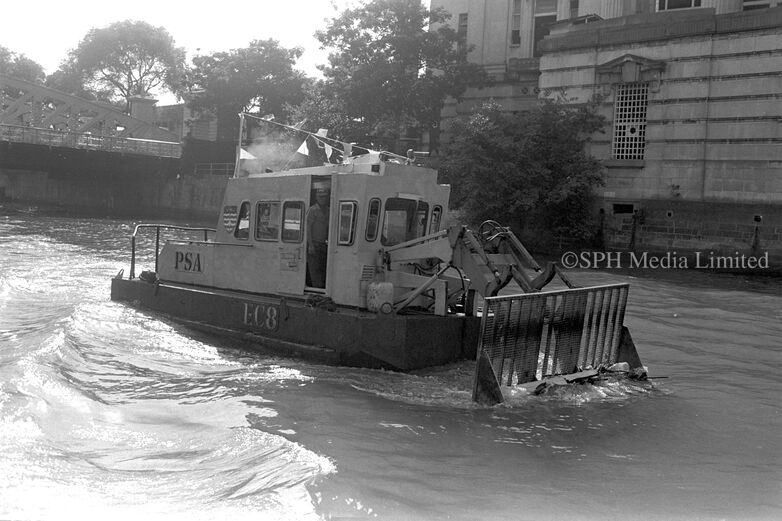
The Singapore River clean-up was an initiative held between 1977 and 1987. The river had been polluted due to trading activities, farms, settlements, and hawkers. Waste and byproducts contributed to the pollution, and aquatic life could not thrive. A water-witch was used to scoop up the flotsam found in the Singapore River.
©️ SPH Media Limited
Share to
Tags
Available for print on products
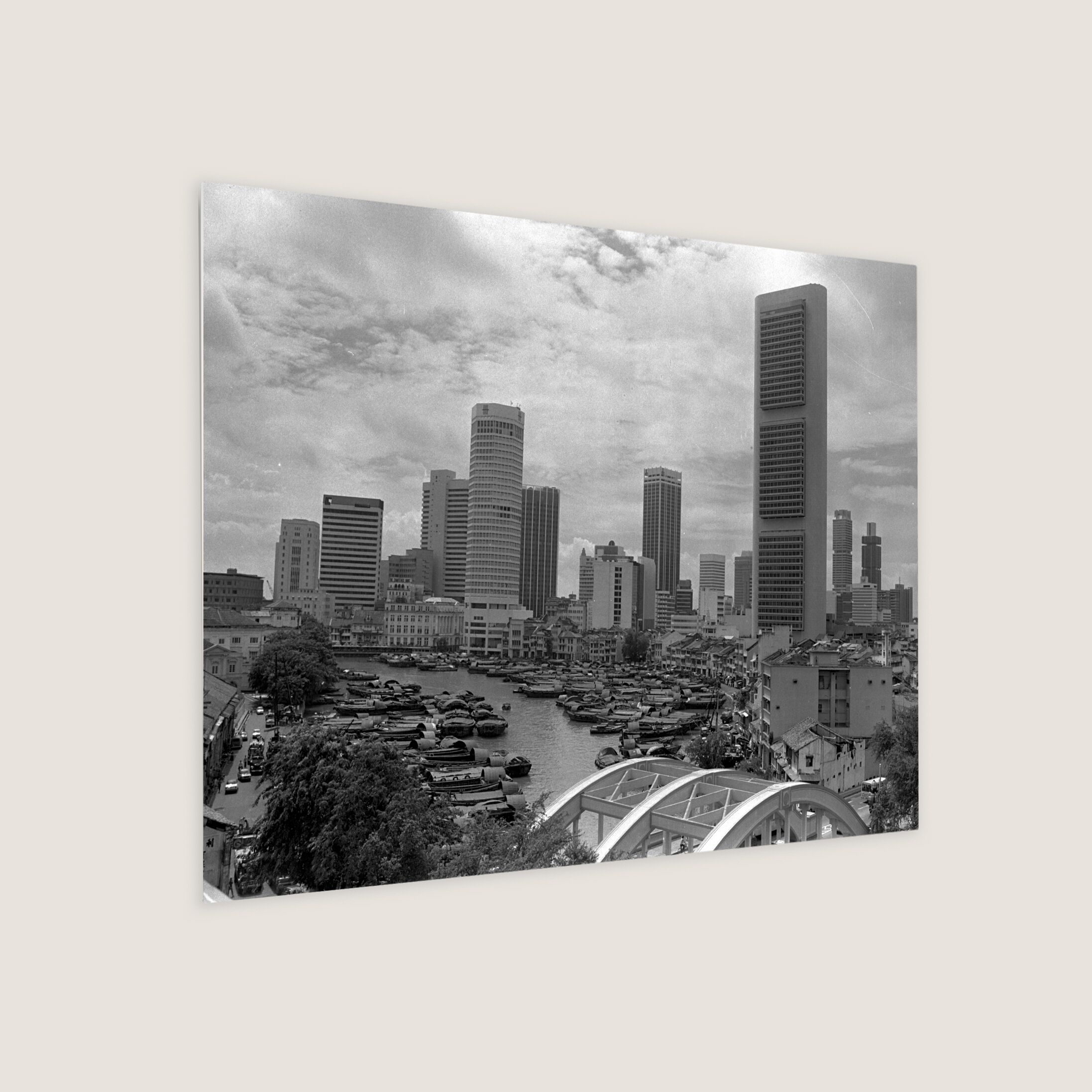
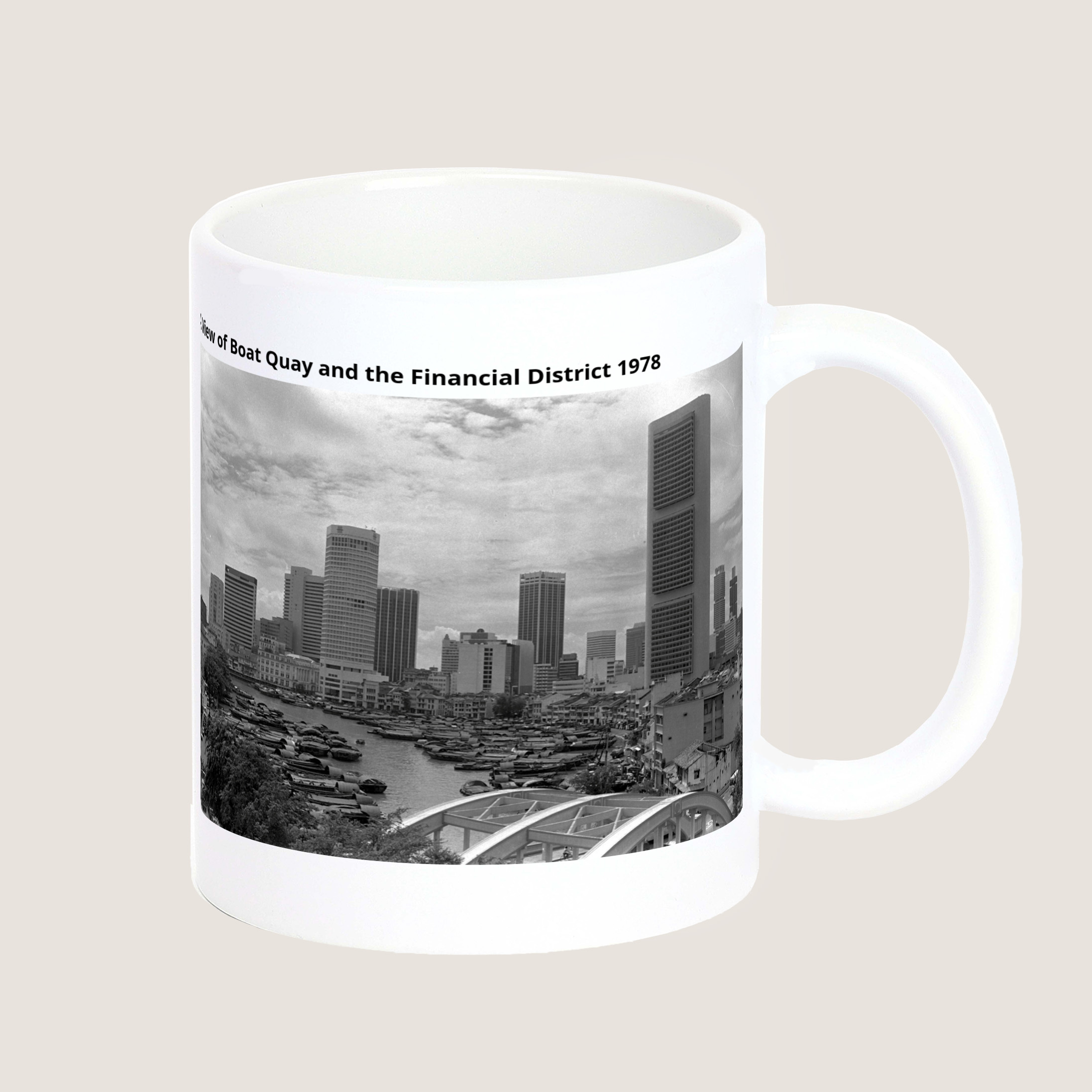
 A View of Boat Quay and the Financial District
1978
A View of Boat Quay and the Financial District
1978
A View of Boat Quay and the Financial District
Year 1978
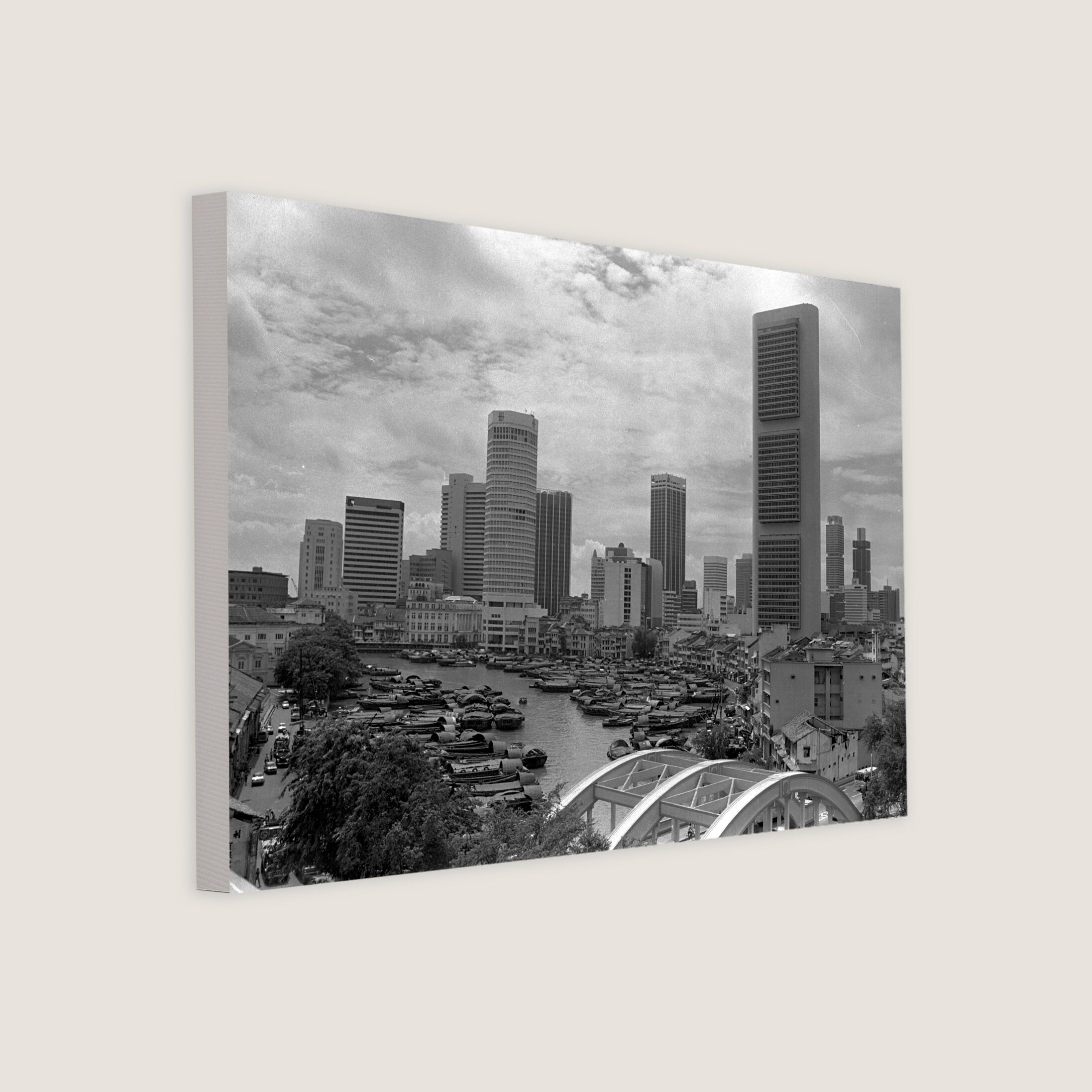
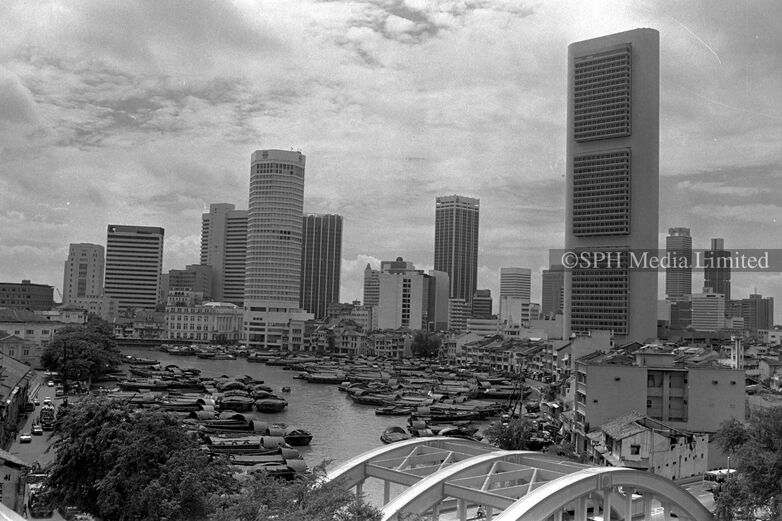
Looking towards the mouth of the Singapore River is the view of Boat Quay and the financial district. The tongkang were used for coastal and inter-island trading with countries like Indonesia, South Johore, Malacca, Perak, and Sarawak. When Singapore River was cleared as part of the river clean-up campaign in 1983, the tongkang were shifted to Pasir Panjang.
©️ SPH Media Limited
Share to
Tags
Available for print on products
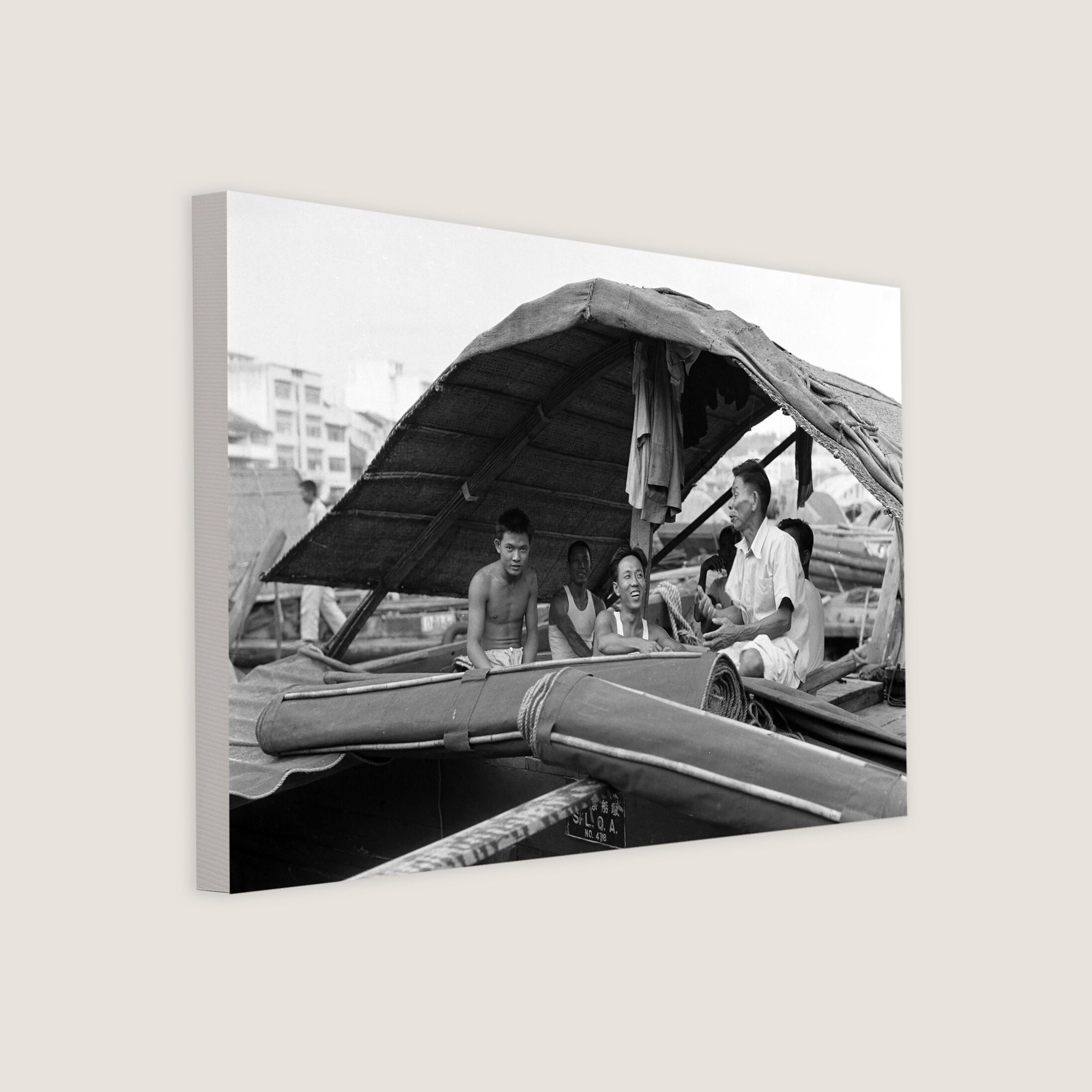
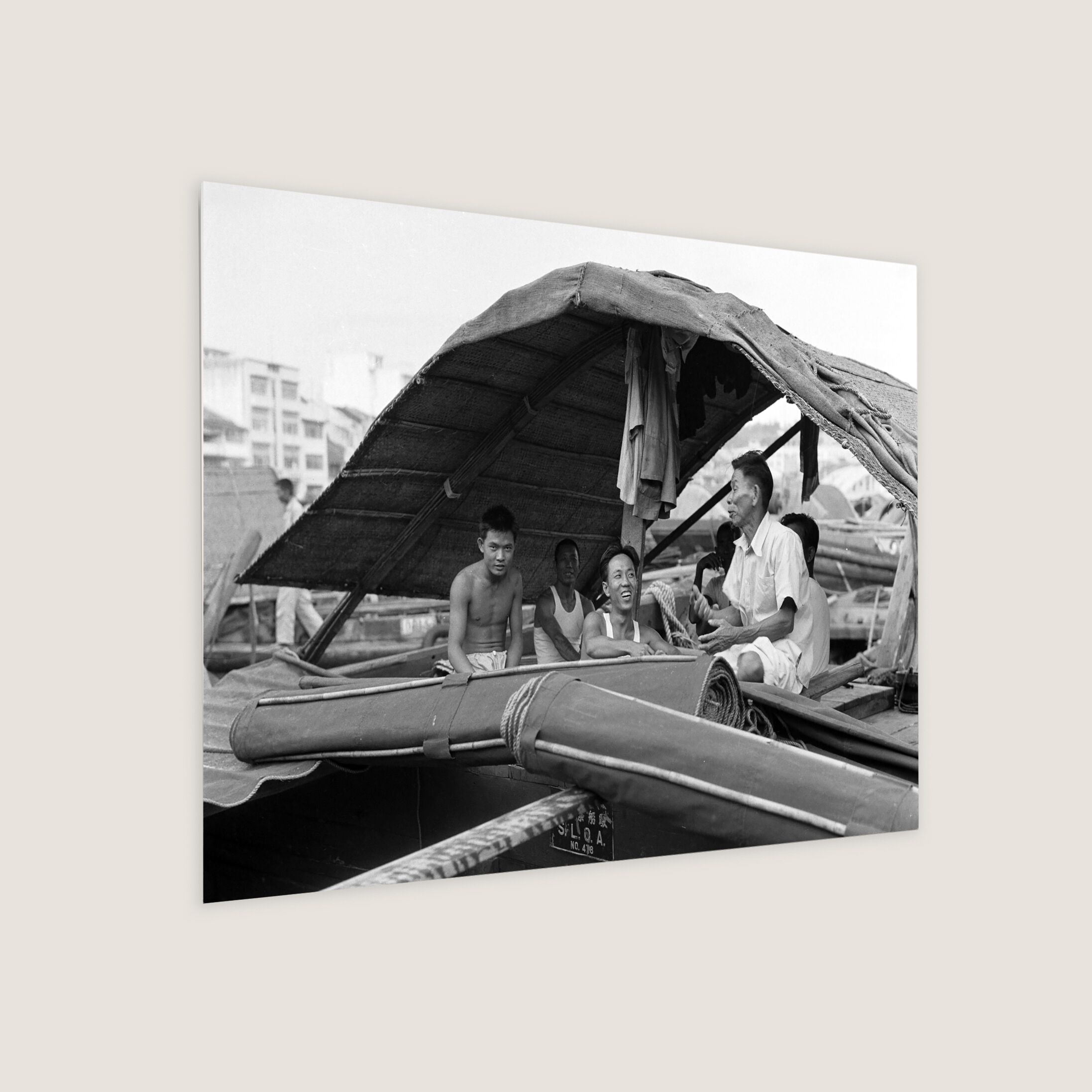
 Workers Taking a Break on a Tongkang
1957
Workers Taking a Break on a Tongkang
1957
Workers Taking a Break on a Tongkang
Year 1957
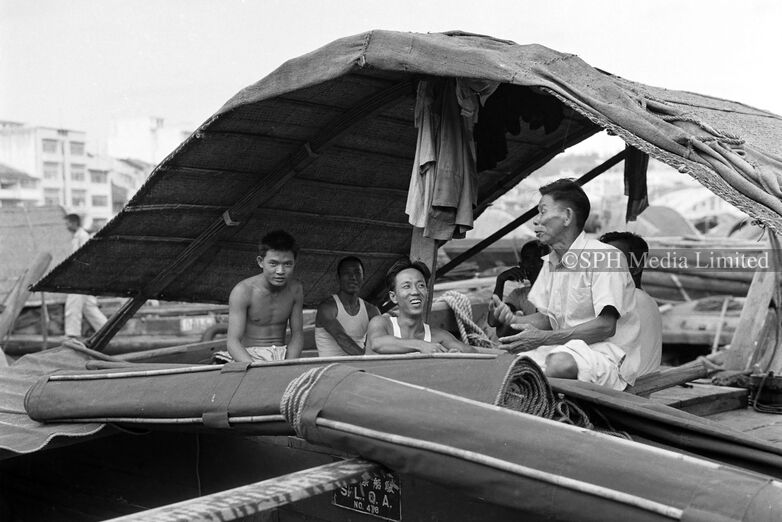
Tongkang means bumboat in Malay. These trades created many job opportunities and were the link between ships anchored out at sea and warehouses built along the riverbanks. Workers taking a break on a tongkang include boatmen, cargo handlers, warehouse clerks and more.
©️ SPH Media Limited
Share to
Tags
Available for print on products
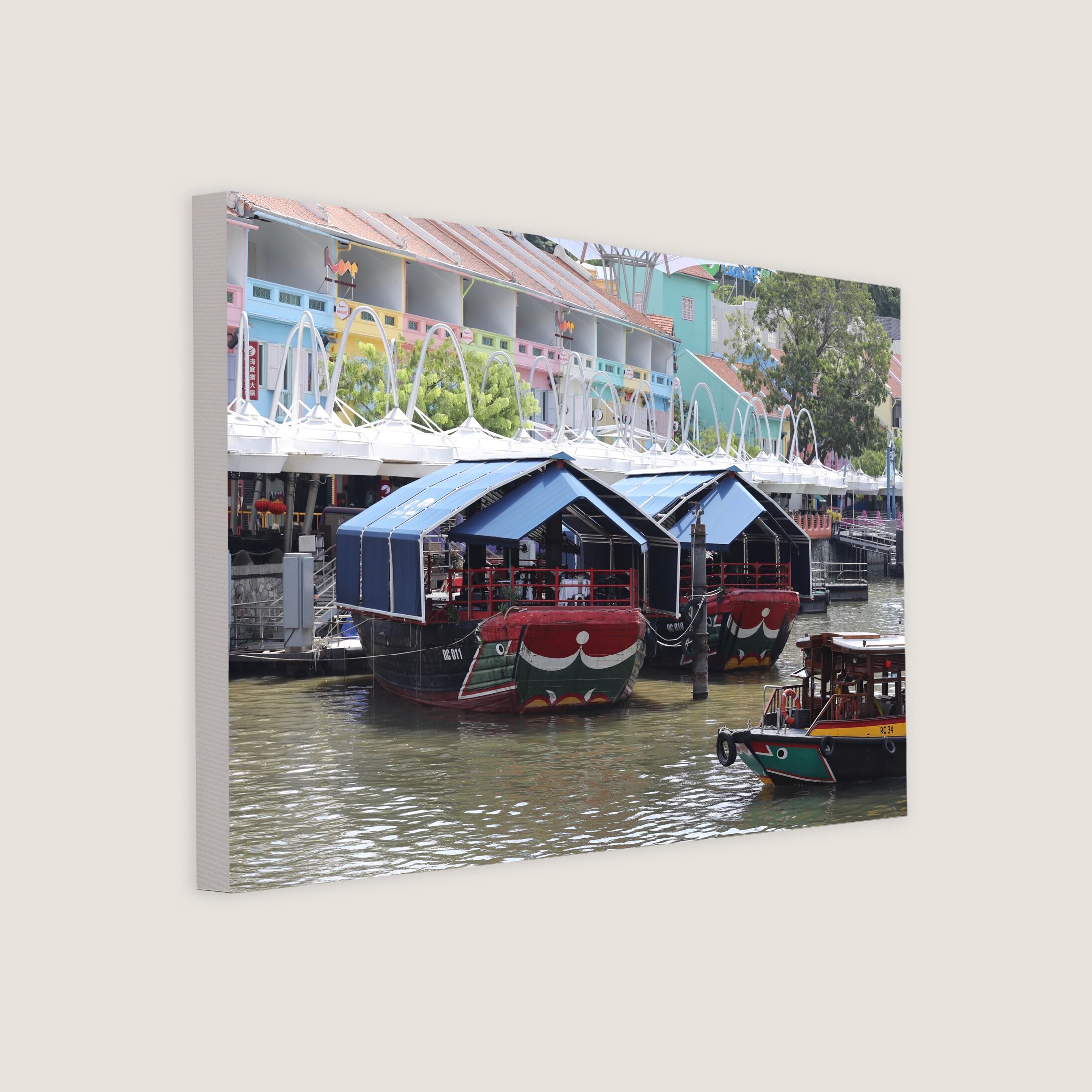
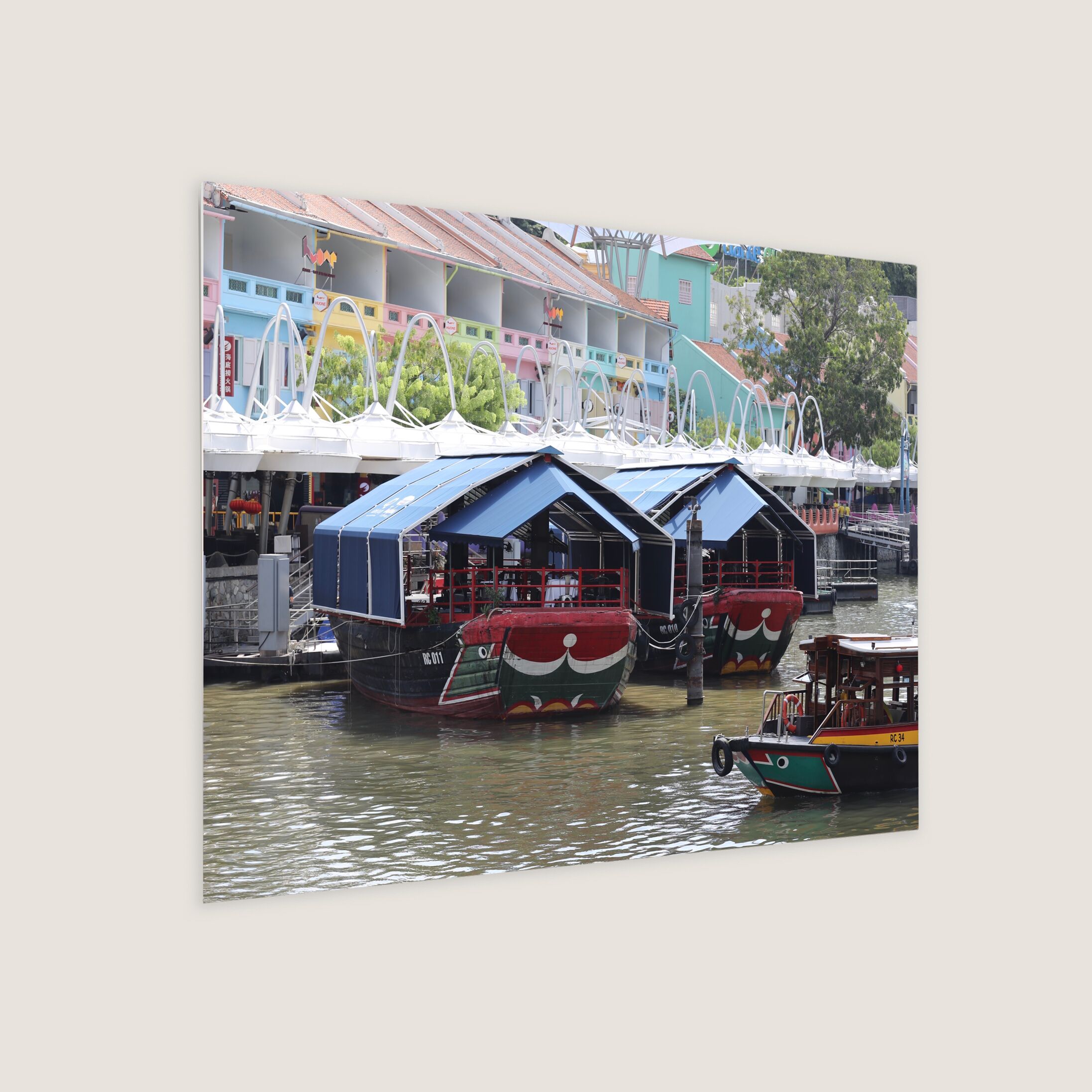
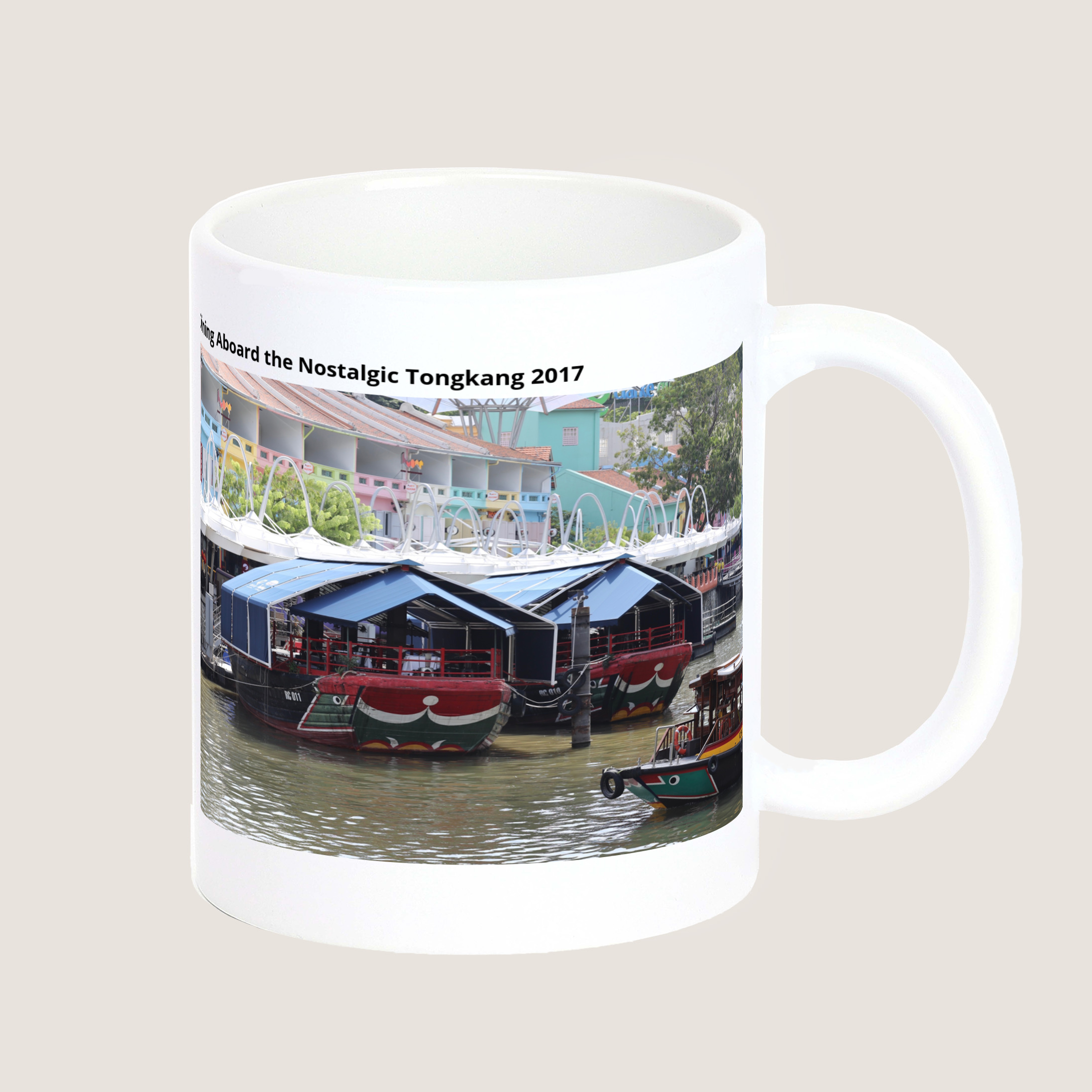
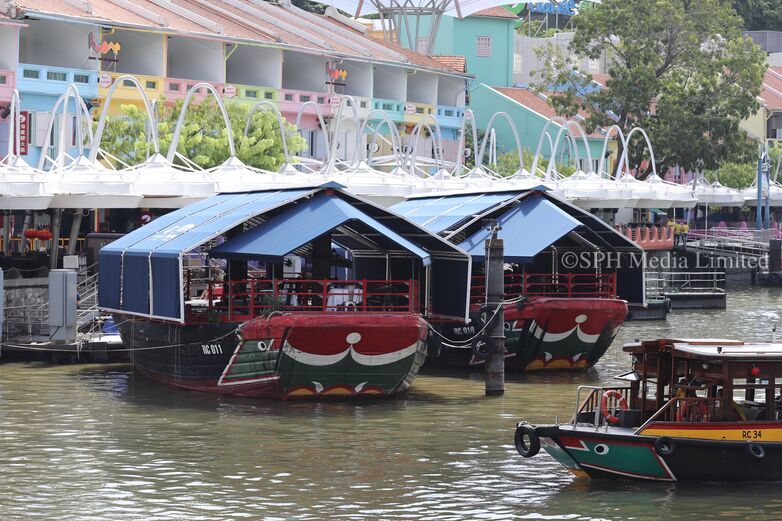 Dining Aboard the Nostalgic Tongkang
2017
Dining Aboard the Nostalgic Tongkang
2017
Dining Aboard the Nostalgic Tongkang
Year 2017
A restaurant was improvised from a tongkang by the Singapore River near Clarke Quay in 2017, where guests could dine on the tongkangs moored to the side of the river. As of 2025, the restaurant has since been permanently closed.
©️ SPH Media Limited
Share to
Tags
Available for print on products
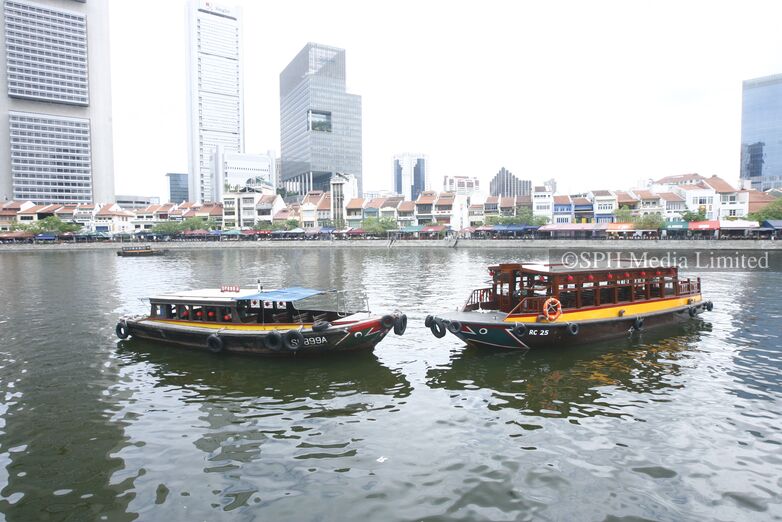 Diesel-Powered Barges Bid Farewell to the River
2008
Diesel-Powered Barges Bid Farewell to the River
2008
Diesel-Powered Barges Bid Farewell to the River
Year 2008
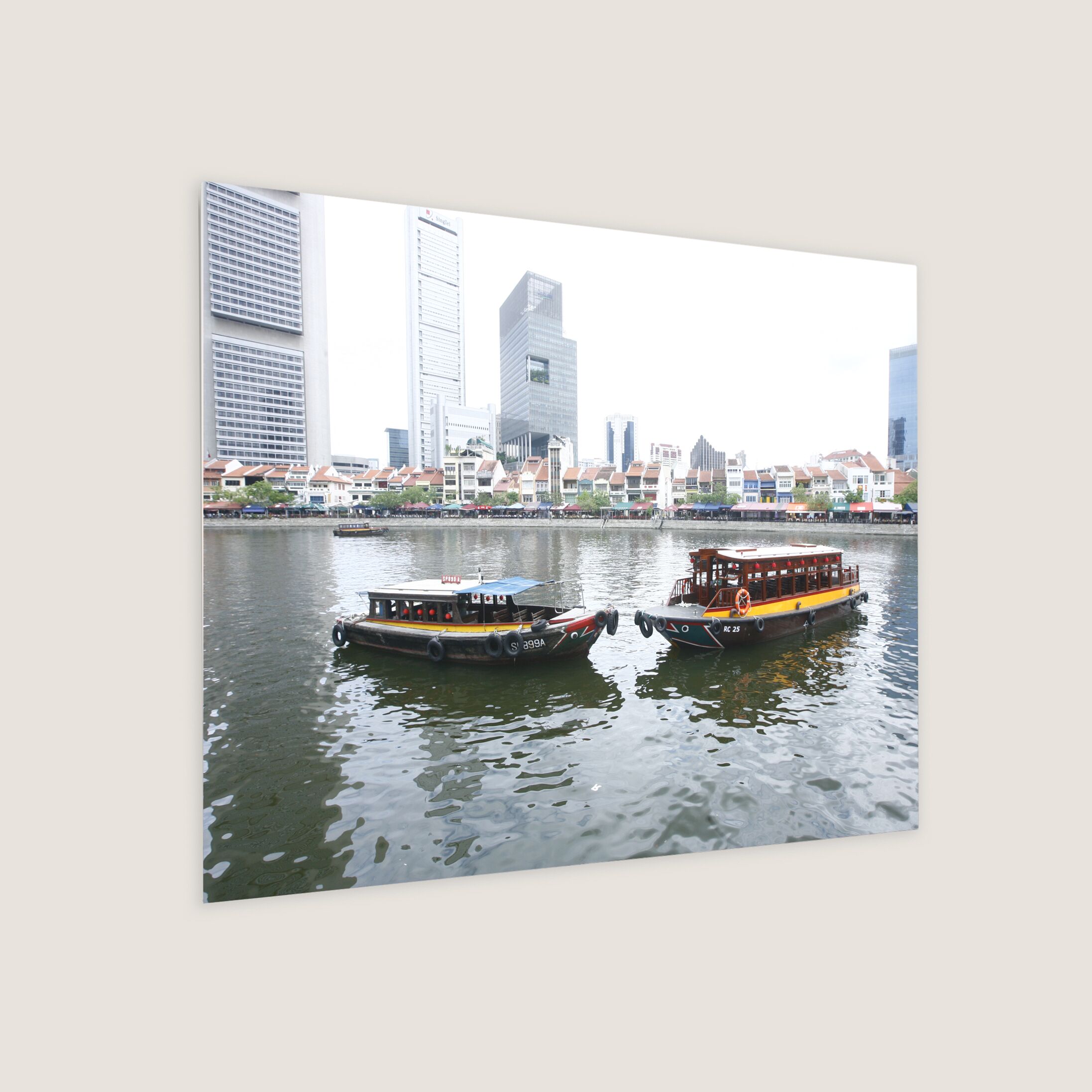
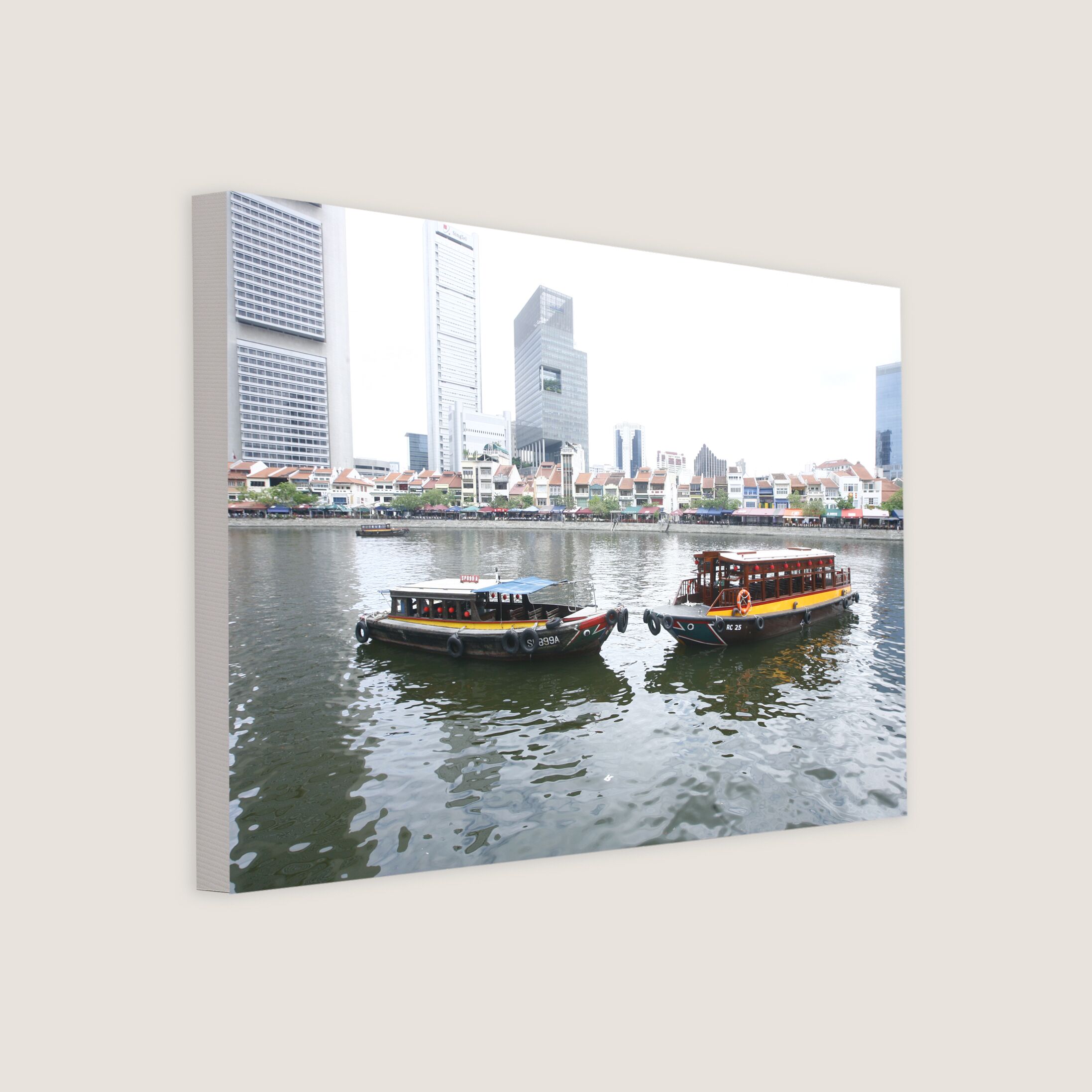
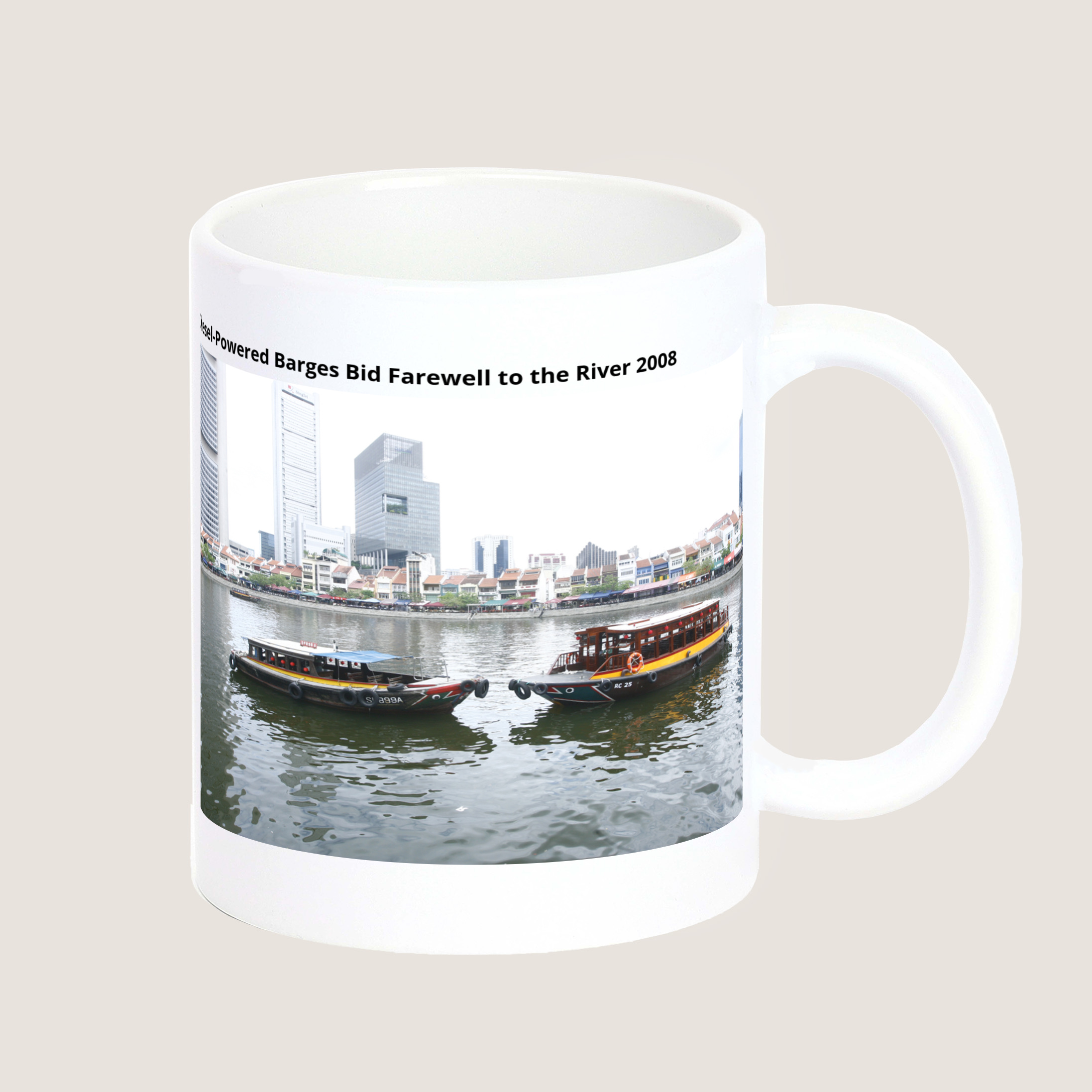
With the Marina Barrage, the Singapore River has formed a freshwater lake connecting to Marina Bay. Due to concerns over water quality and environmental pollution, all barges operating on the Singapore River transitioned from diesel to electricity since 2008. The photo shows the old diesel-powered barge on the left and the new electric-powered barge on the right
©️ SPH Media Limited
Share to
Tags
Available for print on products
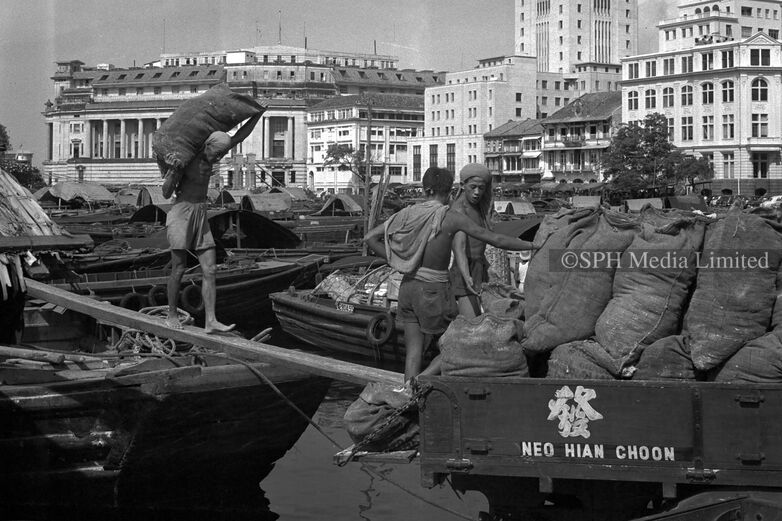 Coolies Transferring Goods from the Tongkang
1956
Coolies Transferring Goods from the Tongkang
1956
Coolies Transferring Goods from the Tongkang
Year 1956
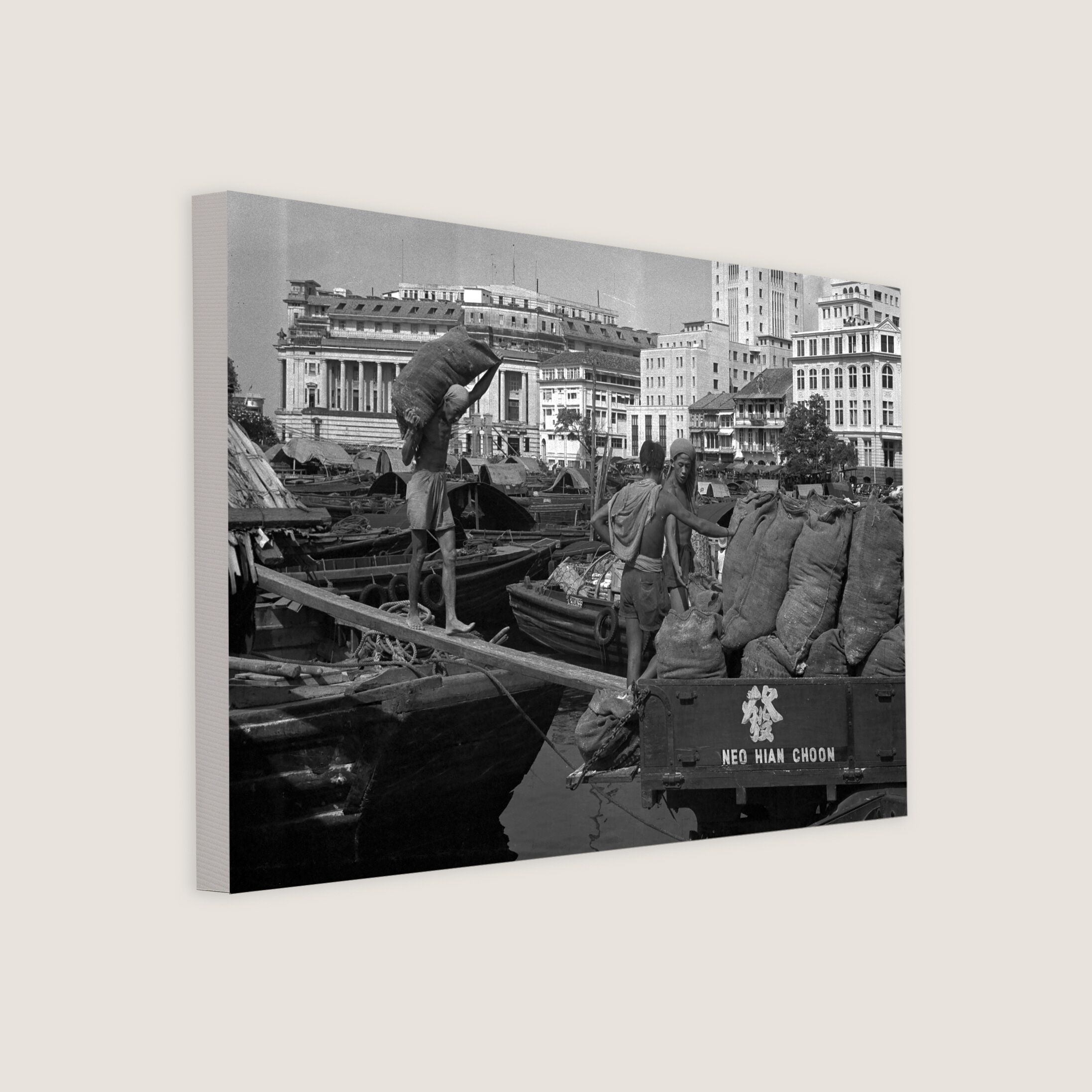
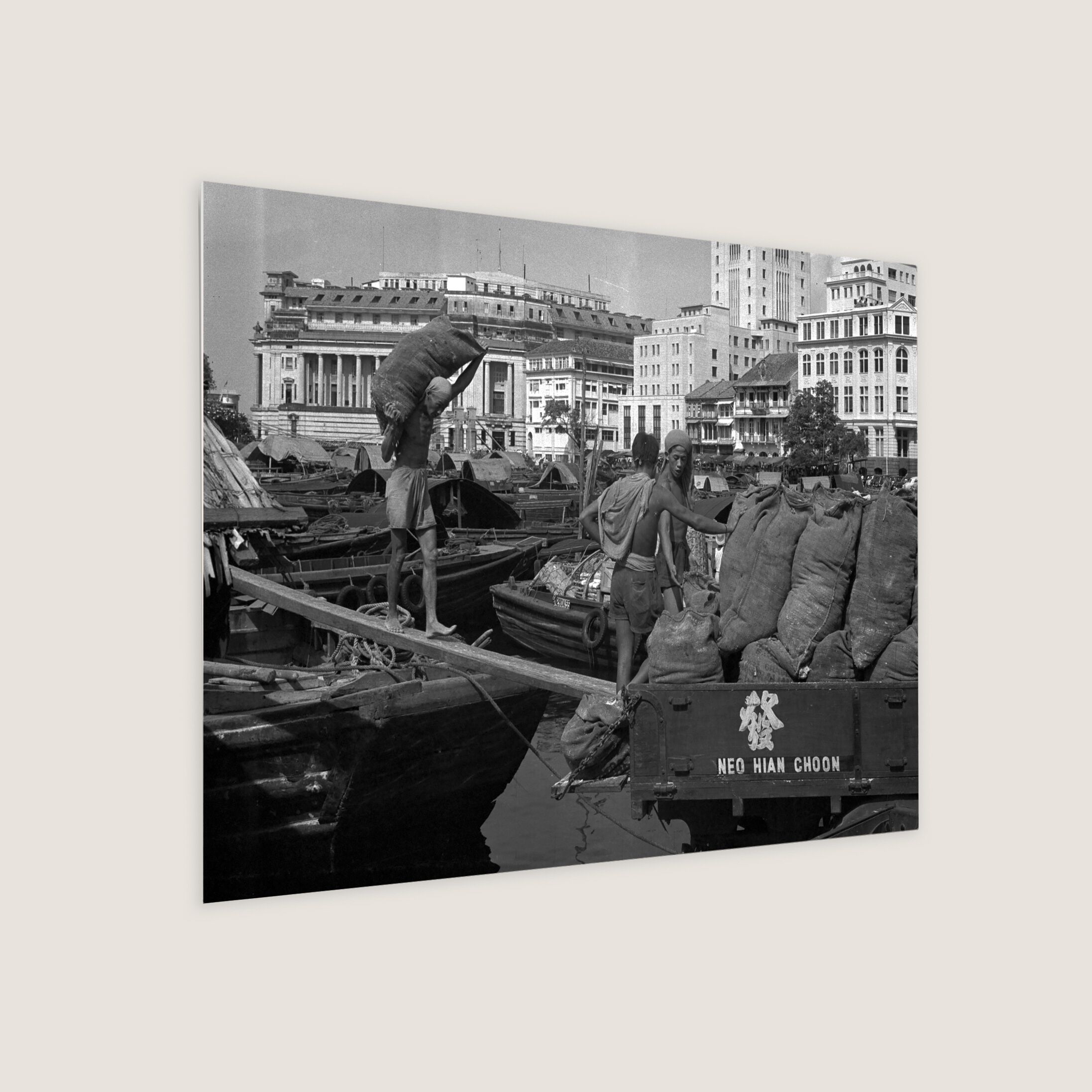
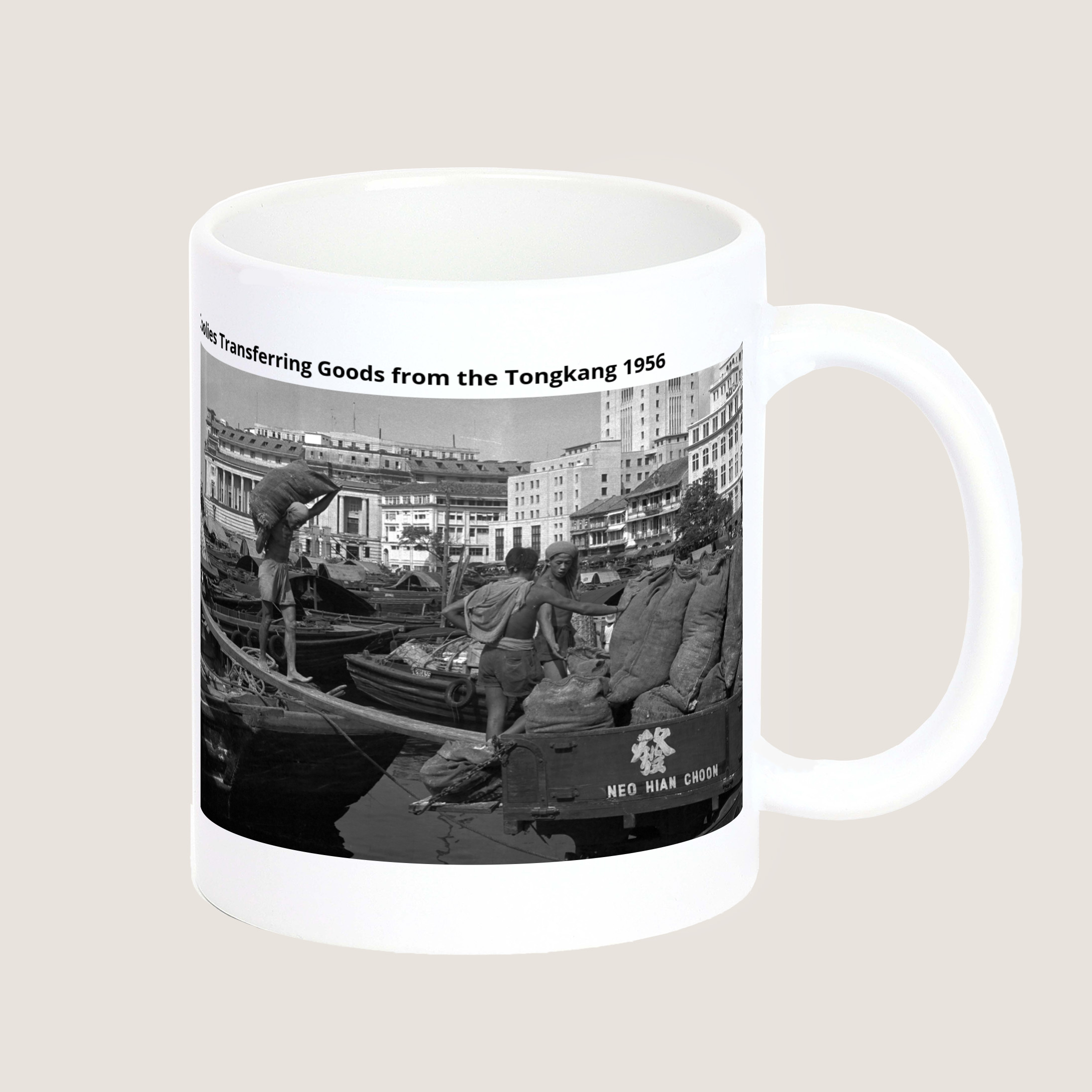
Labourers, also known as coolies, were commonly employed for strenuous manual labour and physically demanding tasks, such as loading and unloading cargo. In early Singapore, it was a frequent sight to see these workers carrying gunny sacks filled with goods near the Singapore River. The goods were loaded from a tongkang (a bumboat) onto a lorry that would transport them to warehouses for storage.
©️ SPH Media Limited
Share to
Tags
Available for print on products
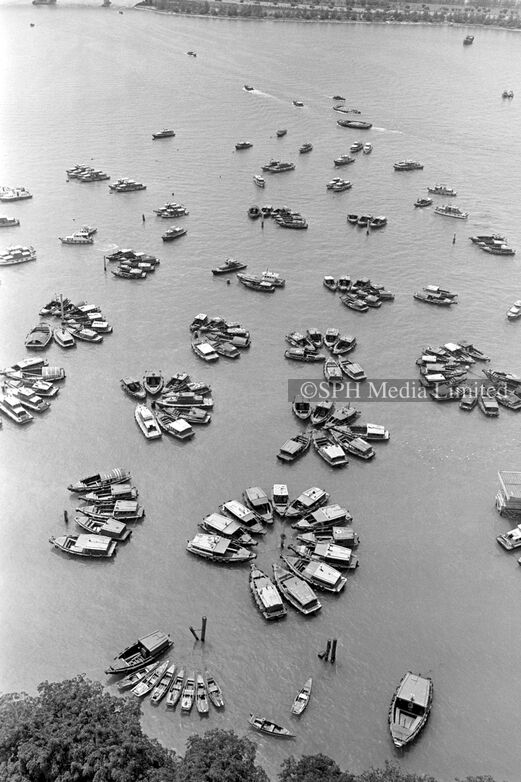 Aerial View of Tongkang at Singapore River Mouth
1982
Aerial View of Tongkang at Singapore River Mouth
1982
Aerial View of Tongkang at Singapore River Mouth
Year 1982
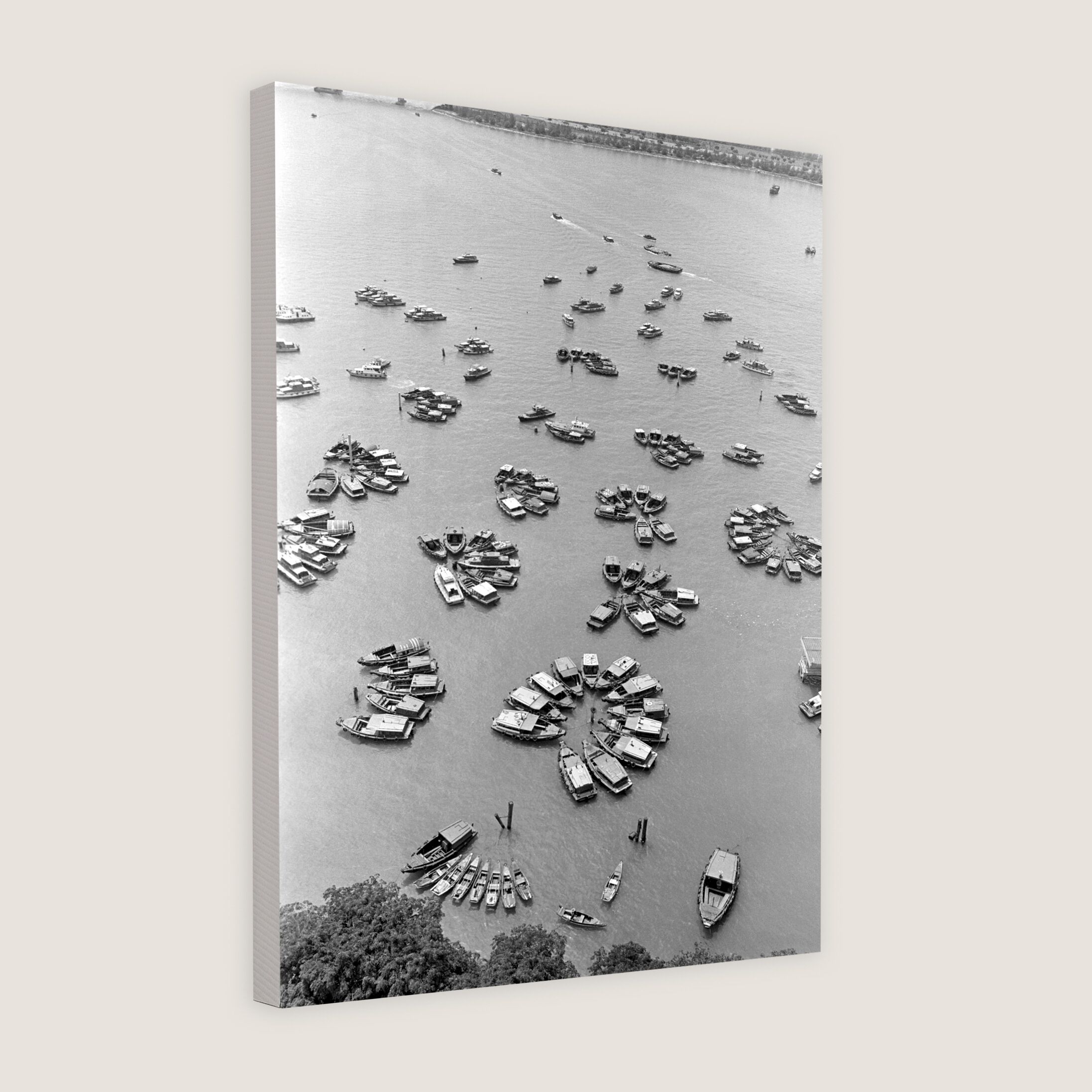
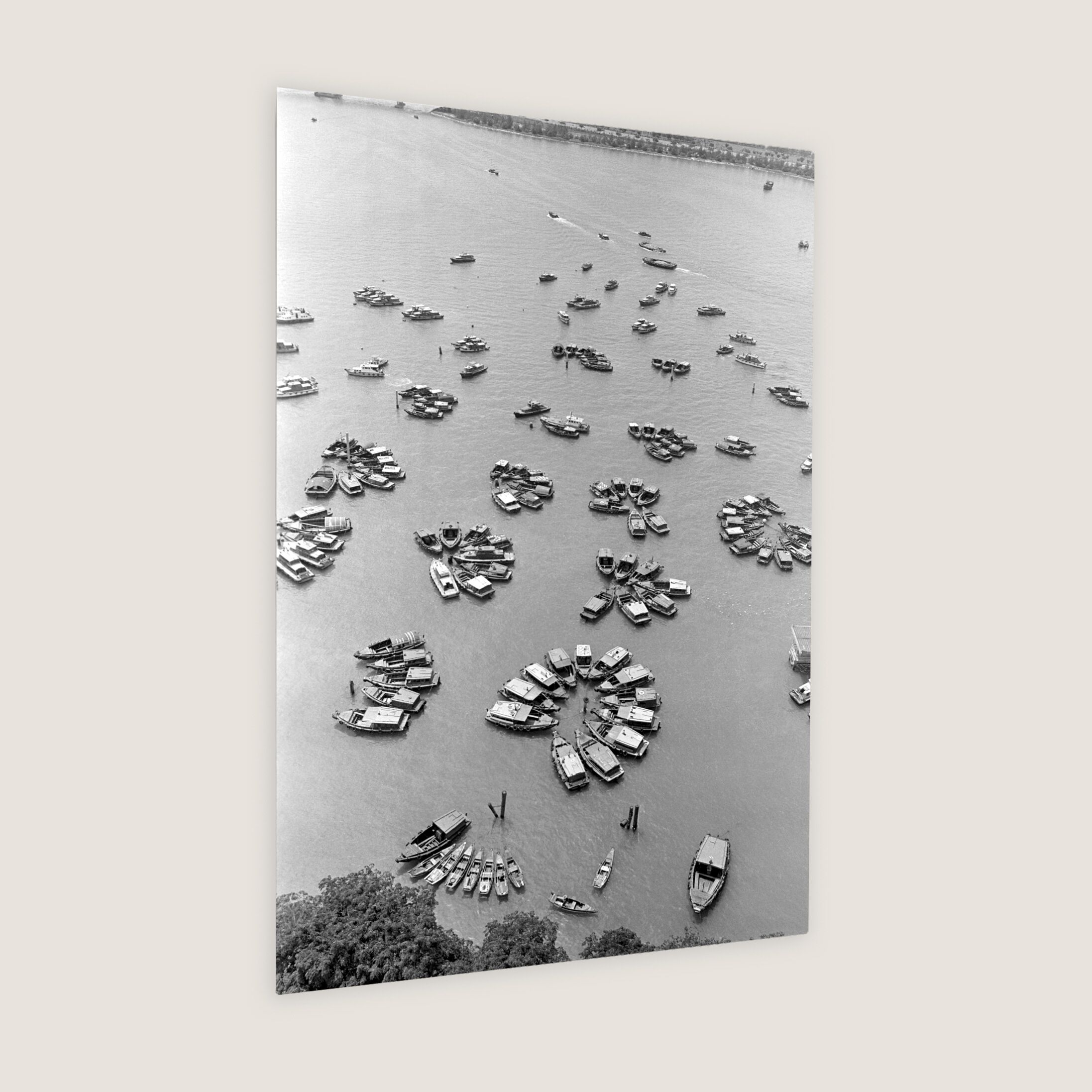
Clusters of tongkangs line the Singapore River. They are interlinked to prevent them from drifting with the current. Above in the photo, several tongkangs can be seen heading toward the open sea, preparing to unload cargo from the ocean-going vessels.
©️ SPH Media Limited
Share to
Tags
Available for print on products
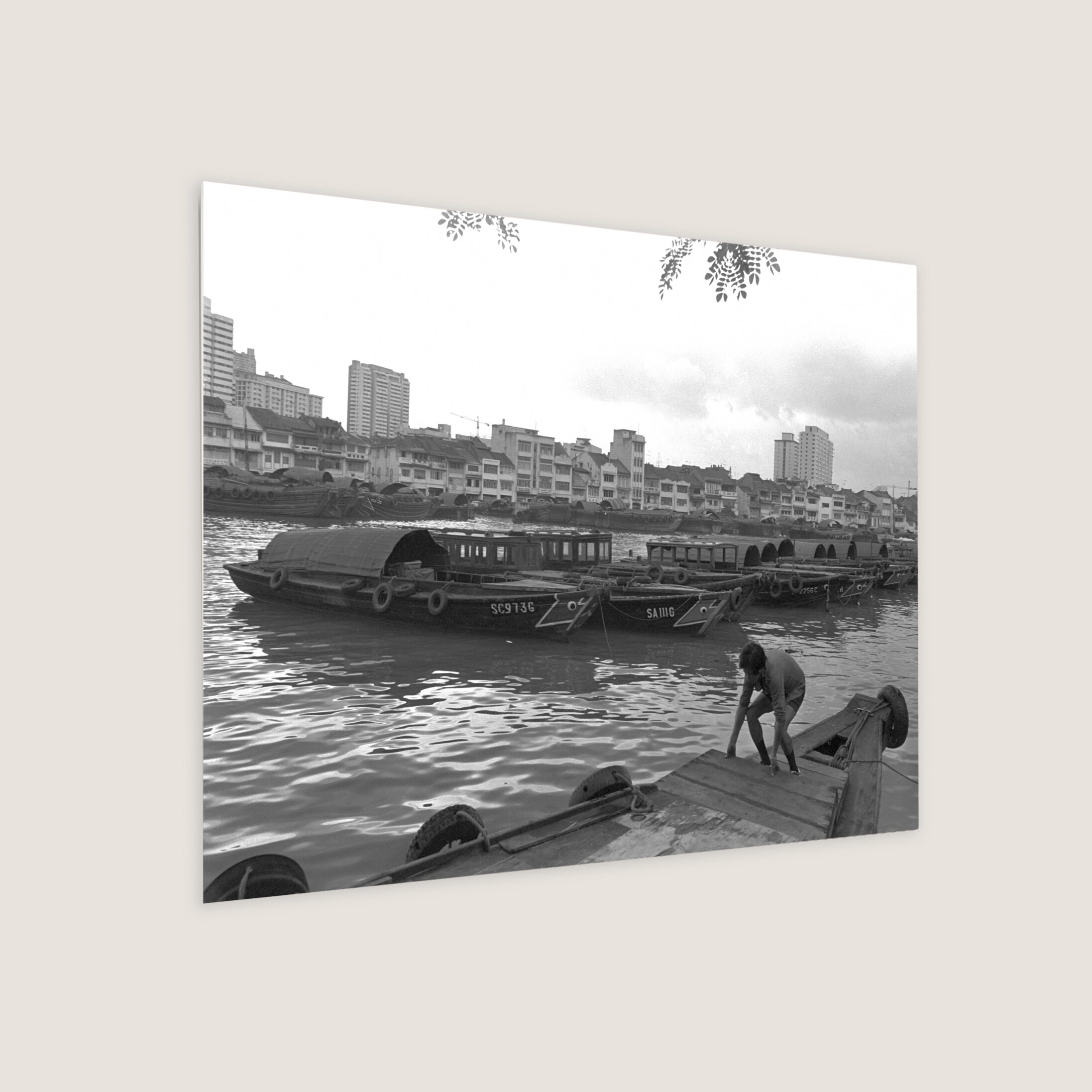
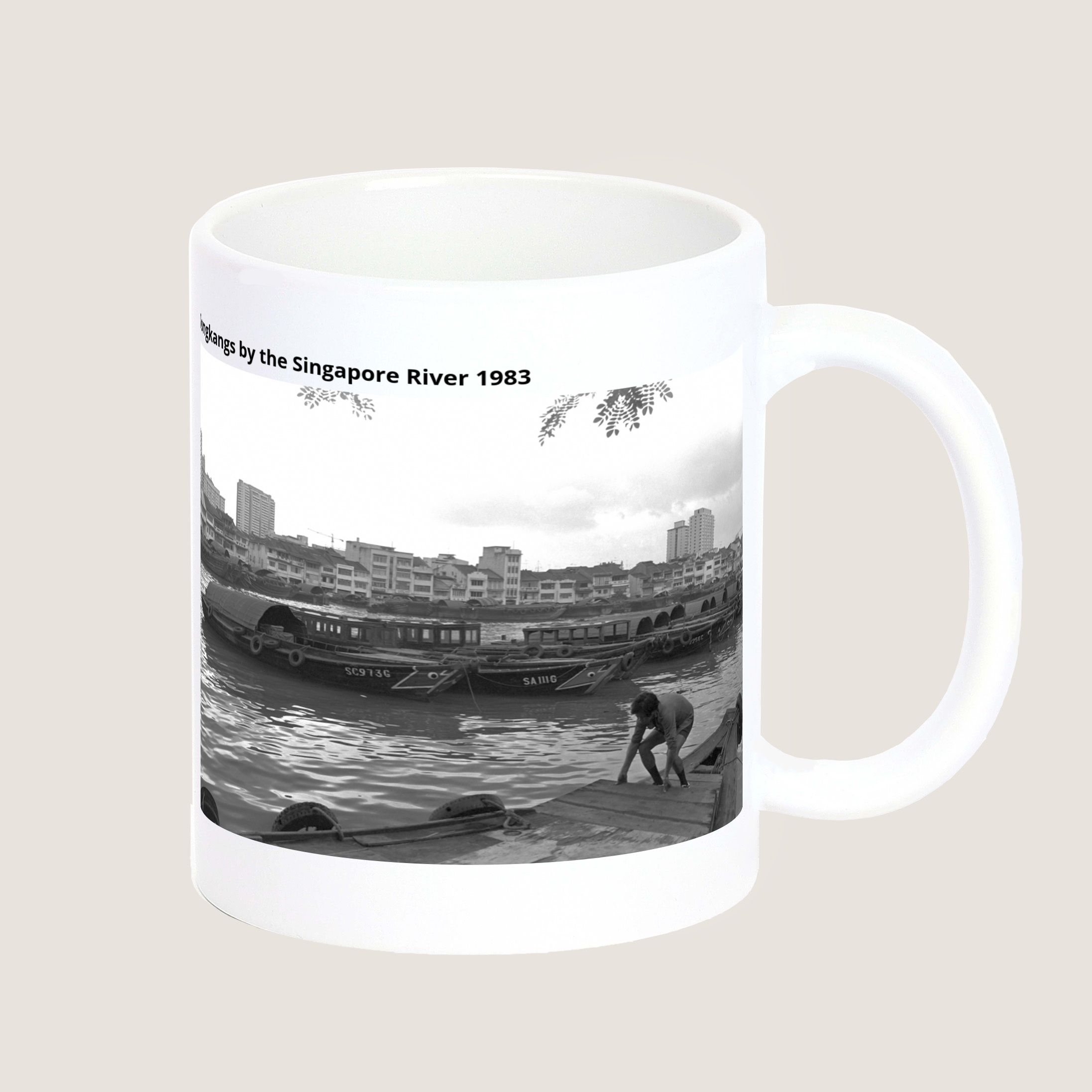
 Tongkangs by the Singapore River
1983
Tongkangs by the Singapore River
1983
Tongkangs by the Singapore River
Year 1983
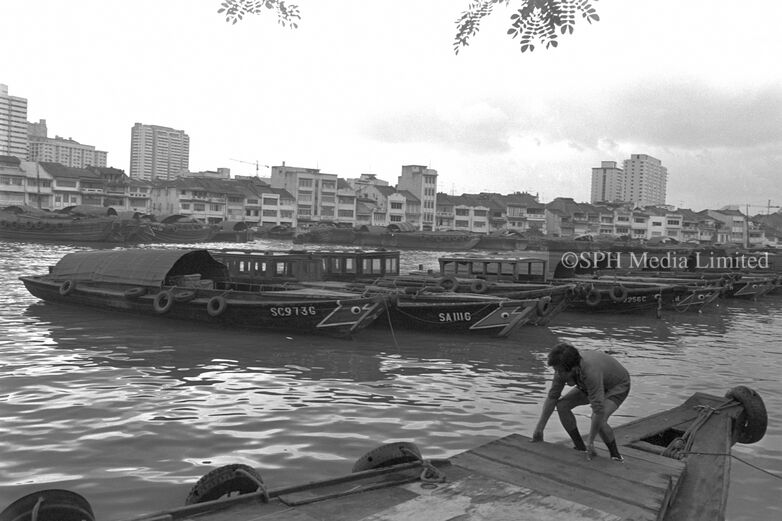
Tongkangs, or bumboats, lined up along the Singapore River. In the past, they were used extensively for transport and moving cargo to various parts of the island and out of the island.
©️ SPH Media Limited
Share to
Tags
Available for print on products
Upgrading Work of Cable Car Station at Mount Faber
1983
Upgrading Work of Cable Car Station at Mount Faber
Year 1983
Mount Faber is where one of the Singapore Cable Car stations is located. This was launched on 15 February 1974 by then Deputy Prime Minister Goh Keng Swee. The cable car is a means of transport to Sentosa, the world-renowned resort island of Singapore. It was part of the efforts to convert the island from its history as a naval base to an island getaway for both tourists and locals.
©️ SPH Media Limited
Share to
Tags
Available for print on products
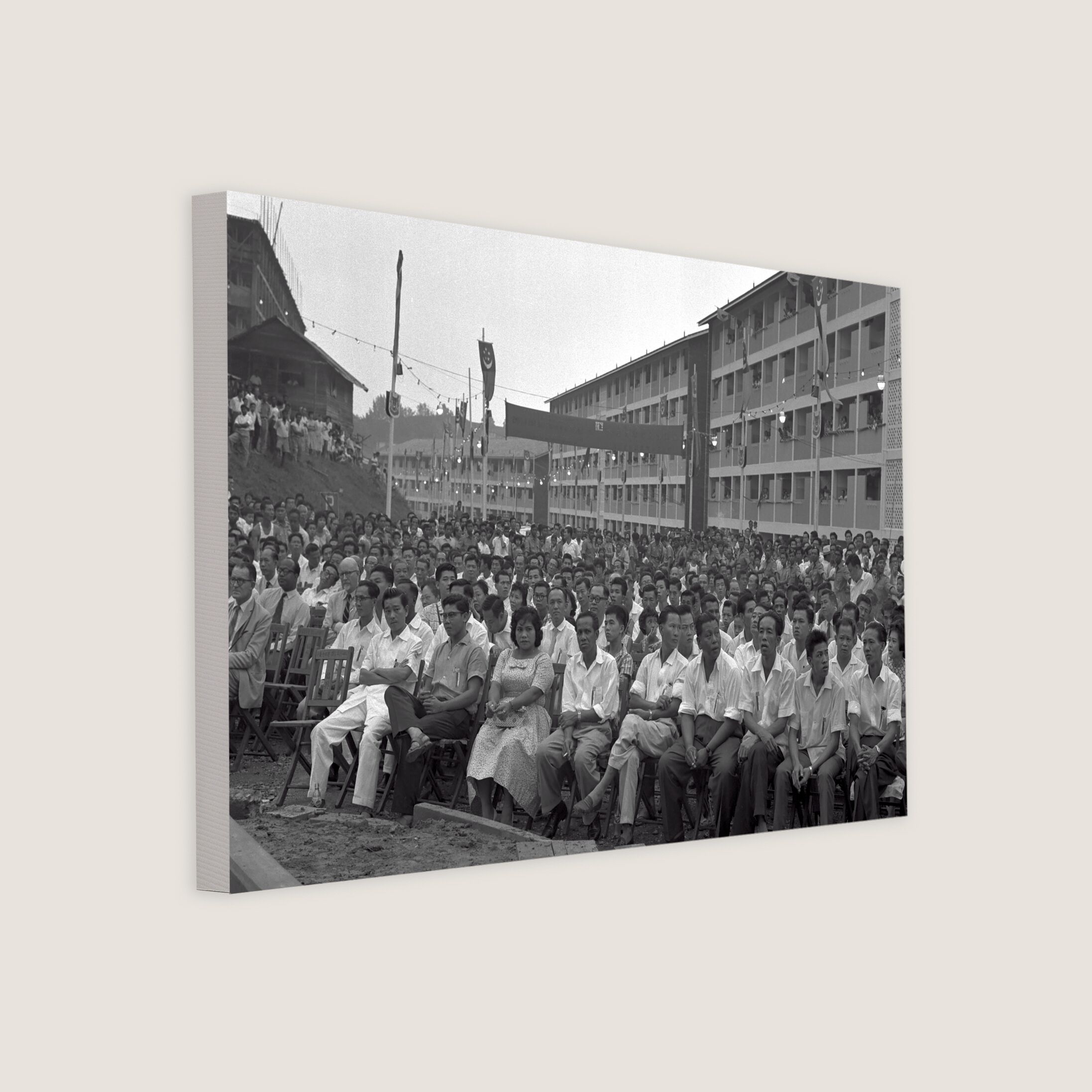
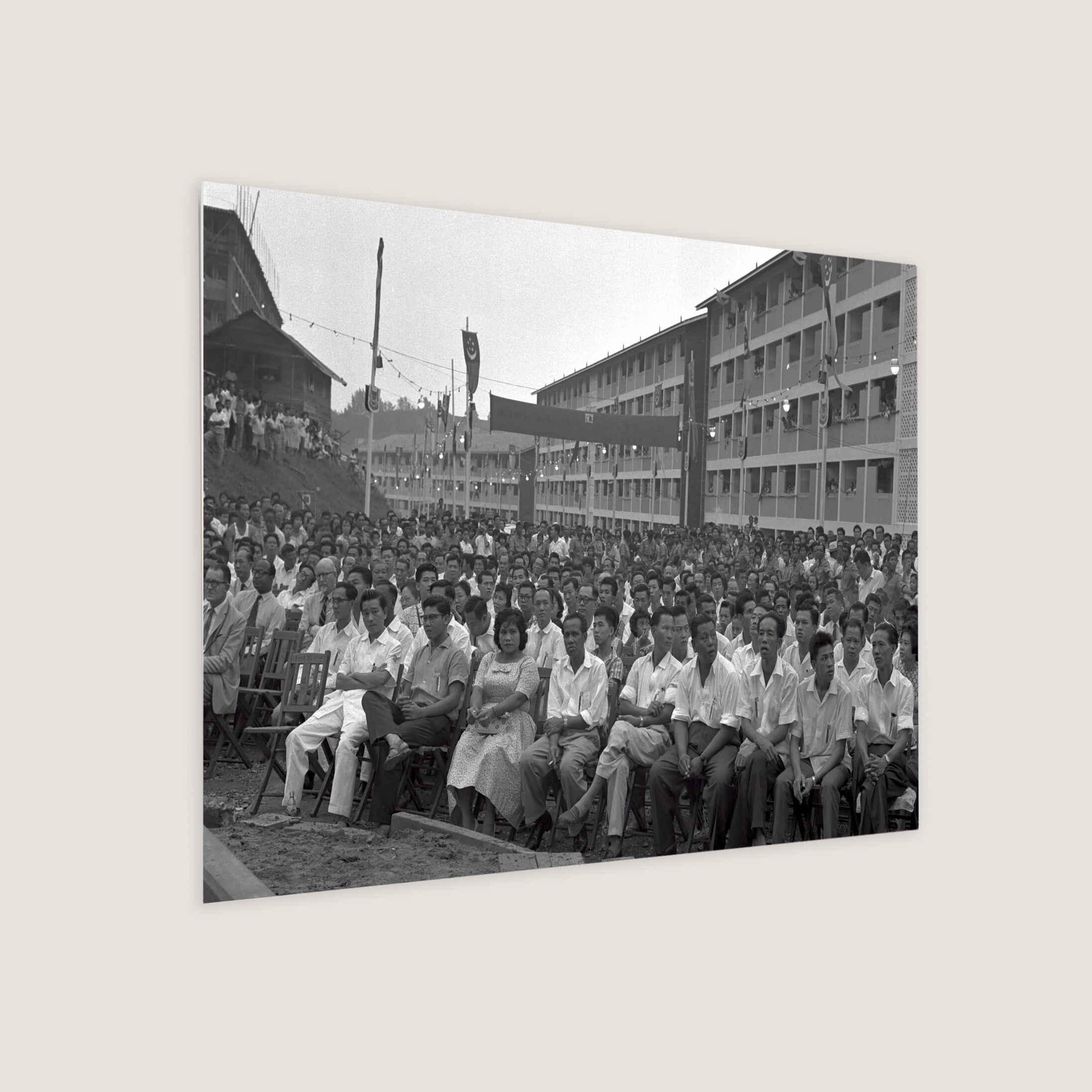
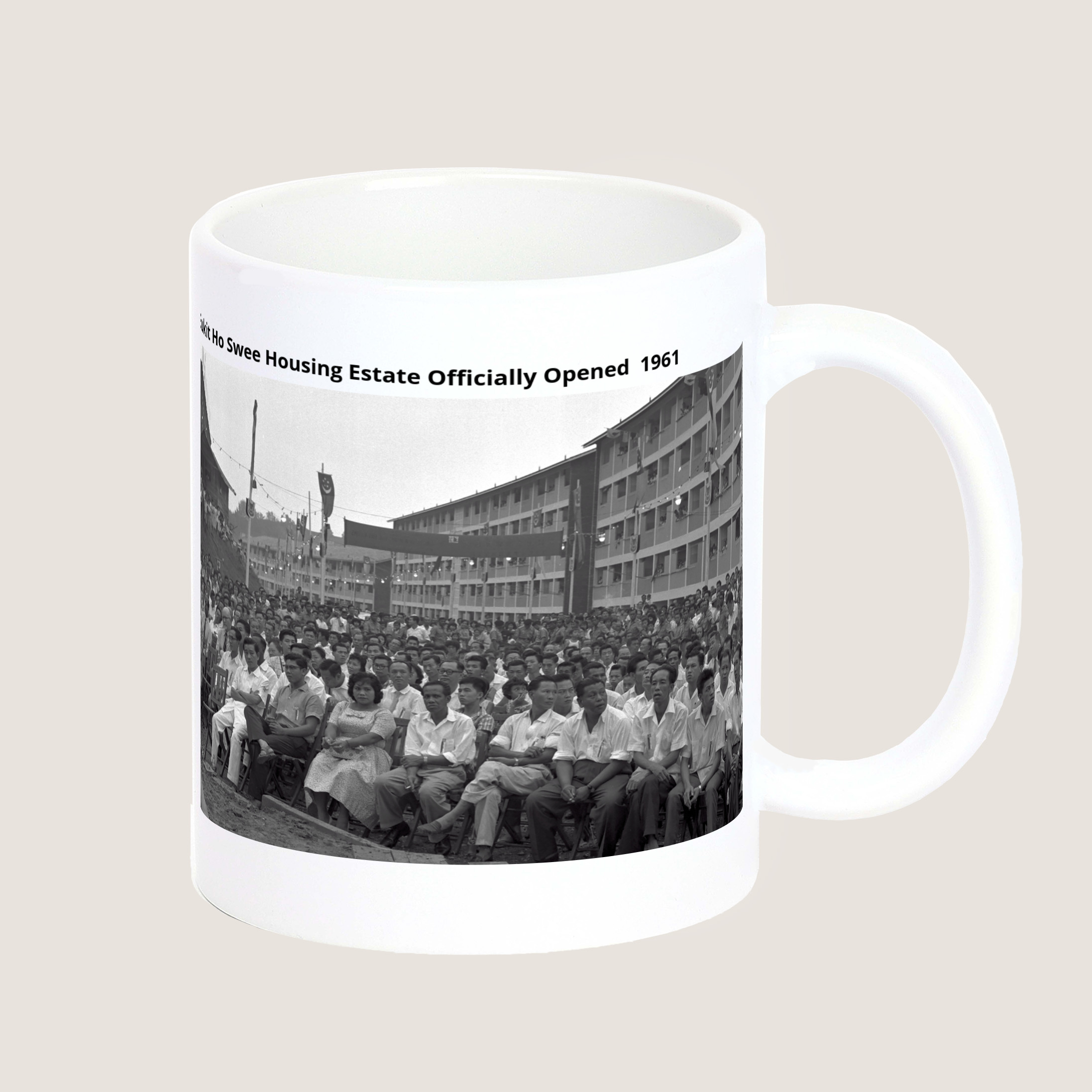
 Bukit Ho Swee Housing Estate Officially Opened
1961
Bukit Ho Swee Housing Estate Officially Opened
1961
Bukit Ho Swee Housing Estate Officially Opened
Year 1961
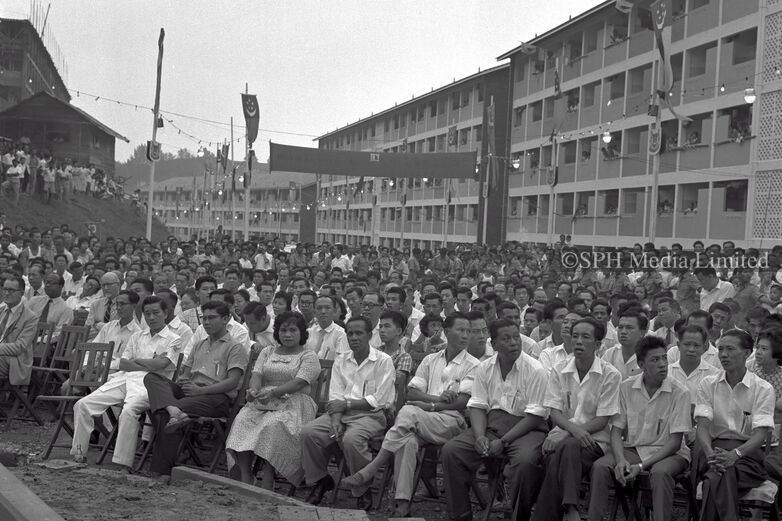
On 25 May 1961, a devastating fire engulfed Bukit Ho Swee, destroying over 2,800 homes and leaving approximately 16,000 people homeless. In response, the government swiftly initiated the construction of new flats, completing the first phase within nine months. This photograph captures residents attending the official opening of the Bukit Ho Swee housing estate, marking a significant milestone in Singapore's public housing history.
©️ SPH Media Limited
Share to
Tags
Available for print on products
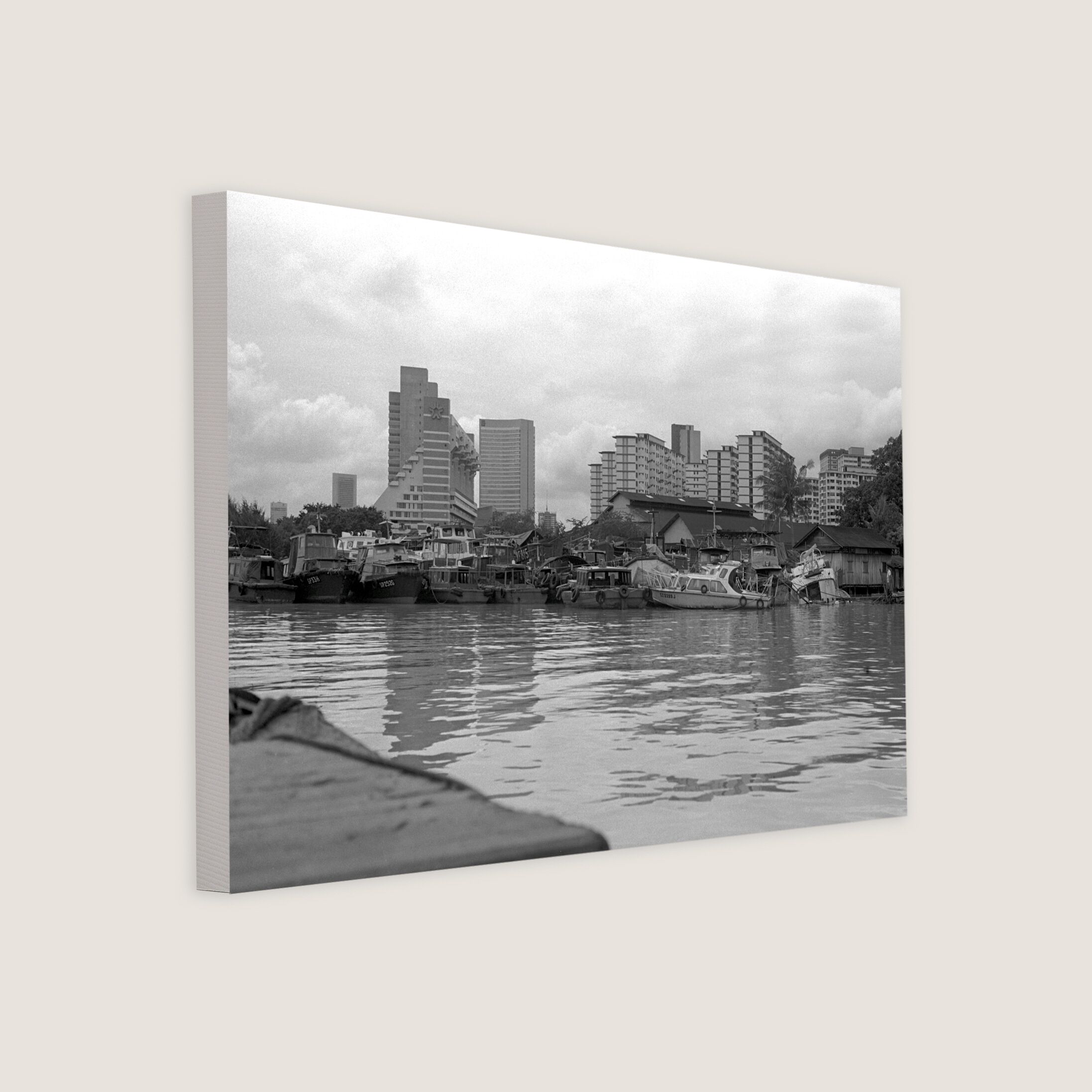
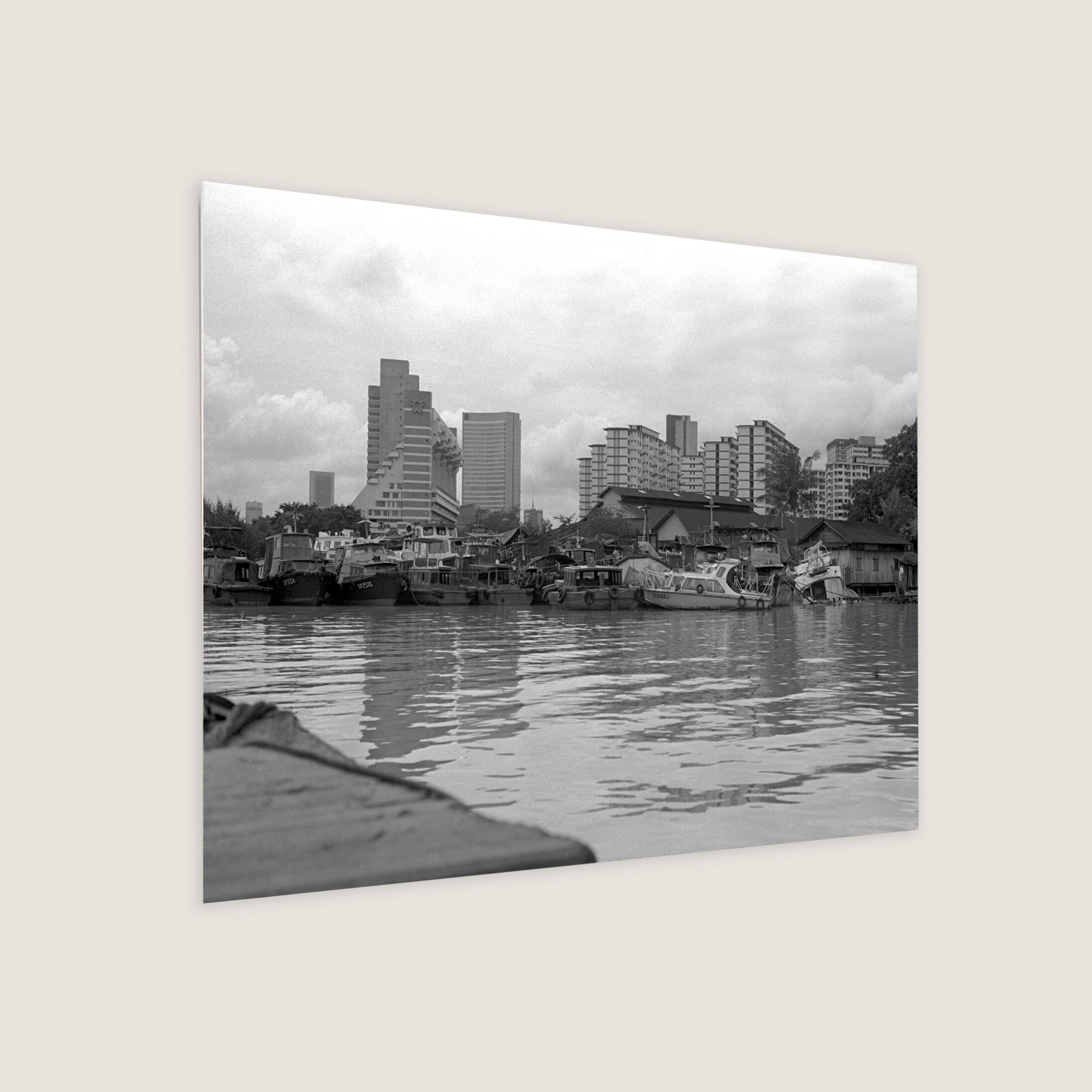
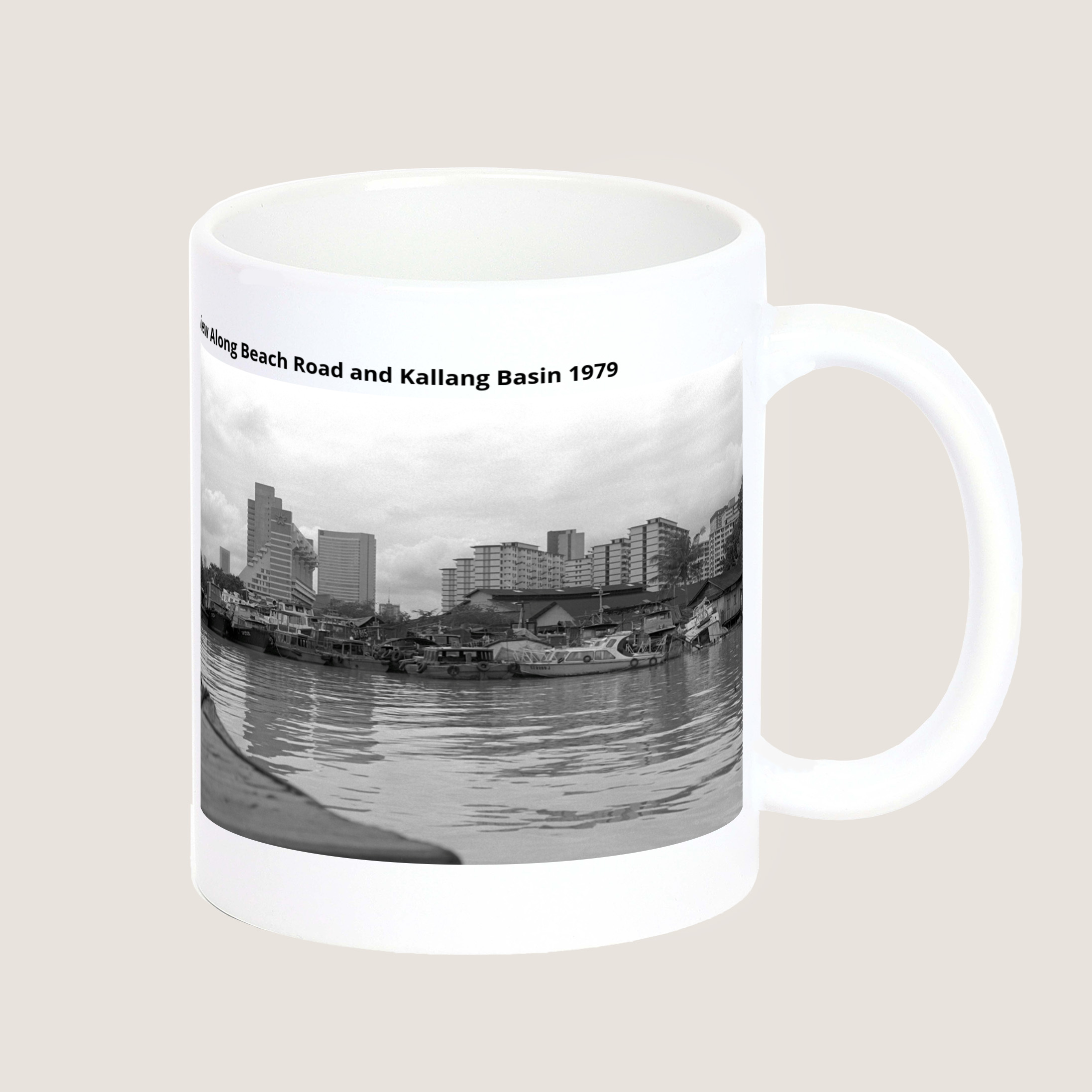
 View Along Beach Road and Kallang Basin
1979
View Along Beach Road and Kallang Basin
1979
View Along Beach Road and Kallang Basin
Year 1979
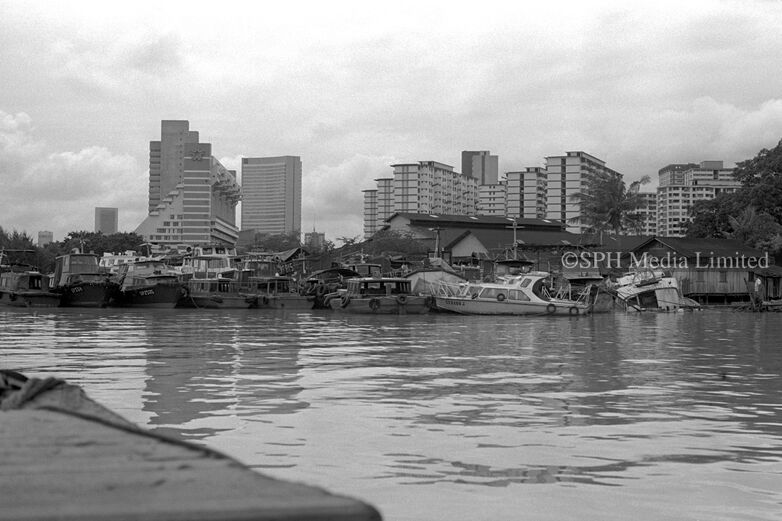
A view of Kallang Basin in the late 1970s shows sawmills, factories, and workshops along its banks. To the left stood Merlin Plaza (now Hotel Royal Plaza) and Golden Mile Complex, while HDB flats lined Beach Road and Crawford Lane. After the river clean-up, waterfront shophouses and boats were relocated, transforming the Kallang Basin landscape.
©️ SPH Media Limited
Share to
Tags
Available for print on products
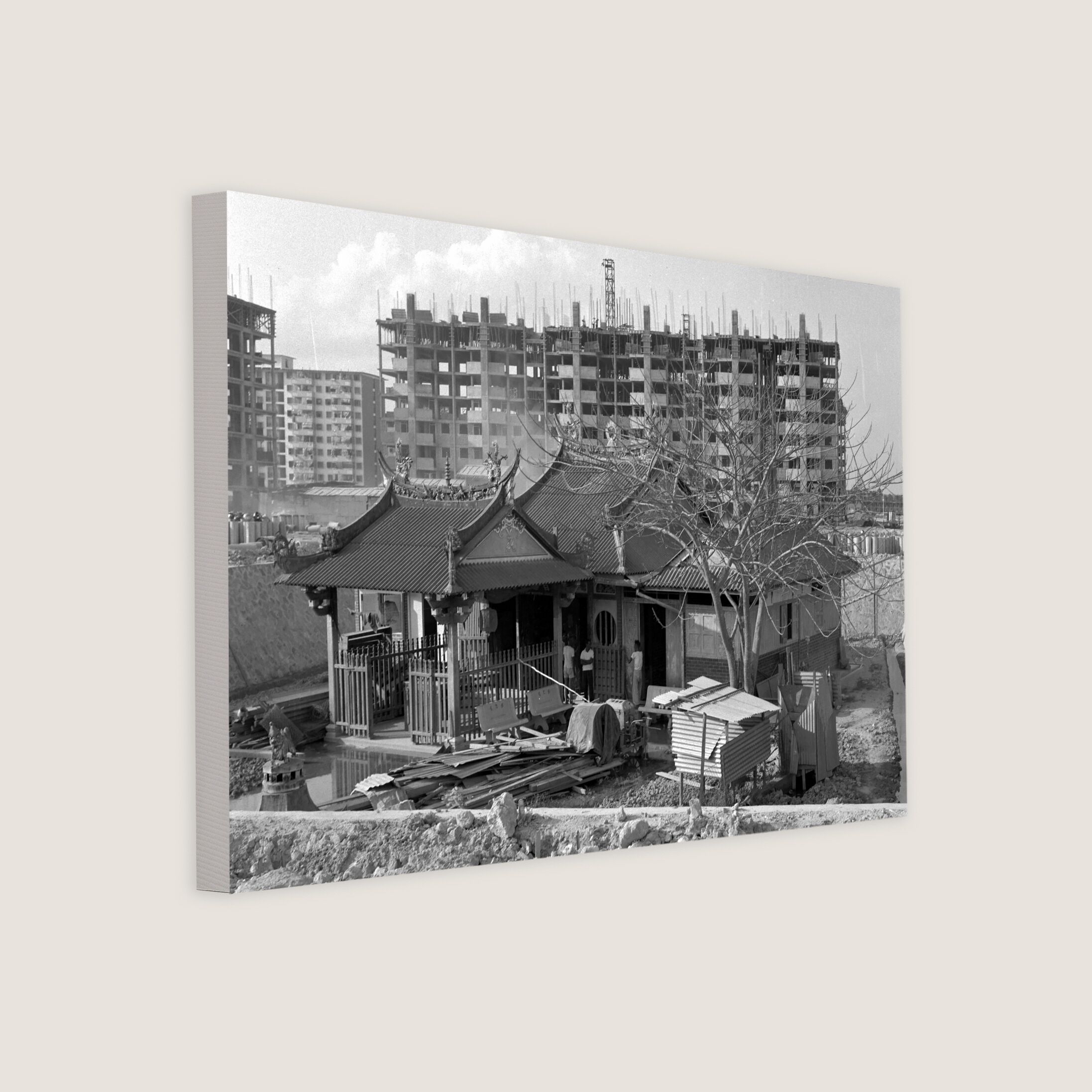
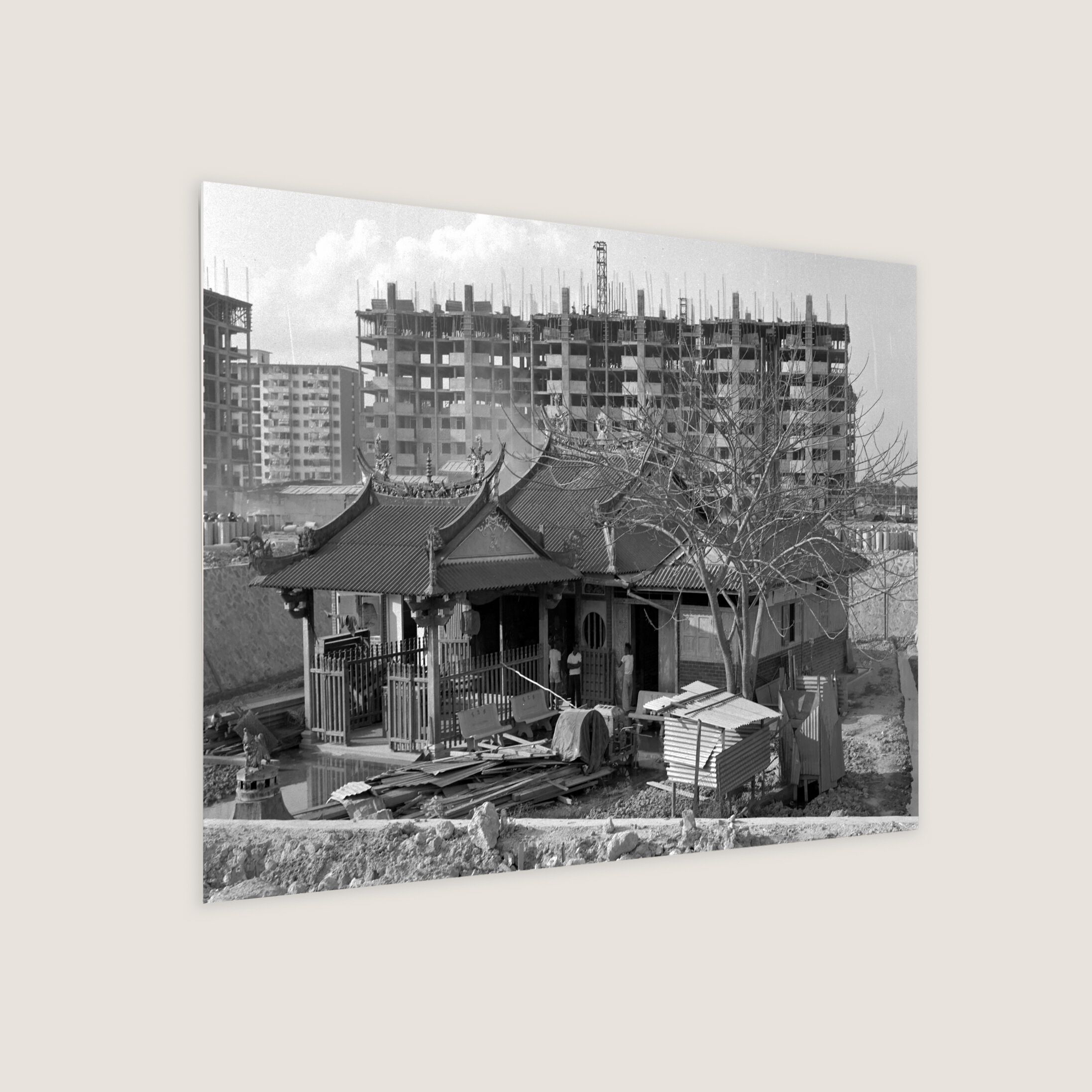
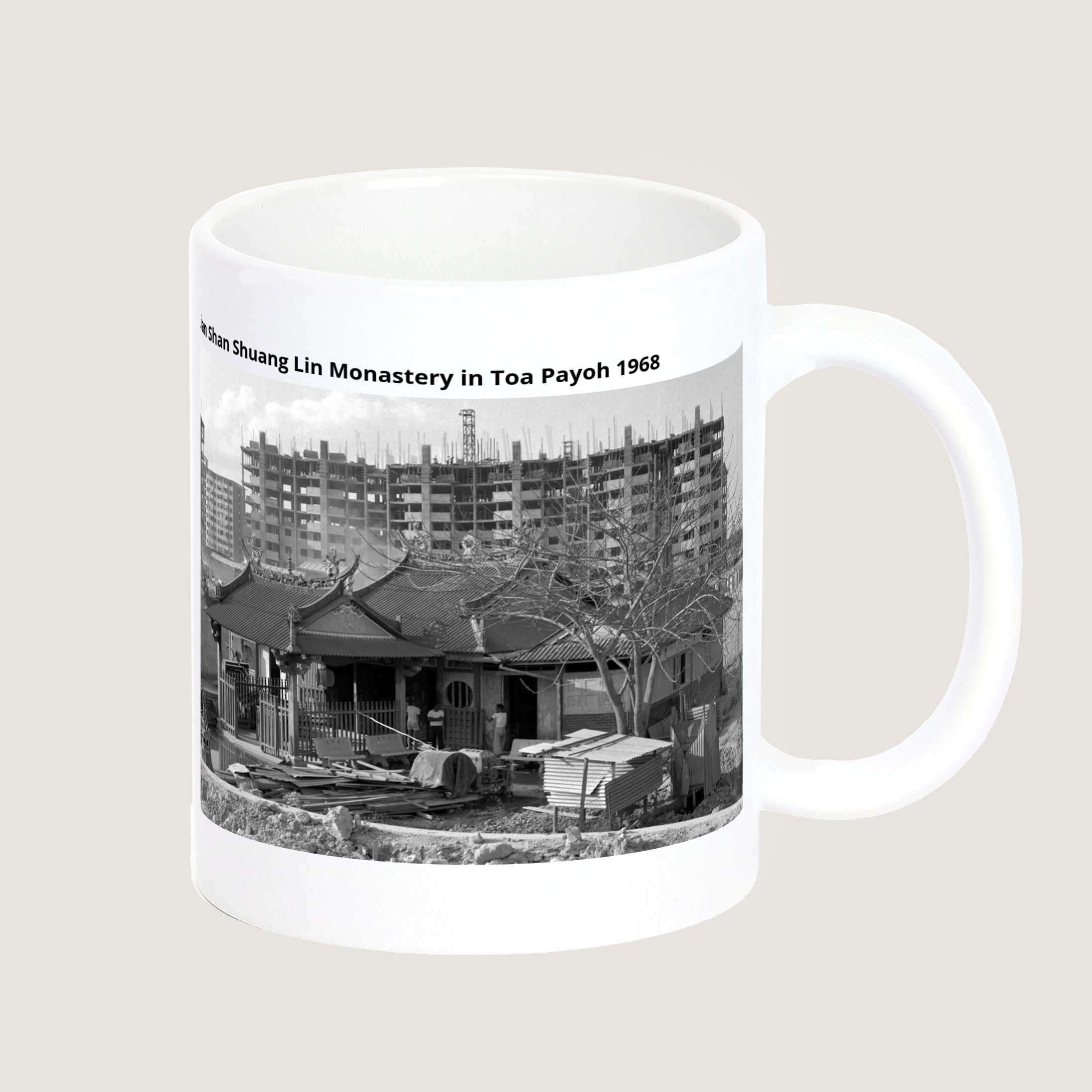
 Lian Shan Shuang Lin Monastery in Toa Payoh
1968
Lian Shan Shuang Lin Monastery in Toa Payoh
1968
Lian Shan Shuang Lin Monastery in Toa Payoh
Year 1968
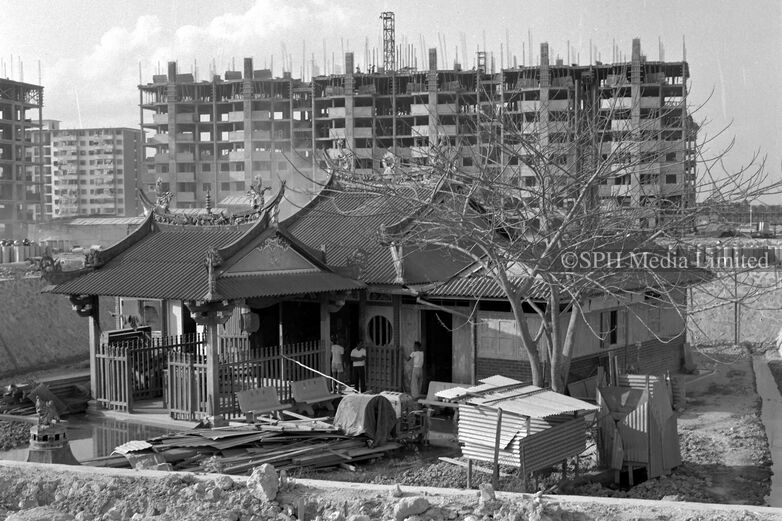
The Toa Payoh satellite HDB flats were being built in the background of the Lian Shan Shuang Lin Monastery in 1968. The temple was constructed in 1909, and today it still stands at the same location in Toa Payoh, right by the Pan Island Expressway.
©️ SPH Media Limited
Share to
Tags
Available for print on products
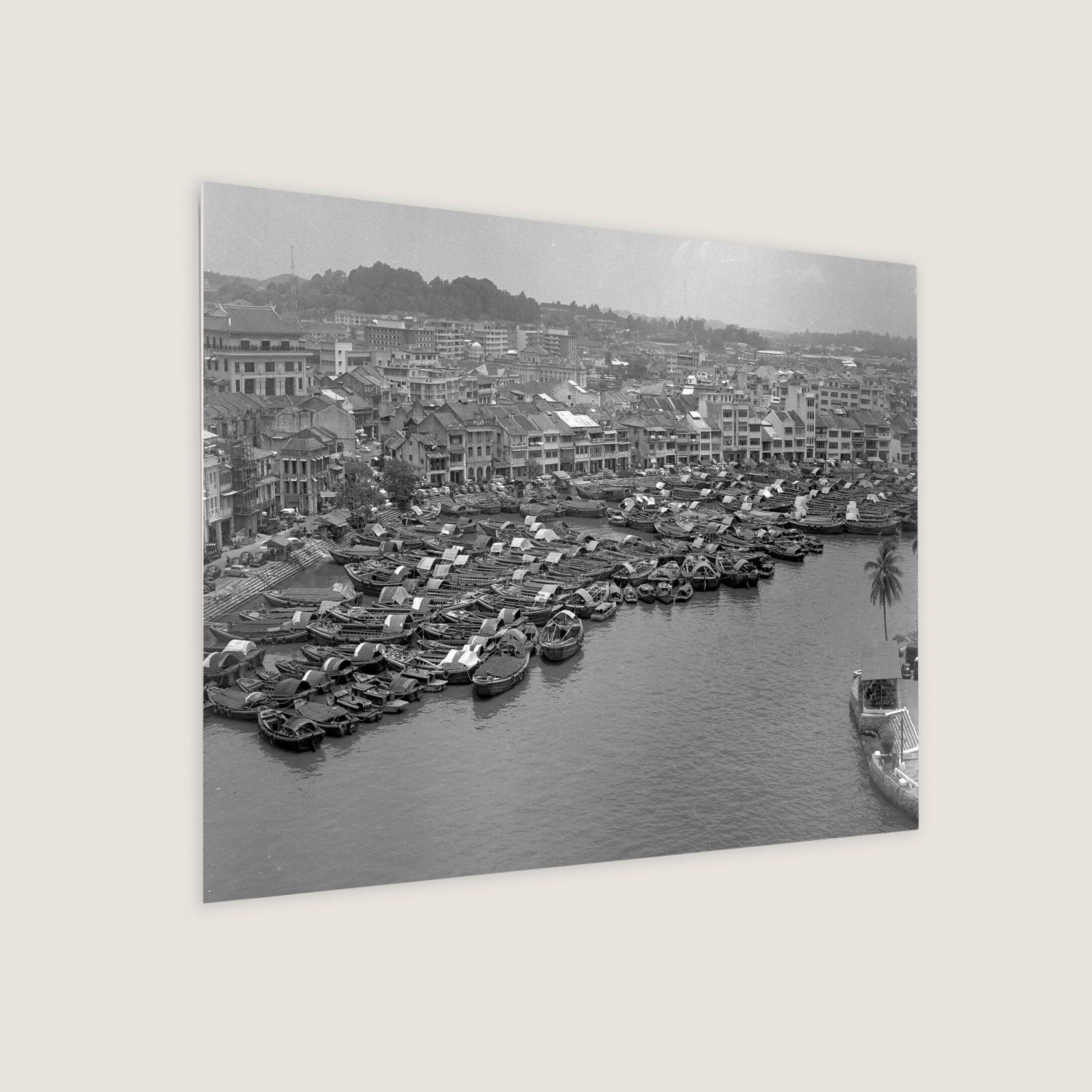
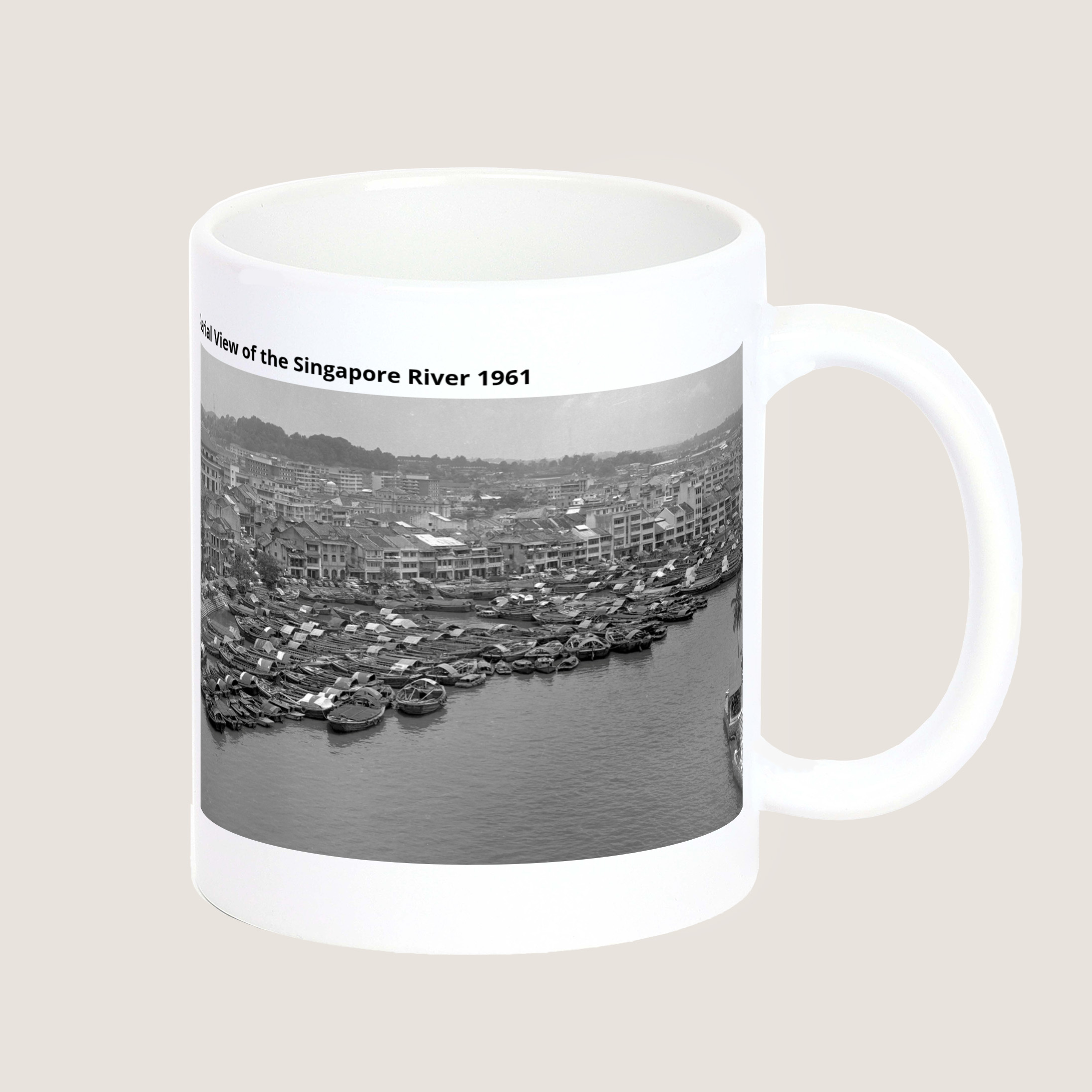
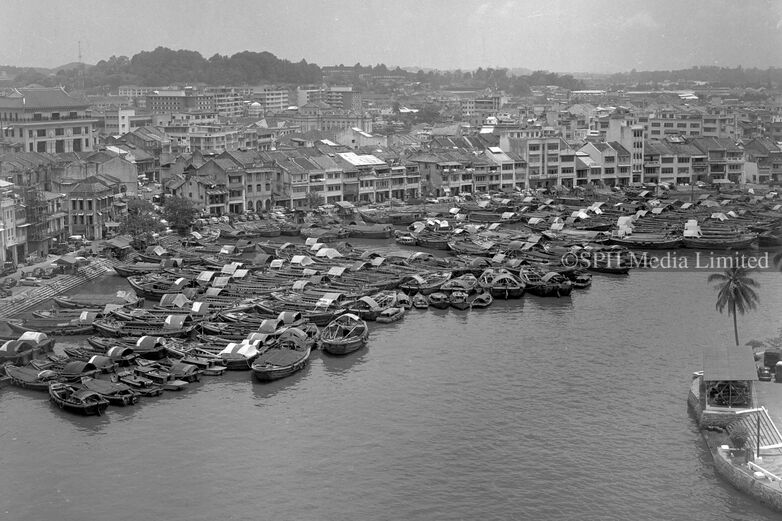 Aerial View of the Singapore River
1961
Aerial View of the Singapore River
1961
Aerial View of the Singapore River
Year 1961
Boats, tongkangs and bumboats at the Singapore River, 7 September 1961. Loading and unloading of goods was brought to a standstill due to the strikes by workers from the Singapore General Employees Union. The area was later cleaned up and redeveloped into a entertainment area which borders the financial district, and the tongkangs are now used to ferry tourists on sightseeing cruises.
©️ SPH Media Limited
Share to
Tags
Available for print on products
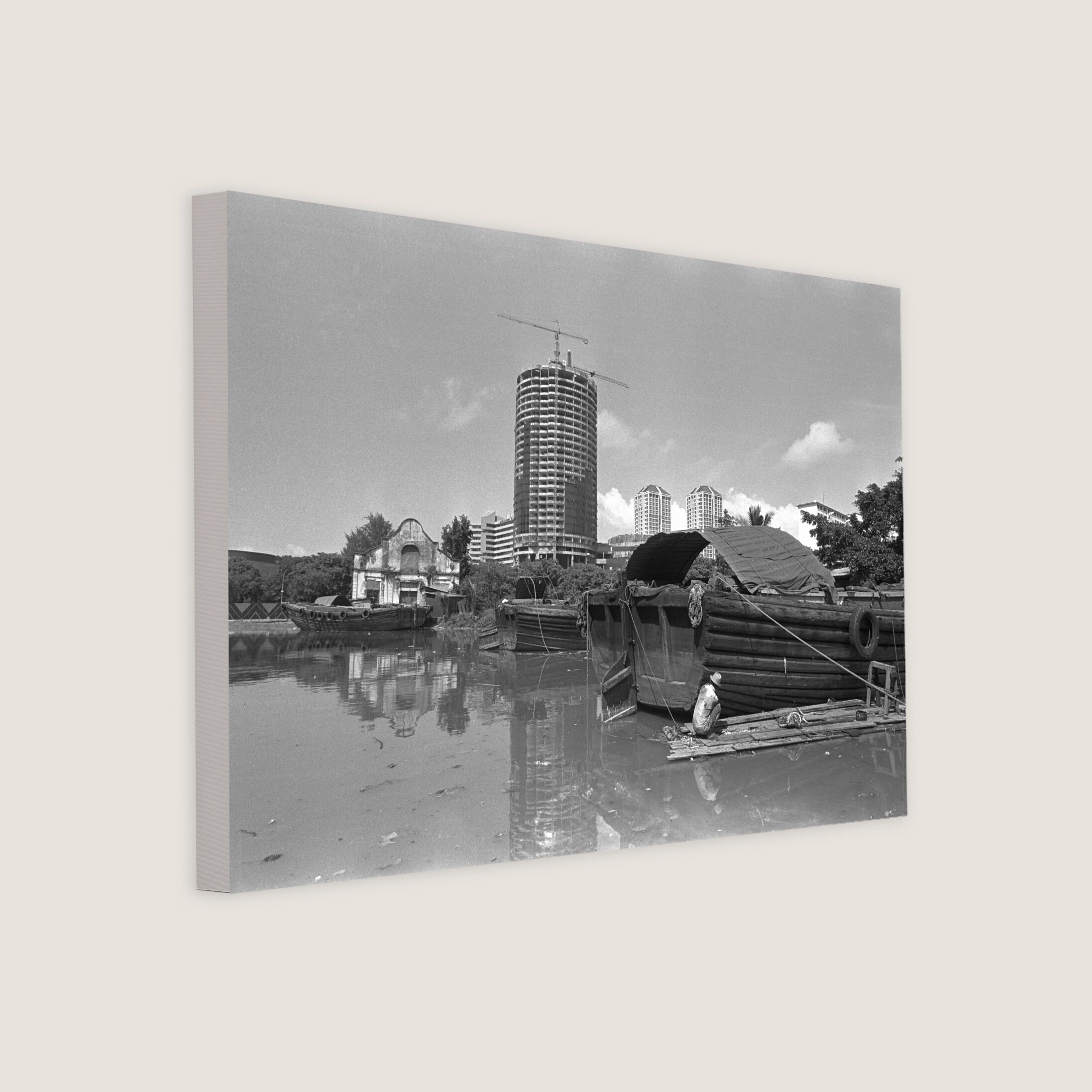
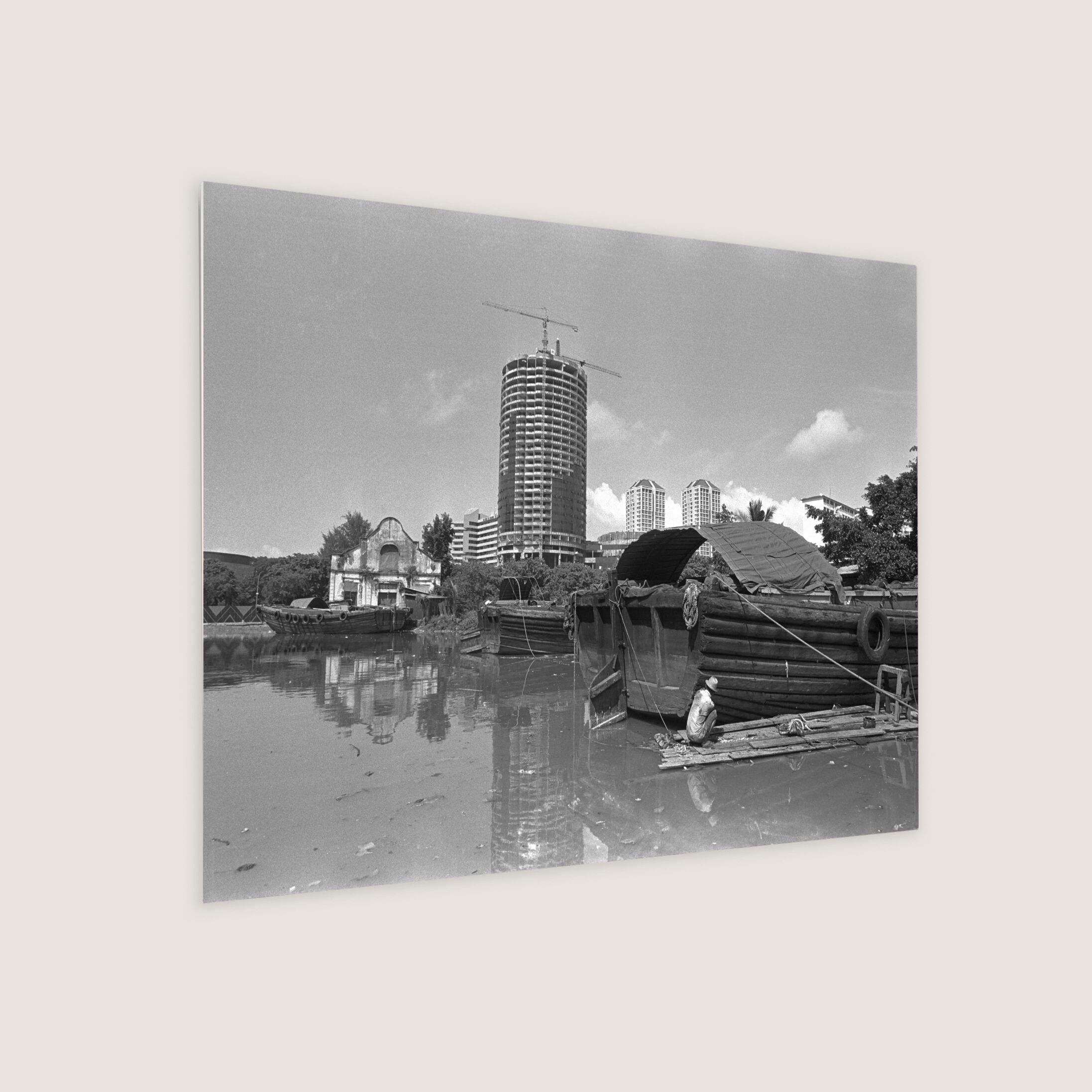
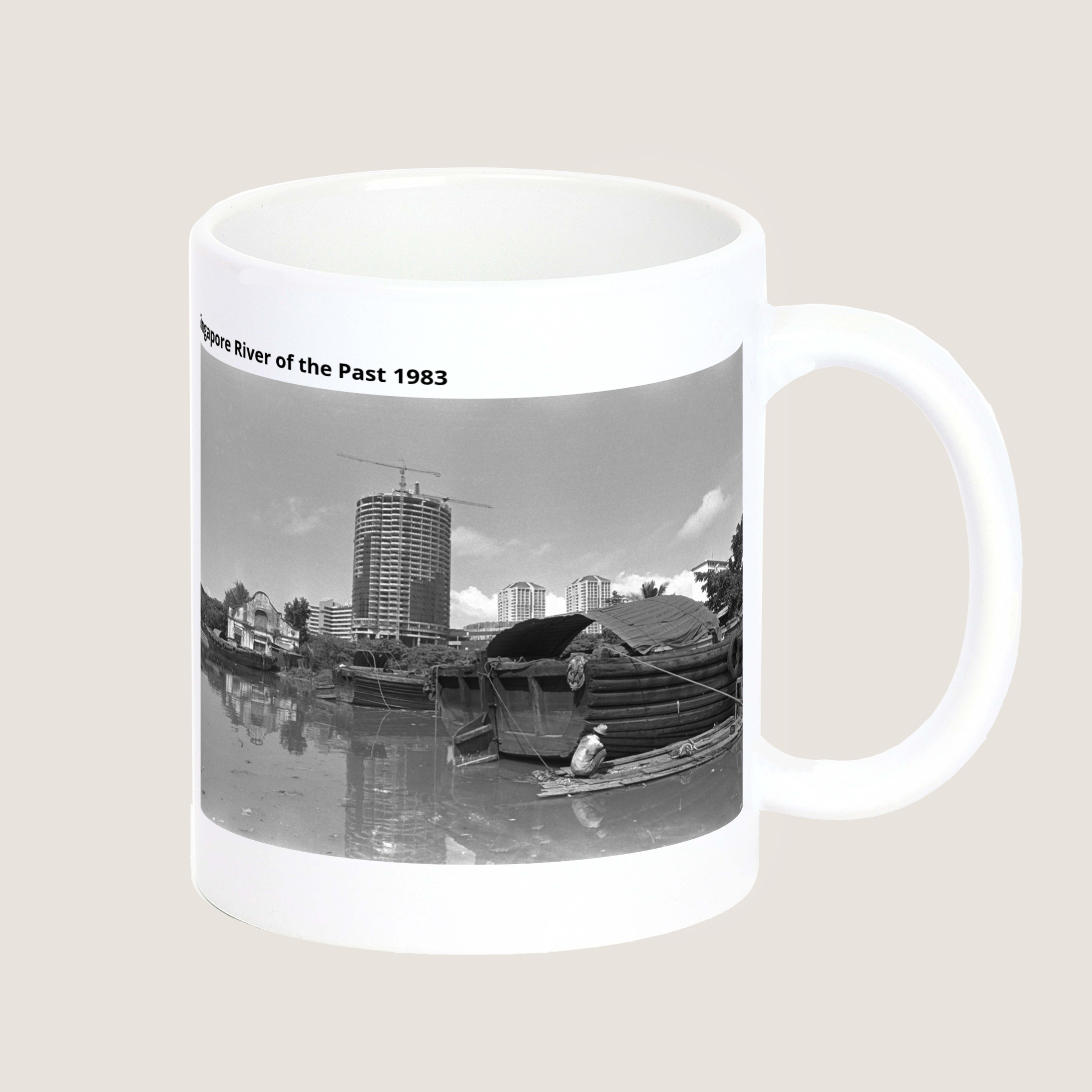
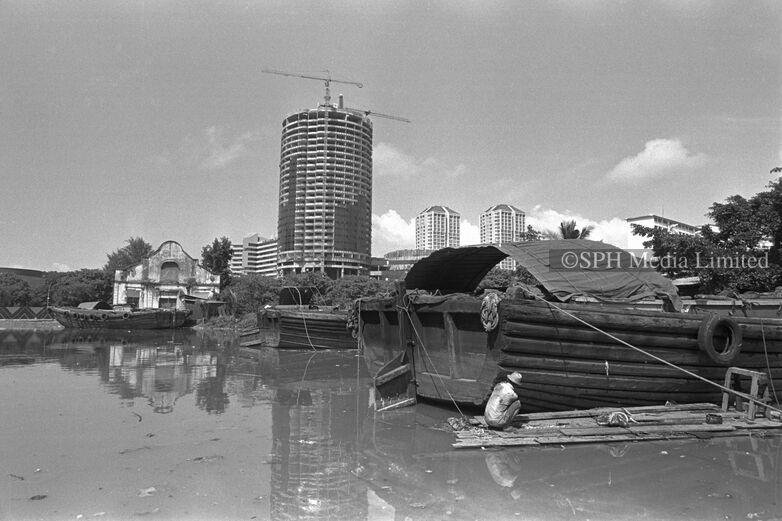 Singapore River of the Past
1983
Singapore River of the Past
1983
Singapore River of the Past
Year 1983
Muddy waters, craftsmen repairing tongkangs by the river, and abandoned warehouses stand in contrast to the buildings under construction in the distance. This photo captures a moment of transition, as the Singapore River clean-up had begun and change was steadily reaching even this quiet corner of the city.
©️ SPH Media Limited
Share to
Tags
Available for print on products
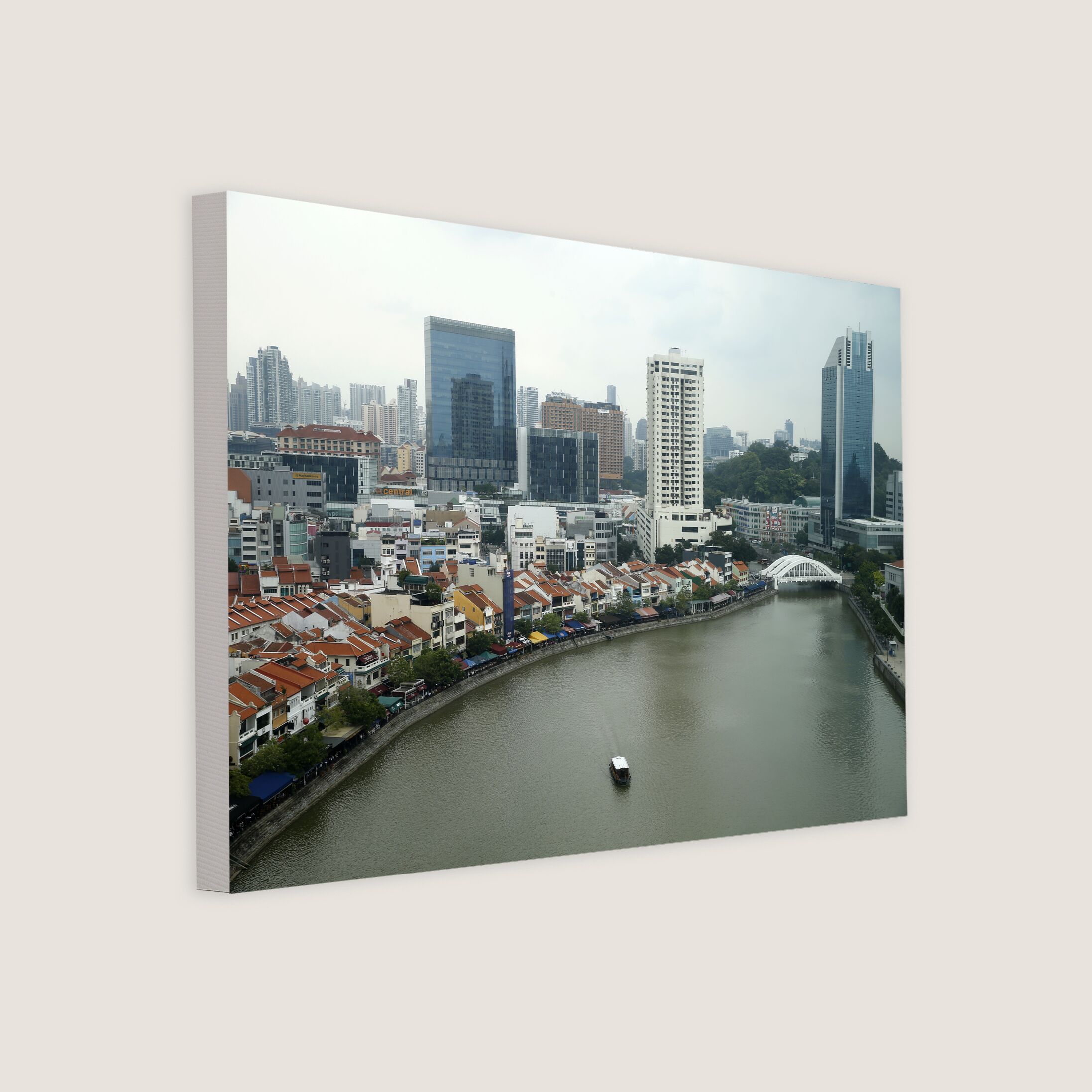
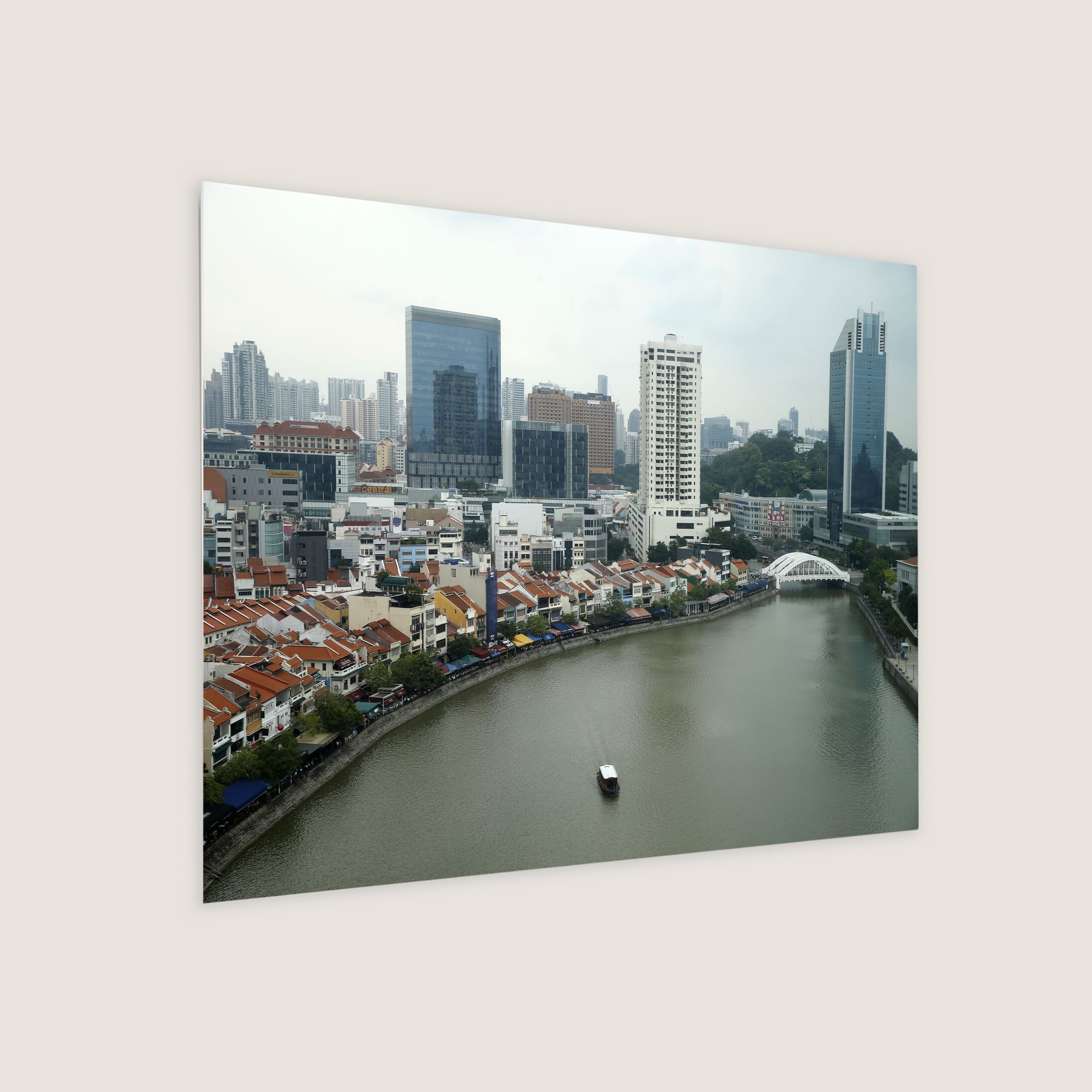
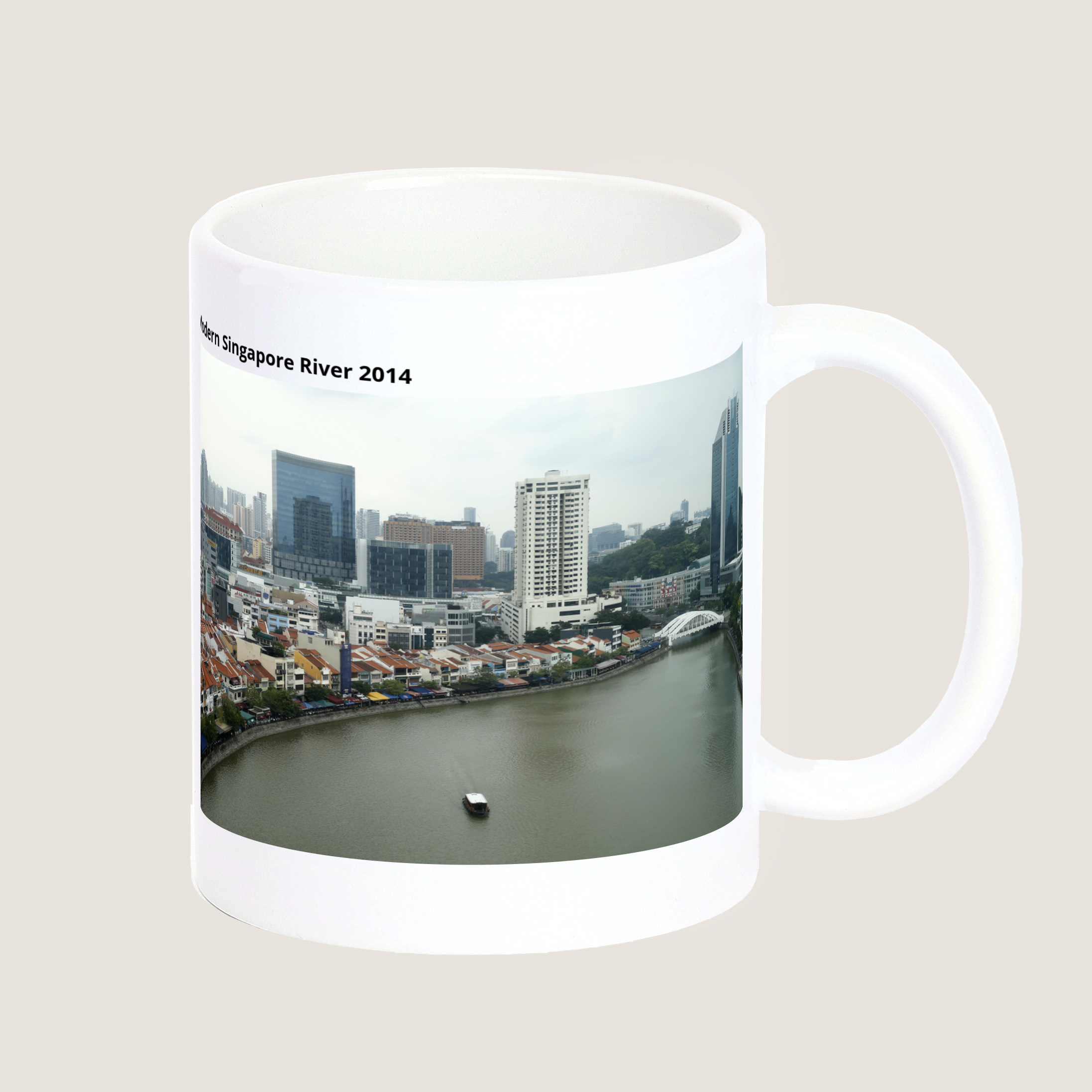
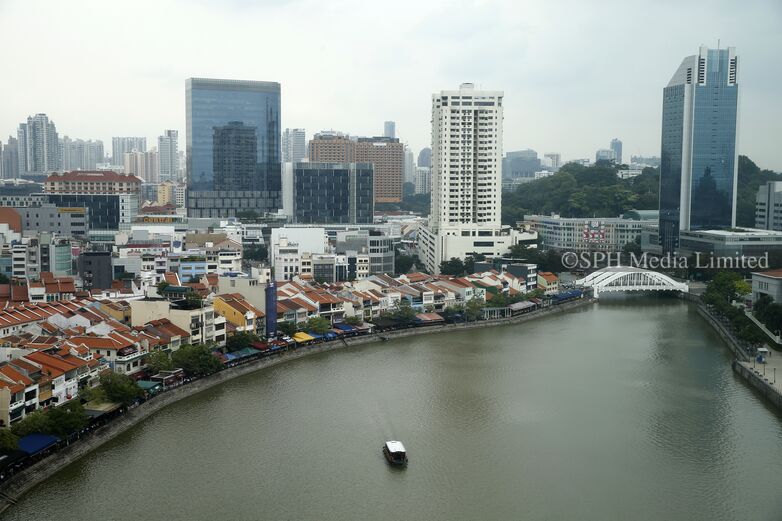 Modern Singapore River
2014
Modern Singapore River
2014
Modern Singapore River
Year 2014
A tongkang glides along the clean waters of the Singapore River at Boat Quay. Once vital for transporting goods across the river, these traditional boats have since transformed, now serving primarily as tourist attractions, reflecting the evolving character of the river through the years.
©️ SPH Media Limited
Share to
Tags
Available for print on products
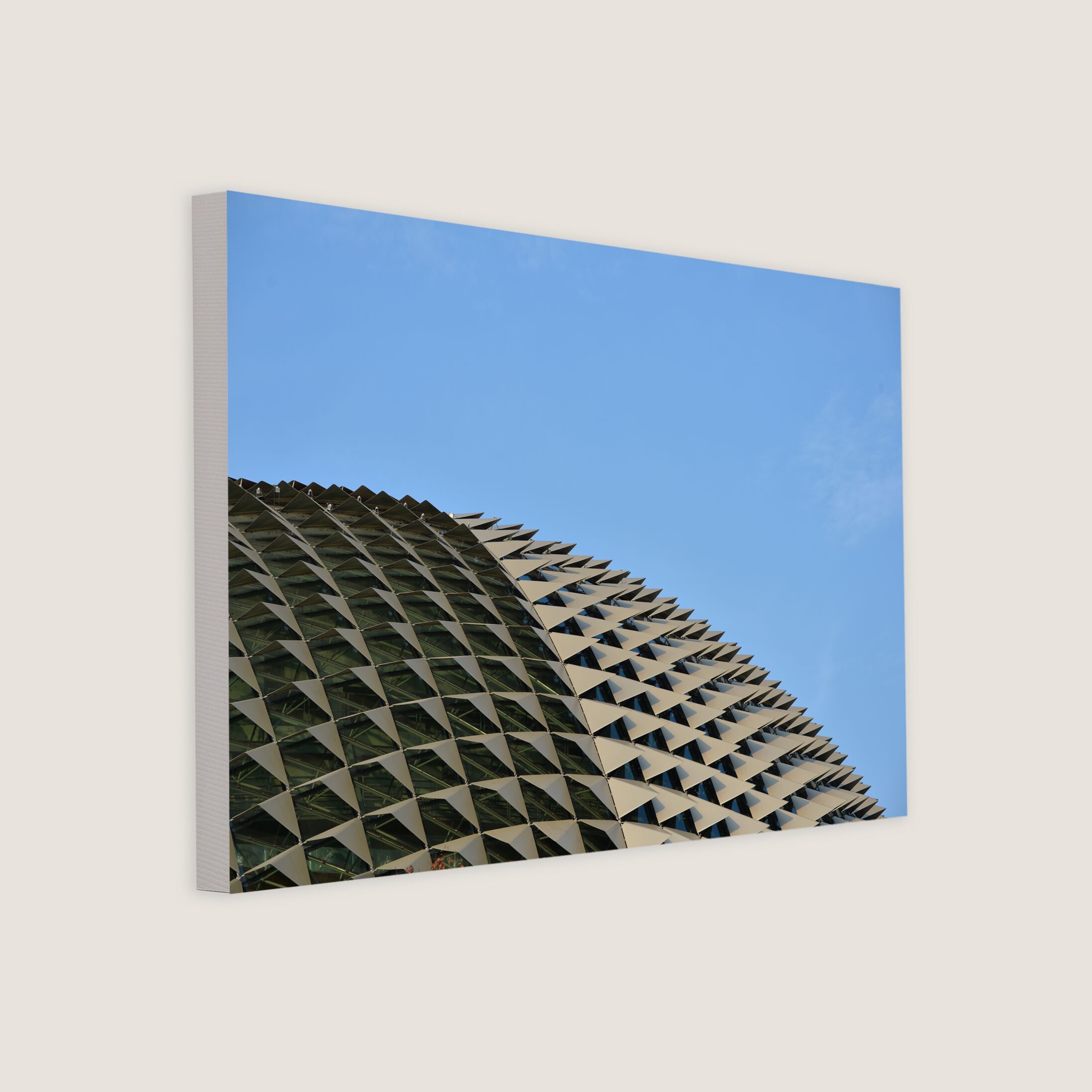
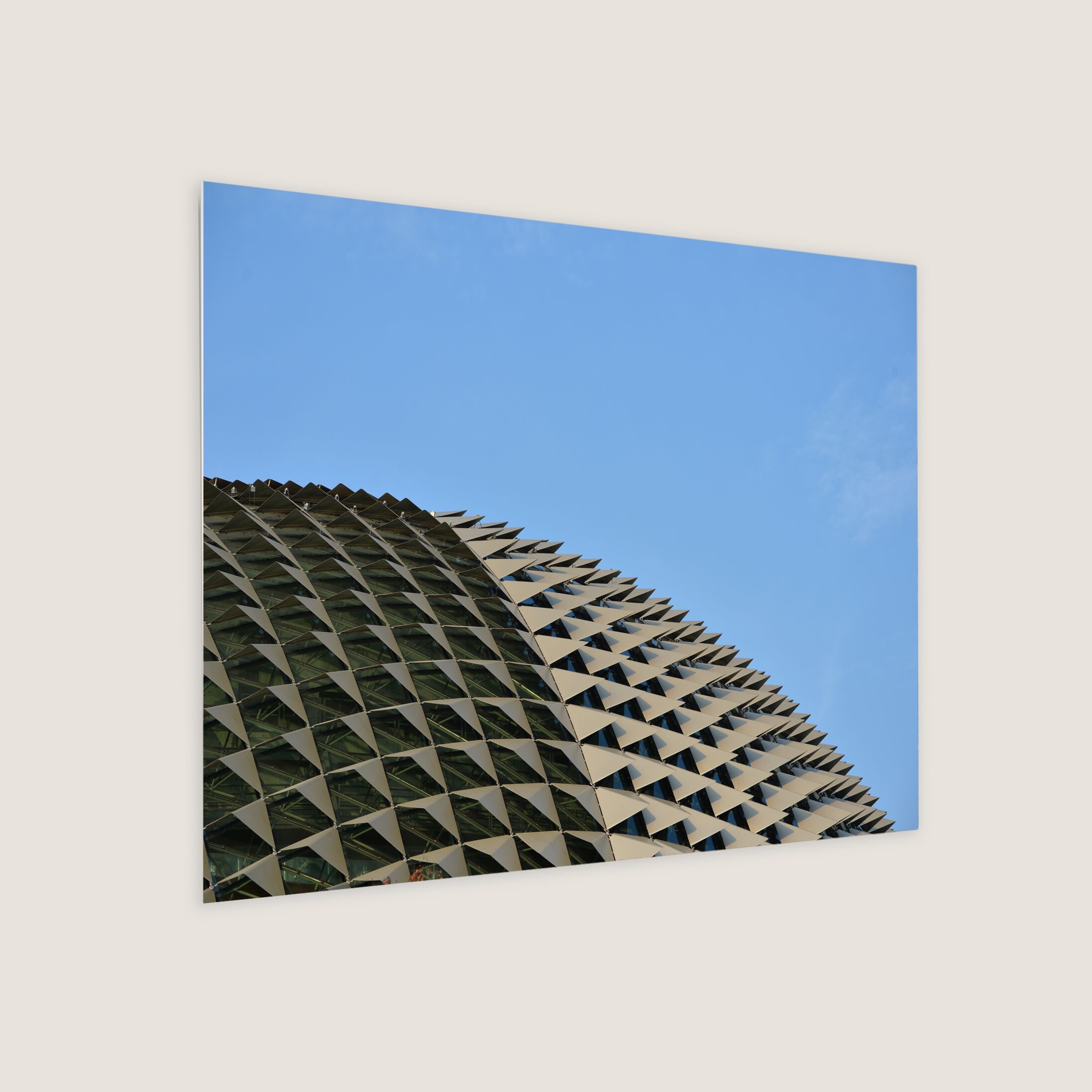
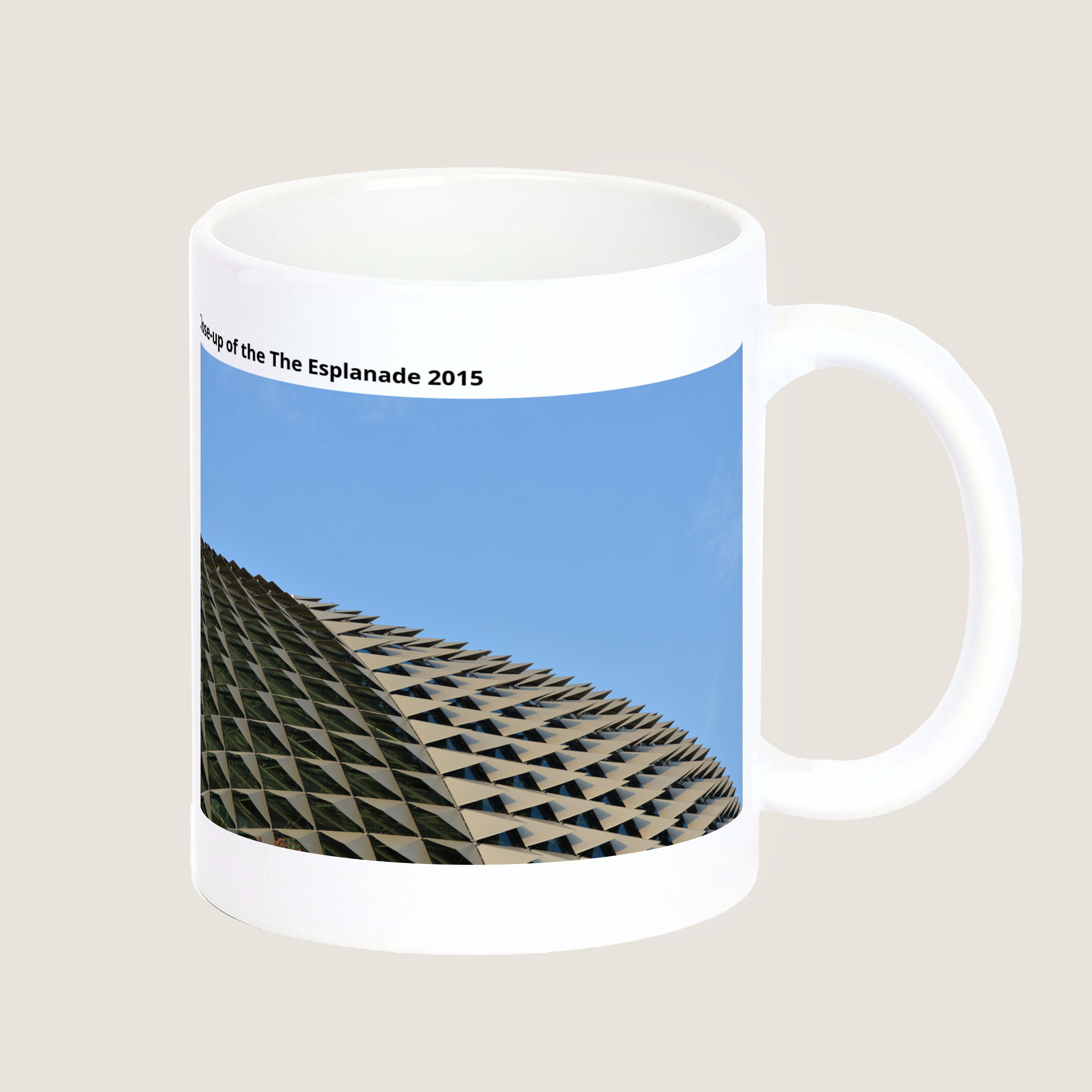
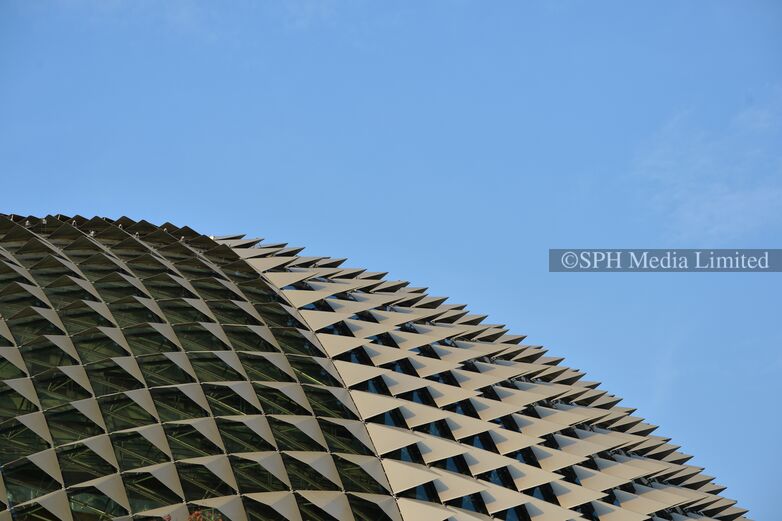 Close-up of the The Esplanade
2015
Close-up of the The Esplanade
2015
Close-up of the The Esplanade
Year 2015
The Esplanade – Theatres on the Bay, often called “The Durian” for its distinctive spiked roof, drew early criticism for its bold design. However, after its opening, public opinion shifted, and the building became a beloved landmark, affectionately nicknamed after the tropical fruit so familiar to Singaporeans.
©️ SPH Media Limited
Share to
Tags
Available for print on products
Boat Quay: a Gazetted Conservation Area
2008
Boat Quay: a Gazetted Conservation Area
Year 2008
Boat Quay is one of the oldest and most historically significant places in Singapore. When Sir Stamford Raffles arrived in 1819, he designated the area for land reclamation. Sand from the hills near Battery Road was used to fill in the mangrove swamps at both ends of the Singapore River. This was Singapore's first developmental project. The buildings at Boat Quay were gazetted for conservation in 1989 and now mainly serve as food and entertainment venues.
©️ SPH Media Limited
Share to
Tags
Available for print on products
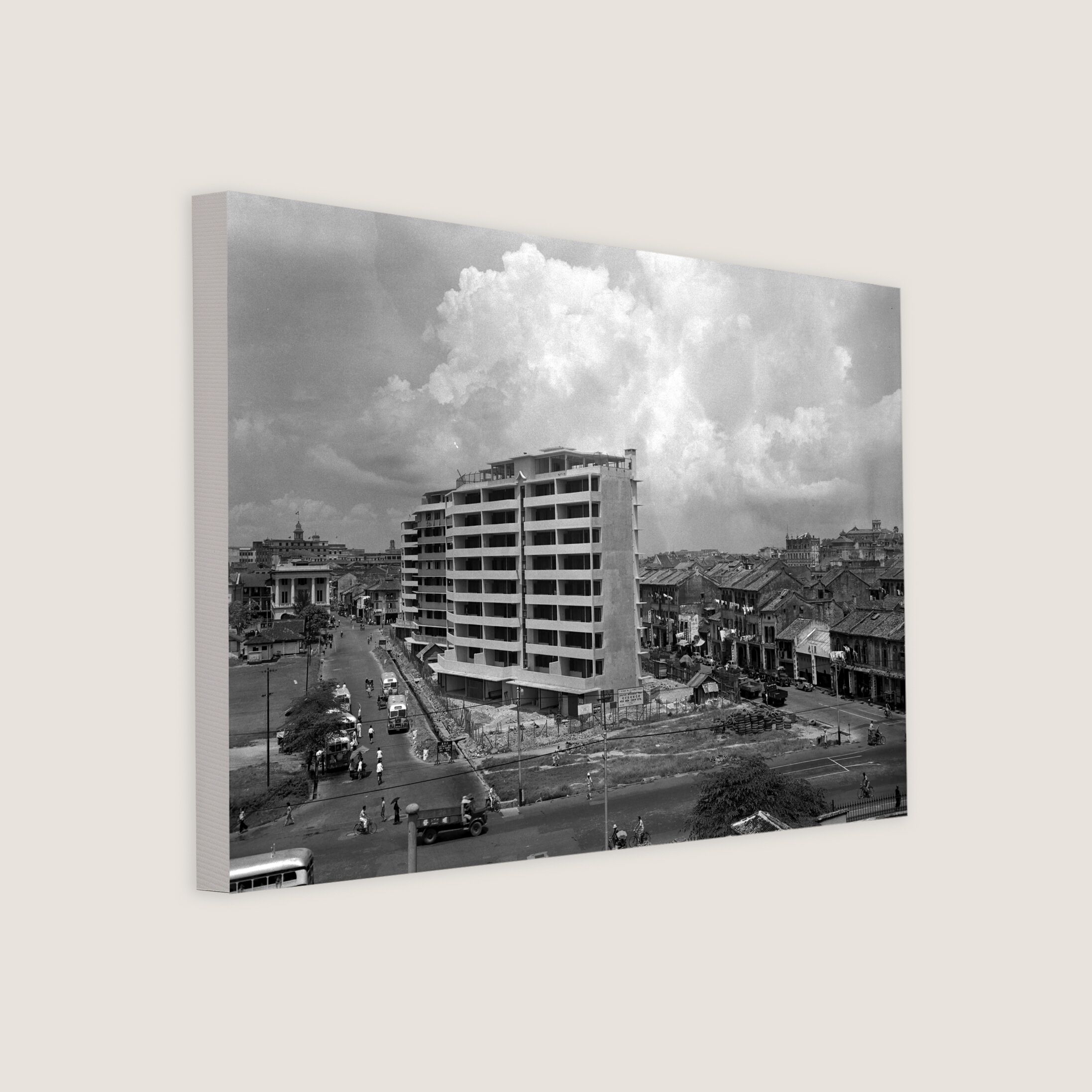
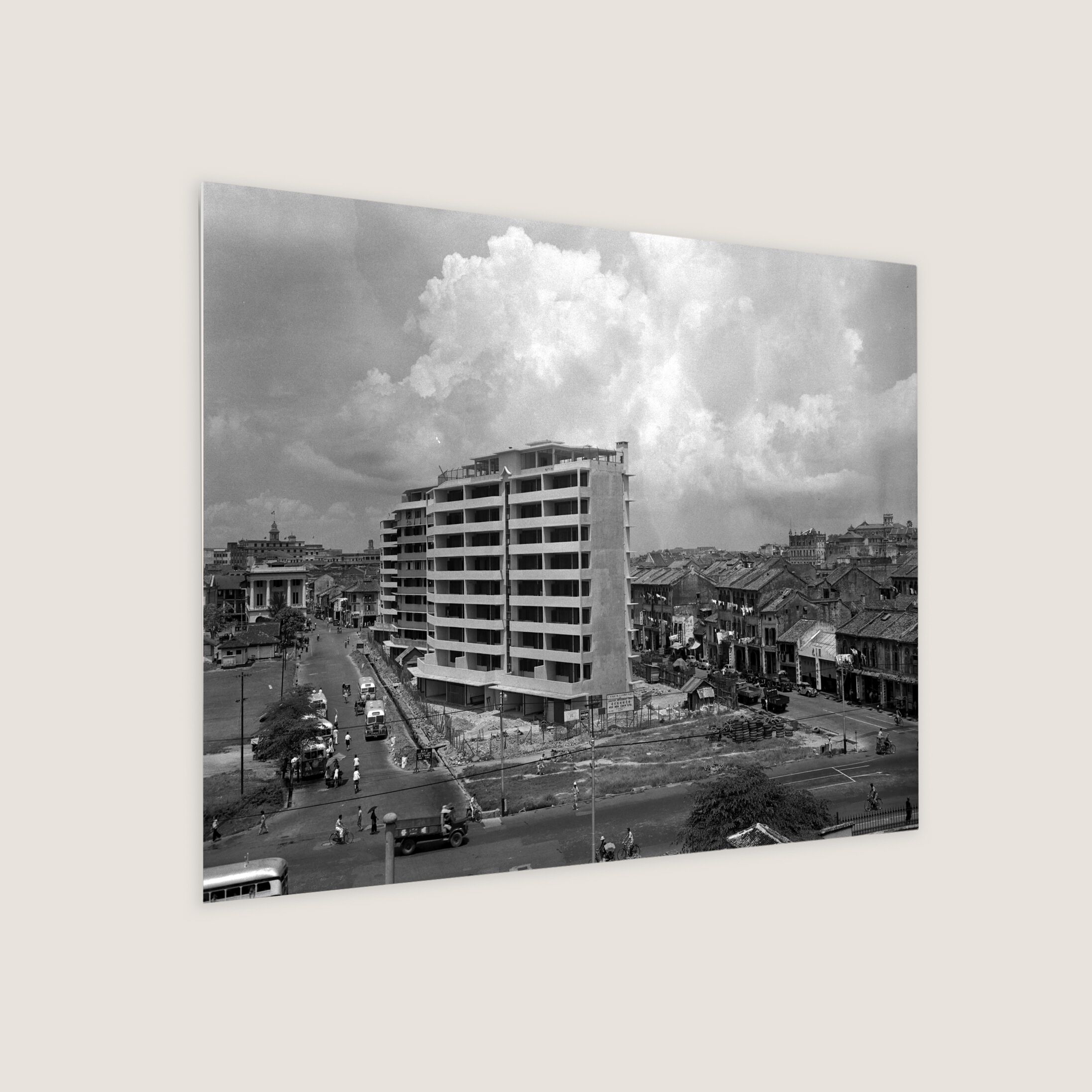
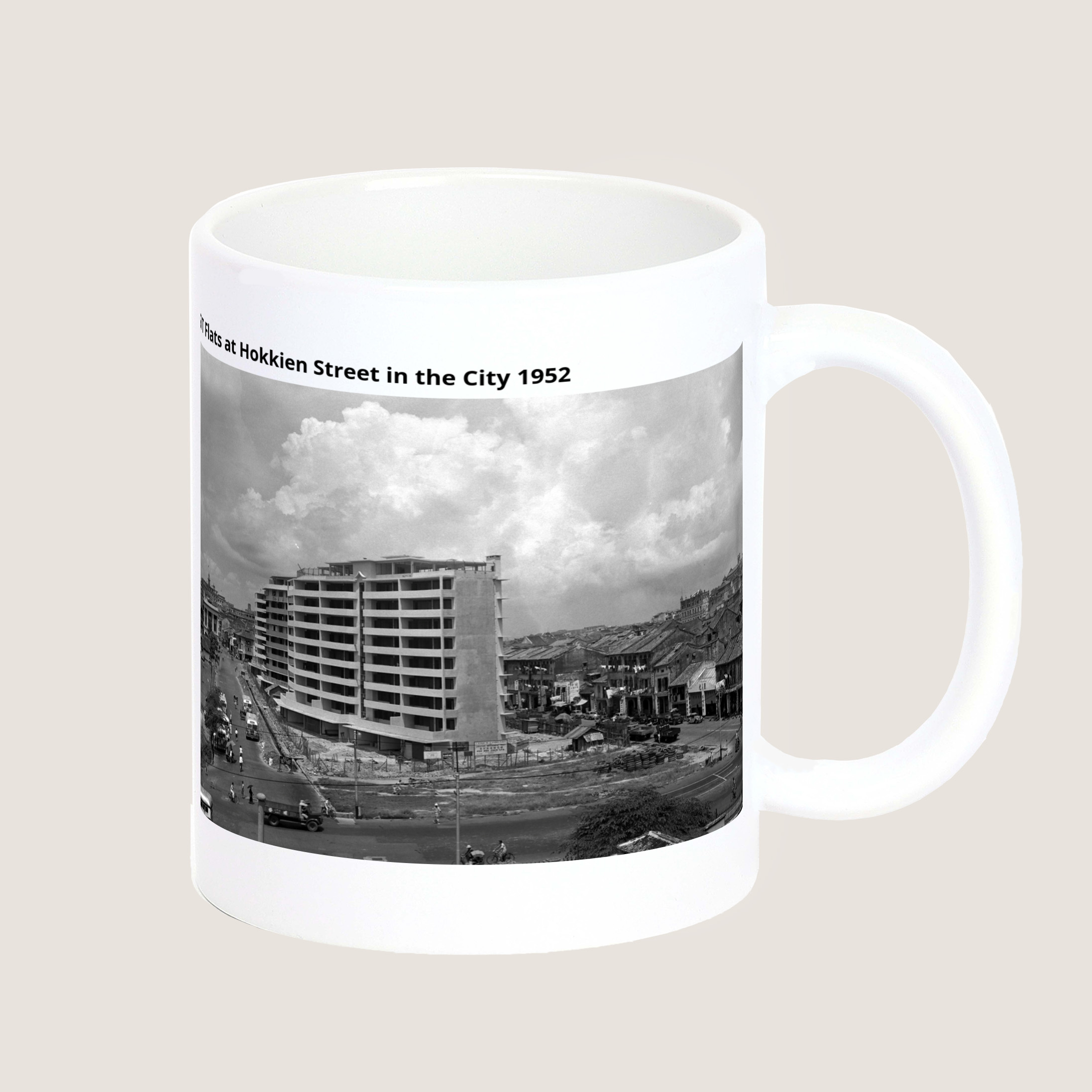
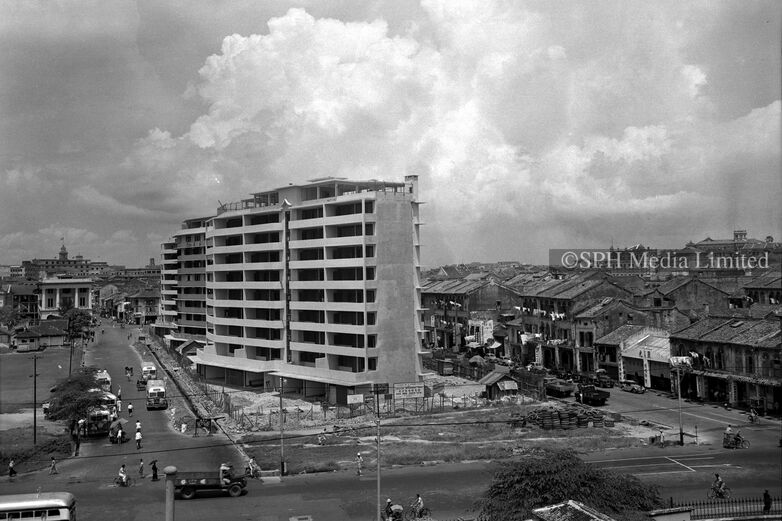 SIT Flats at Hokkien Street in the City
1952
SIT Flats at Hokkien Street in the City
1952
SIT Flats at Hokkien Street in the City
Year 1952
In the early 1950s, the Singapore Improvement Trust (SIT) built flats along Hokkien Street to address the severe housing shortage in the overcrowded city. Hokkien Street is one of the oldest roads in Singapore, and was named after early settlers from Fujian Province, the largest Chinese dialect group.
©️ SPH Media Limited
Share to
Tags
Available for print on products
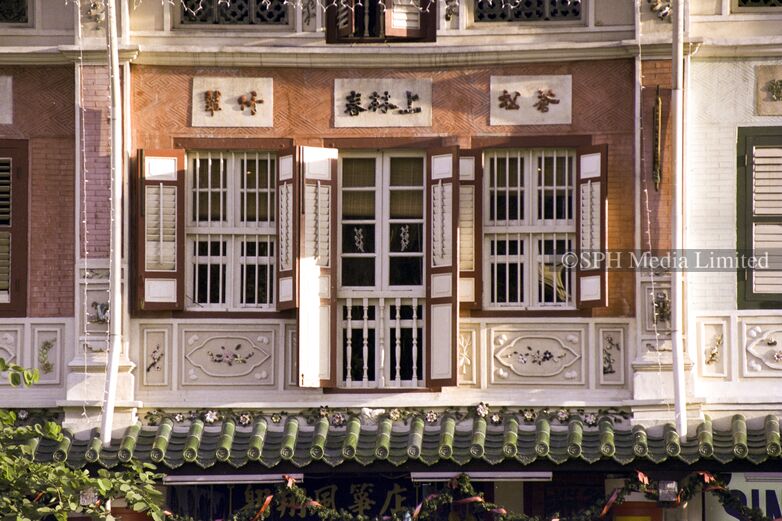 Conserved Shophouses in Tanjong Pagar
1990
Conserved Shophouses in Tanjong Pagar
1990
Conserved Shophouses in Tanjong Pagar
Year 1990
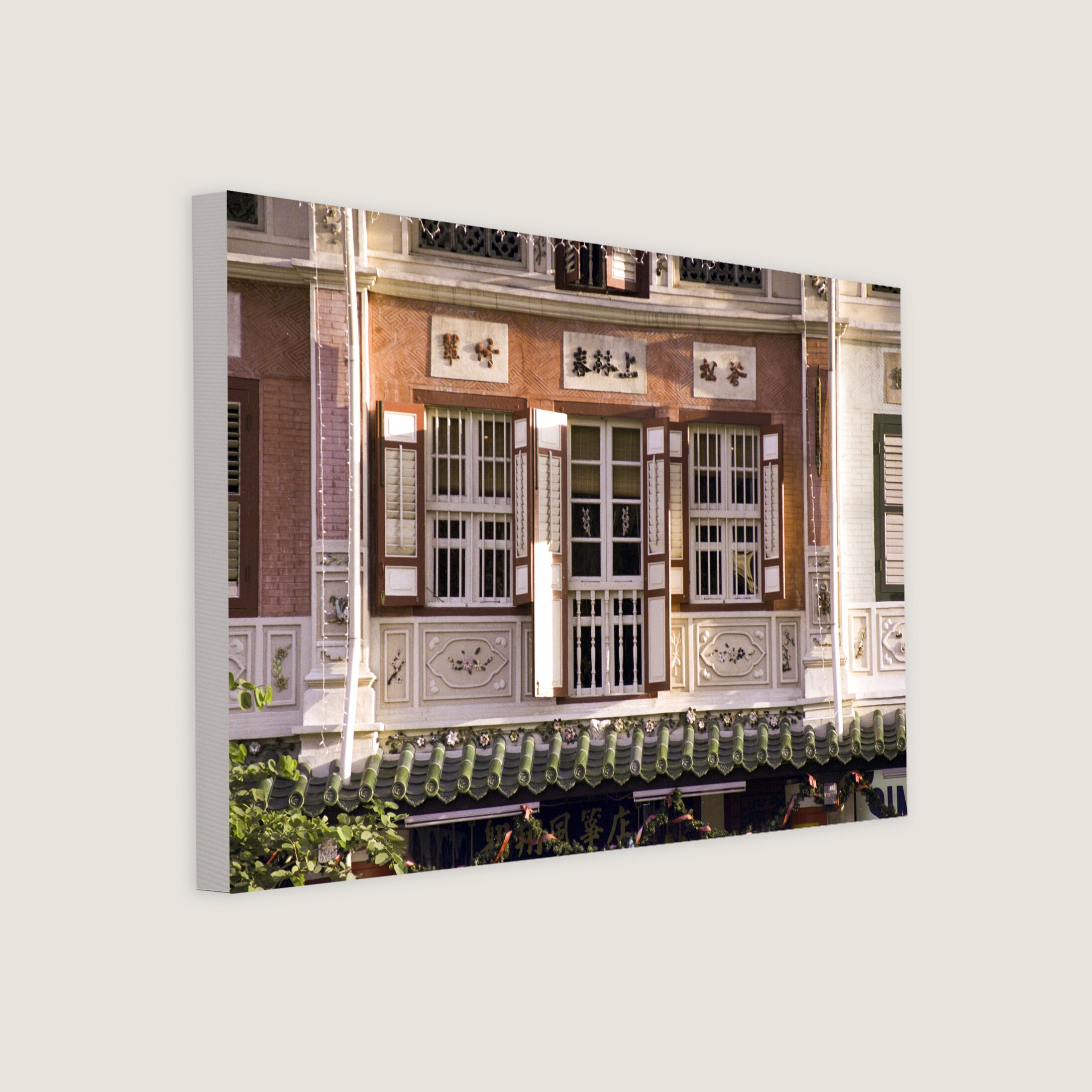
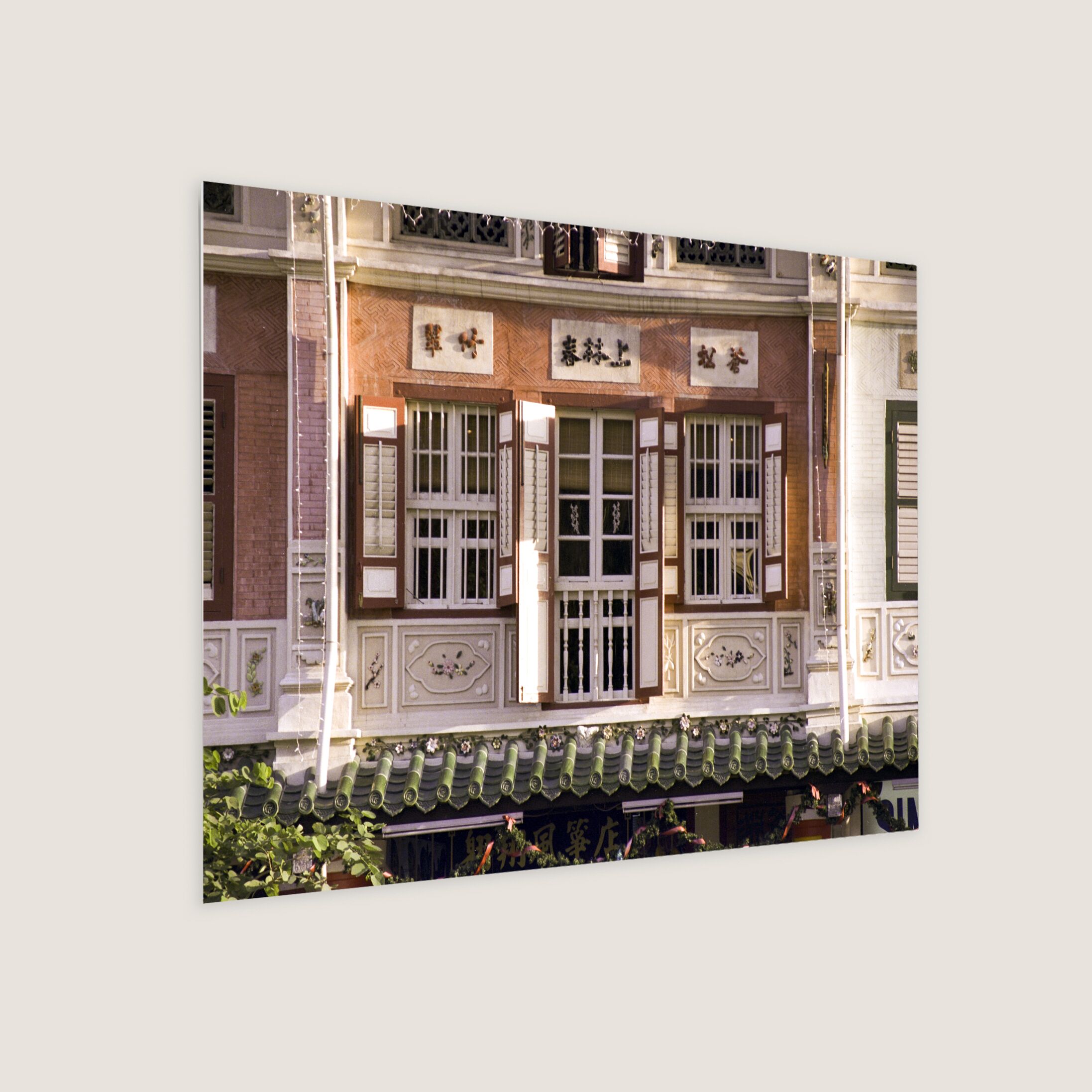
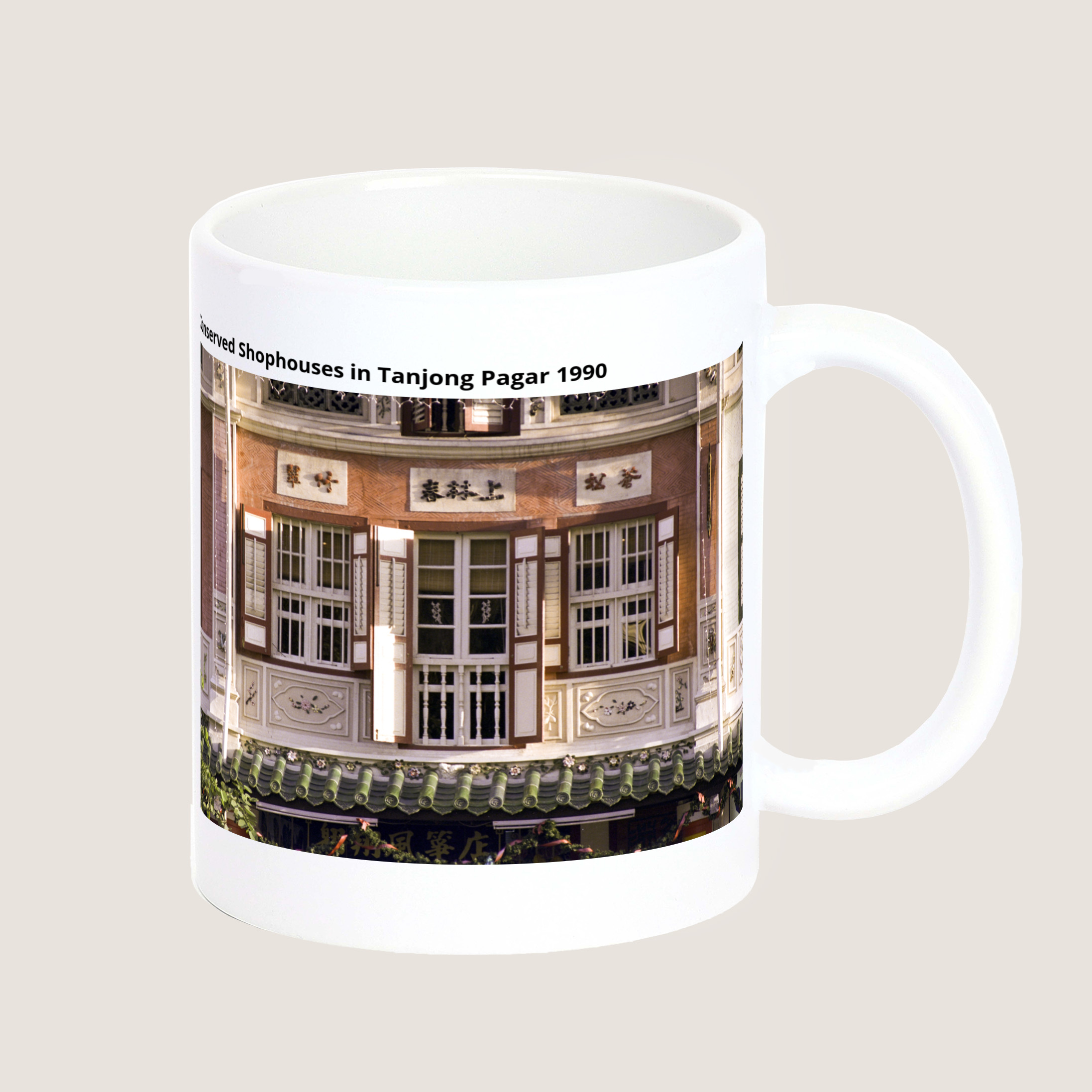
Tanjong Pagar, bounded by Neil Road, Maxwell Road, and surrounding streets, is known for its Early, Transitional, and Late Shophouse styles. It was granted conservation status on 2 July 1989, marking Singapore's first urban restoration project at 9 Neil Road.
©️ SPH Media Limited
Share to
Tags
Available for print on products
Workers Taking a Break on a Tongkang
1957
Workers Taking a Break on a Tongkang
Year 1957
Tongkang means bumboat in Malay. These trades created many job opportunities and were the link between ships anchored out at sea and warehouses built along the riverbanks. Workers taking a break on a tongkang include boatmen, cargo handlers, warehouse clerks and more.
©️ SPH Media Limited
Share to
Tags
Available for print on products
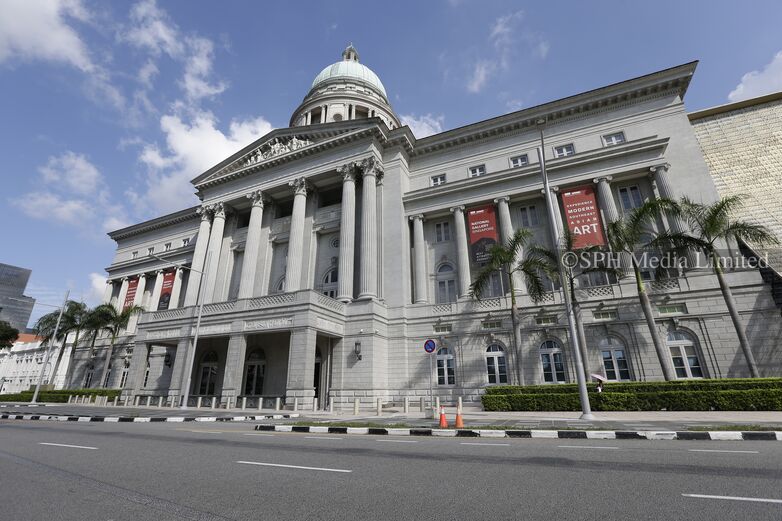 From Supreme Court to National Gallery
2017
From Supreme Court to National Gallery
2017
From Supreme Court to National Gallery
Year 2017
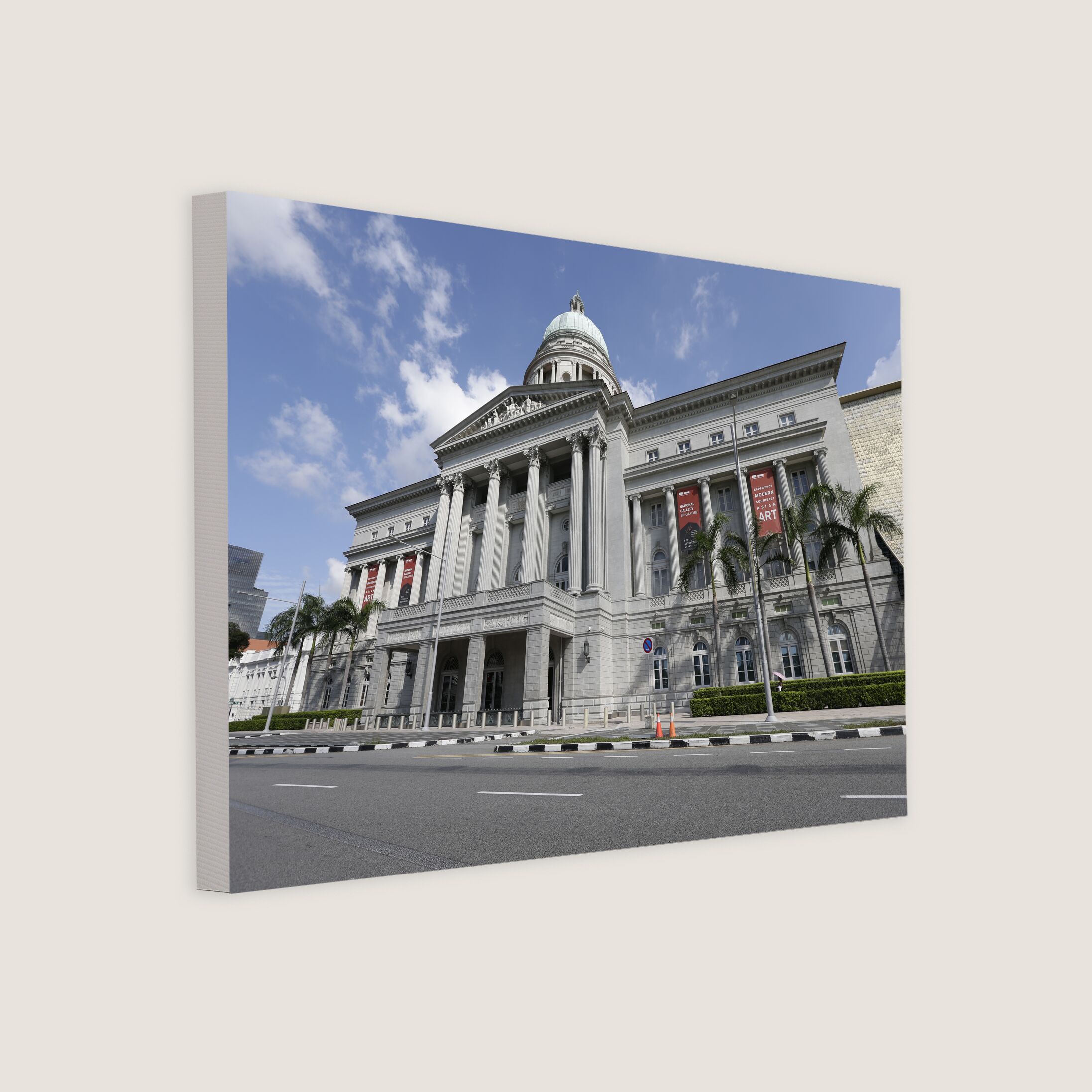
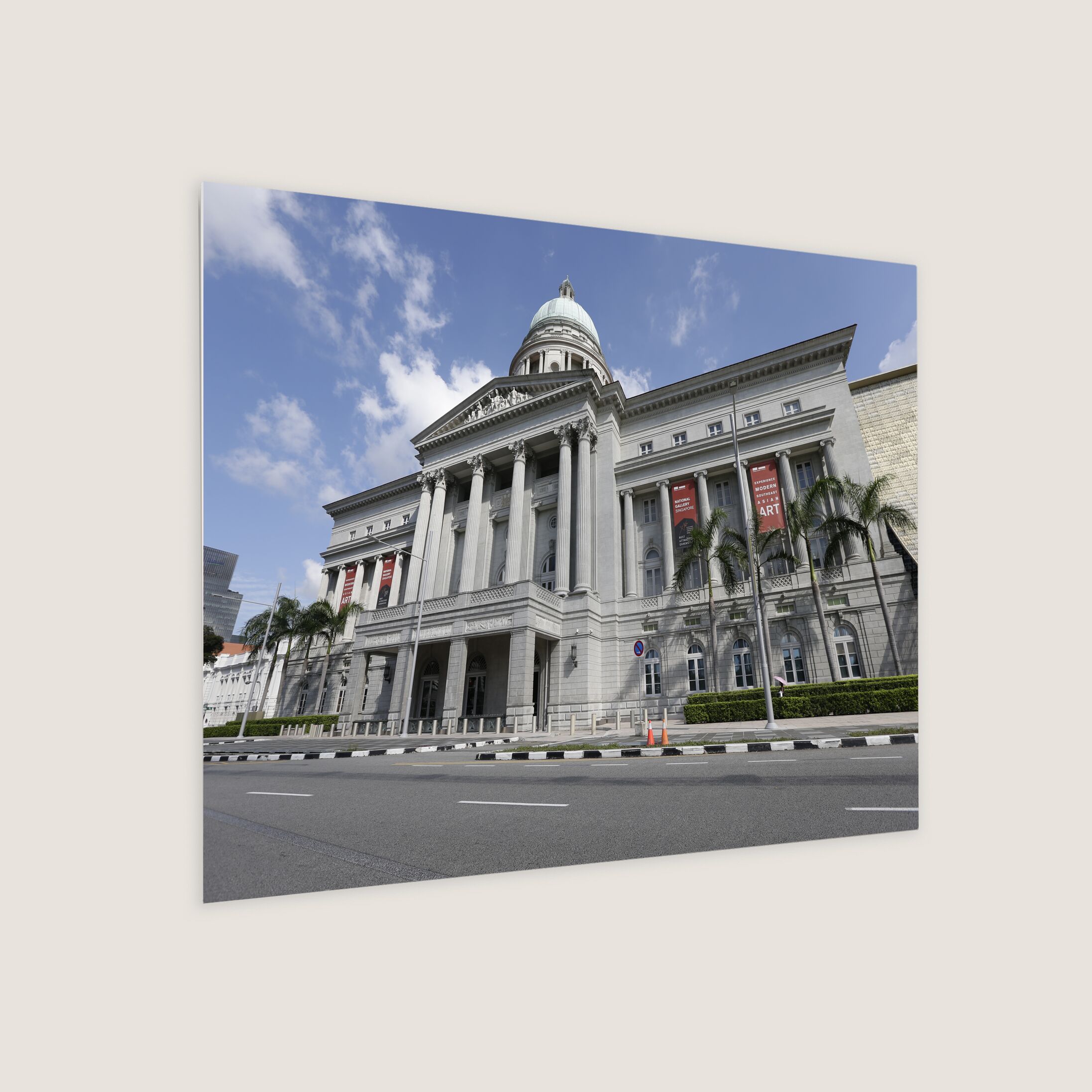
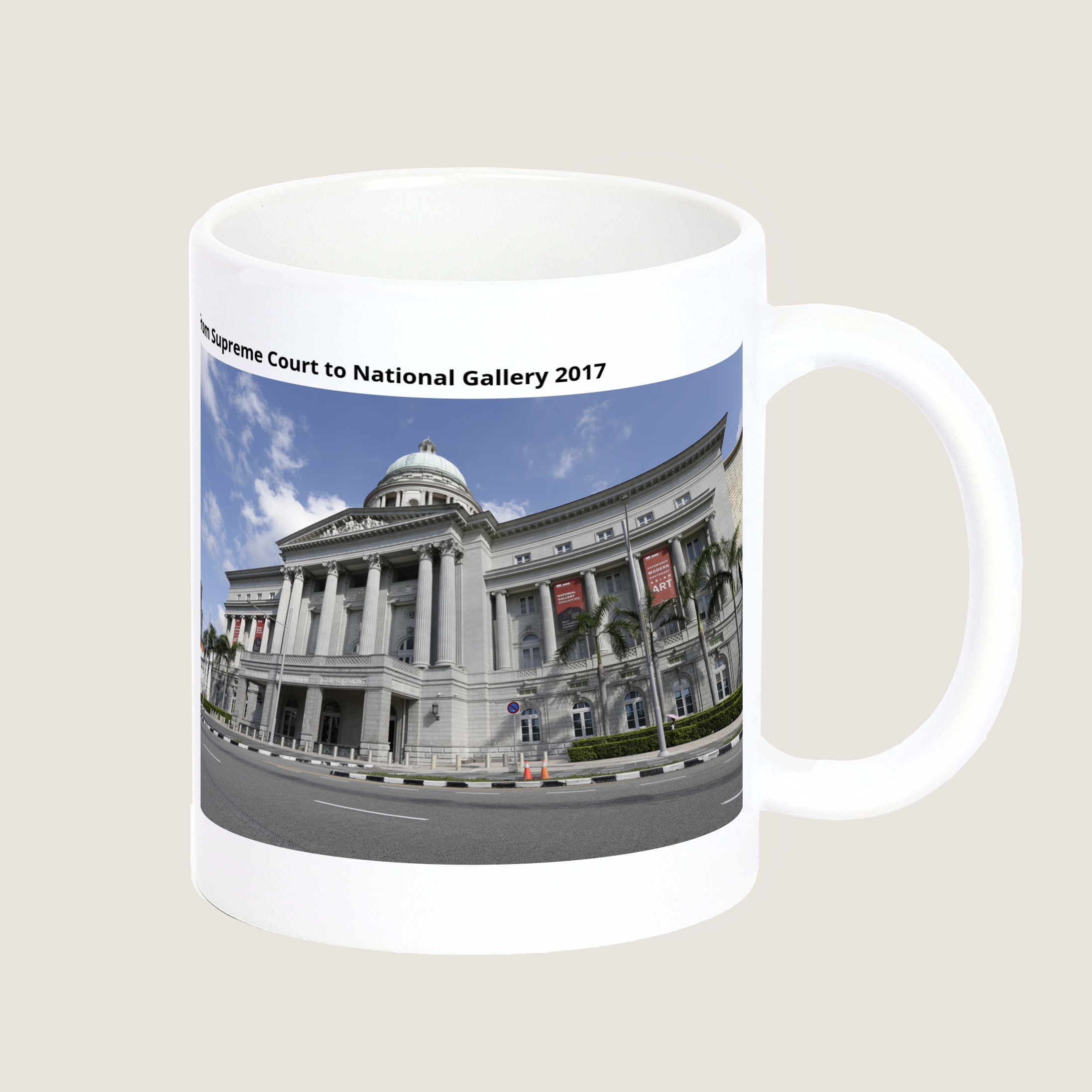
Facing the Padang in the Civic District, the former Supreme Court was restored and transformed into the National Gallery Singapore in 2011. It was built in the 1930s in Neoclassical style. Its distinctive green dome, inspired by London’s St Paul’s Cathedral, remains an iconic feature of the city’s historic landscape.
©️ SPH Media Limited
Share to
Tags
Available for print on products
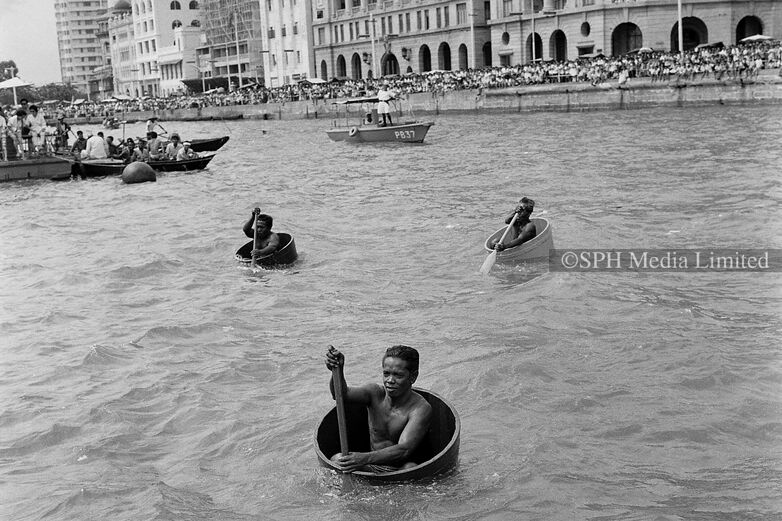 Sea Sports Tub Race at Collyer Quay
1960
Sea Sports Tub Race at Collyer Quay
1960
Sea Sports Tub Race at Collyer Quay
Year 1960
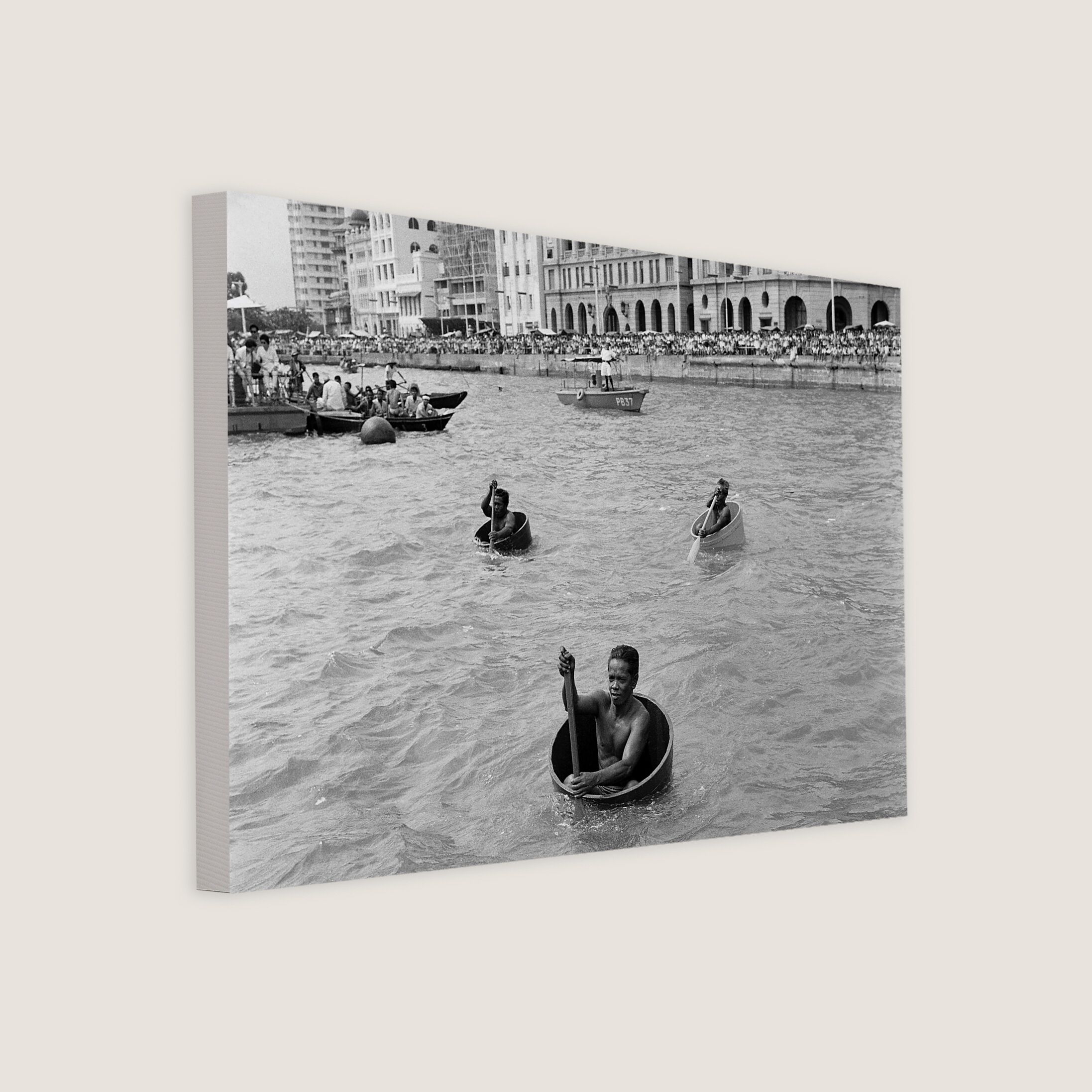
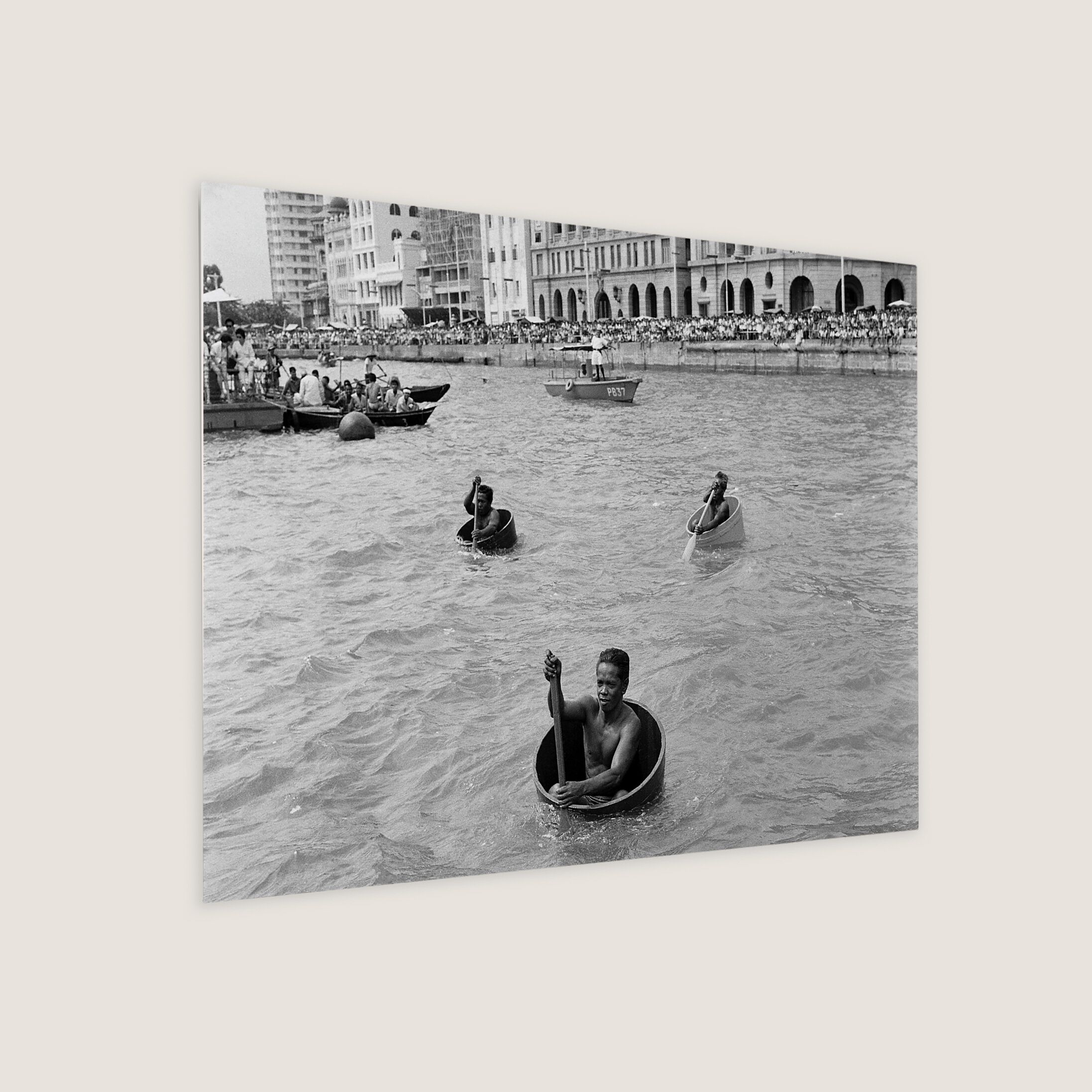
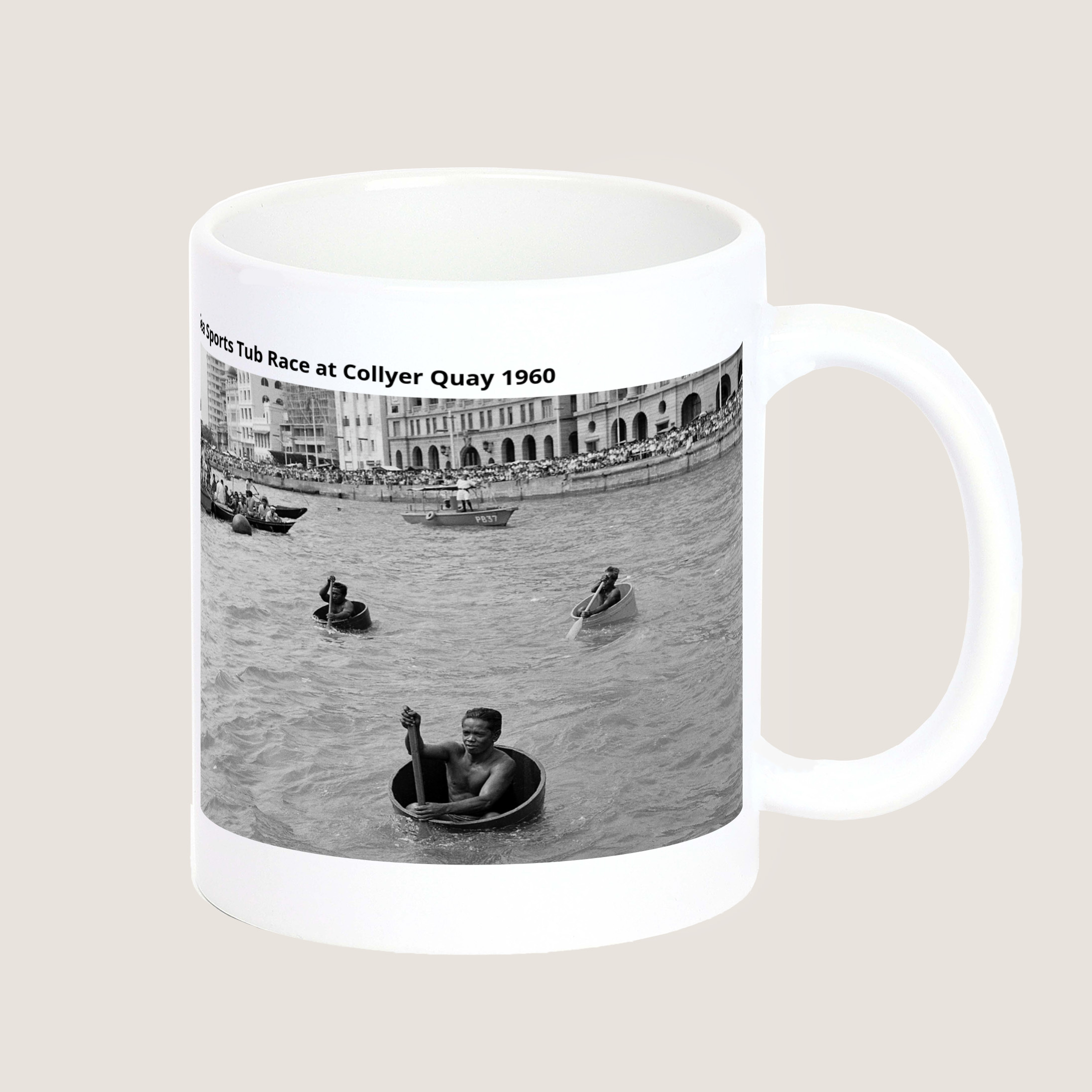
Before Singapore attained independence, the New Year Sea Sports stood as a beloved annual tradition. Held along the bustling waterfront at Collyer Quay, the event welcomed the new year with much fanfare, drawing throngs of spectators who lined the shoreline. In the 1960 edition, a total of 27 events were staged, reflecting the vibrant spirit and communal enthusiasm of the time.
©️ SPH Media Limited
Share to
Tags
Available for print on products
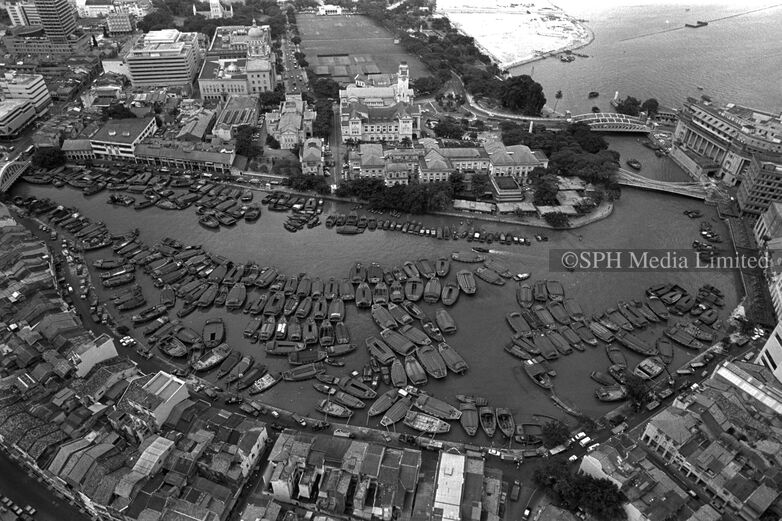 Tongkangs at Singapore River's 'Carp Belly'
1975
Tongkangs at Singapore River's 'Carp Belly'
1975
Tongkangs at Singapore River's 'Carp Belly'
Year 1975
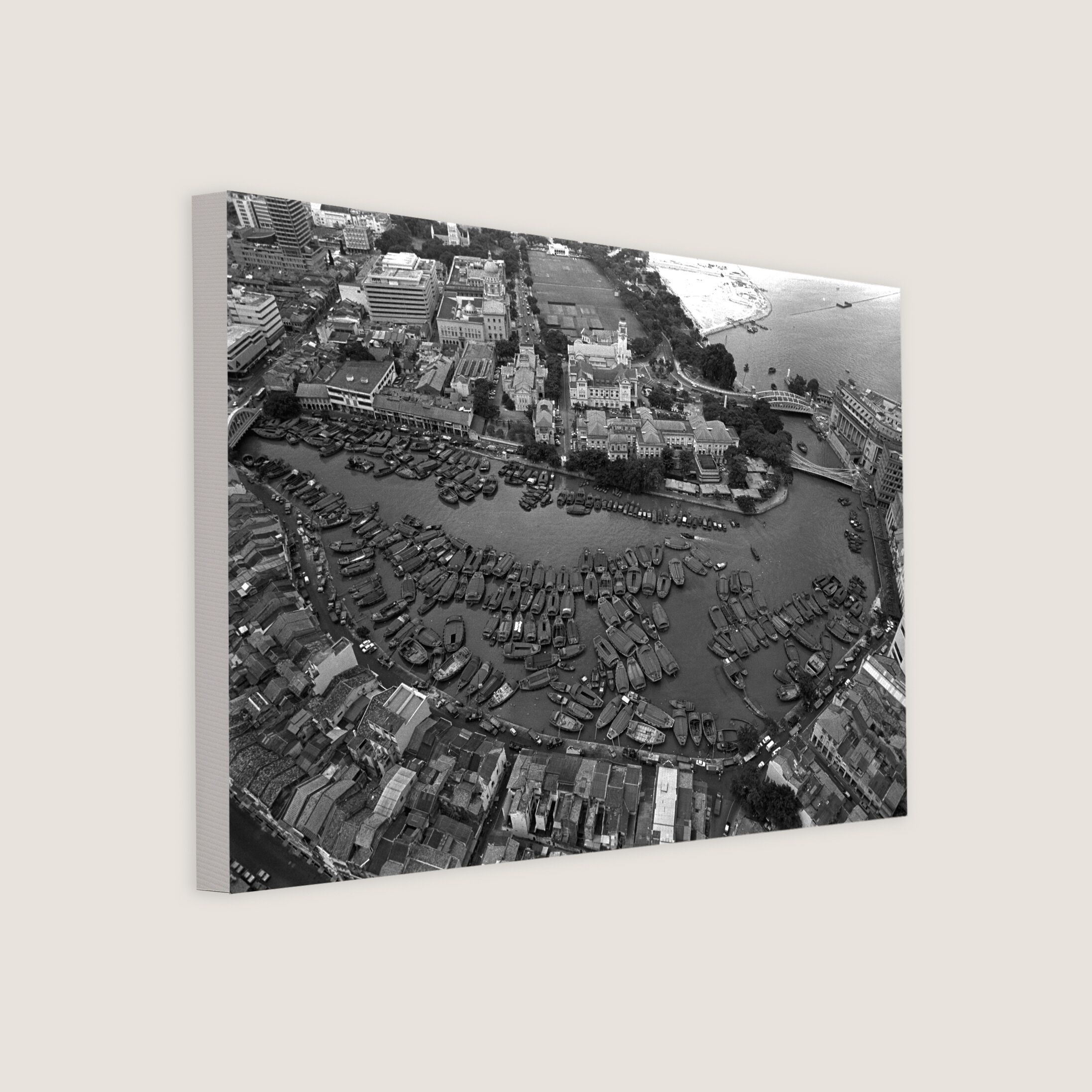
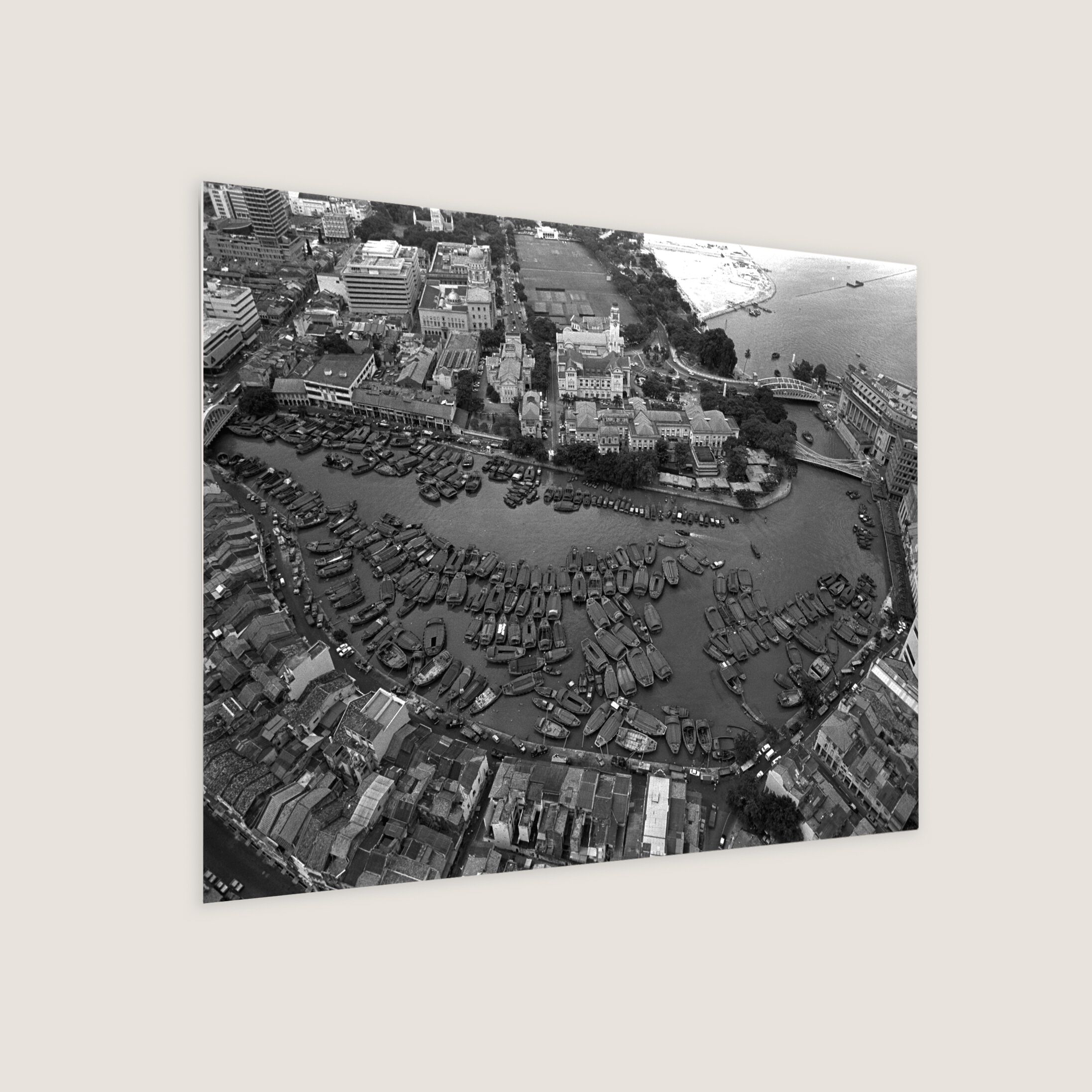
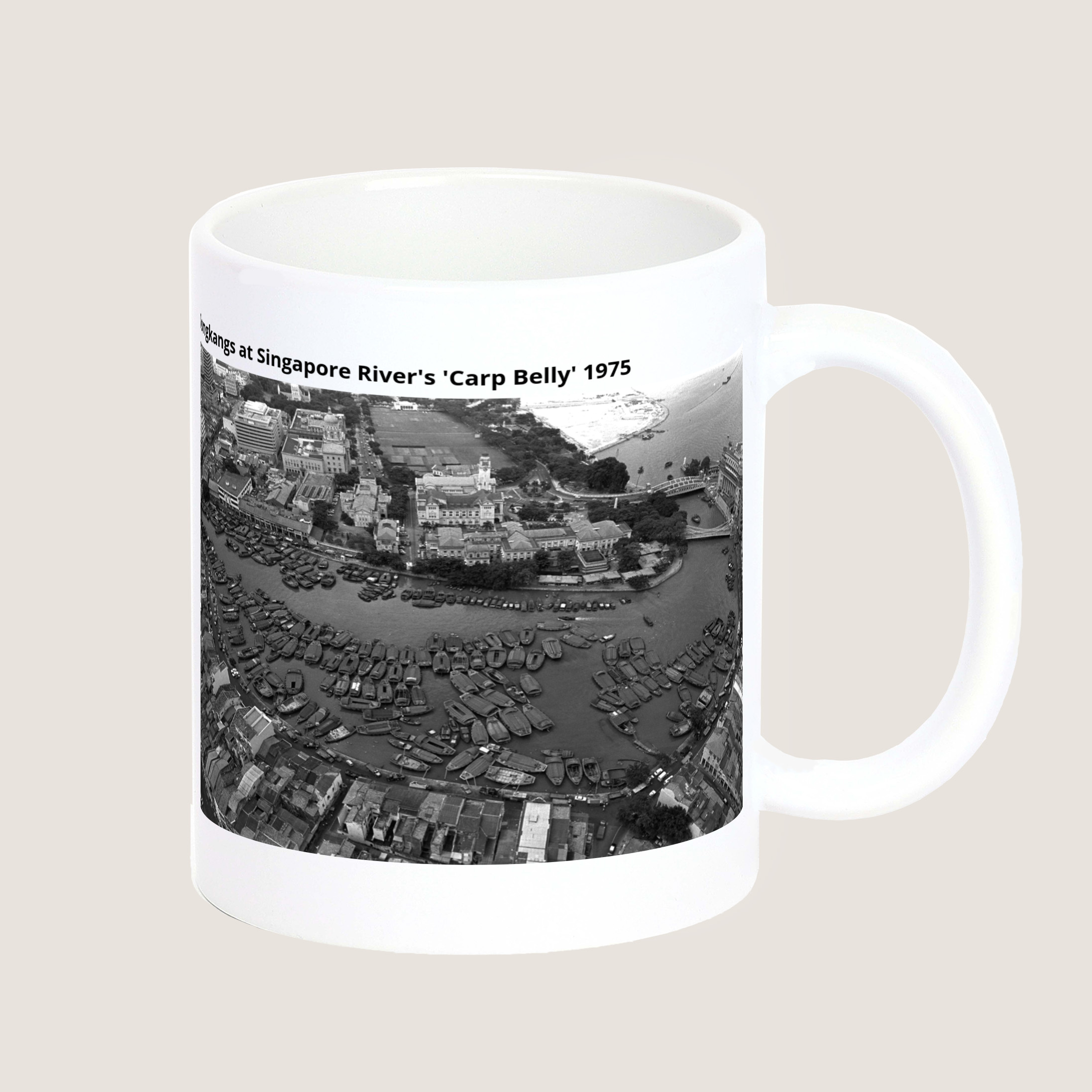
An aerial view captures the bustling Singapore River, where tongkangs once crowded the stretch known as the 'Belly of the Carp'. This curved section, resembling a carp's belly, was considered auspicious in Chinese culture, symbolizing prosperity and attracting merchants who established warehouses and shophouses along its banks.
©️ SPH Media Limited
Share to
Tags
Available for print on products
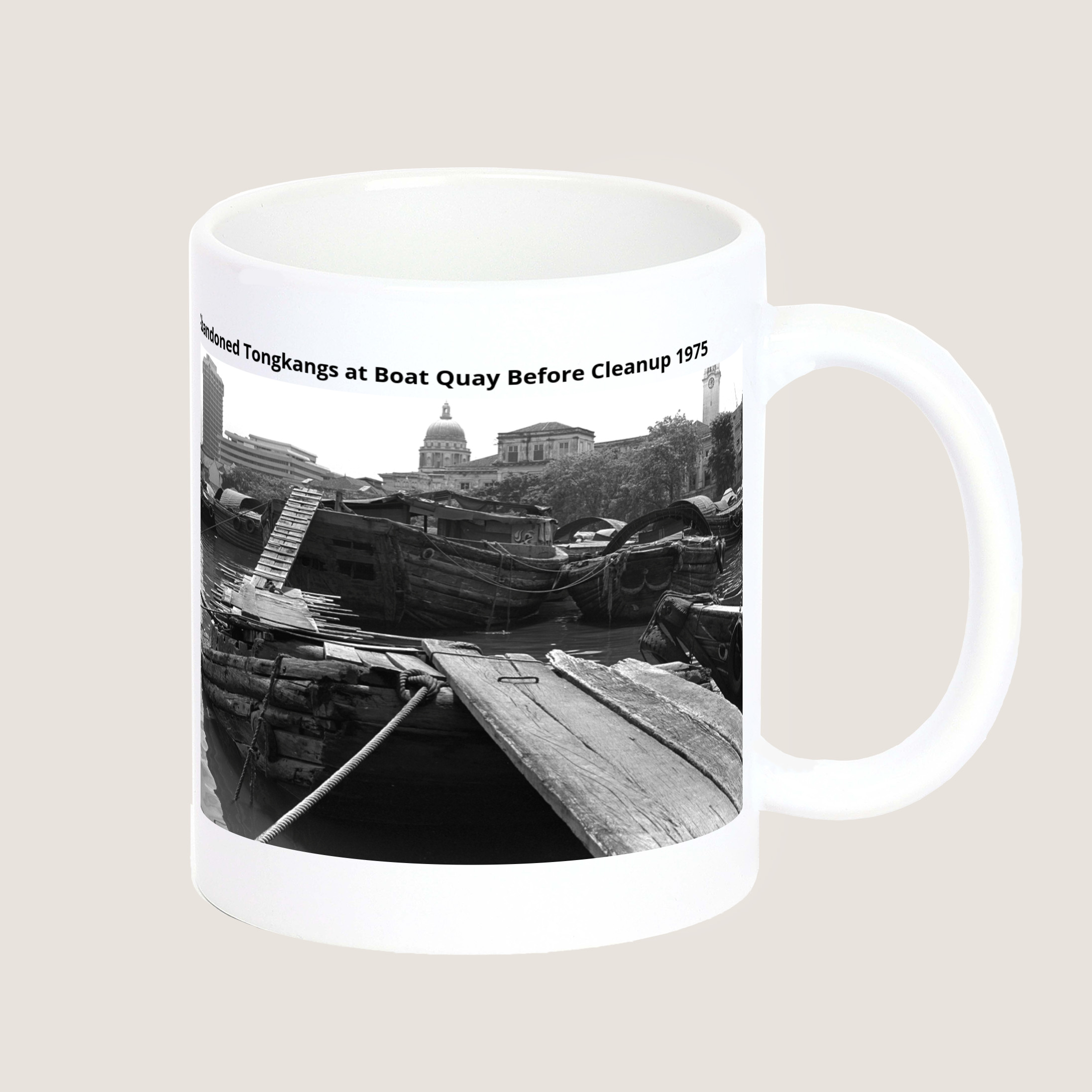
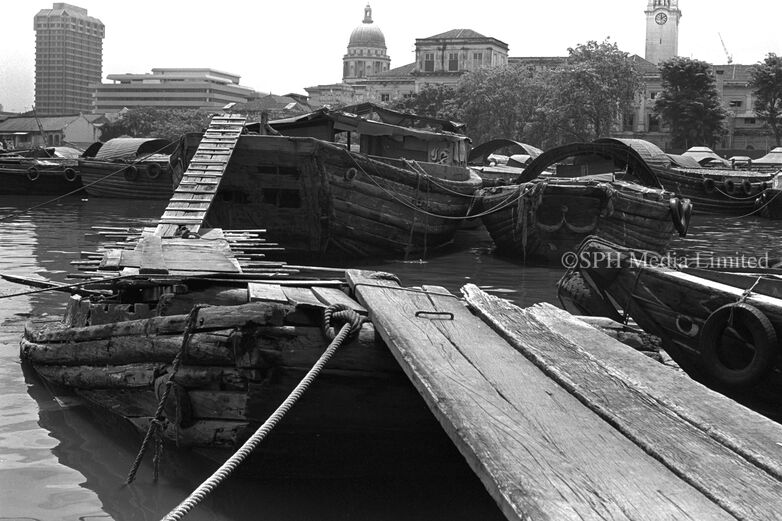 Abandoned Tongkangs at Boat Quay Before Cleanup
1975
Abandoned Tongkangs at Boat Quay Before Cleanup
1975
Abandoned Tongkangs at Boat Quay Before Cleanup
Year 1975
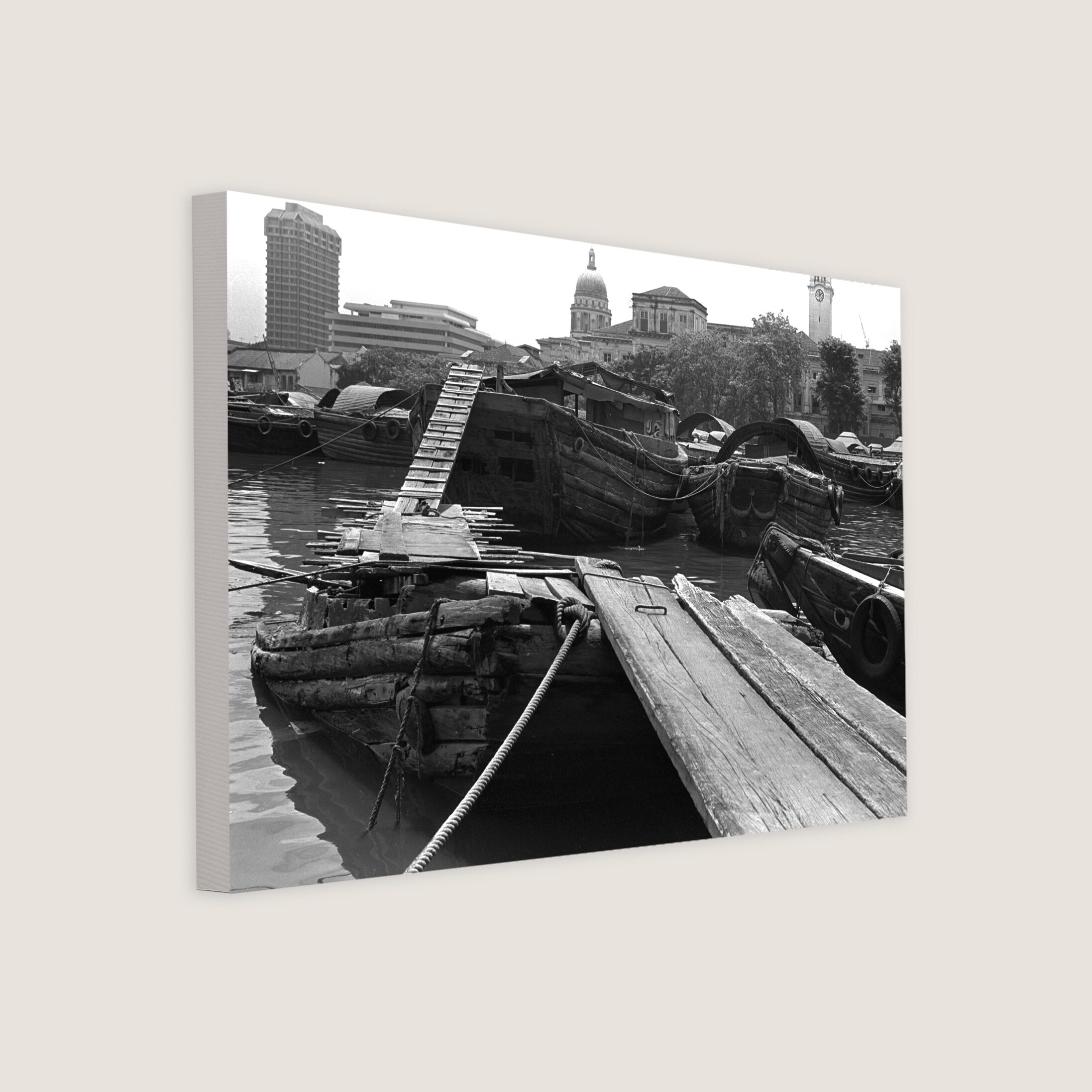
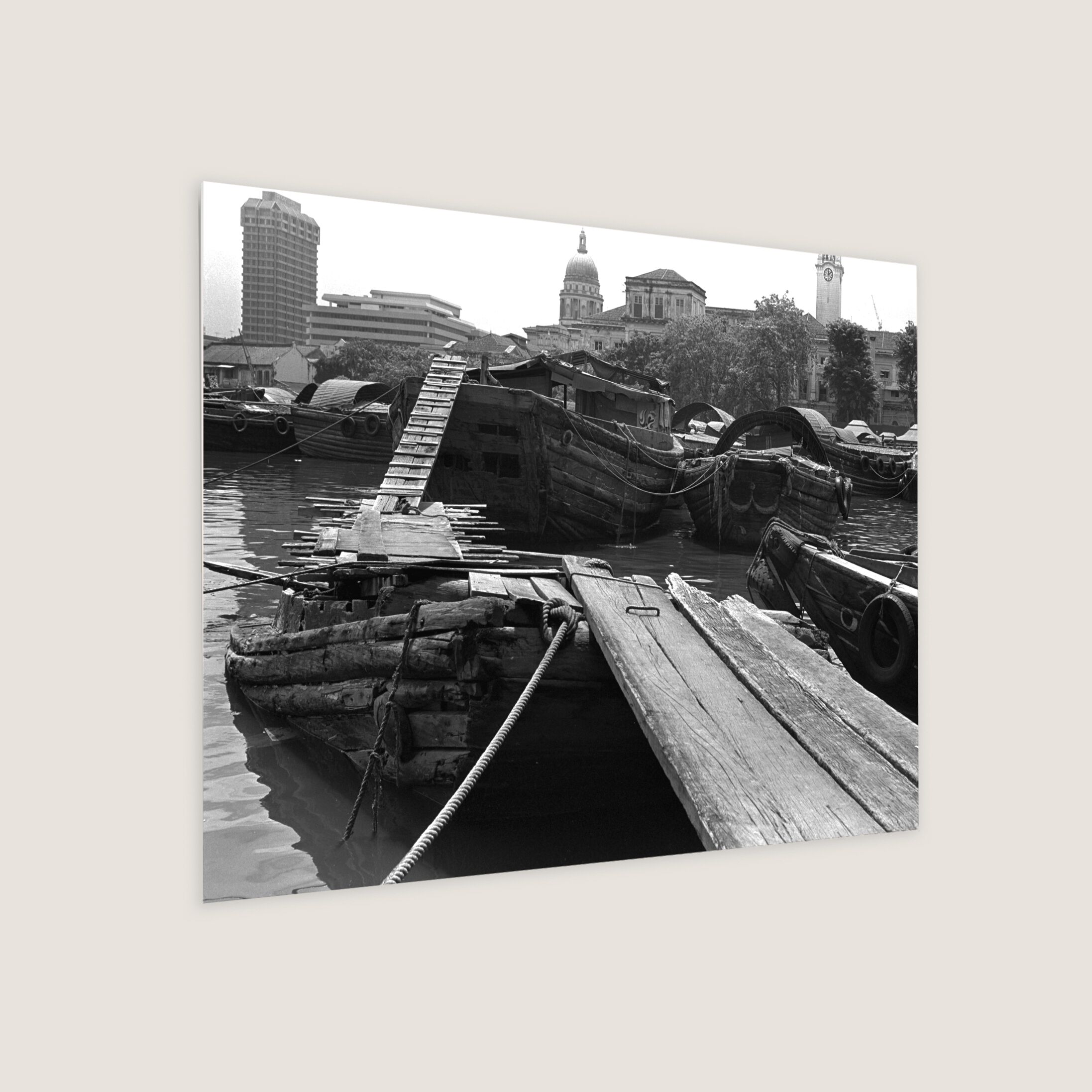
Two years before the official launch of the river clean-up in 1977, barge traffic on the Singapore River had already begun to dwindle. Abandoned tongkangs started appearing along the river, and the once-busy gangplanks that linked them now stood deserted.
©️ SPH Media Limited
Share to
Tags
Available for print on products
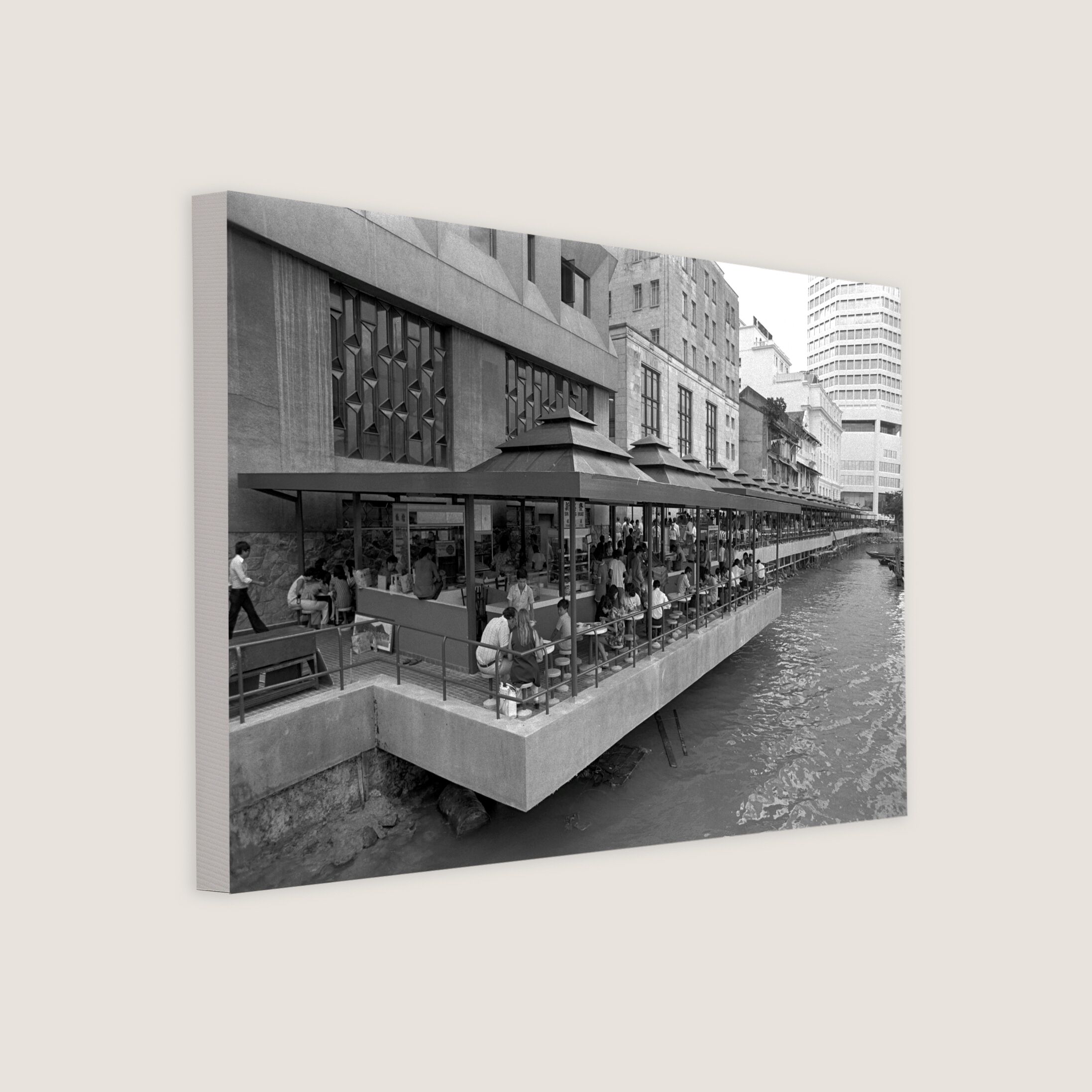
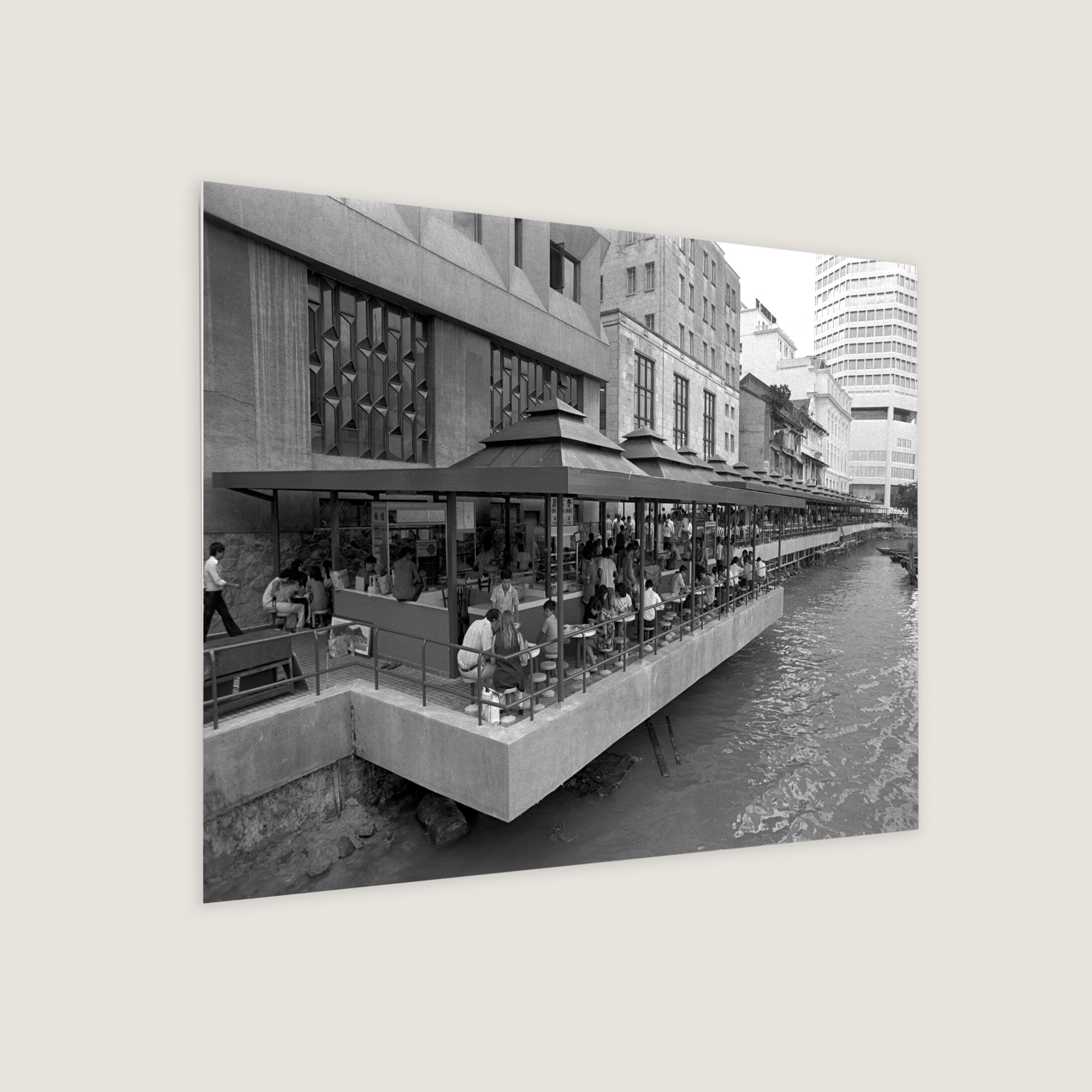
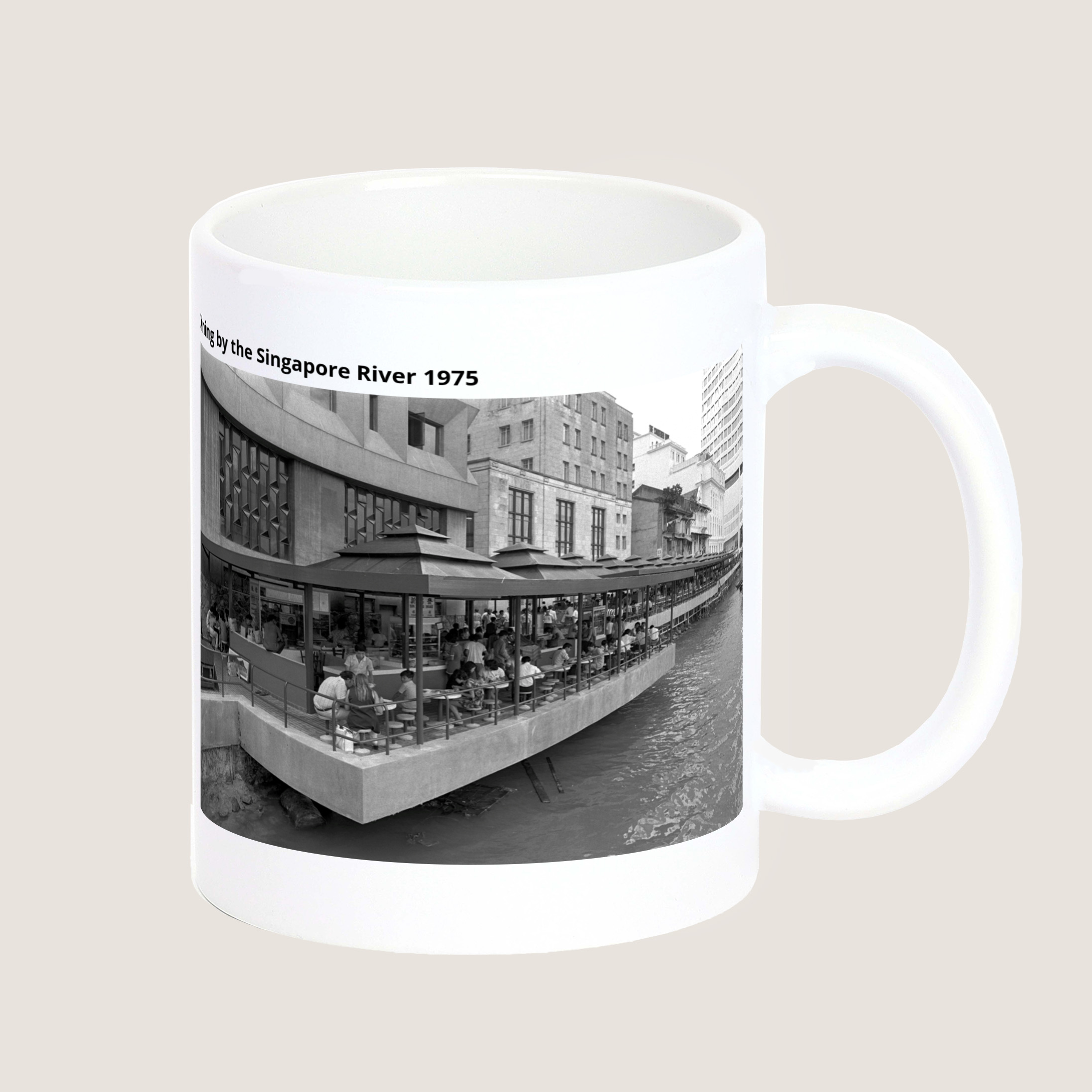
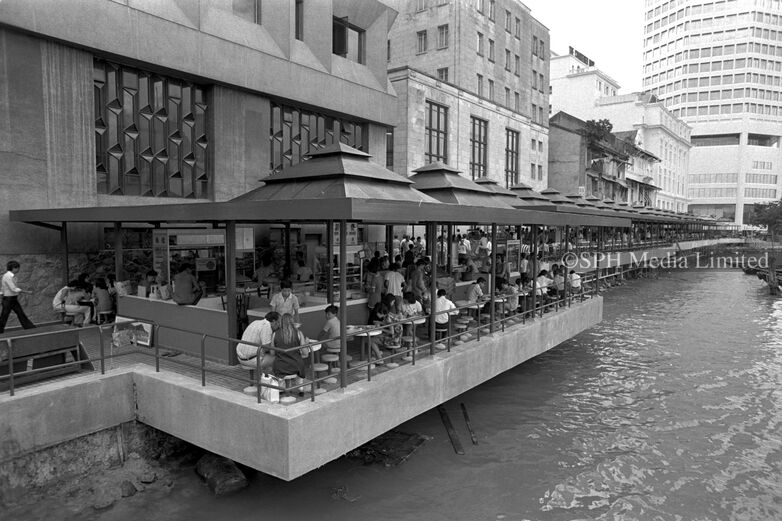 Dining by the Singapore River
1975
Dining by the Singapore River
1975
Dining by the Singapore River
Year 1975
Opened in 1975 near Empress Place, in front of the Bank of China, the Boat Quay Food Centre was introduced by the Ministry of Environment to replace makeshift stalls that once occupied the site. Catering mainly to office workers in the vicinity, it stood as part of the government’s broader push to modernise street hawking. The centre was demolished in the mid-1990s during urban renewal.
©️ SPH Media Limited
Share to
Tags
Available for print on products
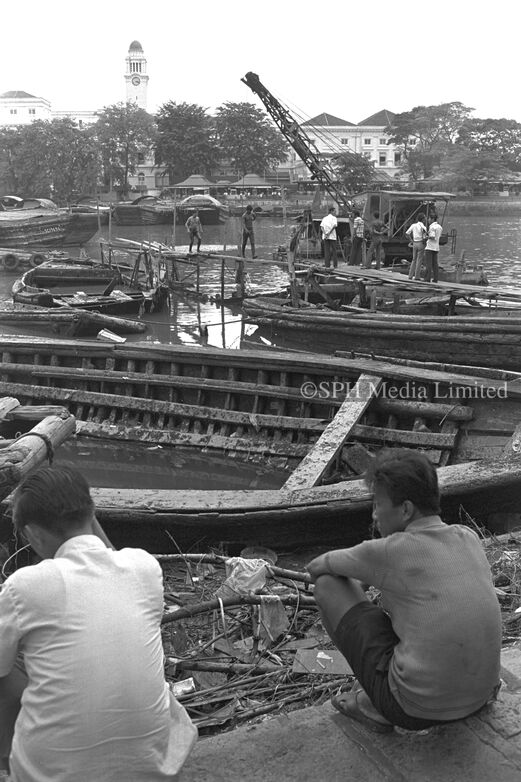 Clearing Abandoned Tongkangs in Singapore River
1977
Clearing Abandoned Tongkangs in Singapore River
1977
Clearing Abandoned Tongkangs in Singapore River
Year 1977
In 1977, Singapore embarked on a decade-long mission to rejuvenate the heavily polluted Singapore River. This project was helmed by the Public Work Department and the Public Utilities Board. Once a bustling artery of trade, the river had become choked with waste from industries, squatters, and hawkers. A key focus of the cleanup was the removal of derelict tongkangs that had been abandoned or sunk along the riverbanks.
©️ SPH Media Limited
Share to
Tags
Available for print on products
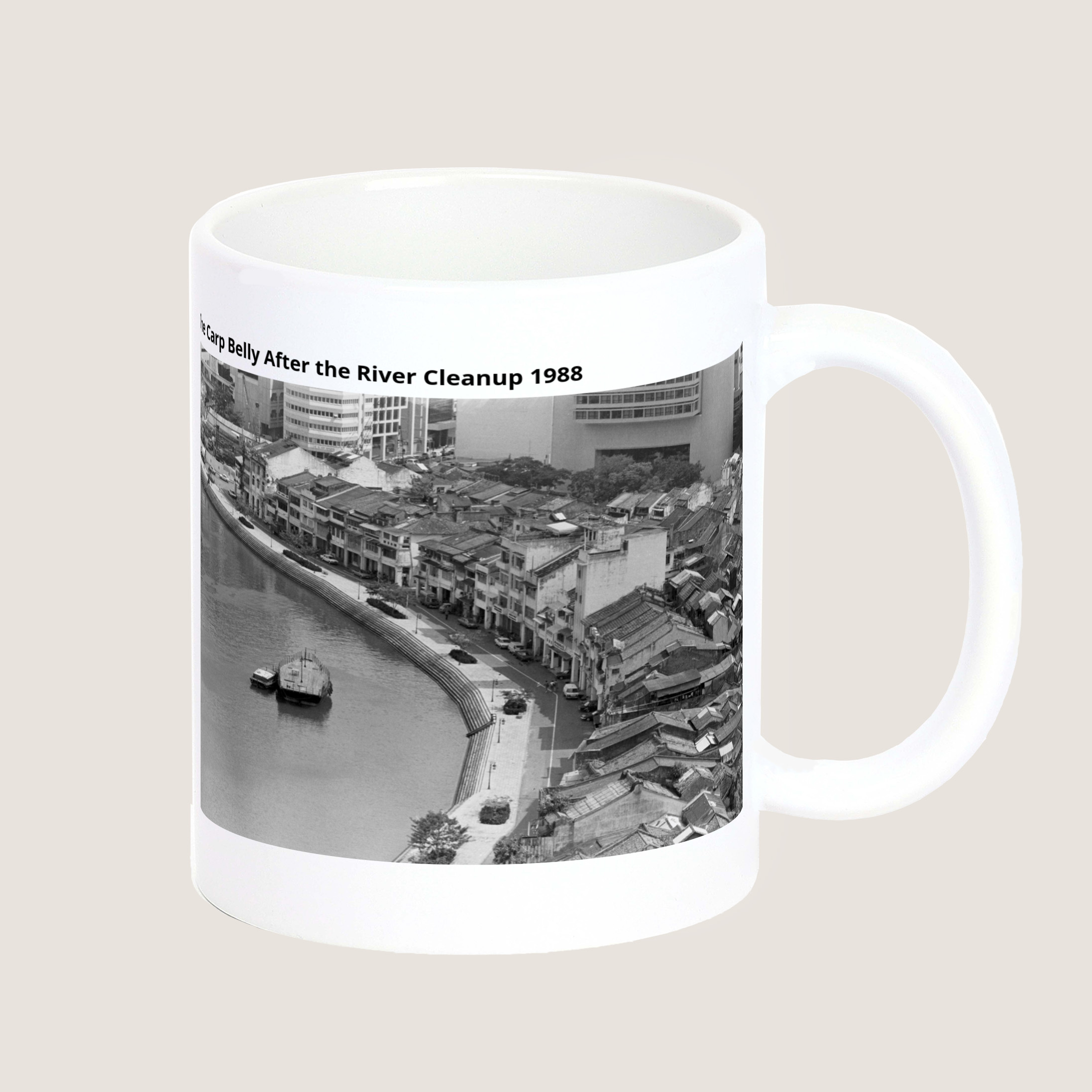
 The Carp Belly After the River Cleanup
1988
The Carp Belly After the River Cleanup
1988
The Carp Belly After the River Cleanup
Year 1988
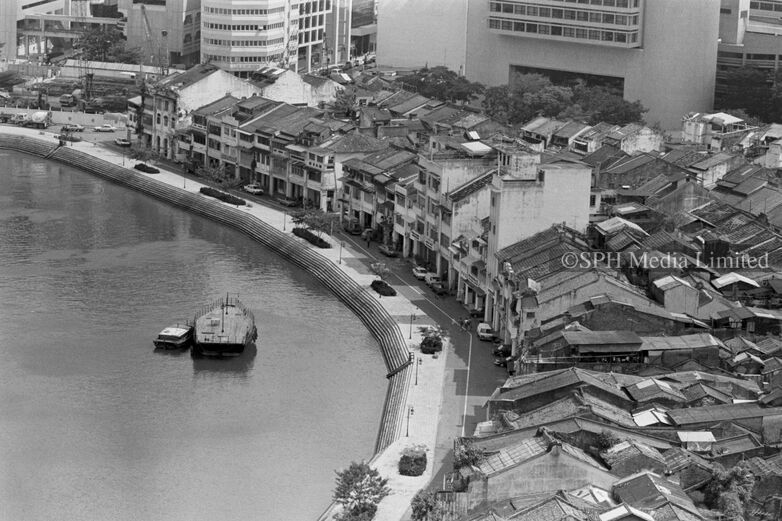
The photo captures Boat Quay after the Singapore River cleanup, marking a turning point in the area’s transformation. This area of the Singapore River is known as the 'Carp's Belly', due to its unique shape. Once teeming with trade and tongkangs, the riverfront entered a new chapter as part of wider urban redevelopment plans for the historic waterway and its surroundings.
©️ SPH Media Limited
Share to
Tags
Available for print on products
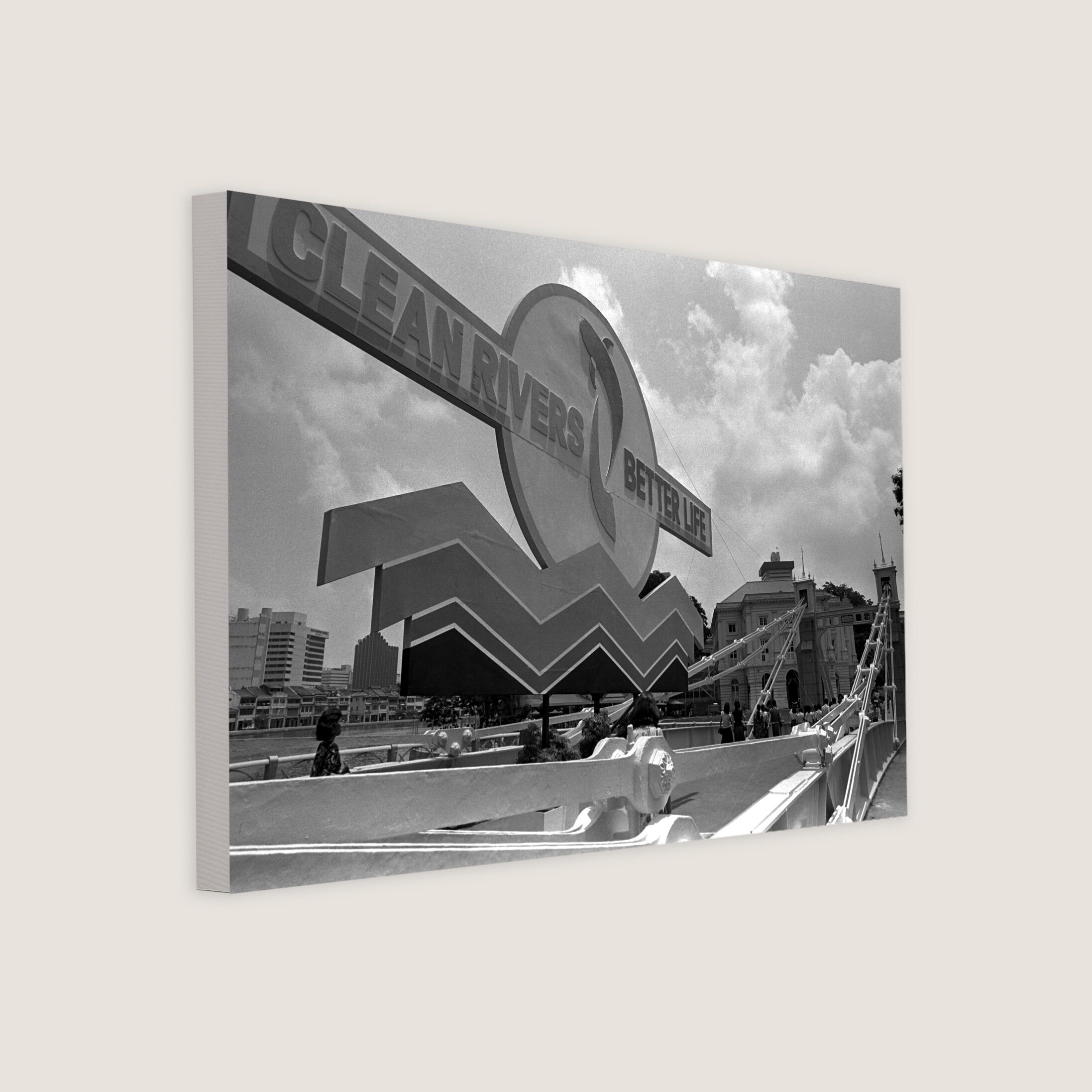
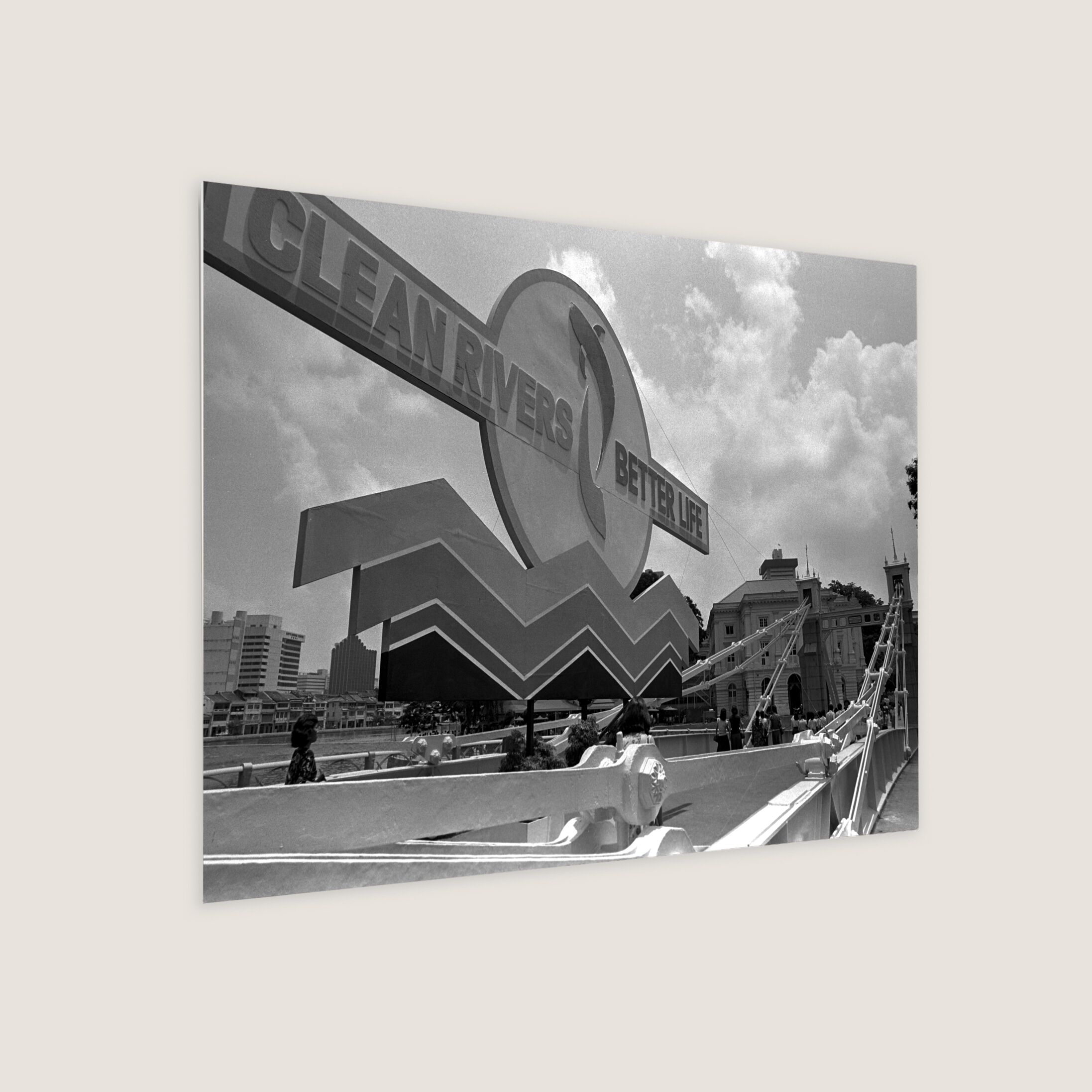
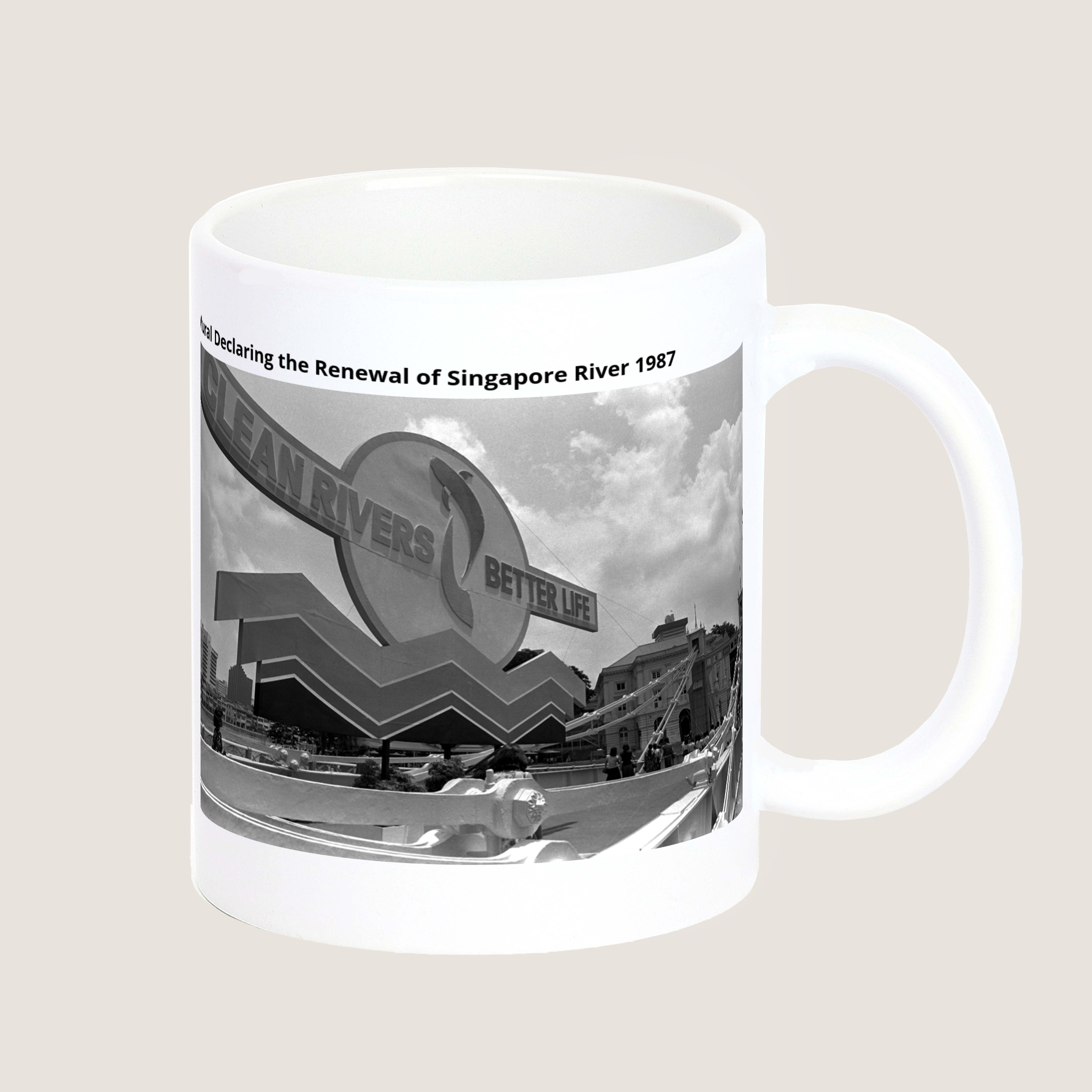
 Mural Declaring the Renewal of Singapore River
1987
Mural Declaring the Renewal of Singapore River
1987
Mural Declaring the Renewal of Singapore River
Year 1987
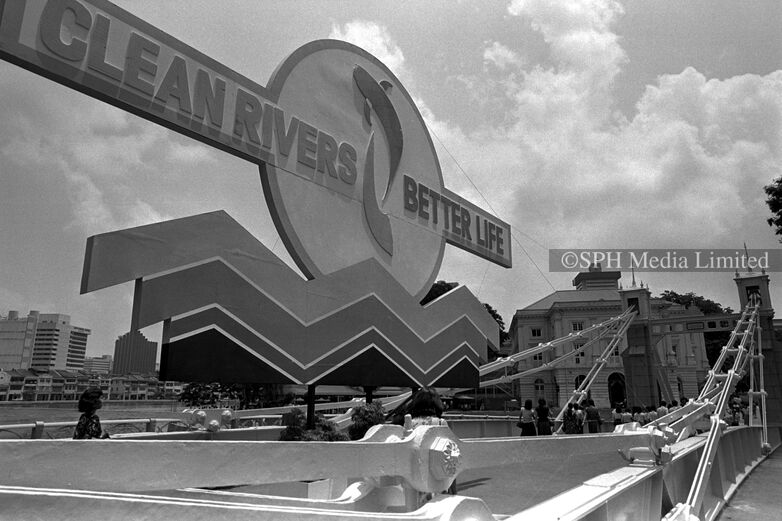
A striking mural on Cavenagh Bridge featured two orange fish in Chinese brush strokes, swimming over clear blue waters. This artwork, part of the "Clean Rivers, Better Life" campaign, symbolised the success of the decade-long Singapore River cleanup. On 2 September 1987, the river was officially declared clean, and its transformation was celebrated with a five-day carnival.
©️ SPH Media Limited
Share to
Tags
Available for print on products
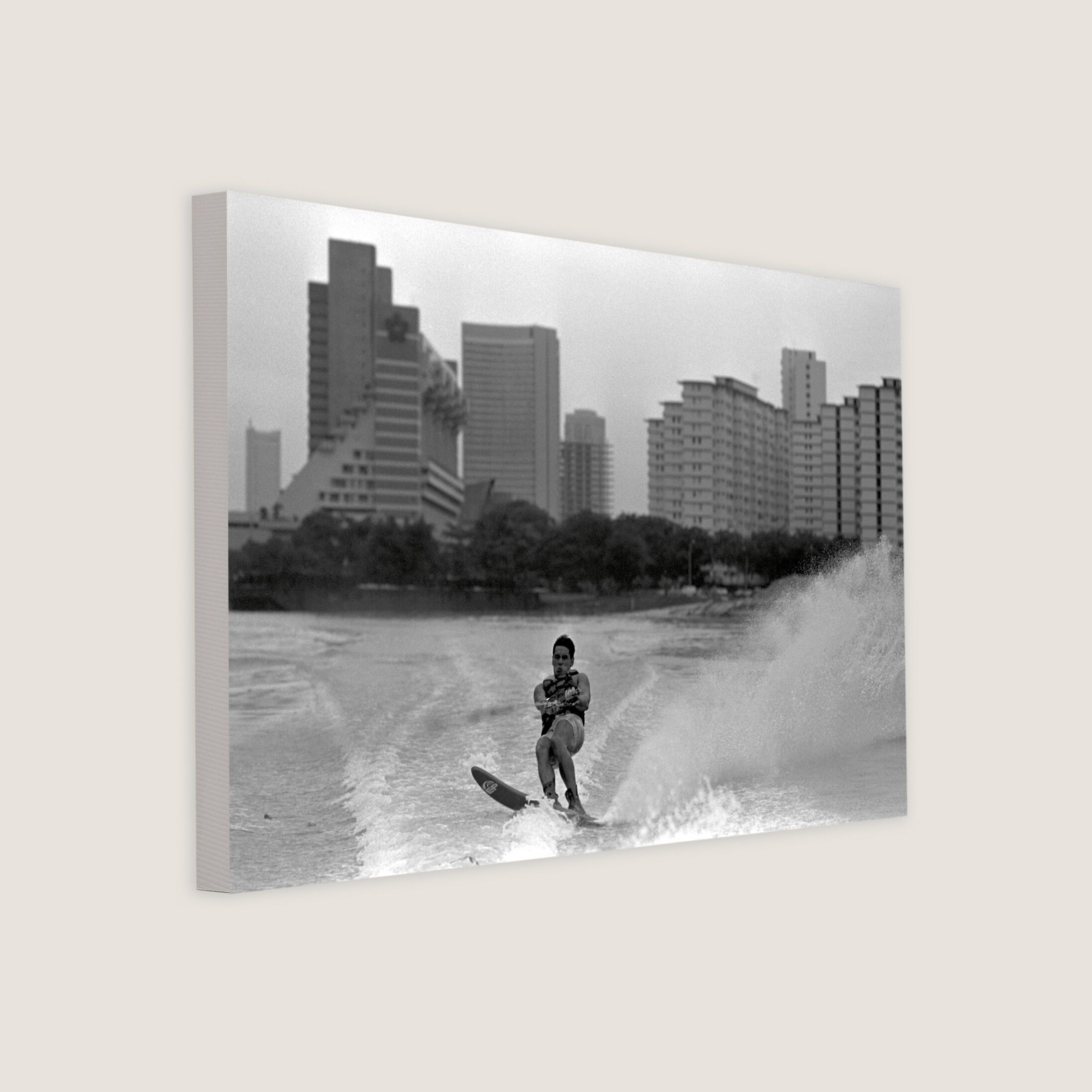
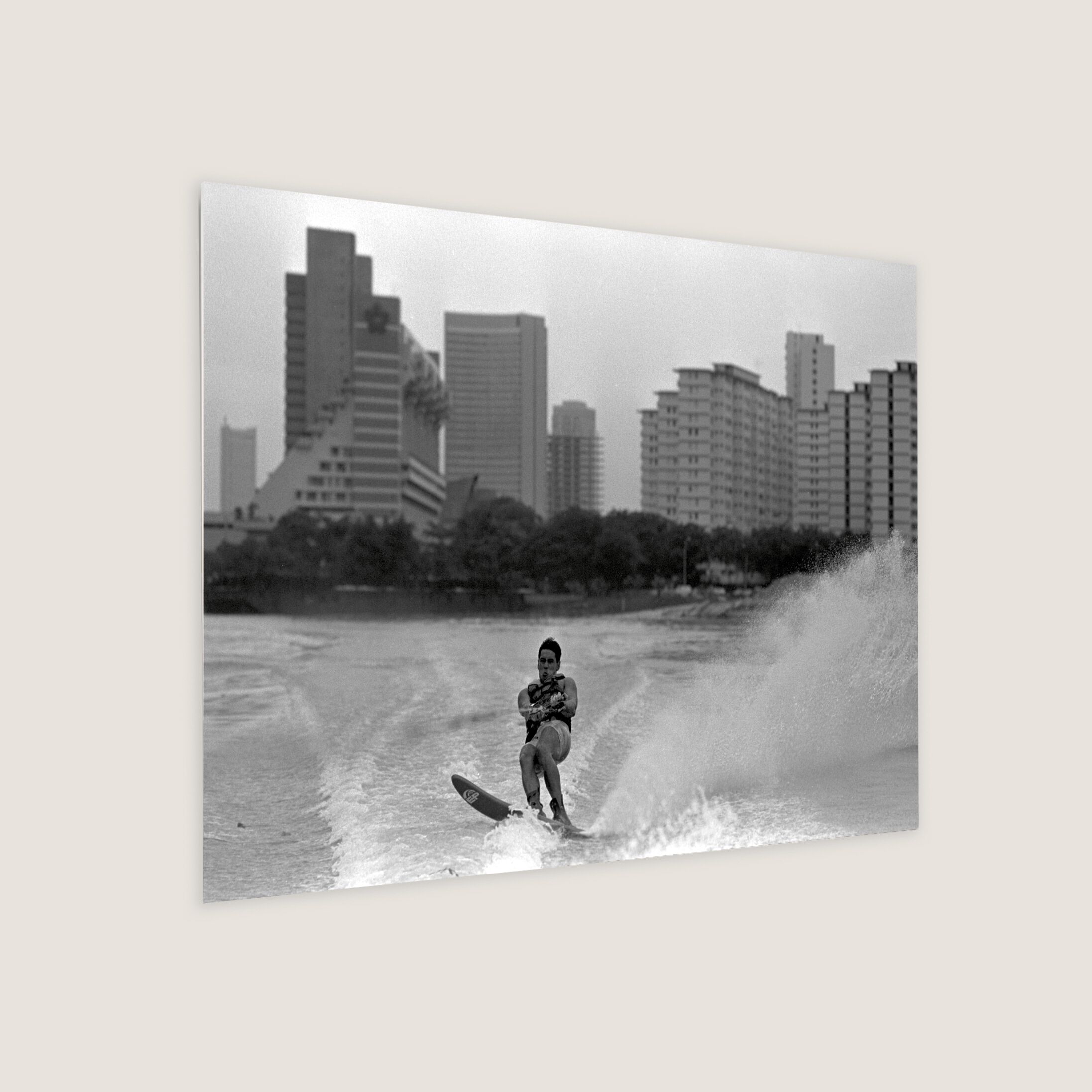
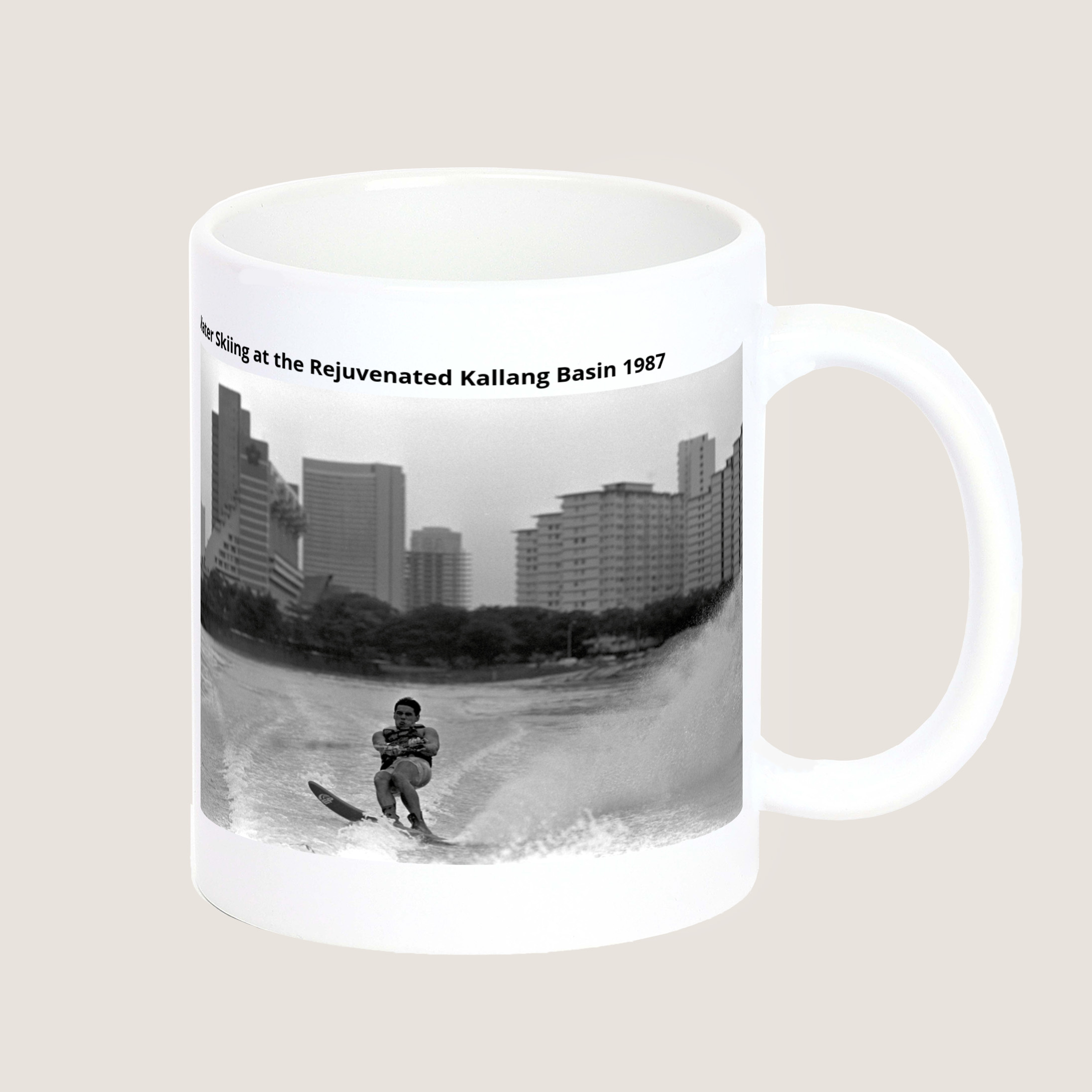
 Water Skiing at the Rejuvenated Kallang Basin
1987
Water Skiing at the Rejuvenated Kallang Basin
1987
Water Skiing at the Rejuvenated Kallang Basin
Year 1987
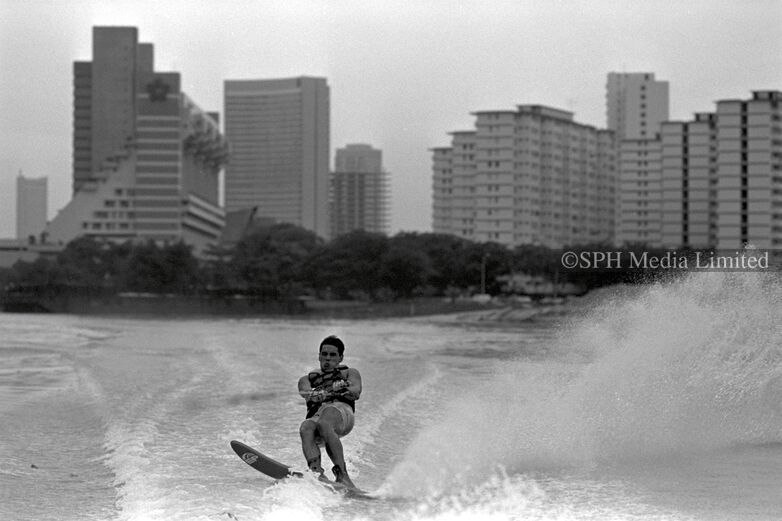
In the early 1990s, following a 16-year effort to clean up Singapore's polluted waterways, Mr Paul Fong was one of the first people who water-skied on the rejuvenated Kallang River. Today, the Kallang Basin hosts water sports like kayaking and dragon boating, overseen by the Singapore Sports Hub. Landmarks such as the Golden Mile Complex and nearby HDB flats stand in the background.
©️ SPH Media Limited
Share to
Tags
Available for print on products
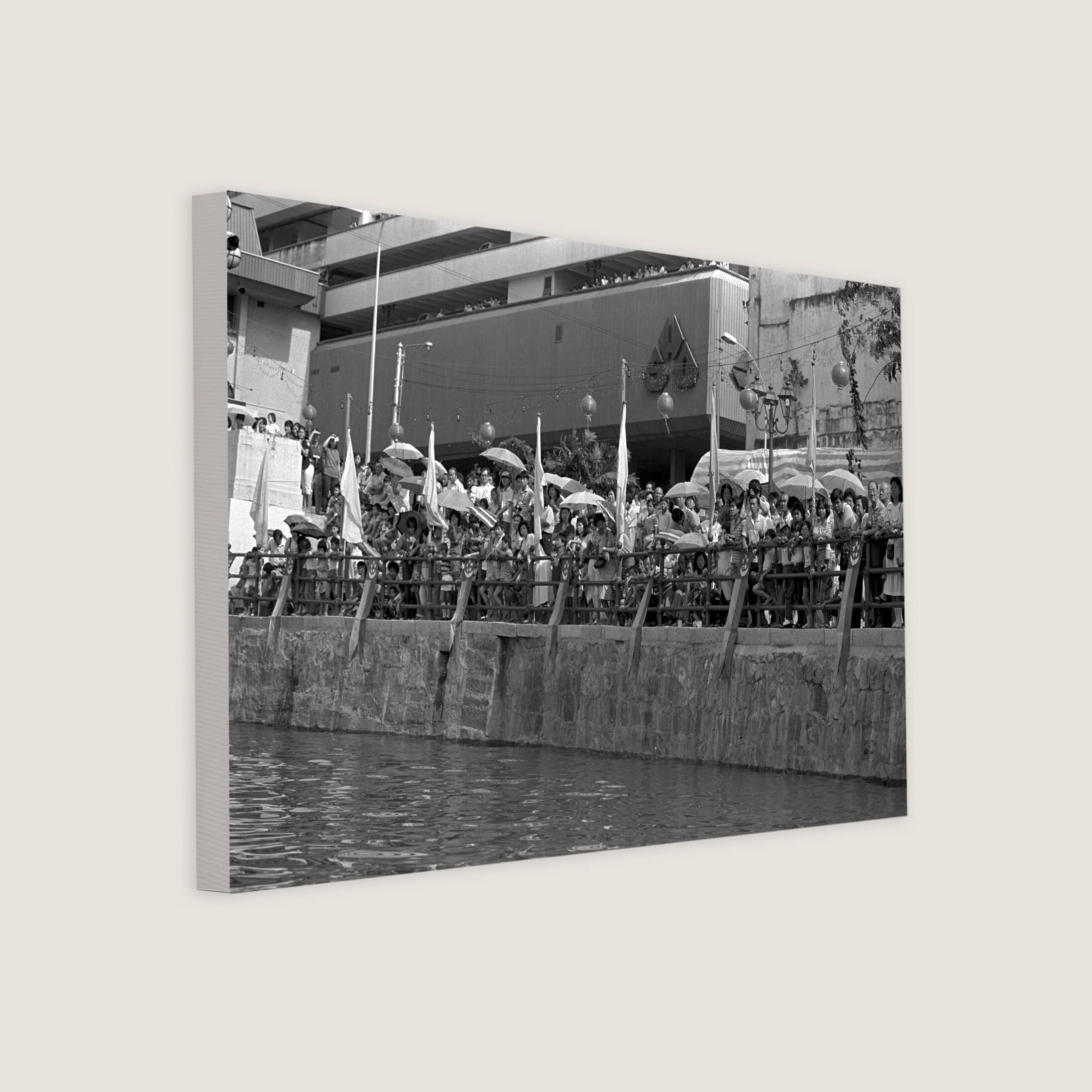
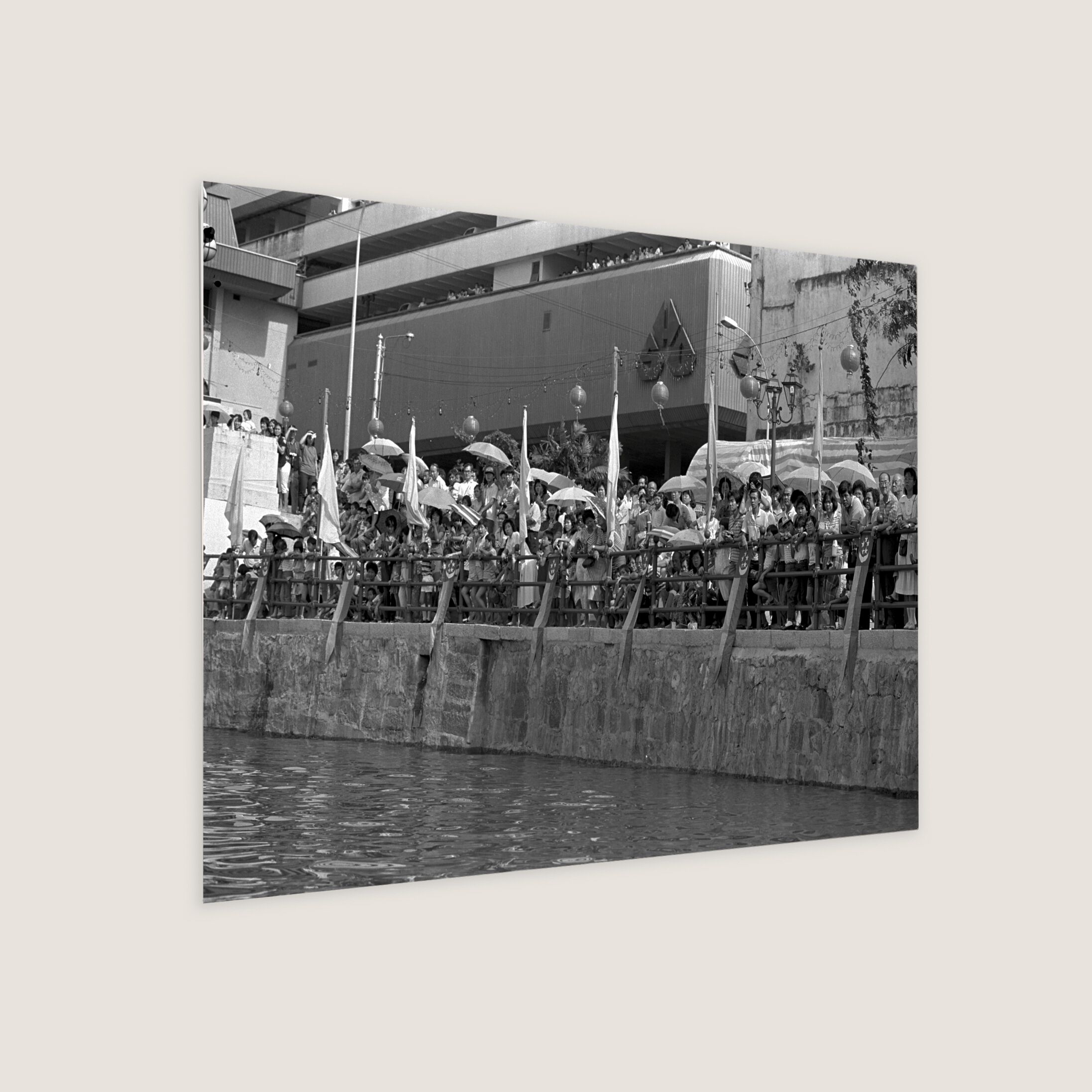
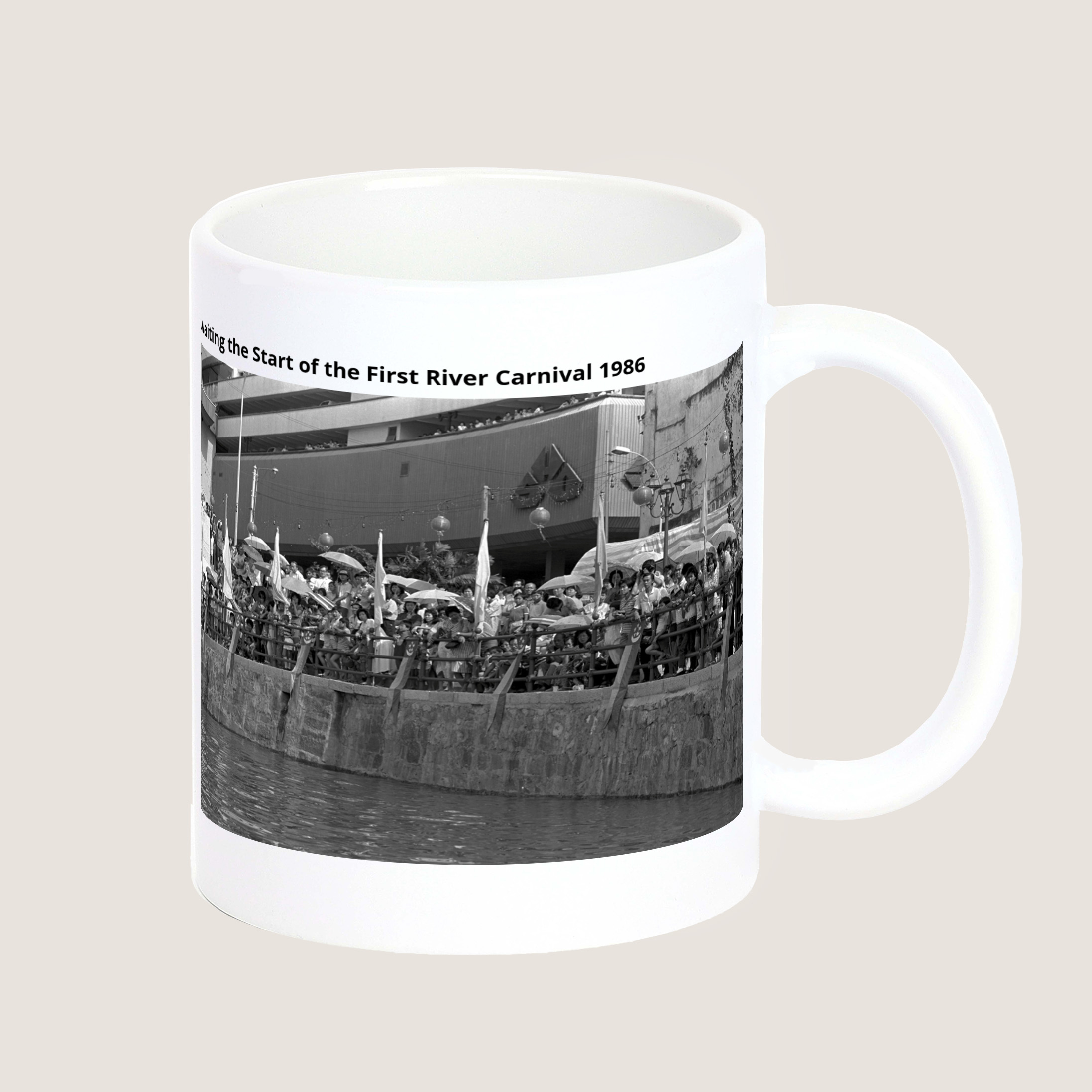
 Awaiting the Start of the First River Carnival
1986
Awaiting the Start of the First River Carnival
1986
Awaiting the Start of the First River Carnival
Year 1986
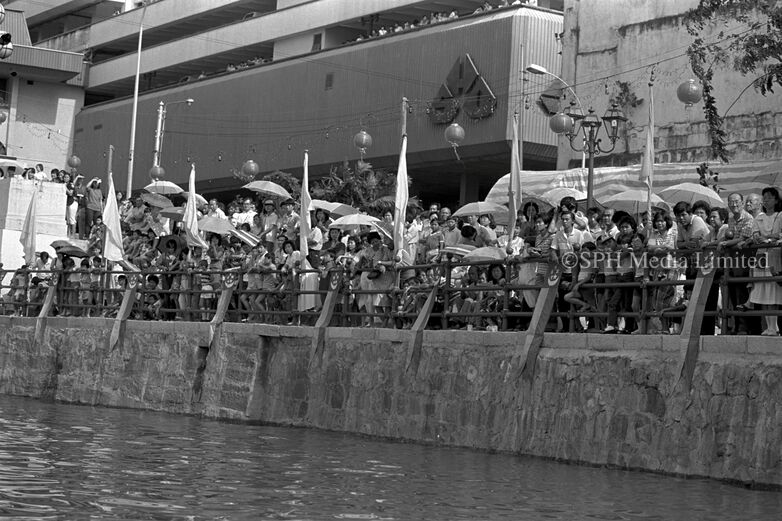
Held in November 1986, the Singapore River Carnival was part of Merlion Week, organised by the Singapore Armed Forces Reservists Association (SAFRA) and supported by the Ministry of Culture. Staged along a section of the river that had already been cleaned and cleared of tongkangs, the event reflected ongoing efforts to transform the historic waterway.
©️ SPH Media Limited
Share to
Tags
Available for print on products
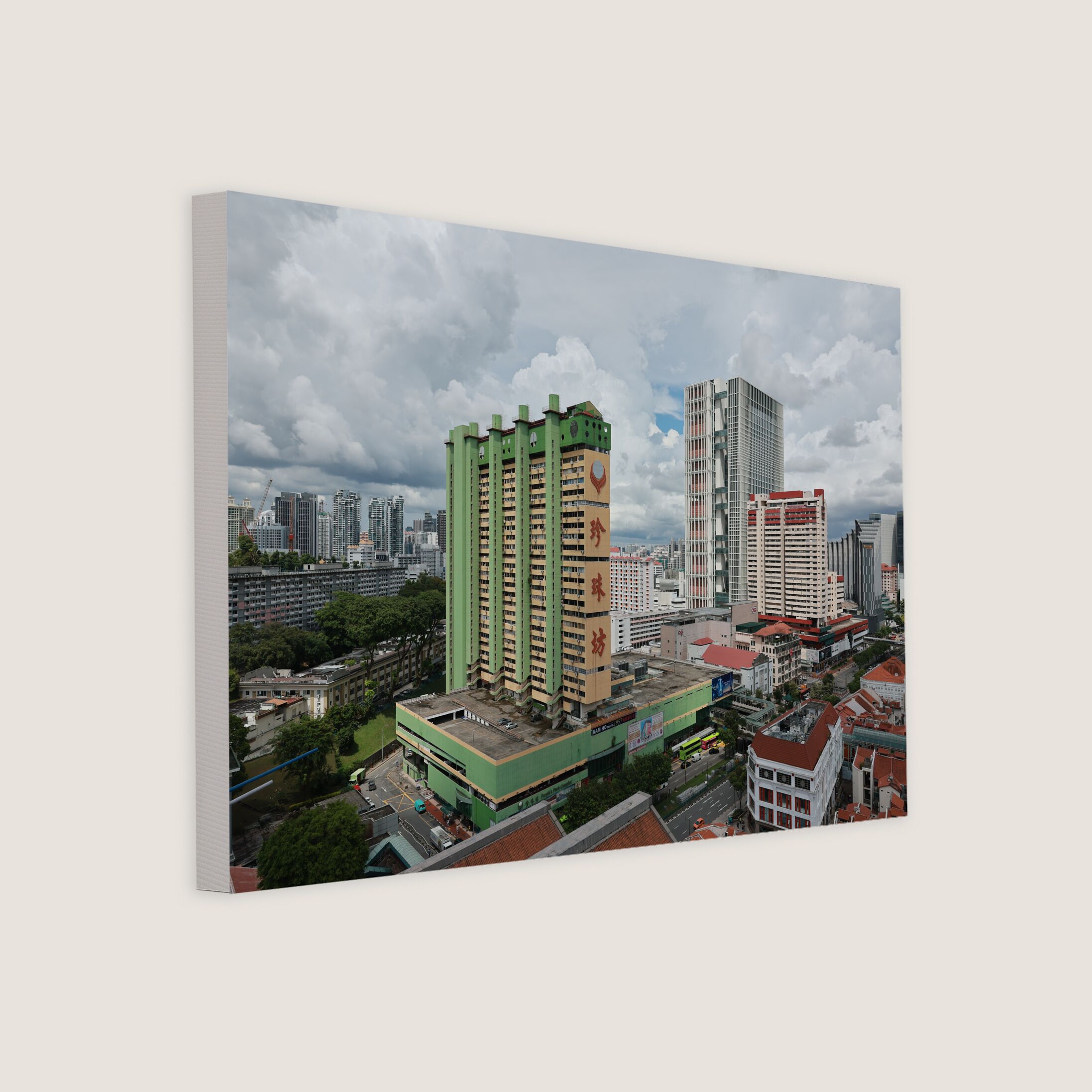
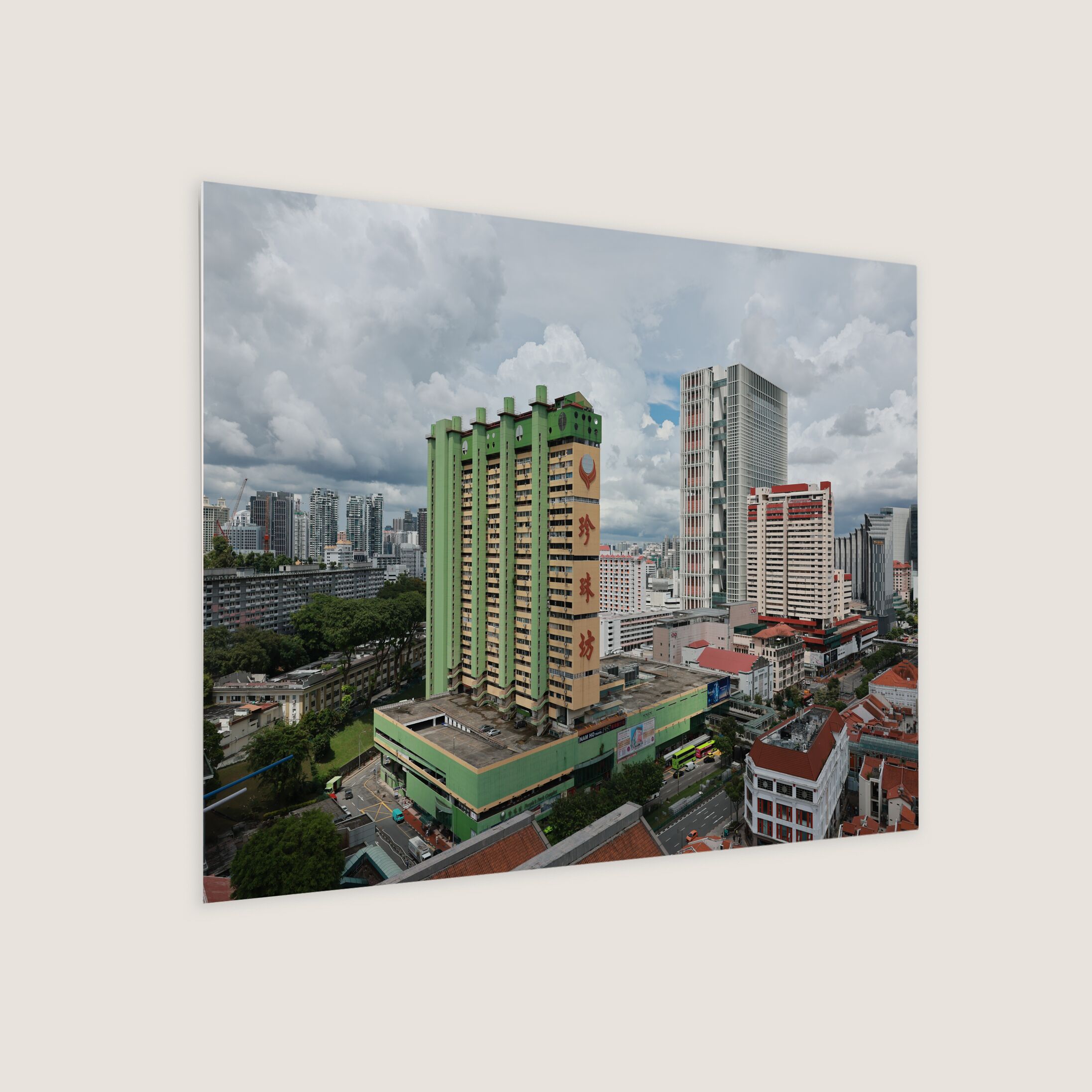
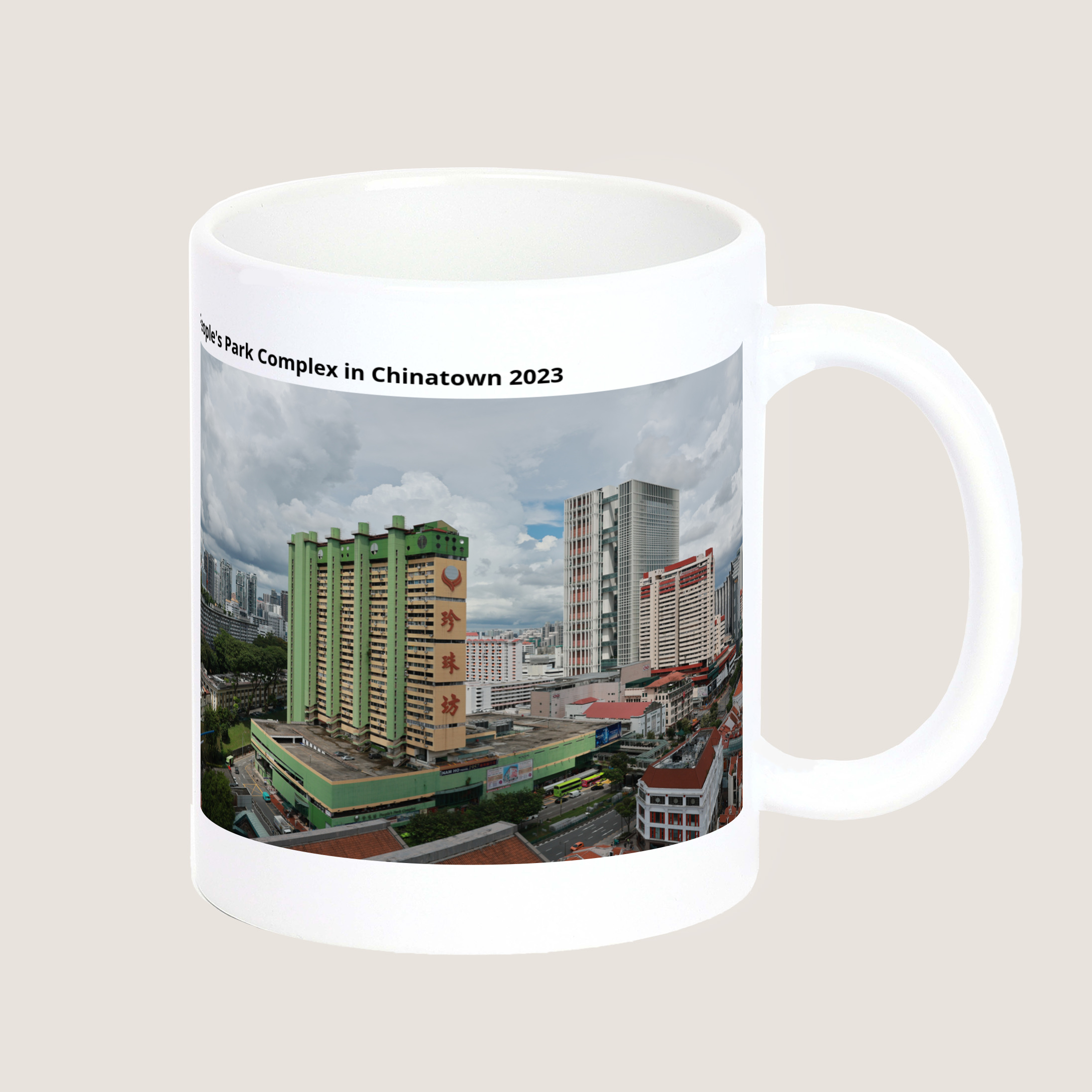
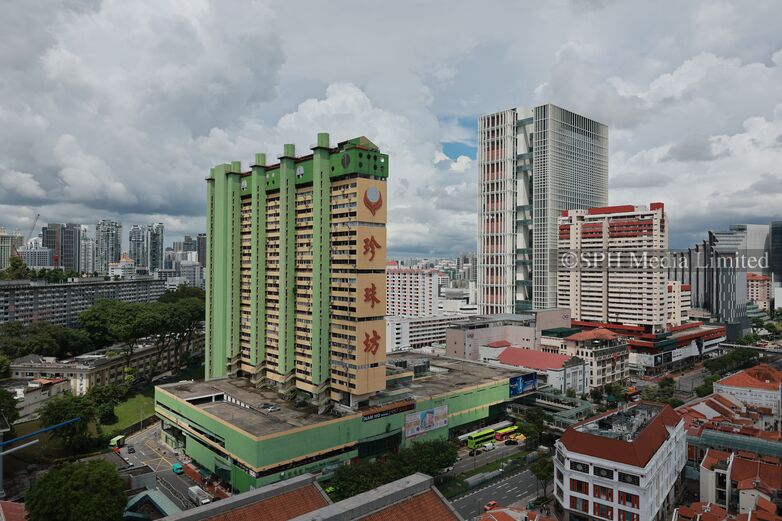 People's Park Complex in Chinatown
2023
People's Park Complex in Chinatown
2023
People's Park Complex in Chinatown
Year 2023
Completed in 1973, People’s Park Complex, also known as Zhenzhu Fang, was Singapore’s first mixed-use development, combining residential and commercial spaces. Built on the site of a former public park and later the bustling People’s Park Market, the original market was destroyed by fire in 1966. The complex marked a new era in urban planning and modern living.
©️ SPH Media Limited
Share to
Tags
Available for print on products
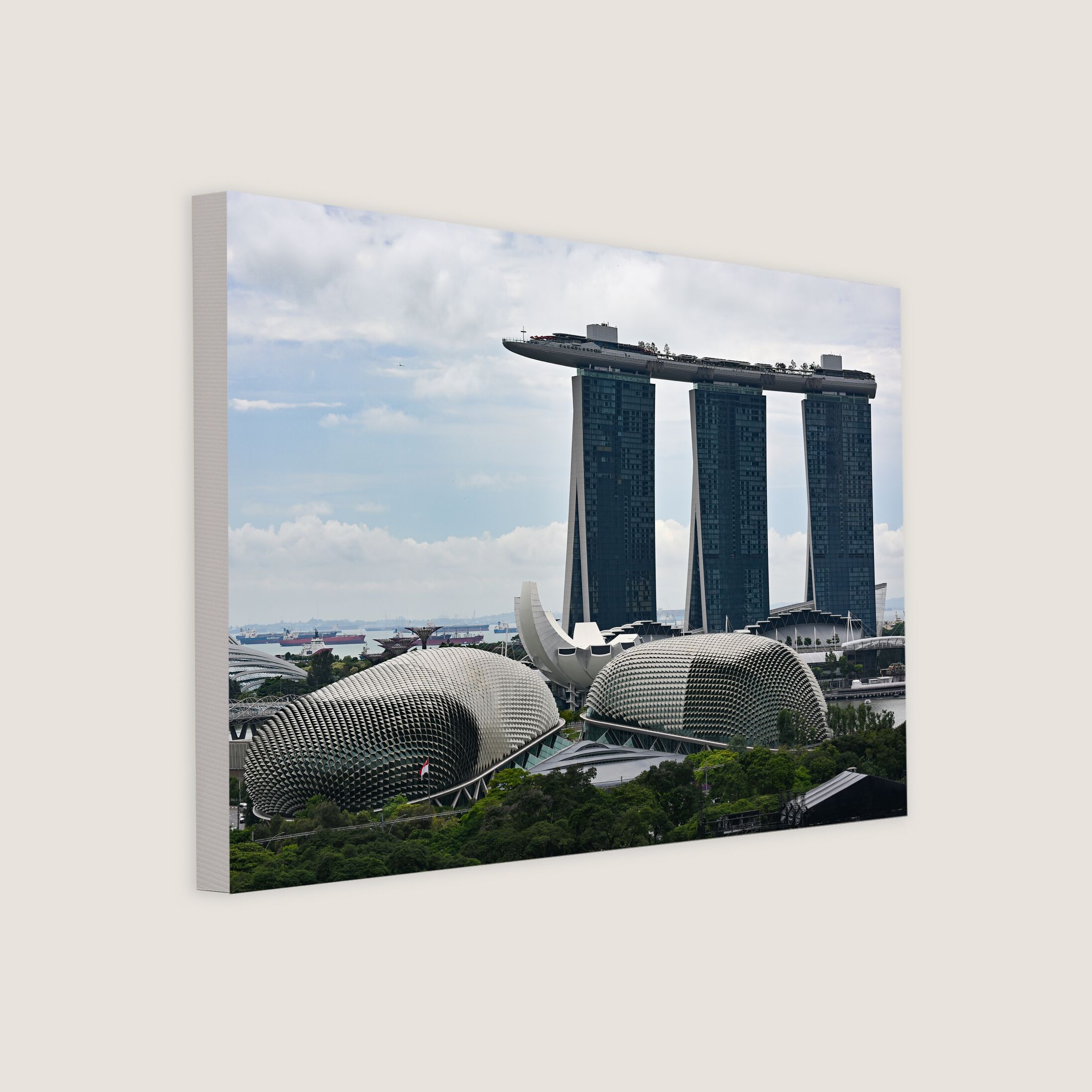
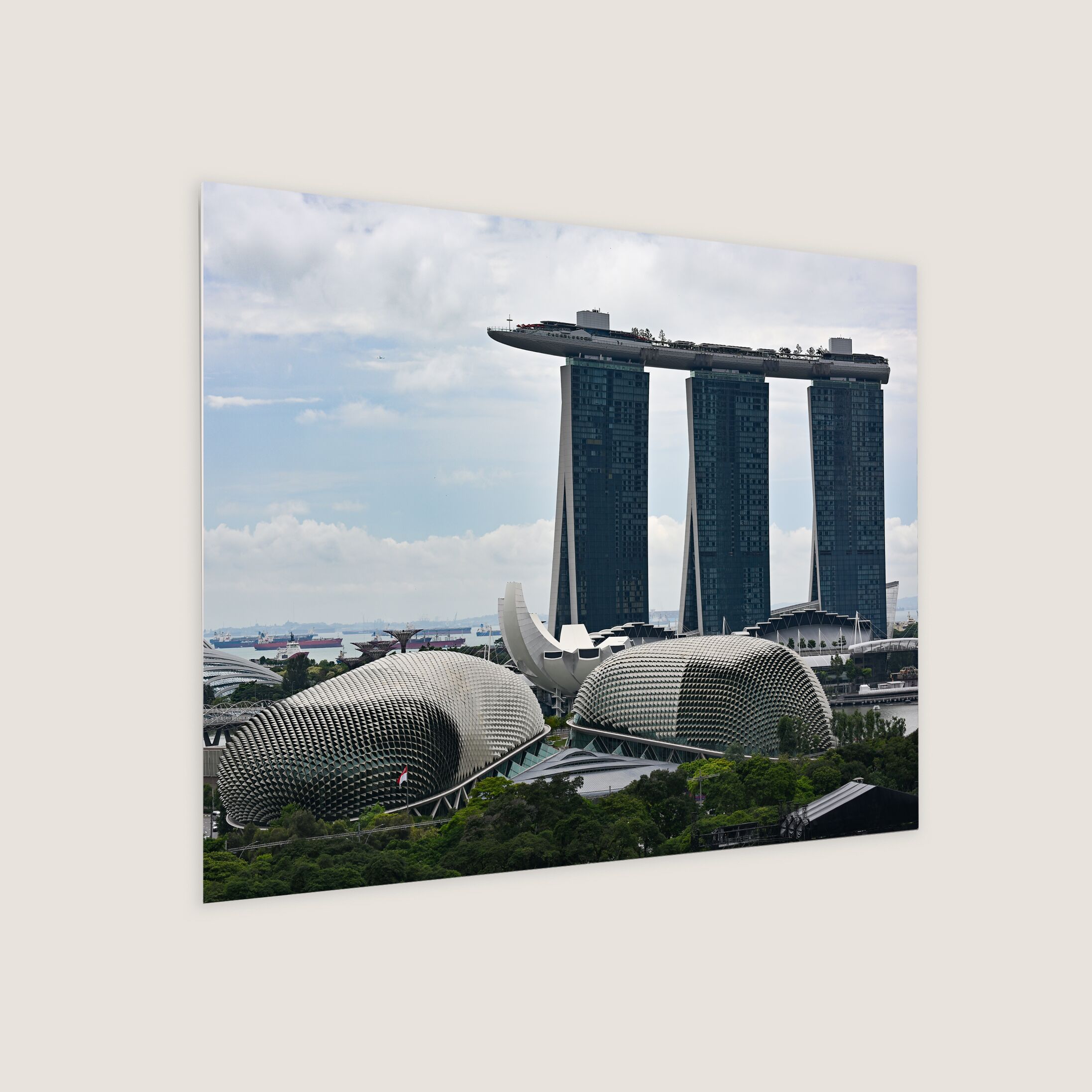
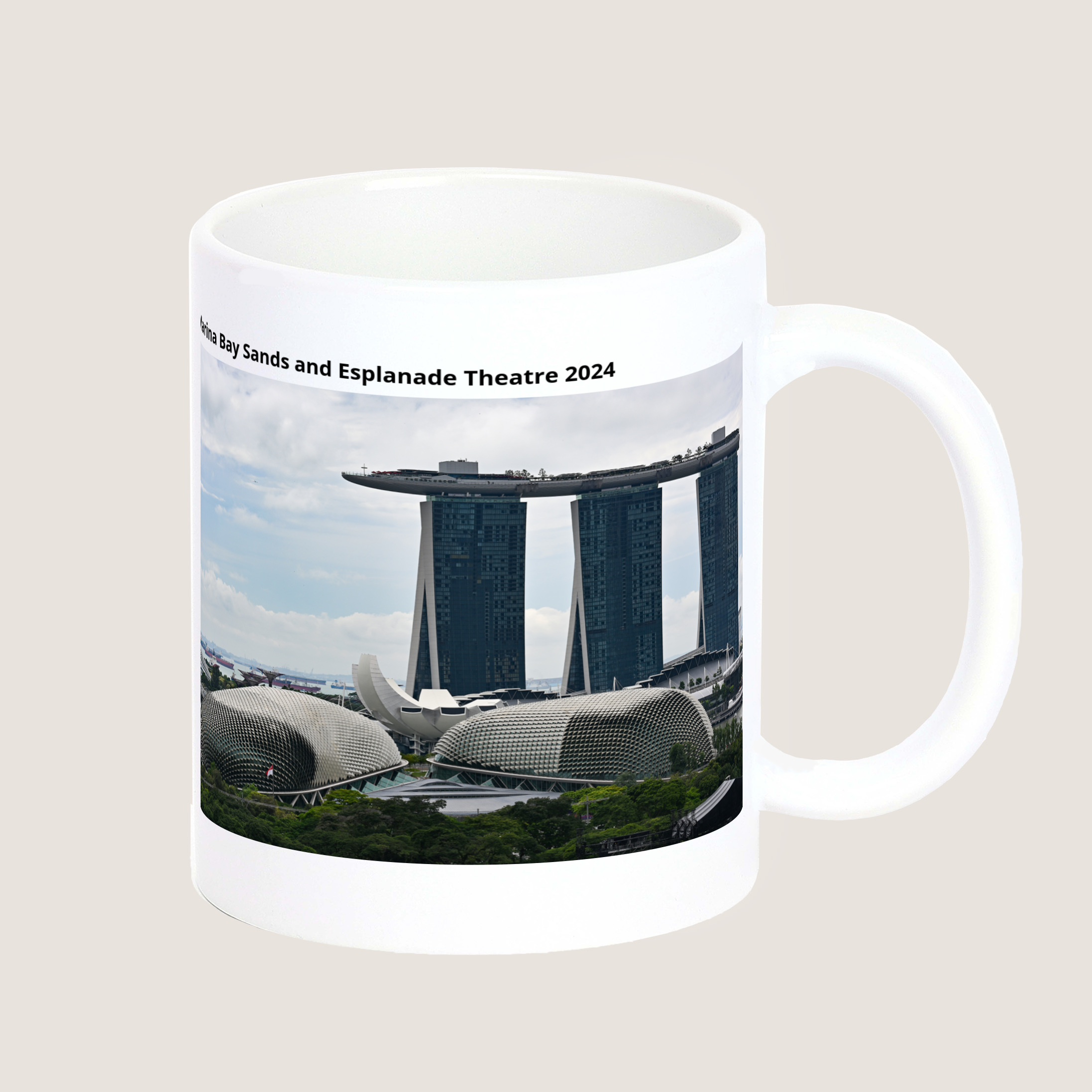
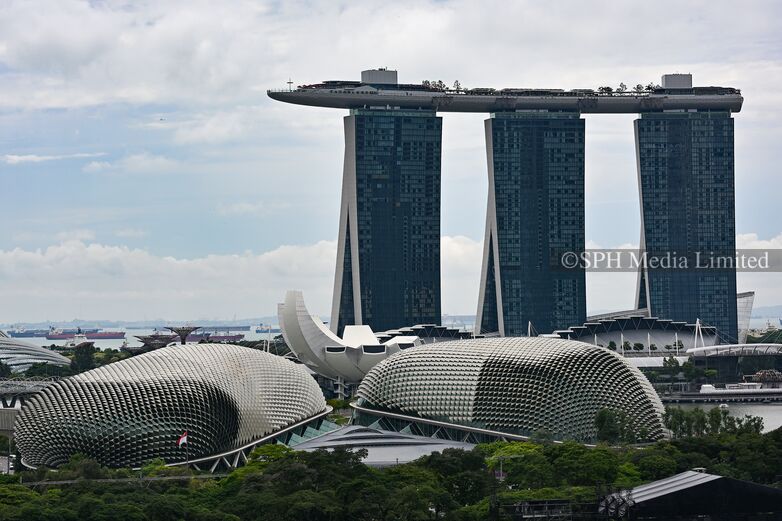 Marina Bay Sands and Esplanade Theatre
2024
Marina Bay Sands and Esplanade Theatre
2024
Marina Bay Sands and Esplanade Theatre
Year 2024
The Marina Bay area, once part of the open sea, was reclaimed through major land works beginning in the 1970s and continuing into the early 1990s. Today, the two prominent buildings that rise from this reclaimed ground stand as iconic landmarks along the Singapore waterfront.
©️ SPH Media Limited
Share to
Tags
Available for print on products
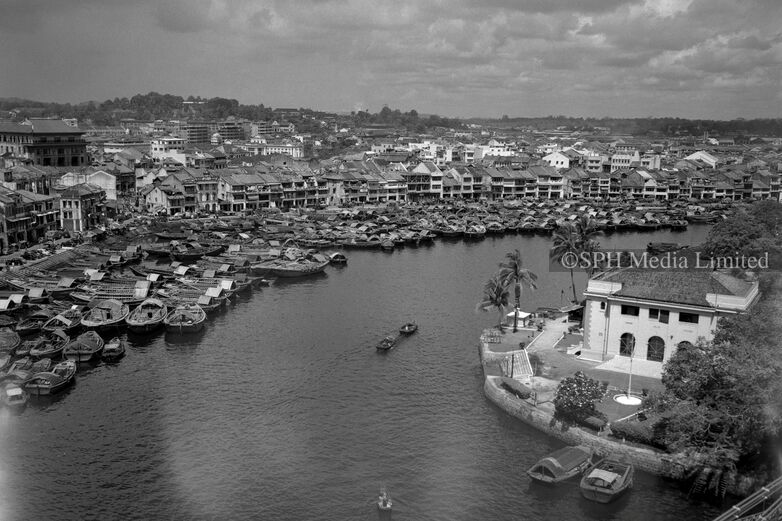 Former Marine Police Station at Empress Place
1955
Former Marine Police Station at Empress Place
1955
Former Marine Police Station at Empress Place
Year 1955
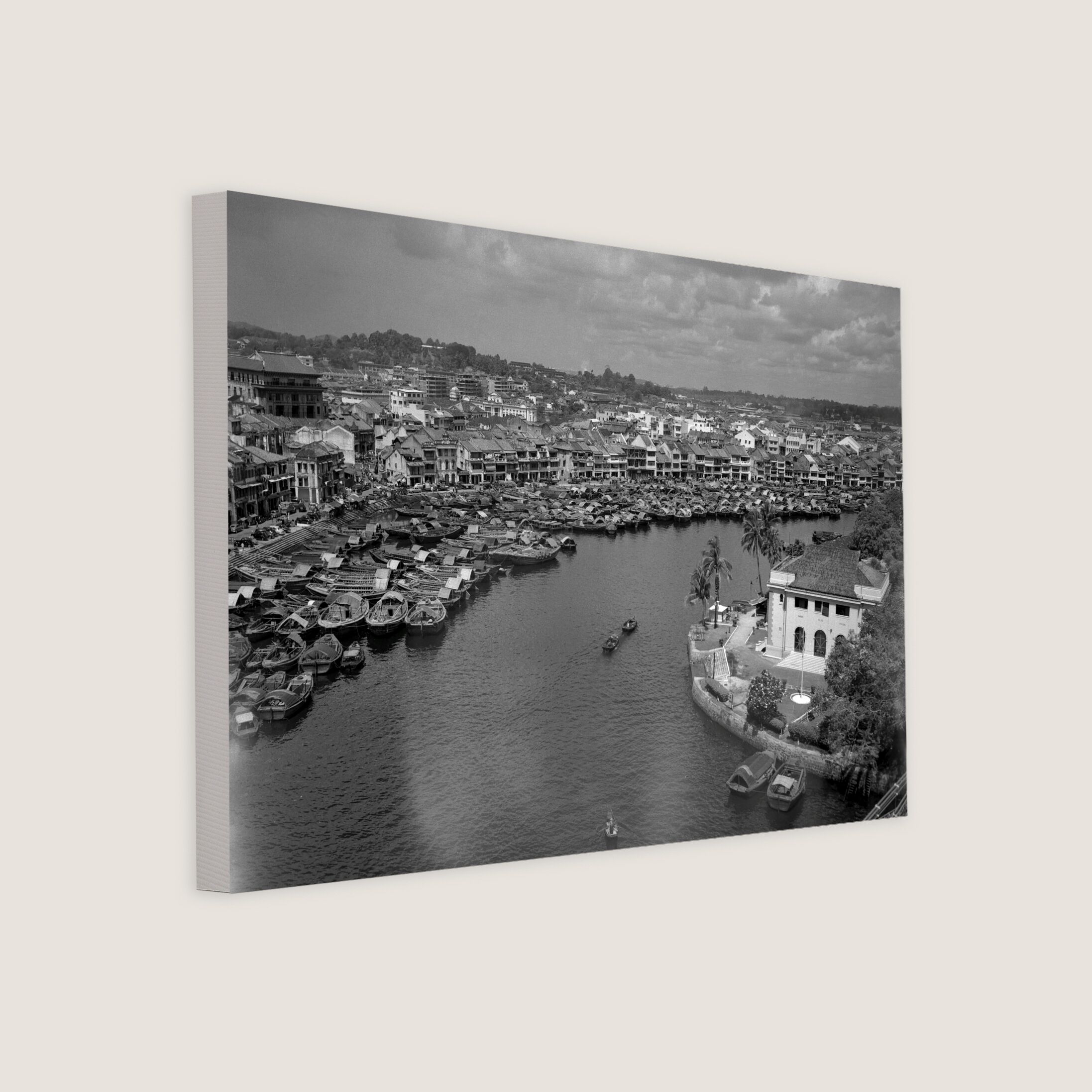
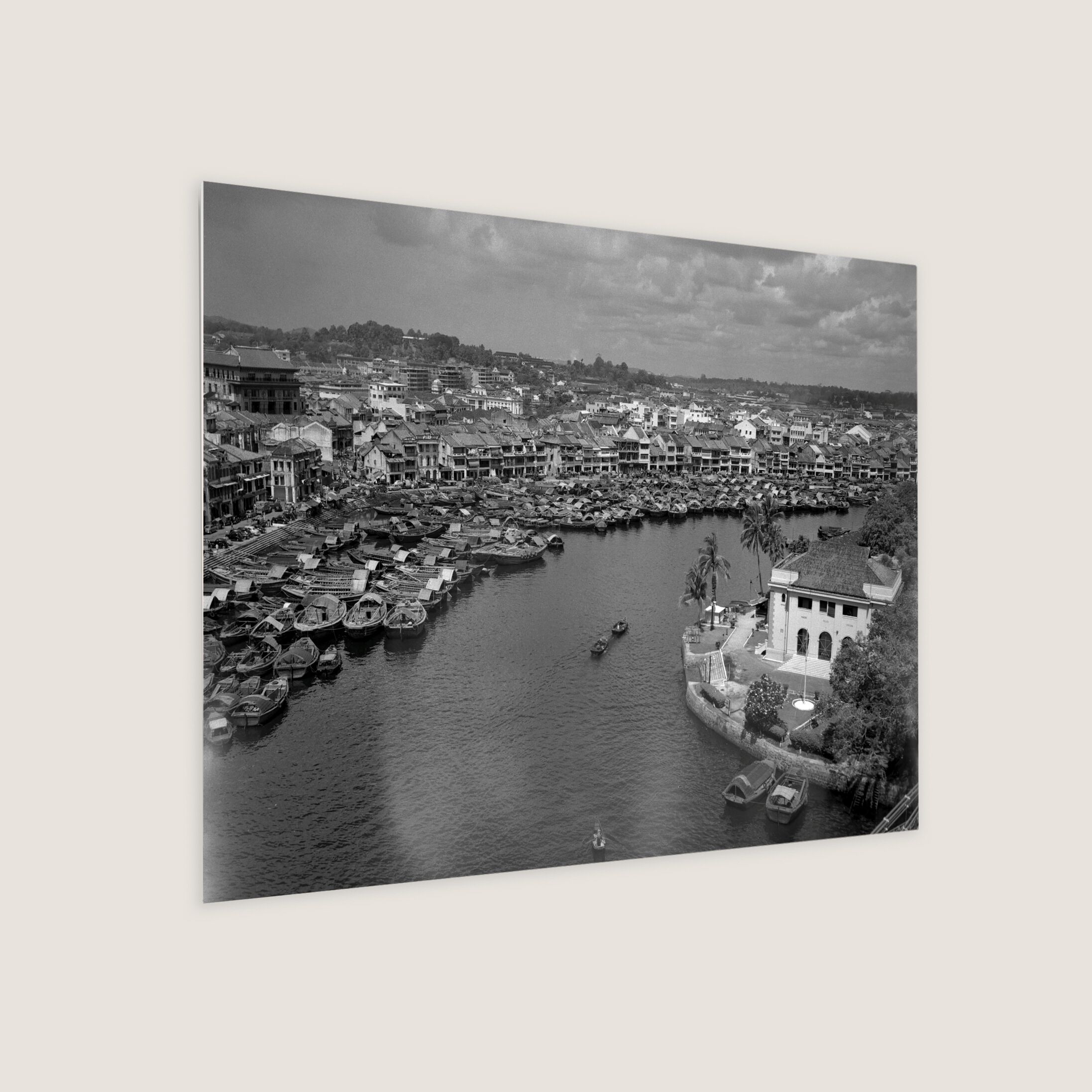
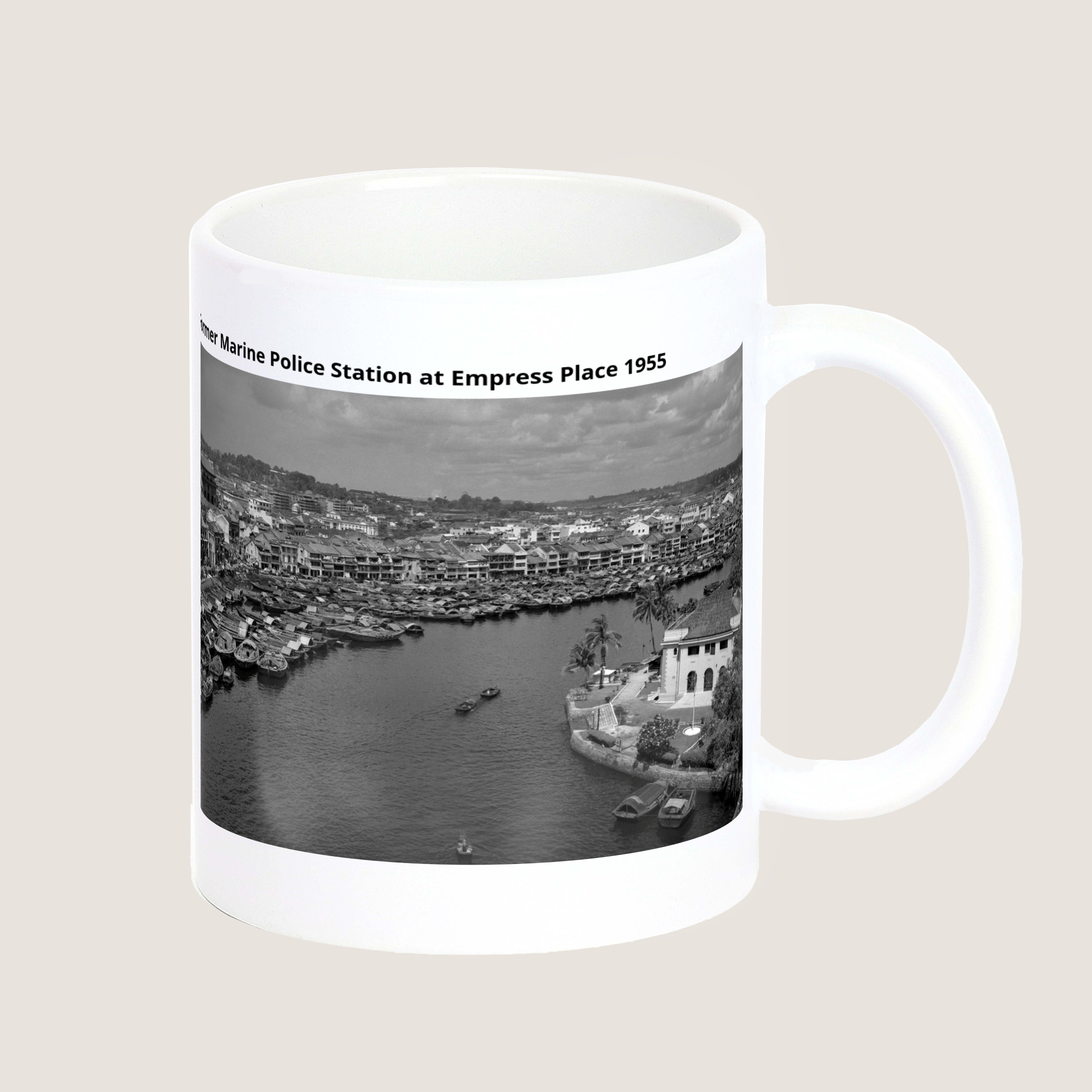
Featuring tongkangs lining the Singapore River in 1955. The former Marine Police Station at Empress Place is situated along the river as well. It was where people could seek help regarding marine crimes. This included the smuggling of illicit cargo, theft of cargo and fishing in prohibited areas. Today, the building no longer exists.
©️ SPH Media Limited
Share to
Tags
Available for print on products
Diesel-Powered Barges Bid Farewell to the River
2008
Diesel-Powered Barges Bid Farewell to the River
Year 2008
With the Marina Barrage, the Singapore River has formed a freshwater lake connecting to Marina Bay. Due to concerns over water quality and environmental pollution, all barges operating on the Singapore River transitioned from diesel to electricity since 2008. The photo shows the old diesel-powered barge on the left and the new electric-powered barge on the right
©️ SPH Media Limited
Share to
Tags
Available for print on products
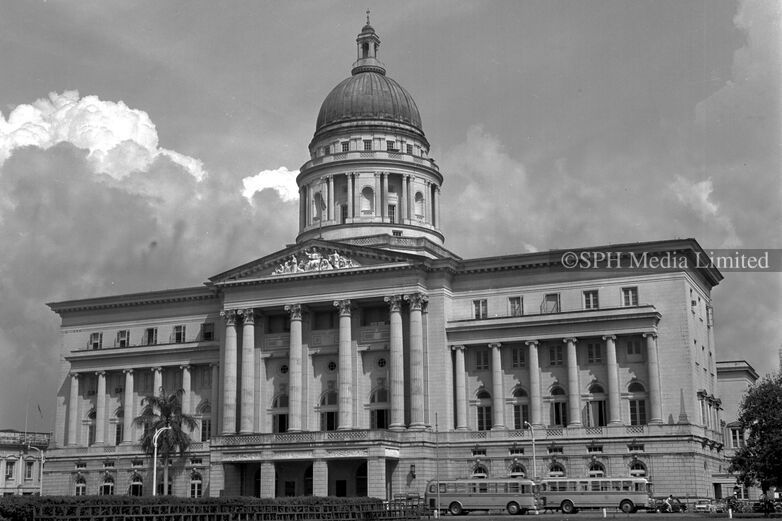 Former Supreme Court
1965
Former Supreme Court
1965
Former Supreme Court
Year 1965
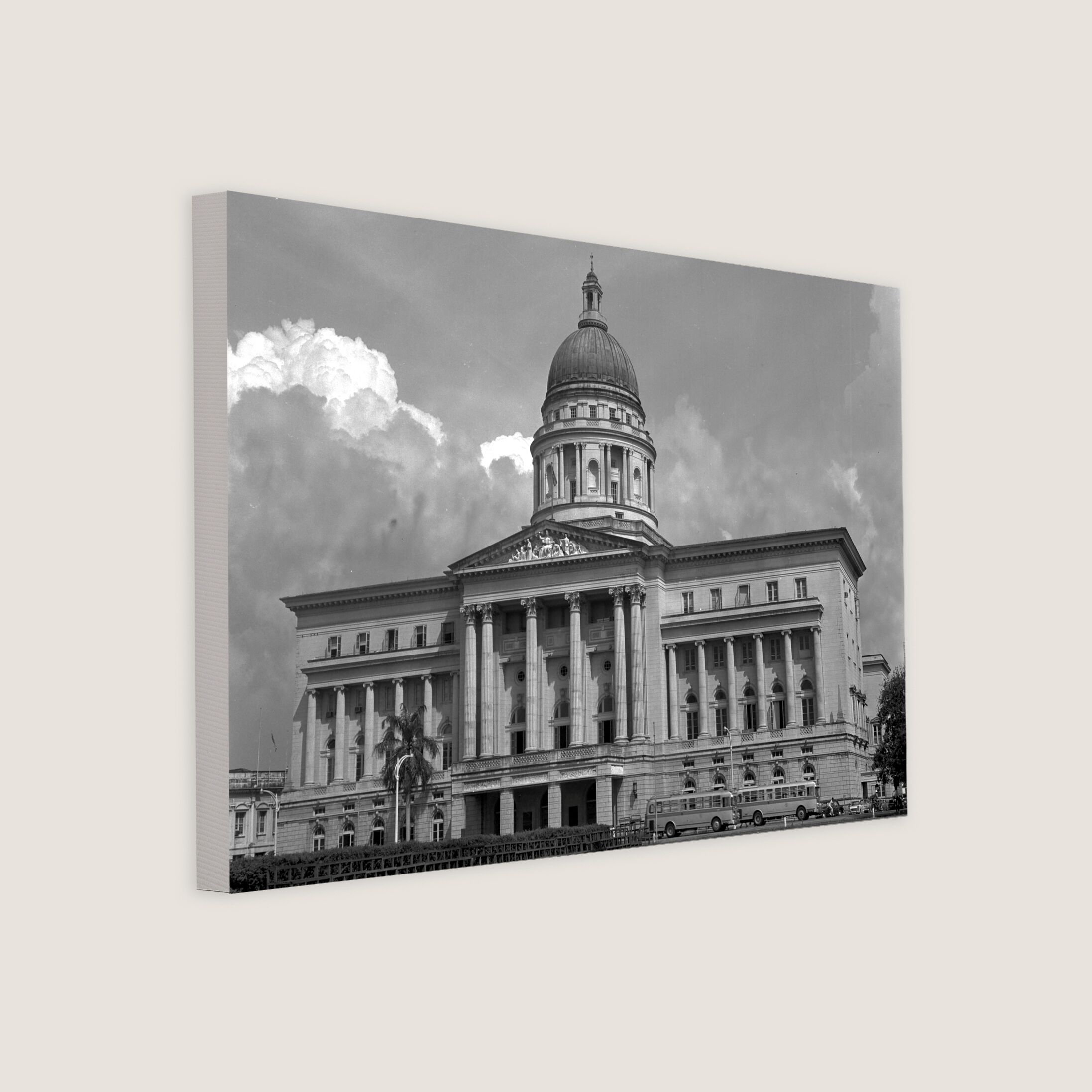
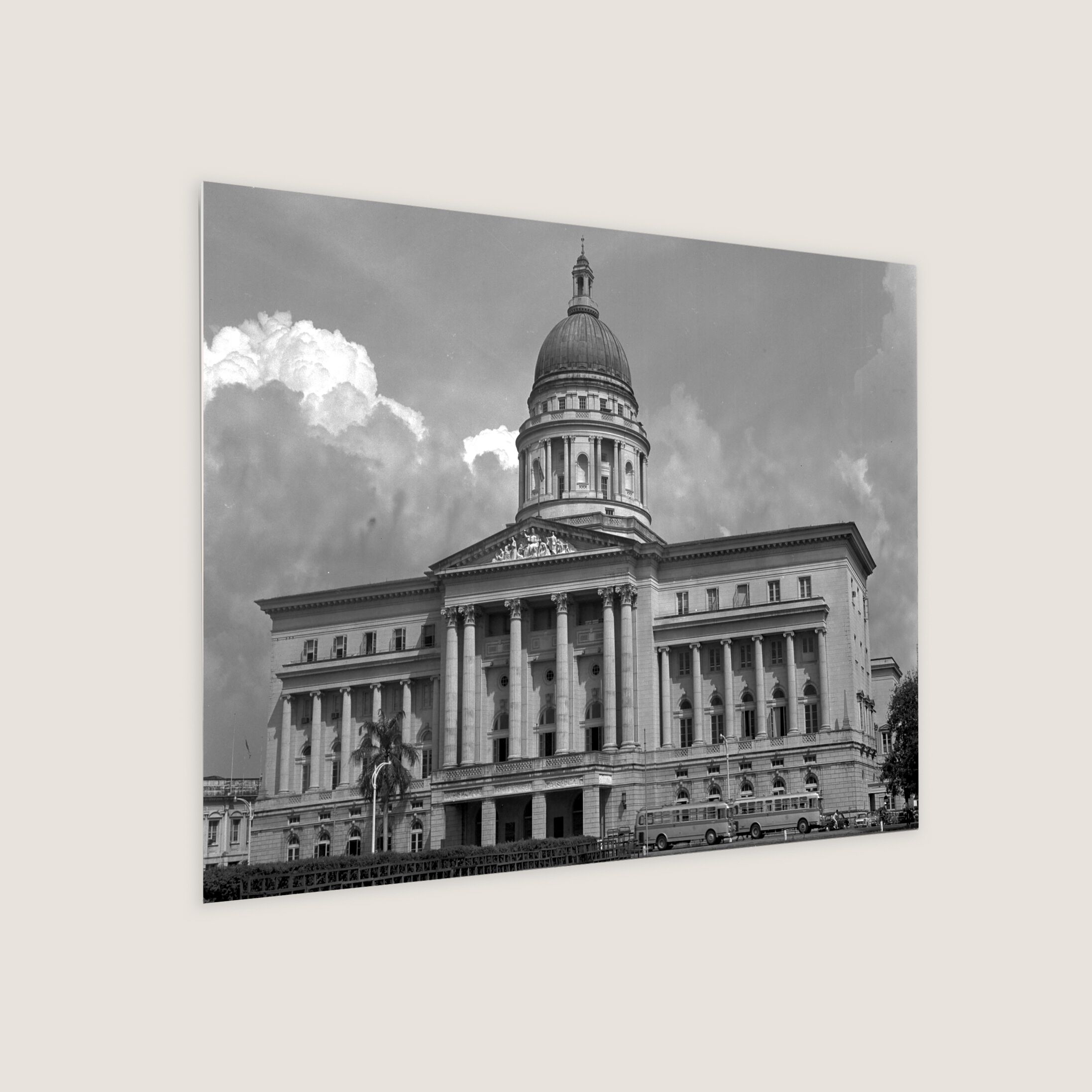
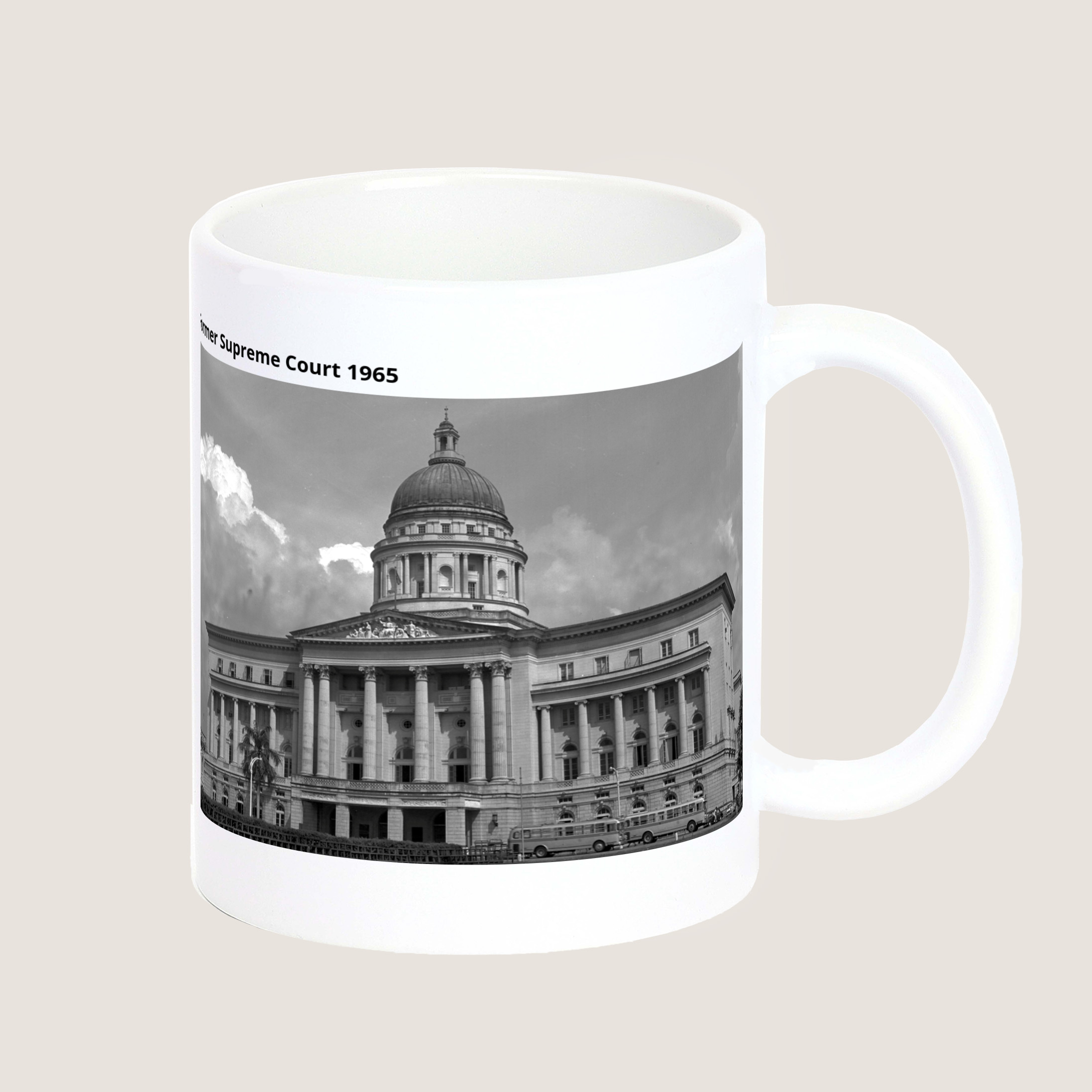
The former Supreme Court at St Andrew’s Road, pictured on 26 April 1965, was completed in 1939 as the last grand classical structure of colonial Singapore. Serving as the nation’s highest court until 2005, it housed major cultural events and, in 2015, was reborn as the National Gallery Singapore.
©️ SPH Media Limited
Share to
Tags
Available for print on products
 Cruising Along the Singapore River in Tongkang
2019
Cruising Along the Singapore River in Tongkang
2019
Cruising Along the Singapore River in Tongkang
Year 2019
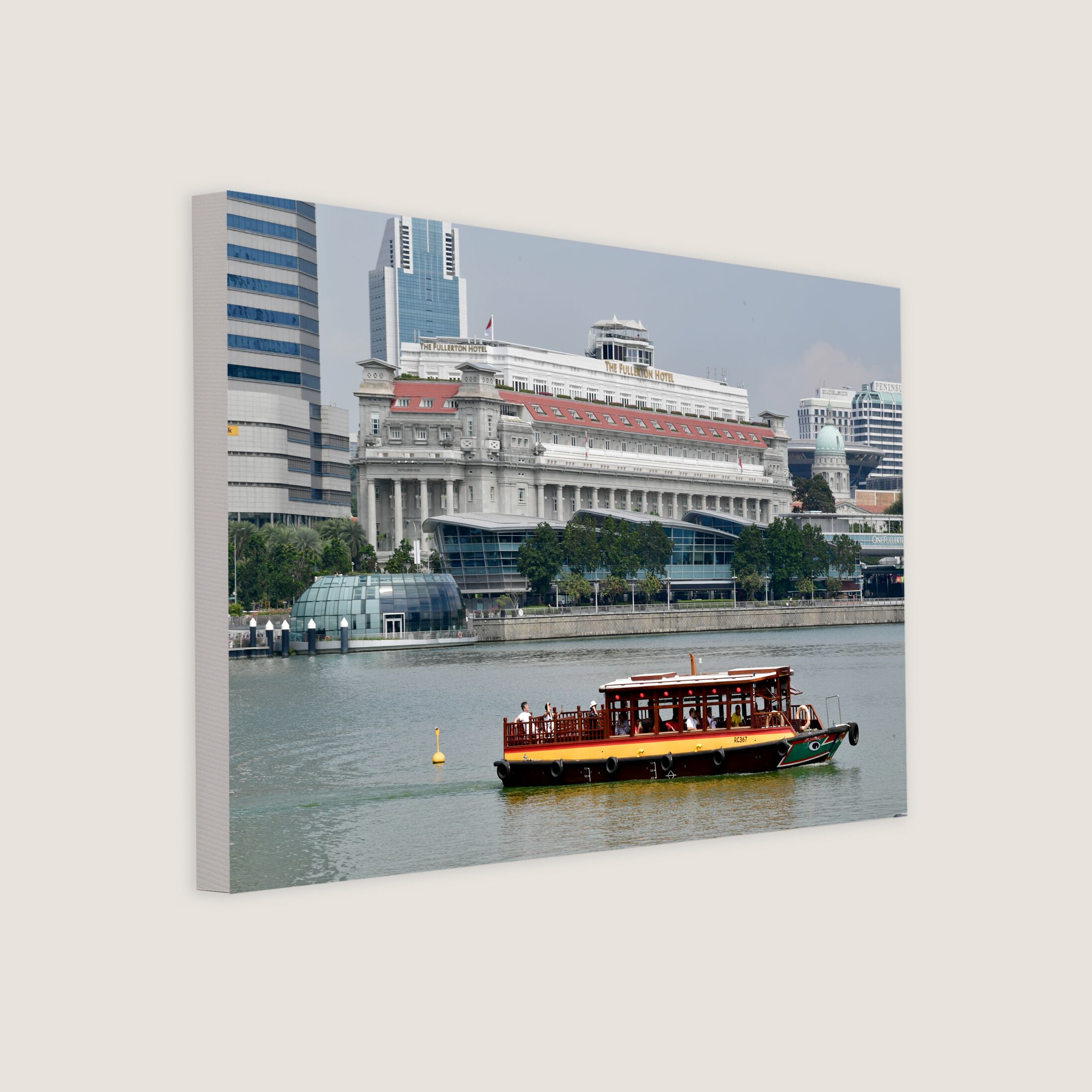
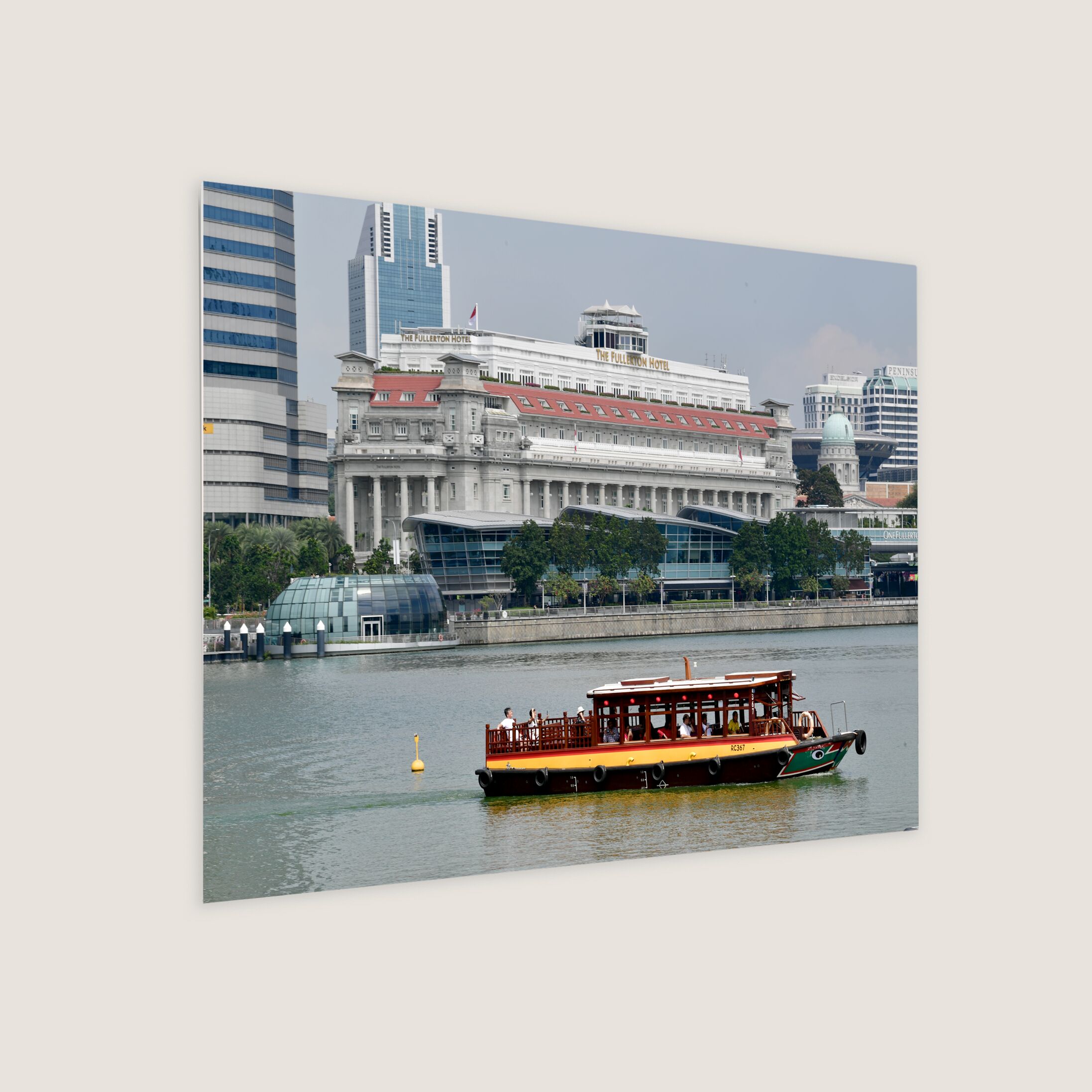
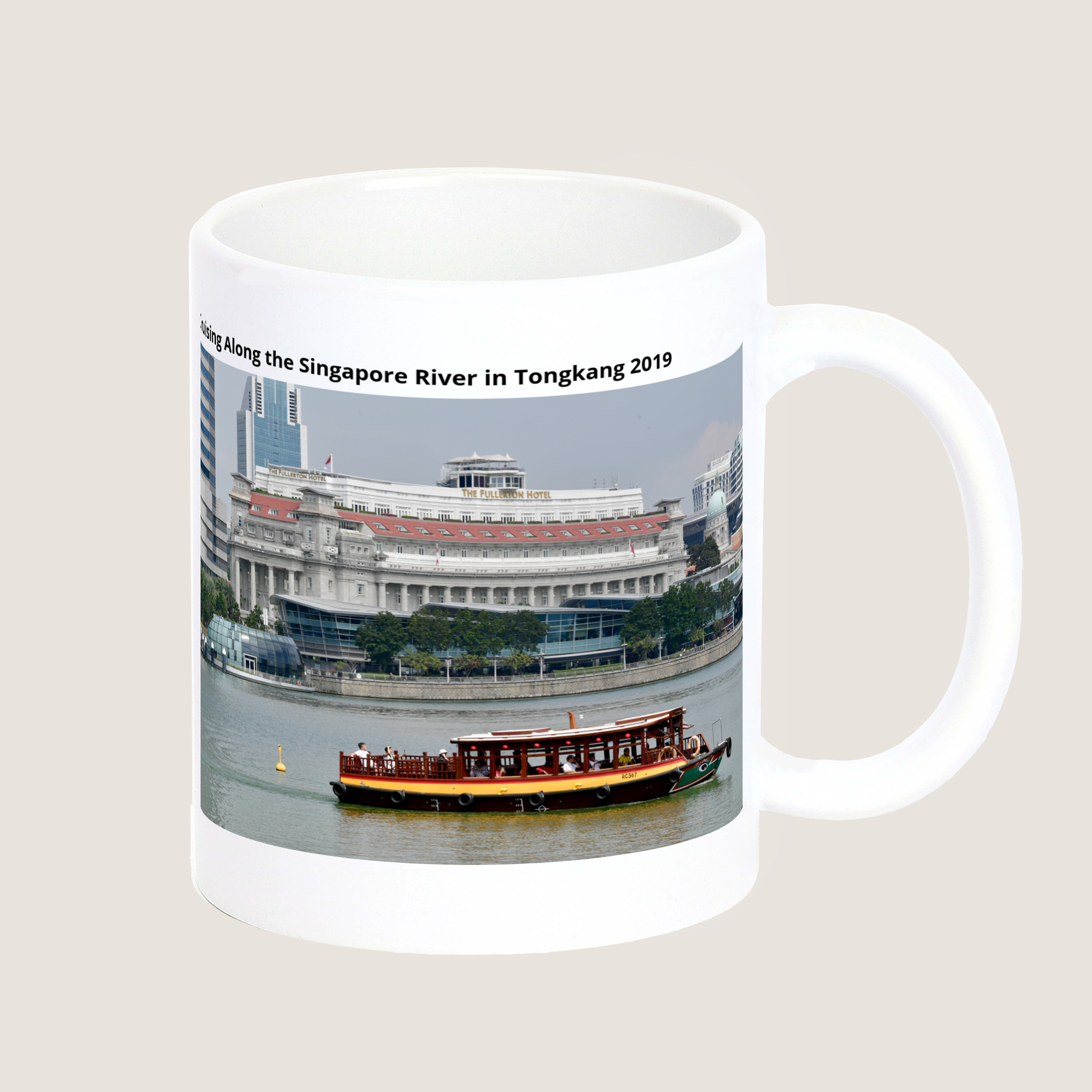
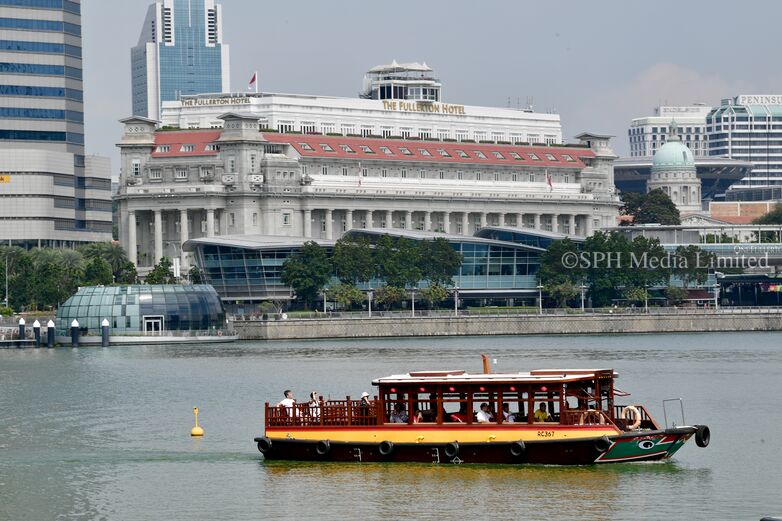
A tongkang was cruising along the Singapore River on October 30 2019, with the scenic Fullerton Hotel in the background. The front of these boats are often painted with 'eyes', to enable them, metaphorically, to see danger ahead. Old rubber tyres fixed to the sides of these boats are used as shock absorbers in case of collision with the quay, jetty or other boats.
©️ SPH Media Limited
Share to
Tags
Available for print on products
 Riding Past Victoria Theatre
2020
Riding Past Victoria Theatre
2020
Riding Past Victoria Theatre
Year 2020
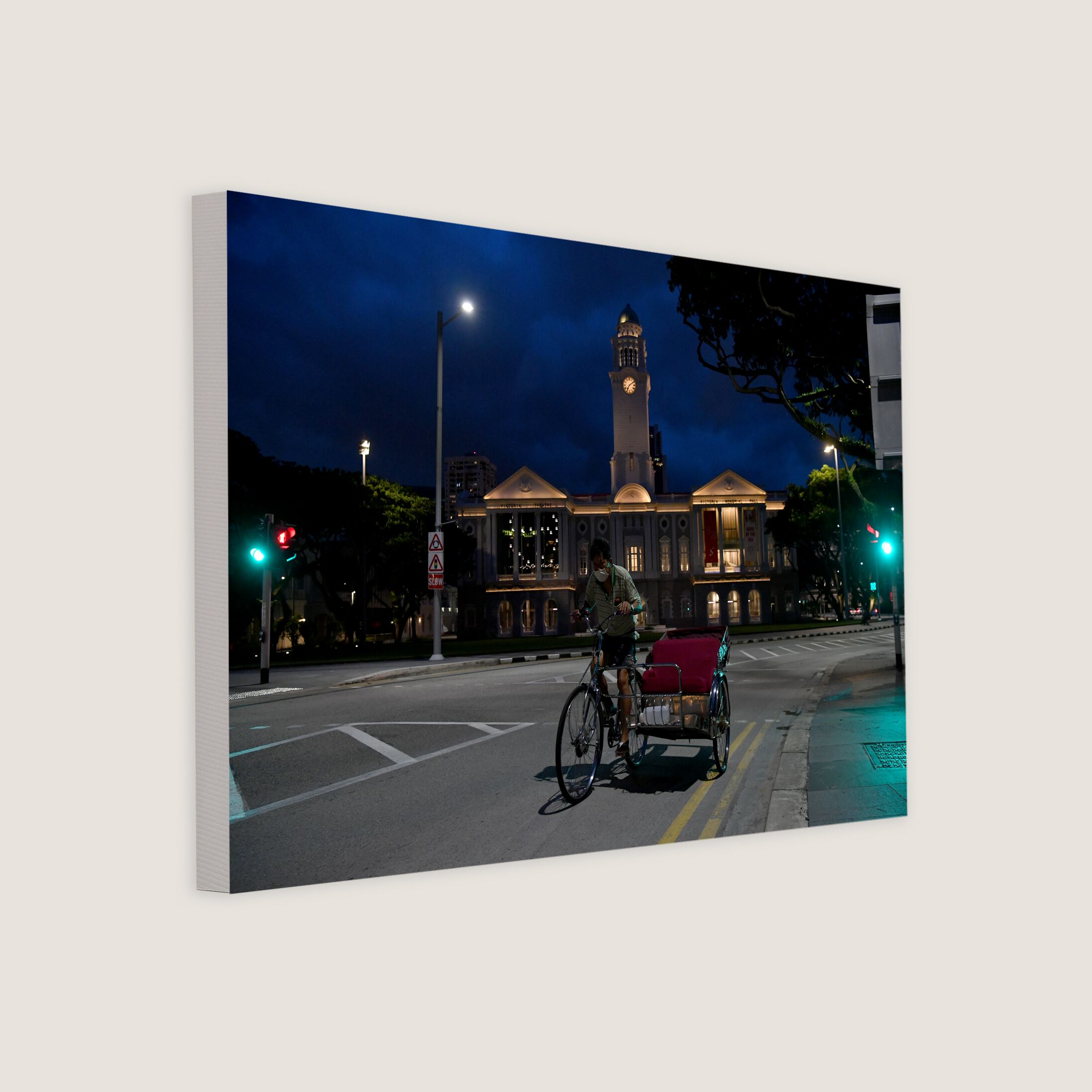
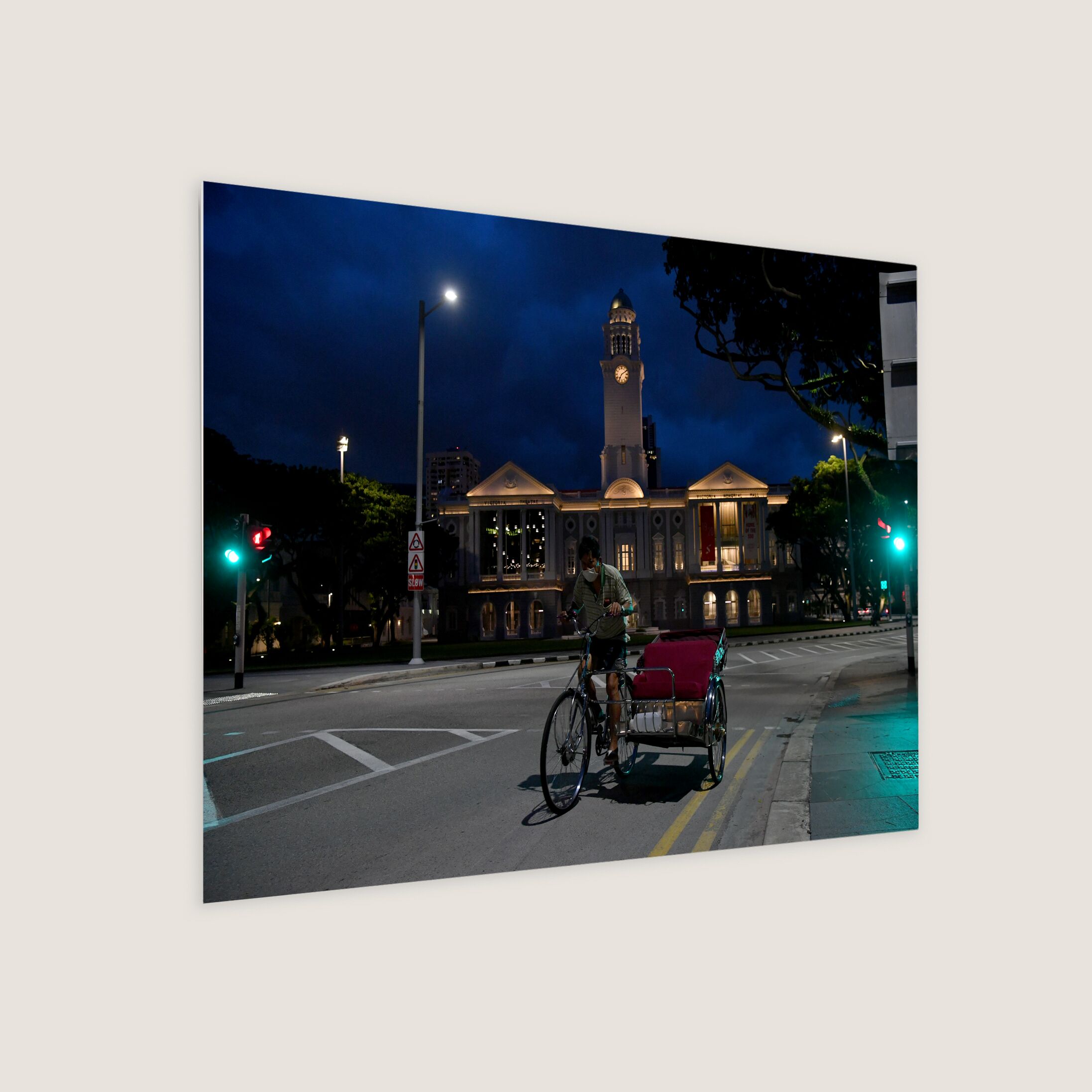
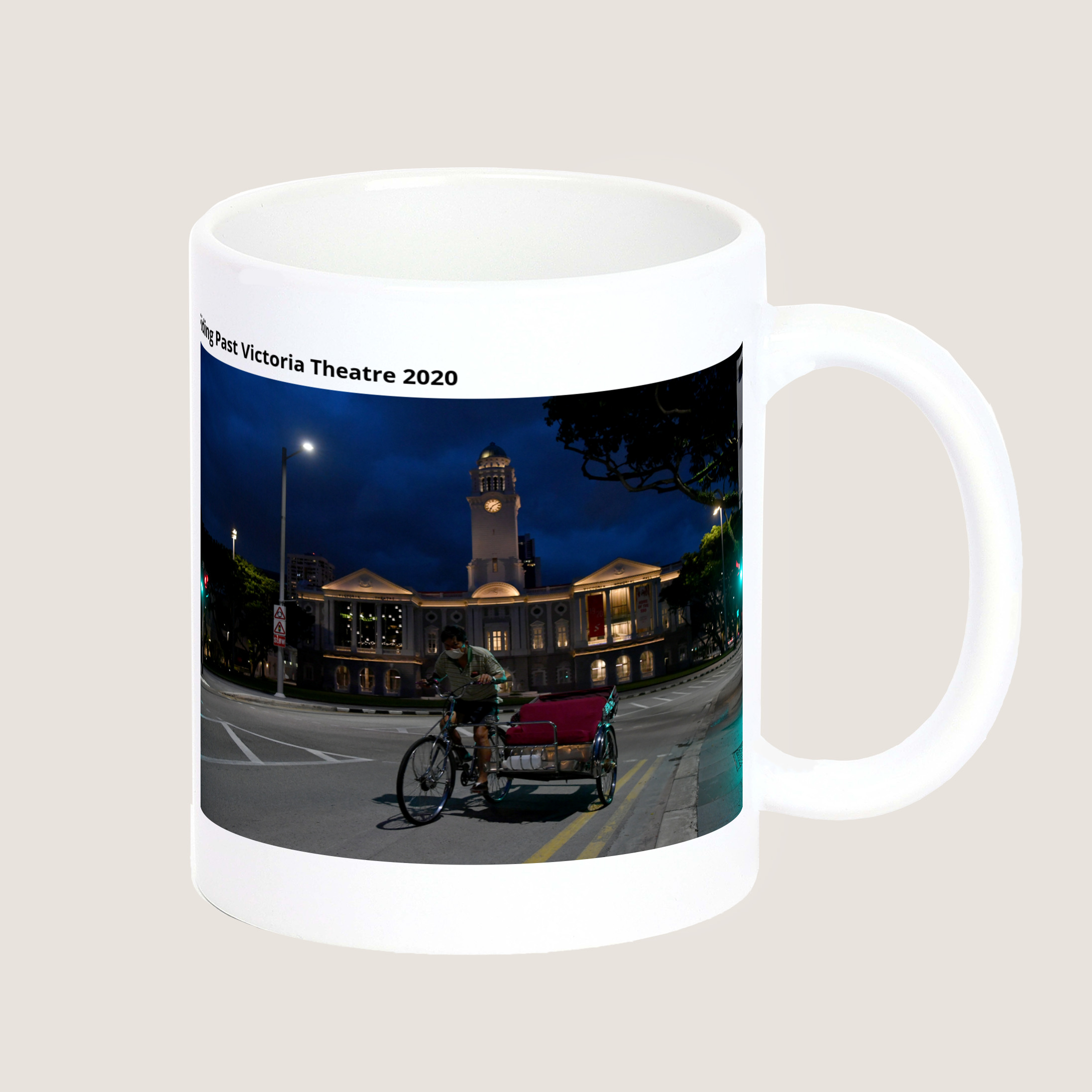
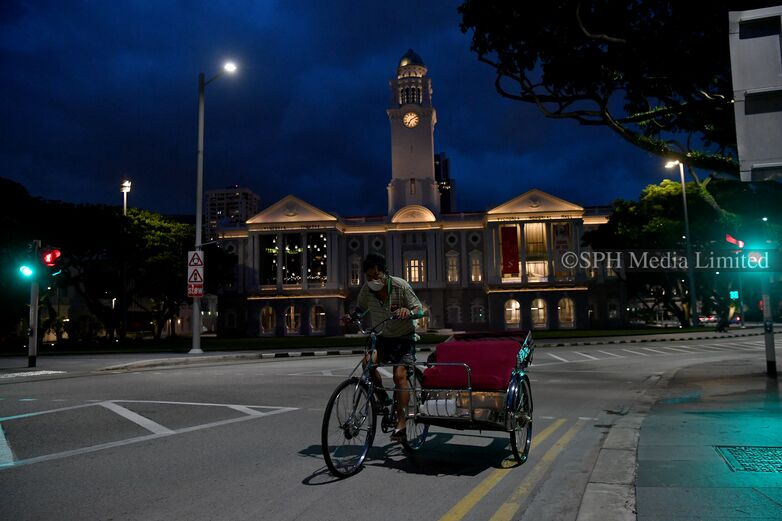
A trishaw rider was riding his empty trishaw past the Victoria Theatre in September 2020. Three years later, in 2023, trishaw licenses were no longer issued, and trishaws are no longer seen on the streets of Singapore.
©️ SPH Media Limited
Share to
Tags
Available for print on products
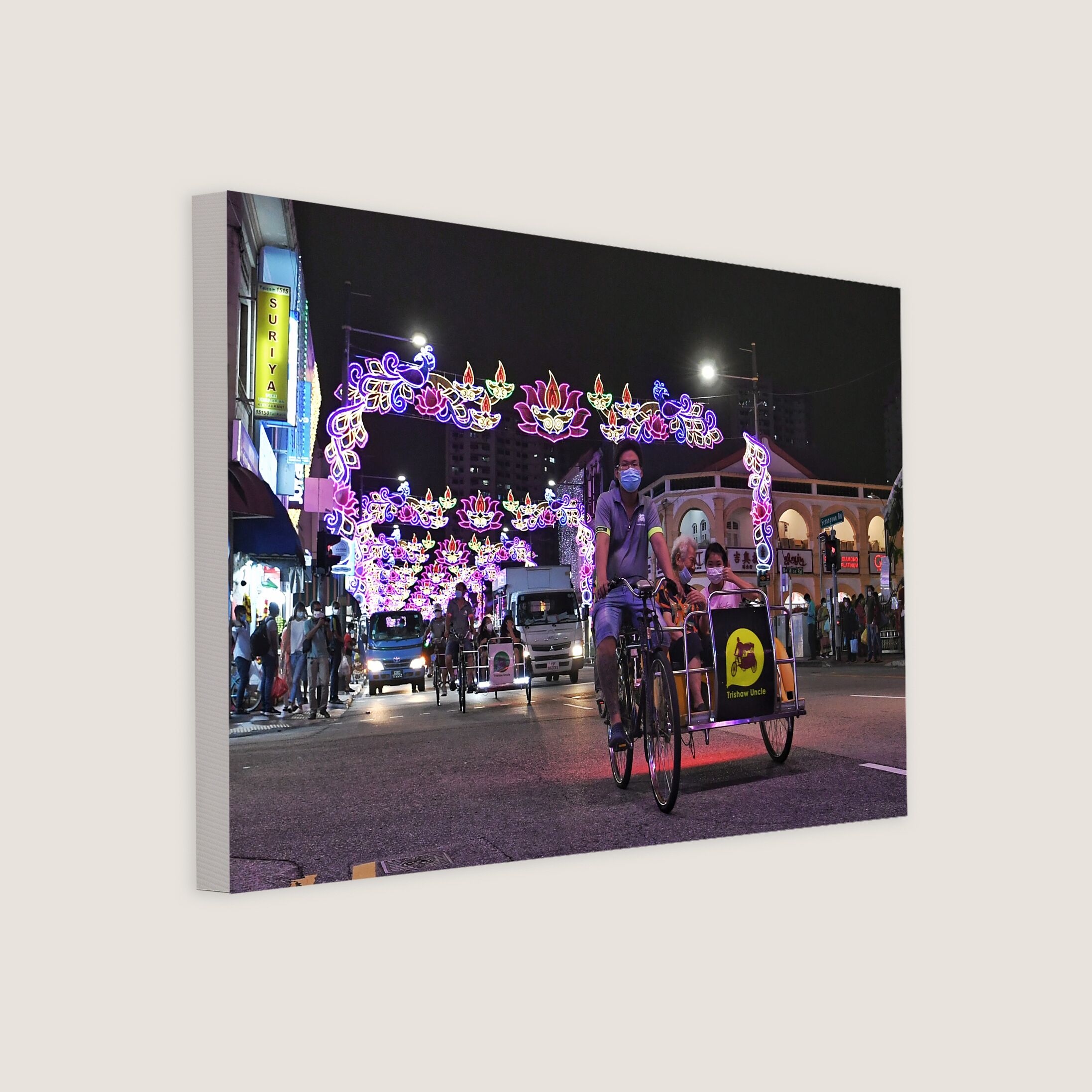
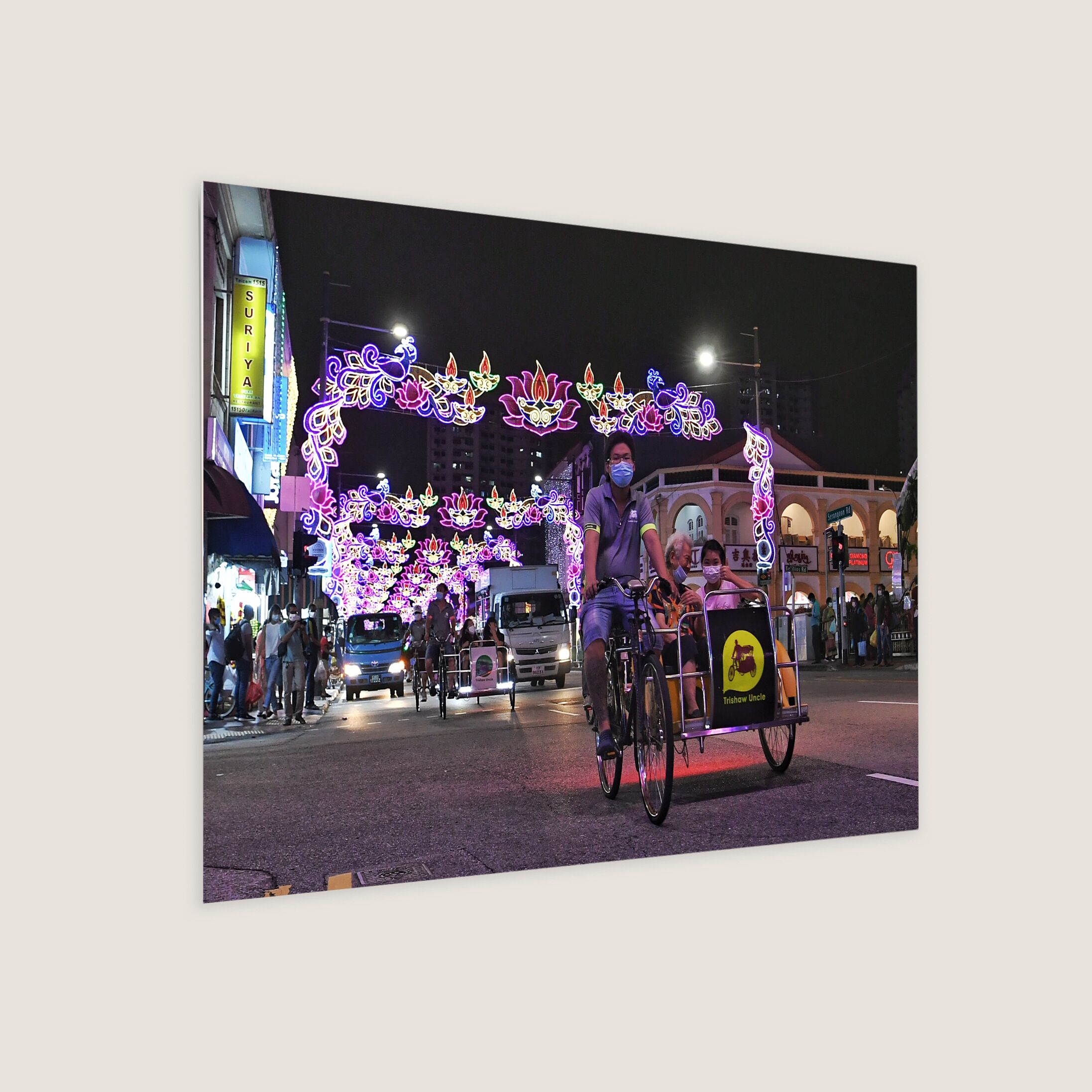
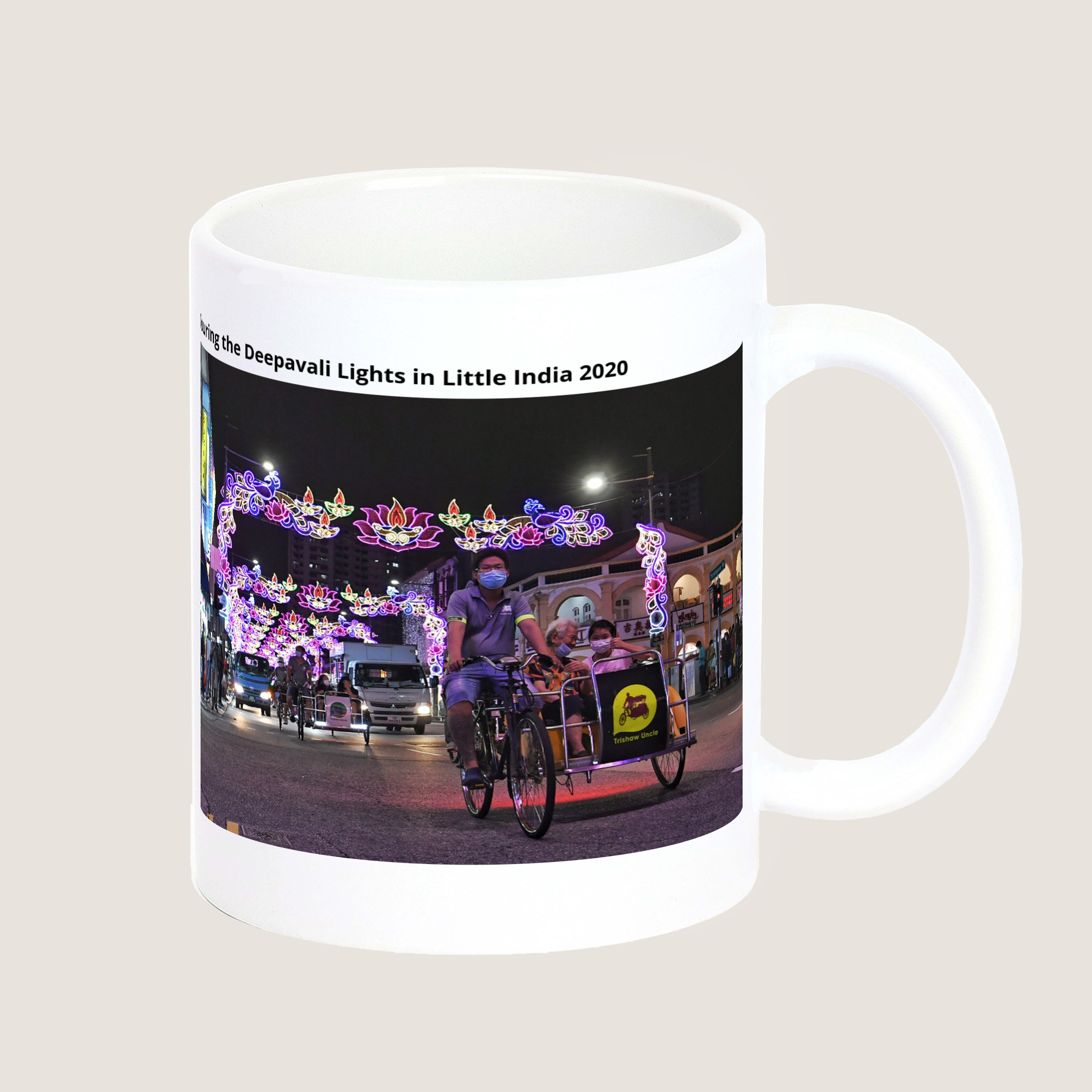
 Touring the Deepavali Lights in Little India
2020
Touring the Deepavali Lights in Little India
2020
Touring the Deepavali Lights in Little India
Year 2020
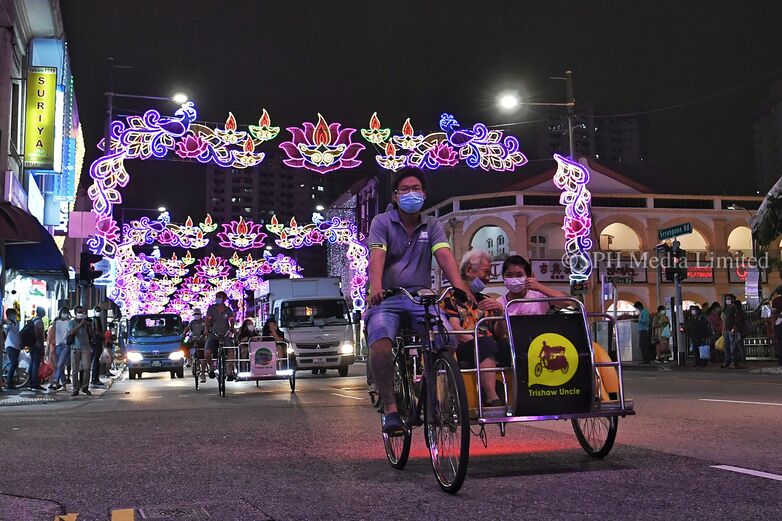
A trishaw in Little India made a round-trip journey from Campbell Lane, passing various landmarks in October 2020. The ride was licensed by a tour agency and was the last type of trishaw seen cycling around Singapore. The government has stopped issuing new trishaw licenses, and all previous licenses have expired. Trishaws ceased operating on the streets of Singapore in June 2023.
©️ SPH Media Limited
Share to
Tags
Available for print on products
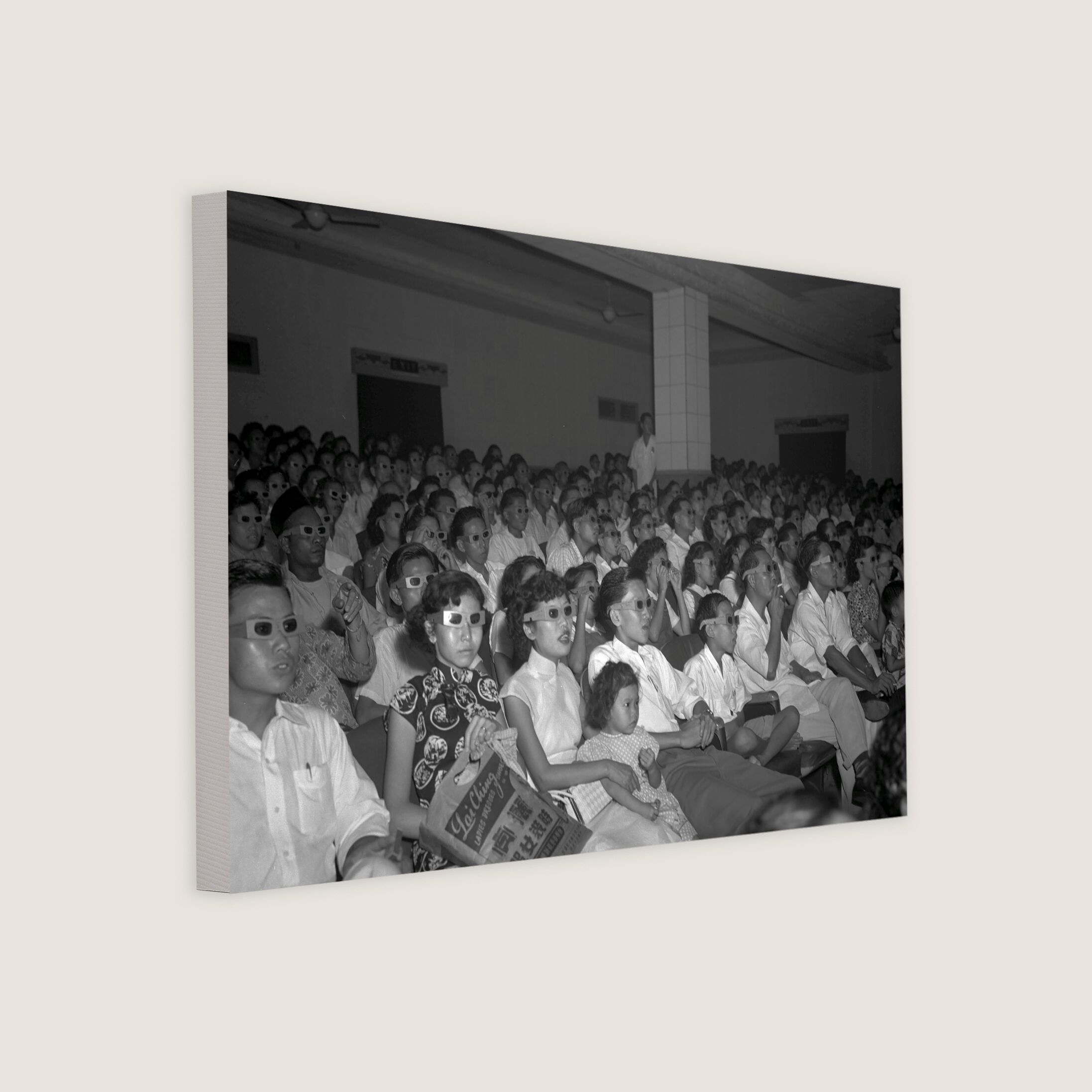
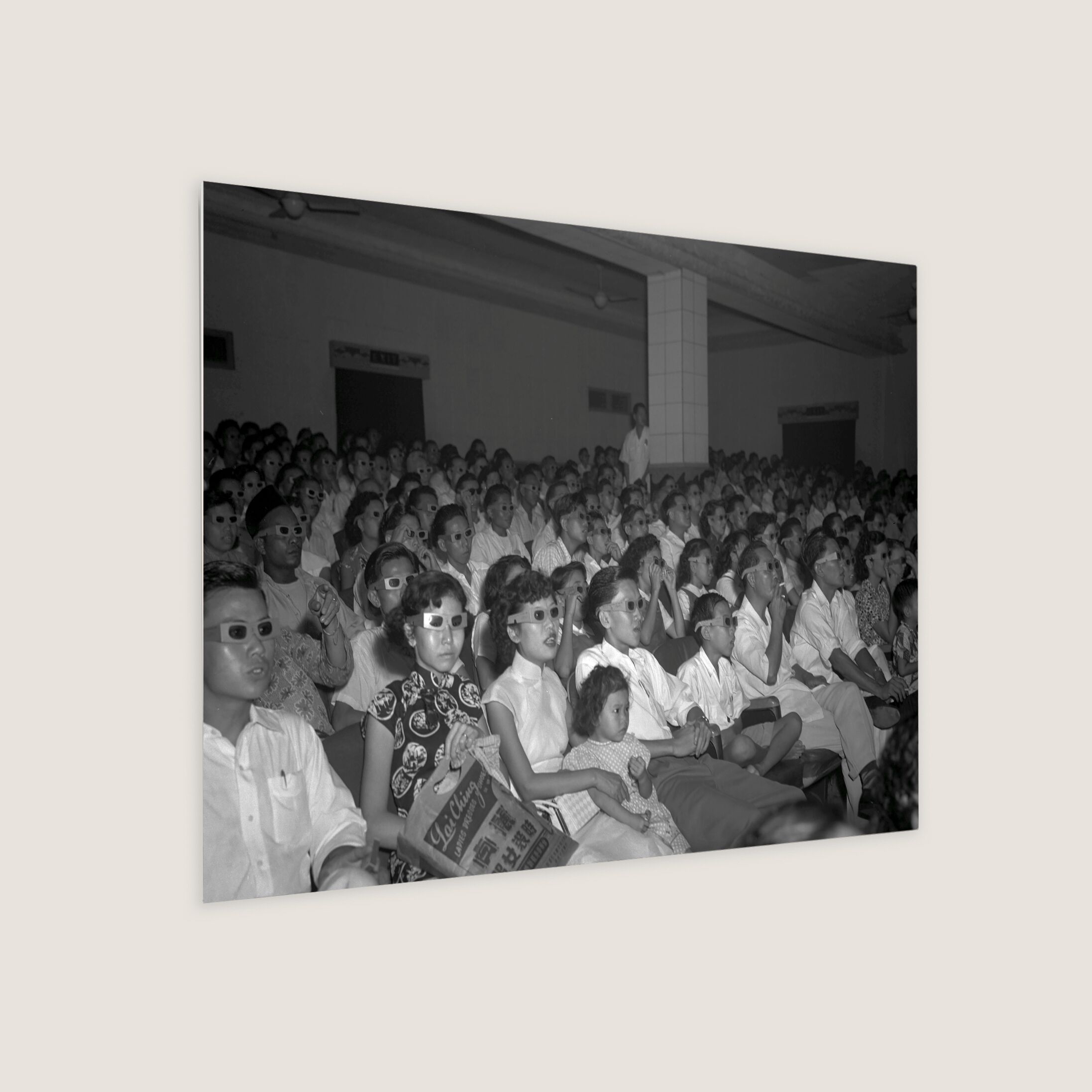
 3D Colour Movie at Open Air Capitol Cinema
1953
3D Colour Movie at Open Air Capitol Cinema
1953
3D Colour Movie at Open Air Capitol Cinema
Year 1953
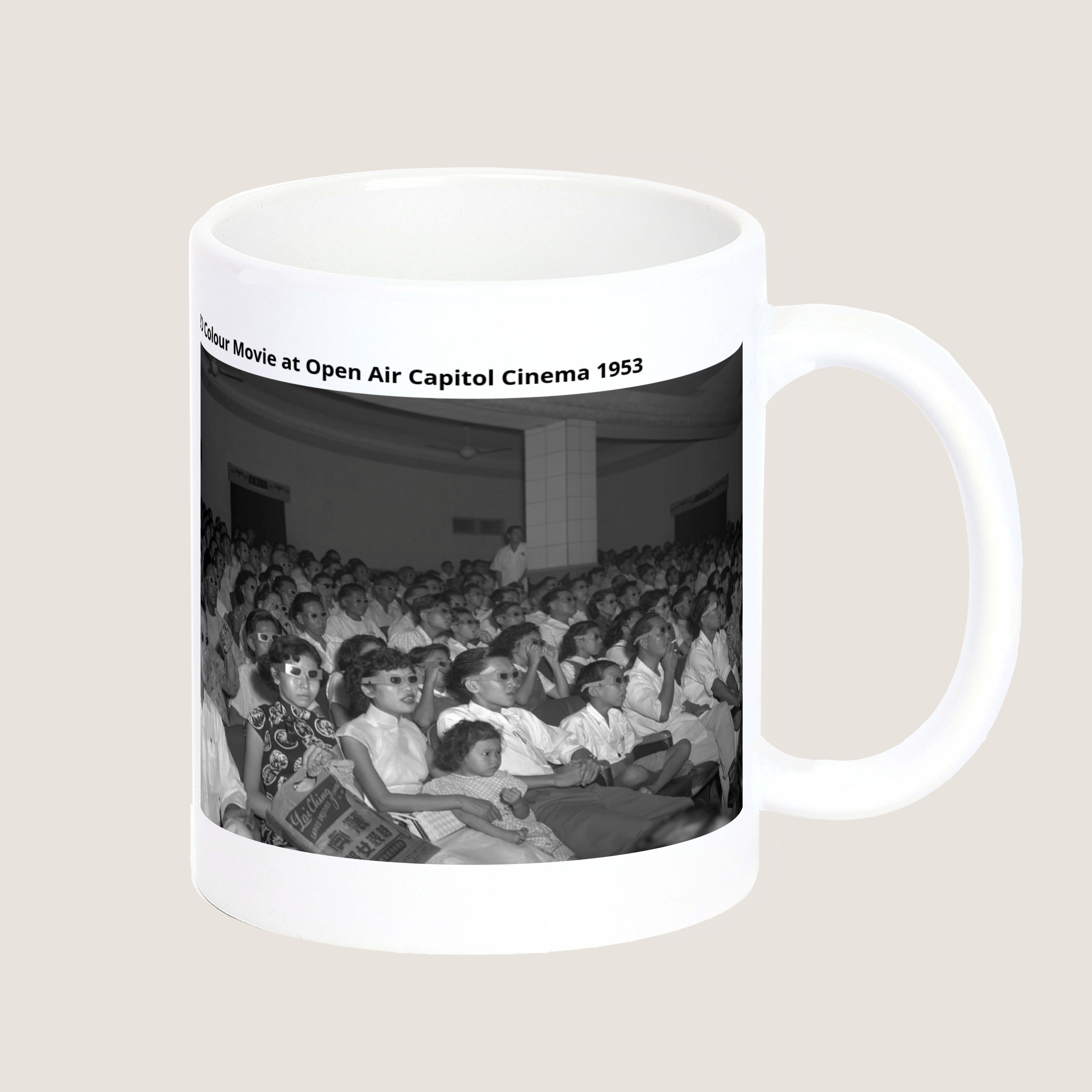
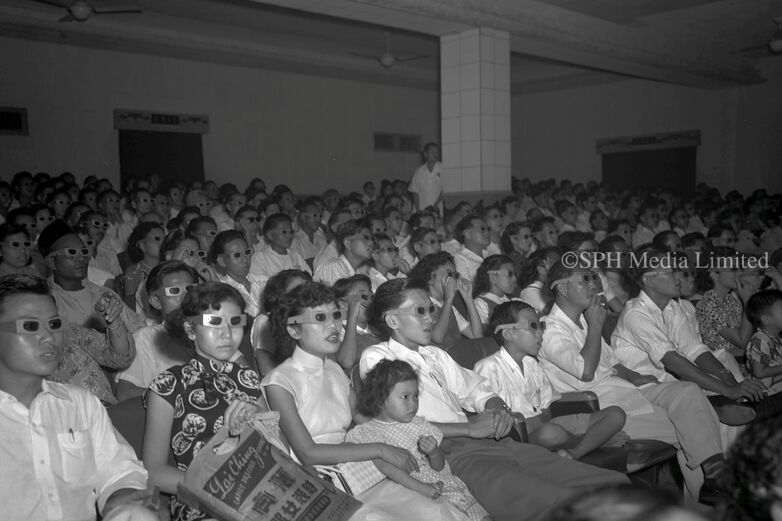
The Capitol Cinema first opened in 1930. At the time of its opening, it was regarded as the most modern auditorium with the largest capacity in the Far East. The cinema's roof could also slide open, creating a gap of over 12 meters. People wearing polarised spectacles attended the screening of the three-dimensional color movie Bwana Devil at Capitol Cinema. Today the Capitol Cinema is known as the Capitol Theatre.
©️ SPH Media Limited
Share to
Tags
Available for print on products
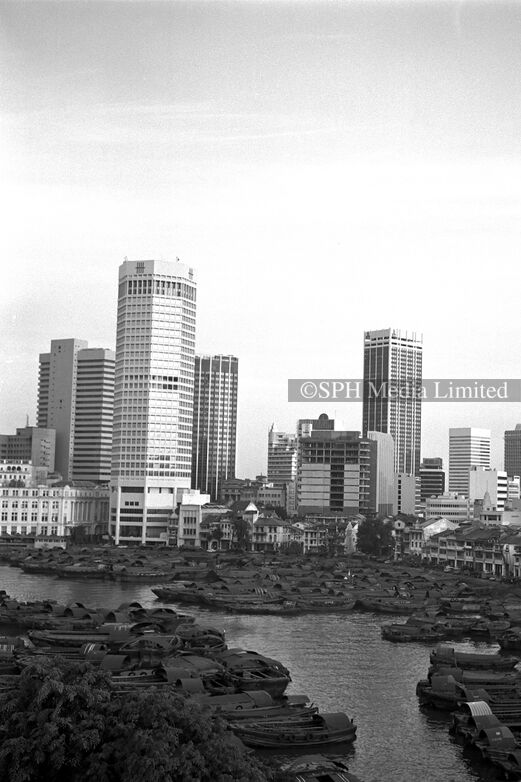 Tongkangs Making Their Final Appearance
1977
Tongkangs Making Their Final Appearance
1977
Tongkangs Making Their Final Appearance
Year 1977
In August 1977, as the Singapore River cleanup commenced, tongkangs were making their final appearance along the waterway, their silhouettes framed by the rising skyline. Once vital to trade, these wooden boats ferried goods from ocean vessels that could not berth ashore, marking an era of bustling river commerce now fading into history.
©️ SPH Media Limited
Share to
Tags
Available for print on products
Have a photo idea to suggest?